Skip to content

When sourcing aluminum windows from China, buyers often face one question: factory or trading company? Workshop photos offer little proof of a supplier’s actual operations. A better approach is to check China’s public business registry, focusing on three details: the registered company name, its 18-digit Unified Social Credit Code, and its business scope in Chinese.
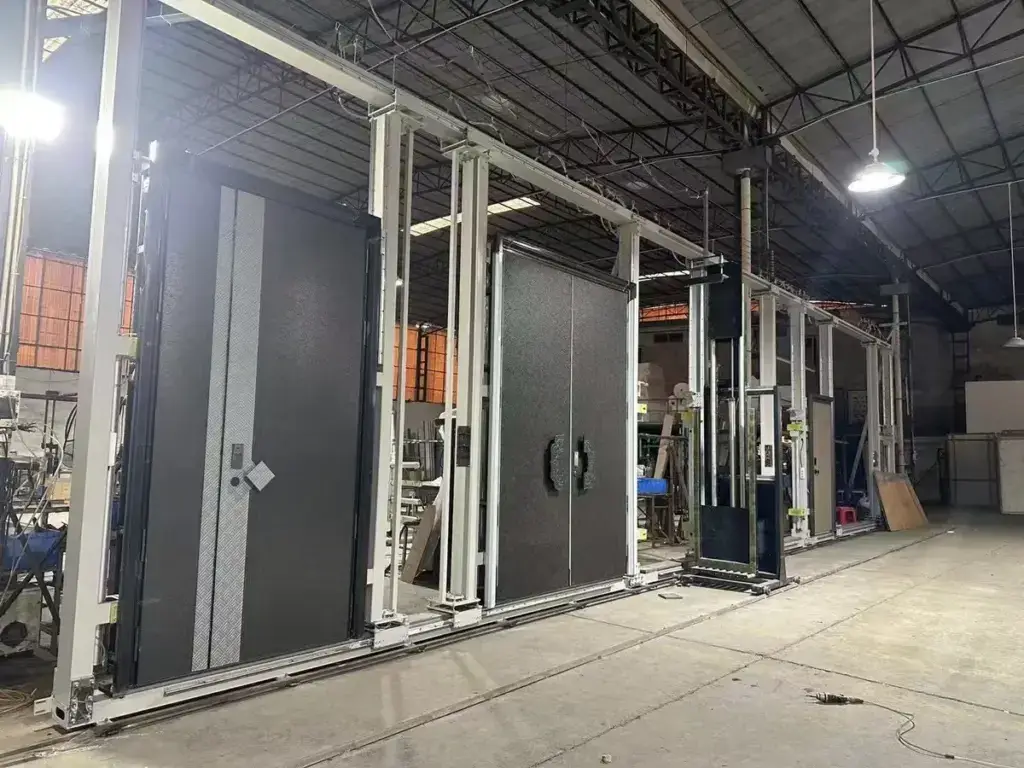
A broad product range does not automatically make a company a trading company. OPUOMEN offers aluminum doors, garage doors, folding systems, panoramic windows, sunrooms, pergolas, and curtain wall systems, supported by published production processes, technical drawings, and product certificates.
This article covers three ways to verify factory status and four order types where a trading company may be the better choice. Before paying a deposit, compare the purchase contract with the public registry record to ensure both name the same legal entity.
What the Distinction Changes on an Order
A factory and a trader differ on four things: who signs your drawings, whose name files the export, who traces a defect, and who pays for a re-run. Price is not one of them.
Ask four questions in the first email and write the answers into the proforma invoice. Which legal entity issues the shop drawings. Which entity appears as exporter on the customs declaration. Who signs the packing list. Whose bank account receives the deposit. Four matching names describe one factory. Four different names describe a service layer. Know what that layer costs and what it covers.
A trading company buys volume across several factories and can move an order to whichever line has capacity. That flexibility is a genuine cost advantage on a mixed order and a genuine traceability problem when a profile fails. That is the part of a factory vs trading company decision that price never settles. The distinction that matters is whose process record describes the units you received.
Some suppliers answer the question outright. Our aluminum front door manufacturer page states the position in its own FAQ: a direct manufacturer producing aluminum doors and windows in its own factory, with OEM and ODM support. The same page lists in-house cutting, assembly, finishing and quality inspection across a 60,000 square meter plant with 200+ staff. That is the claim. Everything below is how to test a claim like it, including ours.
What a Trading Company Actually Provides

A trader sells consolidation, contract language, export filing and one point of contact. Judge it on that layer, not on photographs of a plant it does not own.
Five functions sit inside a normal trading arrangement. It consolidates categories a single mill does not run, so windows, doors and hardware arrive on one bill of lading. It files the export declaration and writes a contract in English. It chases production dates across several suppliers at once. It accepts quantities an integrated line will not schedule.
What you give up is direct access. Your drawings travel through a second desk to reach the people cutting profiles. A defect claim travels the same desk. The mill’s process records reach you filtered, until the filter is the only record left.
Questions That Show the Value
Ask a trader three things and the margin stops being abstract. Which factory runs your profiles, and what is that factory’s registered legal name. Who signs your shop drawings, and on whose letterhead. What happens to your deposit when the mill misses the date, and in which clause is that written.
A trader who answers all three with names is selling capability you can audit. A trader who answers with “our partner factory” is selling a forwarding address.
Document Checks Before You Send a Deposit
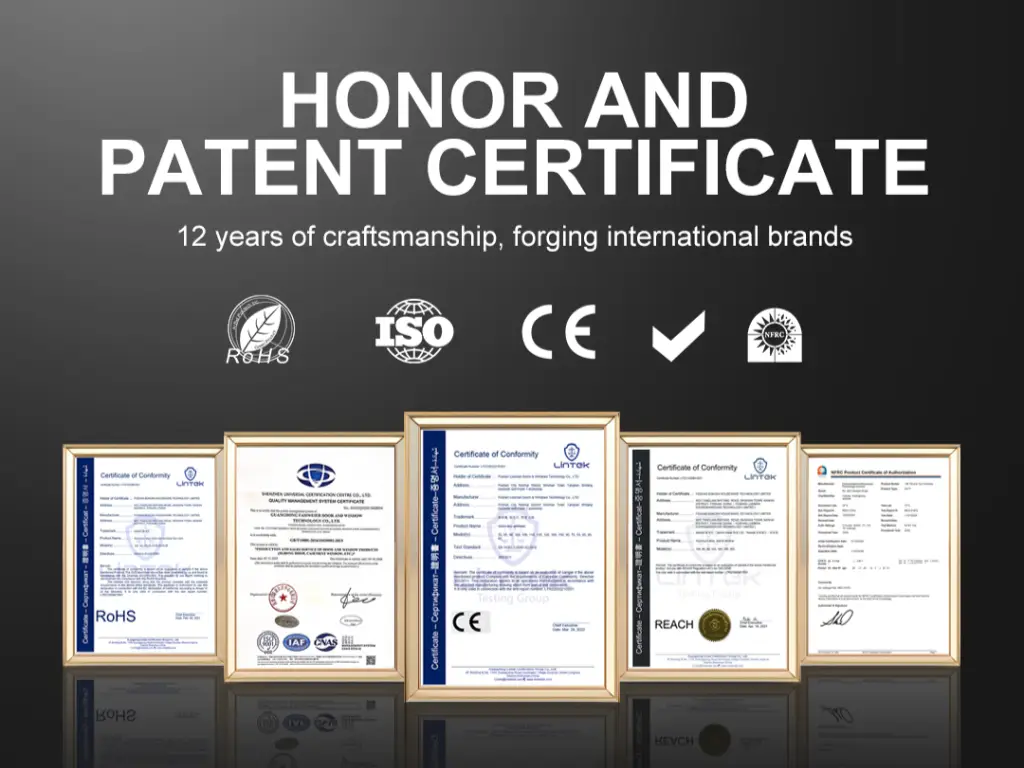
Five documents settle most of a factory vs trading company argument before a deposit. Compare names across all five. The mismatch is the finding, and the explanation behind it is not.
Ask for the business license copy showing the Unified Social Credit Code, and for the registered Chinese legal name in characters, which is what a registry search needs. Ask which entity files the export declaration and put its name in the contract. Confirm that the receiving bank account stands in the registered legal name. Read the draft bill of lading and check who is named as shipper.
Our own post on choosing a professional garage door supplier asks buyers to verify a license, permits and export records, and stops there. The method is below, starting with a code rather than a picture.
The Name Test on Four Documents
The registry guides describe the pattern: one supplier uses an English brand name online, a different Chinese company name on its invoice, and a third entity on its bank account. HI-COM’s guide to the National Enterprise Credit Information Publicity System documents it. The first task is not judging the supplier. It is identifying the exact legal entity.
Then put four papers side by side: quotation, invoice, contract, bank details. One name across all four is a file you can enforce. The English name in your sales correspondence rarely matches the registered name, and searching with that English name is the most common way a registry check fails before it starts.
Ask for the Code, Not the PDF
The Unified Social Credit Code runs 18 characters, digits and capital letters, and it belongs to one registered entity on the mainland. It prints on the business license and repeats as the taxpayer number on an official invoice. A photograph of a license can be cropped, rescaled or borrowed from a sister company.
A code can be looked up by anyone holding the Chinese legal name, in about ten minutes. That is why the code, not the image, is the document worth chasing.
Reading a Chinese Business License in Six Fields
Six fields on the public record test a factory vs trading company claim before you book a flight.
China’s National Enterprise Credit Information Publicity System publishes registration data, administrative licenses and penalties, annual report filings and credit records for mainland entities. Read it as a structured record, not a search result, and take the six fields in order.
| Field | What the record fixes | What you compare it against |
|---|---|---|
| Registered legal name | The entity standing behind the brand | Contract, invoice, bank account, drawings letterhead |
| Unified Social Credit Code | 18 characters belonging to one entity | The code printed on the license copy |
| Registration status | Active, deregistered, revoked or moved out | Whether you can trade with it at all |
| Business scope | What the entity is licensed to do | The products you are buying |
| Address and establishment date | Where the entity sits and since when | The plant address on your audit booking |
| Legal representative and capital | Who signs and what stands behind the signature | The person negotiating with you |
Scope Wording Is the Decisive Field
Scope wording splits into two families, and the split is the whole test. Production and processing verbs describe an entity that makes things. Wholesale, retail and import-export verbs describe an entity that moves things. The registry guides name the mismatch directly as a red flag: a supplier claiming to be a manufacturer whose scope, address or entity type reads as a trading business.
Our own ISO 9001 certificate scope line reads production and sales service of door and window products. That is what a scope looks like when it covers making and selling. Ask for the scope in Chinese characters and have someone who reads Chinese confirm the verbs, because a translated summary in a PDF is not the record.
What an Active Status Does Not Cover
Active status means the entity has not been deregistered and its license has not been revoked. It does not mean the record is clean. A company can show active and still sit on the abnormal-operation list, and the two must be read separately.
Entries on that list follow a missing annual report or an inability to reach the company at its registered address. Annual reports run from 1 January to 30 June each year for the prior year, so a gap is dated and checkable. Above that list sits the serious breach register, which is harder to clear and brings restrictions on public procurement, financing, government projects and licenses. Equity freeze information appears in the same record.
Browser translation mangles these terms. Copy the record and keep it with the contract, rather than keeping a machine translation of it.
Running the Search From Abroad
The registry has no official English version. Searches run on the exact Chinese legal name or on the 18-character code, and a puzzle verification gates the results page. From outside the mainland, requests from our own network returned HTTP 521 rather than a search form, across three runs dated 3 November 2026. Plan on a colleague on the ground or a paid check.
Know the limit. The record shows an entity exists, is active, and carries no visible compliance entries. It is a registration check, not a capability audit, and it does not prove that a supplier is safe to buy from.
Send your drawings, sizes and target market. You get shop drawings, section details and a walkthrough booked on a date you choose, from the entity that cuts the profiles.
Direct manufacturer since 2013 | 60,000 m² plant | 200+ professional staff
What a Factory Audit Actually Covers

The registry proves an entity exists. An audit proves that it makes the product. A factory vs trading company answer needs both, in that order.
Three routes exist and each returns something different.
- Your own visit. You confirm that the address on the license is a working plant. A date you chose tells you more than a date the supplier chose, because a plant warned in advance gets tidied.
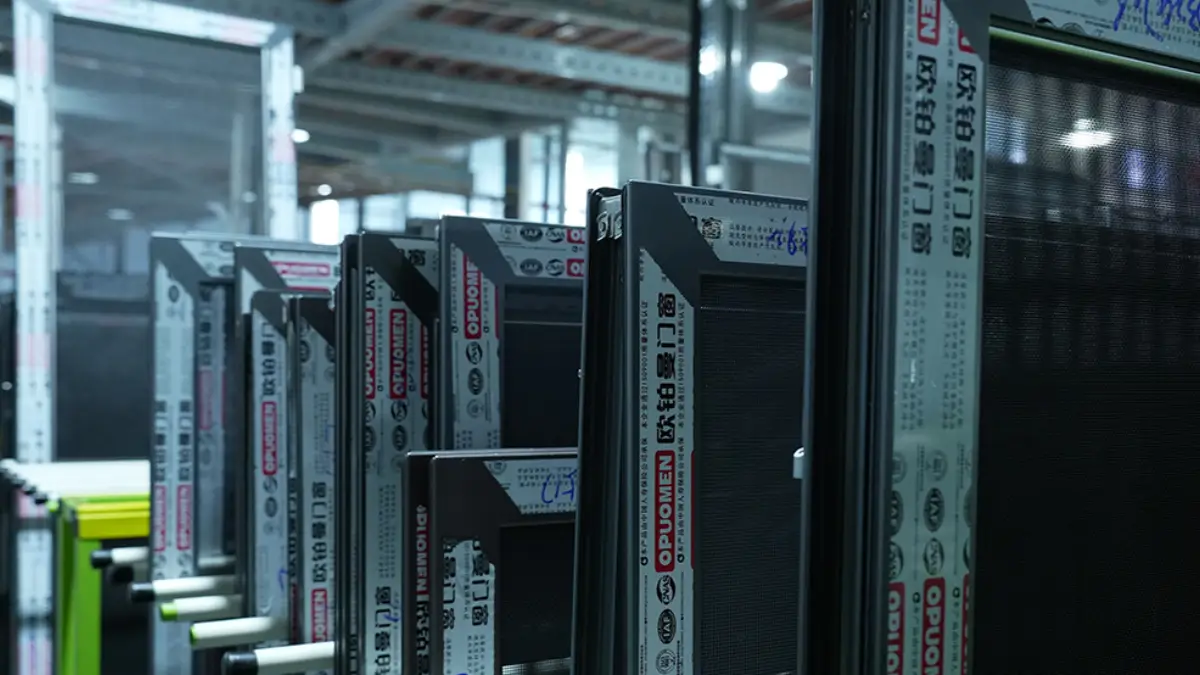
- A scheduled video walkthrough. You see what stands where the camera points at that hour. Ask for one continuous take from raw profile stock to the packing area, with the cutting and tempering steps inside the same call.
- A third-party inspection firm. It reports against a stated scope on a stated sample: what was checked, on which date, against which tolerance. Read the scope page before the conclusion page.
An inspection report certifies goods or process inside its own sampling plan. It does not certify that the entity you contracted is the entity that produced the goods, and that gap is exactly where a mixed-name file does its damage. Put the report, the registry record and the shipping document on one page and check that one name appears on all three.
AEO Is a Customs Credential, Not a Quality Badge
China’s authorized economic operator status runs on the General Administration of Customs credit management measures, Order No. 251. Those measures adopt the World Customs Organization SAFE Framework (Beijing municipal government, Customs AEO policy overview). The general standards cover four areas and 16 criteria: internal control, financial status, compliance with laws and regulations, and trade security.
Recognition requires the enterprise to be registered and filed at customs, with no failed result and a maximum of three basically-meets results in each standard set. The benefits are published in the same notice.
| Published AEO measure | What the notice states |
|---|---|
| Inspection rate | Below 20 percent of the rate applied to standard-management enterprises |
| Clearance order | Priority in customs clearance and related business procedures |
| Audit load | Reduced frequency of audits and verification |
| Customs guarantee | May apply for exemption from customs guarantees |
| Standing | Reviewed every five years; certificate revoked if standards stop being met |
| Outside China | Streamlined clearance in economies holding a mutual recognition agreement |
Read that list for what it is. It describes customs standing, not window performance. An AEO certificate says an enterprise keeps records a regulator can rely on. That is a real signal about paperwork and a weak signal about thermal break design.
Two questions cover it in one email: is the enterprise recognized, and under which legal name. If the certificate names a different entity from the license record you just read, you are holding two entities and one contract.
Price, MOQ and Product Range Signals
Three signals buyers use to settle this question prove nothing on their own: a low price, a small minimum order, and a wide catalogue.
A low number settles no factory vs trading company argument. Ask which line runs your order, and what that line charges for a stock configuration. A named line is a fact you can put in front of a registry record. A story about long relationships and direct access is not.
A small minimum order usually means the seller aggregates quantities across factories or holds finished stock. Many first orders need that service. Then ask the separate question: can this seller name the factory producing your units.
Breadth is the signal people trust most, and it is the one most often wrong. Our own range runs across aluminum doors, garage doors, folding systems, panoramic windows, sunroom customization, curtain wall and pergolas. A rule that disqualifies breadth disqualifies most integrated plants, because every plant buys something it does not make.
Read a published manufacturing process of windows and doors and count the steps that begin in-house. Ours begin at design and drawing and at material preparation with 6063-T5 profiles. We publish no extrusion line claim, and profile coating appears on the about-us page rather than in the cutting sequence. That is the honest version of a Foshan plant, and you should expect the same precision from anyone selling you a factory.
The Four Tests That Do Work
- Shop drawings and section details issued by the contracting entity, on its own letterhead. Forwarding a drawing costs nothing; issuing one means an engineer opened the file.
- A named profile supplier and a named glass processor, plus the record of who tested the assembled unit.
- Process steps performed at the address printed on the license, seen in one continuous walkthrough rather than three filmed rooms.
- Quality records traceable to a production line and a date, not a generic inspection sheet with no unit numbers.
An integrated plant answers those four without delay. A reseller has to ask somebody else first, and that pause is the answer you were looking for.
When a Trading Company Is the Better Buy
Four order shapes suit a trader: a mixed villa package, a first order under one container, a contract that must read in English, and hardware outside one mill’s line.
A villa package with windows, pivot doors, a sunroom and matching hardware spans categories no single line covers. Less-than-container consolidation works because a trader already runs mixed loads. A contract in English, with governing law and a claim procedure, is a document skill rather than a manufacturing one. Hardware, seals and replacement parts are a supply job, and that is a separate question from who cuts your profiles.
Buy the layer knowingly. Write the manufacturing entity’s registered legal name into the contract as the producer. Keep the drawing channel in writing, so a revision does not travel by chat message. Confirm whose name appears on the inspection report before the inspection is booked.
Our own guide to finding a reliable windows and doors supplier covers specification, certification and warranty questions you should ask in the same conversation. This article covers the entity behind those answers. The failure is not the trader. It is buying a service and being handed a factory story.
Frequently Asked Questions
What is the difference between a trading company and a manufacturer?
A manufacturer holds the license scope, the equipment and the process records that make the product. A trading company sells goods it buys, and its value sits in consolidation, contract language and export filing. The public record separates them on scope, address and entity type, so a factory vs trading company argument ends at a document rather than a photo.
Can a marketplace profile tell me whether a supplier is a factory?
Treat a platform verification mark as the start of a check, not the end. Ask what was verified, on what date, and by whom. Then compare the verified entity’s legal name with the name on your contract and invoice. A badge says someone saw an address; your order needs the entity registered there.
What is the difference between supplier verification and a factory audit?
Verification reads the public record: does the entity exist, is it active, does its scope match what it sells, does it carry penalty entries. An audit looks at capability: the line, the process, the goods. Neither replaces the other, and a clean registry record says nothing about your glass build.
How do you verify a Chinese supplier before placing an order?
Take the registered Chinese legal name and the 18-character Unified Social Credit Code, run both through the public registry, and read status, scope, annual reports and penalty records. Check that quotation, invoice, contract and bank account name one entity. Book the audit after that, on a date you chose.
Will a factory give me better prices than a trading company?
Not reliably, and the number itself identifies nobody. A trader buys volume across several factories and can move your order to whichever line has capacity, which sometimes beats a mill’s own list price. Ask which line runs your units and what it charges for a stock configuration, then check that name against the record.
What if the supplier turns out to be a trading company?
Nothing invalidates the order, and honesty about the model is not a defect. Check three things before money moves: does the contract name the producing entity, do your drawings come from someone holding the process, and who answers a warranty claim. If any answer is a forwarding address, you are buying a service you were not told about.