Überspringen Sie zu Inhalten

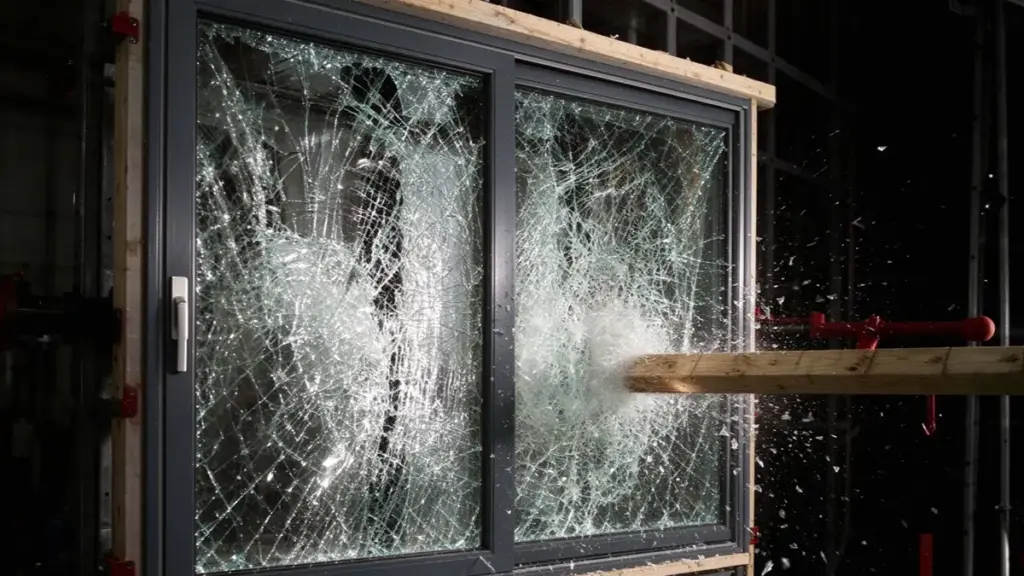
Typhoon-rated windows must meet different wind pressure and debris impact requirements across Asia-Pacific markets. Australia uses site wind classifications, Japan specifies window performance under JIS standards, and China has a separate standard for windborne debris impact. These ratings are not directly interchangeable.
Für Architekten, contractors and window buyers, understanding the differences helps identify the correct test reports, design pressures and product specifications before ordering.
How Typhoon Winds Affect Window Performance
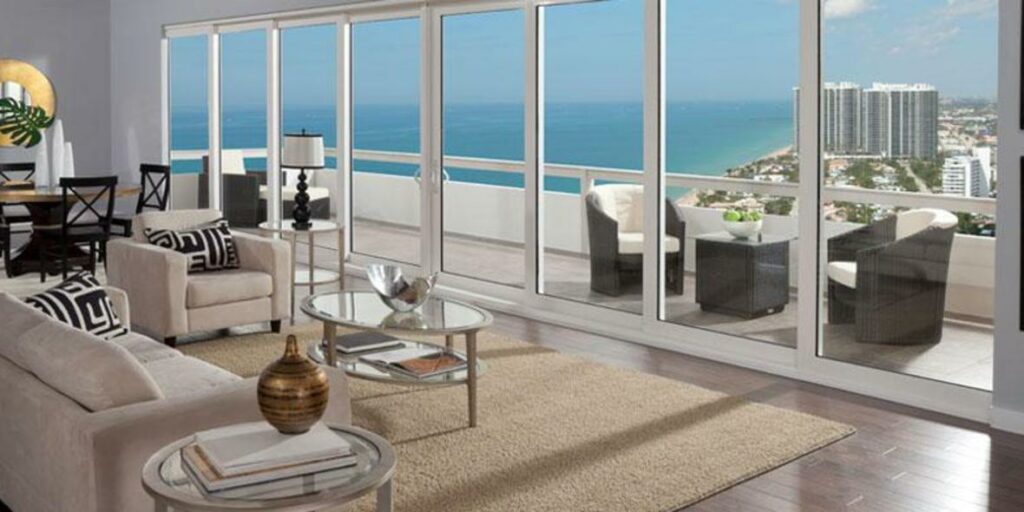
One storm applies three loads. Each has its own standard, and passing one says nothing about the other two.
Typhoon winds expose windows to three loads: direct pressure, internal pressure and debris impact.
Direct pressure pushes against windward surfaces and pulls on leeward faces, affecting both glass and frames.
Internal pressure increases when nearby openings fail, forcing wind into the building. Under Western Australia’s adopted AS/NZS 1170.2 provisions, normally closed windows count as full openings unless proven to resist the applied pressure.
Debris impact can break windows and increase internal pressure. Post-storm surveys in cyclonic Regions B2, C and D document both pressure-related failures and debris damage.
These loads affect the entire assembly, including aluminum frames, Glas, Schlösser, hinges and fixings. Sliding windows and large glazed openings need particular attention.
Reading Australian Wind Regions and Site Classes
Australia gives a wind speed first and a site class second. Neither one is a window rating, and the class letter carries no pascal figure.
How Regional Wind Gust Speeds Determine Window Requirements
Speeds come from a regional wind speed table, adopted state by state through the NCC. The Western Australian version replaces Table 3.1(A) of AS/NZS 1170.2:2021 with its own table. It splits the continent into non-cyclonic Regions A and B1 and cyclonic Regions C and D.
| Return period | Region A (0-5) | Region B1 and B2 | Region C, maximum | Region D, maximum |
|---|---|---|---|---|
| V50, 50 Jahre | 39 MS | 44 MS | 52 MS | 60 MS |
| V100, 100 Jahre | 41 MS | 48 MS | 56 MS | 66 MS |
| V500, 500 Jahre | 45 MS | 57 MS | 66 MS | 80 MS |
| V1000, 1000 Jahre | 46 MS | 60 MS | 70 MS | 85 MS |
| Any R of 5 years up | 67-41R-0.1 | 106-92R-0.1 | 122-104R-0.1 | 156-142R-0.1 |
Three notes on that table decide how usable it is. The gust is a peak with an equivalent moving average near 0.2 S, credited to Holmes and Ginger in 2012. Regions C and D tabulate maxima only, so a site farther from the smooth coastline may take a lower value.
The third note is a paperwork warning. Each region has a formula for any return period of five years or more, so a specification can carry a speed found nowhere in the printed table. Ask for the return period, the region and the resulting speed together.
Why Australian Site Classes Do Not Define Wind Pressure
The second layer is site classification. The housing provisions assign a class from four inputs: wind region, terrain category, topographic classification, and shielding from nearby structures. The result reads N1 to N5 in non-cyclonic country and C1 to C4 where cyclones land.
Cyclonic cells behave differently. In the Western Australian table, a Region C cell carries a class plus a distance band. Identical terrain and shielding can then return C1 or C4, depending on how far the site sits inland. Some combinations return NA, which means the table cannot classify that site.
Here is the buying trap. AS 4055:2021 assigns design gust wind speeds to each wind class, but these values are not fixed window test pressures. A purchase order that specifies a C3 window is therefore incomplete without the project-specific design pressure in pascals.
A second trap waits below 25 M. The internal pressure clause states its simple no-opening table is not intended for low-rise buildings in Regions B2, C and D at ultimate limit states. Cyclonic low-rise design assumes the opening case first. Ask what internal pressure assumption your supplier’s figure was tested against.
Japan’s Window Wind Pressure Rating System
Japanese paperwork names a product standard, a test standard, and a pressure in pascals. The pascal figure is the part that travels.
The product standard for windows is JIS A 4706. A free copy of the standard text, published by a Japanese building research information body, states the scope plainly. It covers sashes used mainly as windows in exterior walls, and it excludes skylights.
That exclusion is a document rule, and buyers lose it at their cost. Inside the standard, the wind-pressure test points elsewhere. It runs under JIS A 1515, using the deformation procedure at its clause 6.4(A).
Pressure is applied in four equal steps up to a maximum. A preliminary pressure of 500 pascals comes first, and the maximum is read from the wind-pressure grade table. So a grade is a shortcut for a number, and the number is the evidence.
The neighbouring properties follow the same logic. Airtightness is measured under JIS A 1516 bei 100 pascals positive. Water tightness runs under JIS A 1517, and the figure shown is a median value rather than one pass point. Winddruck, Luft, Wasser, sound and heat each get a grade, and the product name lists wind pressure first.
Two consequences follow. A grade with no pascal figure under it is an incomplete submittal. And a report on a sliding sash cannot be reused for a rooflight or an opening skylight, because those fall outside the scope the report was written against.
Check the edition before you quote a grade. The current reference is JIS A 4706:2021, which covers swing and sliding windows mainly installed in exterior walls. Roof windows are excluded from its scope. Wind resistance testing follows JIS A 1515, so buyers should confirm the edition cited in the laboratory report before accepting a test result.
How Buyers Assess Windows Without a Wind Pressure Rating
Where no published window class ladder exists, the pressure figure must come from the project engineer. Nobody else can generate it honestly.
Typhoon coasts also sit in markets with no freely published window rating ladder. That is not a hole in your specification. It is a shift in who owes you the number. The project designer derives a site pressure from local wind data and local terrain. Your job is to collect it.
Ask three questions and write the answers into the schedule. What design pressure in kilopascals applies to this elevation, positiv und negativ? What internal pressure assumption sits behind that figure? Which openings are assumed to fail first? A supplier quoting typhoon rated windows without those answers is guessing.
Do not borrow a figure from a weather bulletin. A warning number describes the storm. A facade pressure is that speed squared, halved, multiplied by air density, then adjusted for height, terrain and room pressure. The first is news. The second is a specification.
Run the arithmetic once and the distinction stays. Suppose your engineer’s site speed is 50 MS. Velocity pressure then lands near 1.5 kilopascals before any coefficient touches it. Coefficients then move it up or down, which is why the report should carry a tested pressure.
A test figure cannot be argued upward either. A unit tested to one pressure has evidence to that pressure and no further. If the project number later rises, the answer is a new test or a different unit. It is not a letter from the factory explaining why the old result still holds.
Give us the site pressure in kilopascals, the internal pressure assumption, and the target market. You get glass, profile and hardware matched to that figure, the test scope named before production, and a written note on every standard we cannot cover.
Seitdem direkter Hersteller 2013 | 60,000 m² Pflanze | 200+ professionelles Personal
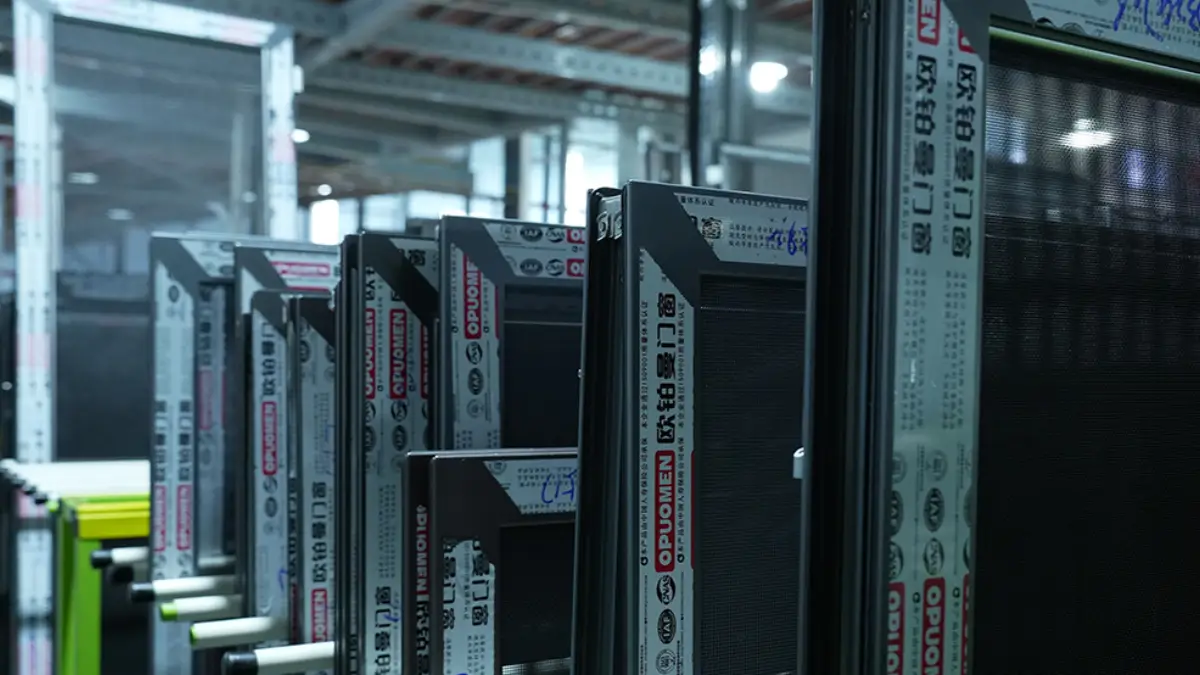
Debris Impact Is a Separate Test
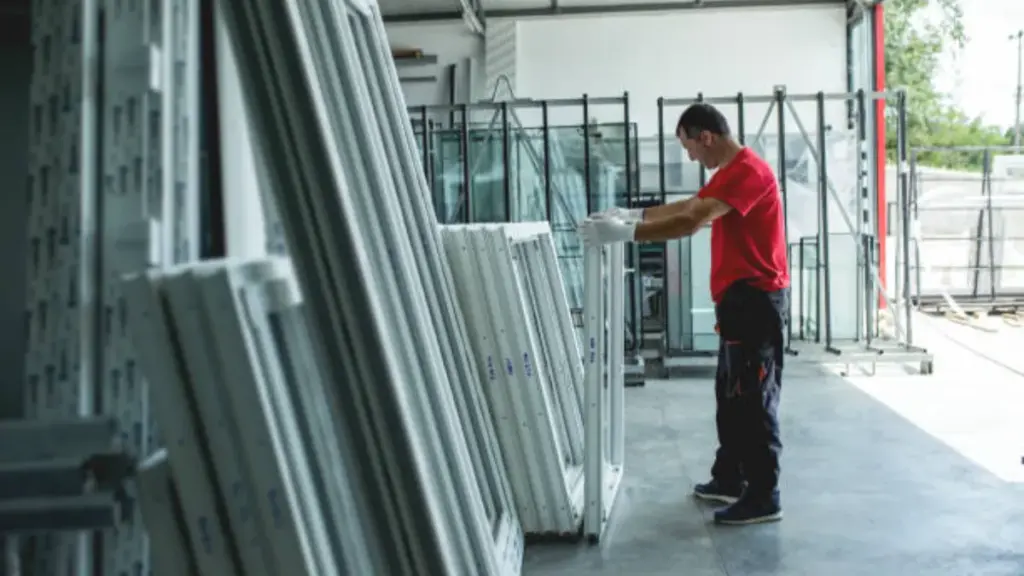
Wind pressure and flying debris are different standards, different specimens and different failures. A grade for one is not evidence for the other.
China’s Separate Standards for Windborne Debris Impact
Files reaching our document intake list numbered levels for wind pressure, water tightness and airtightness. Debris has a separate national standard, and its register record is public. The GB/T 29738-2013 entry in the national standard database translates as the grading and test method for curtain wall and windows resisting windborne debris impact.
Four facts sit on that record. It was issued on 18 September 2013 and took effect on 1 June 2014. It is listed as current, and its last review, dated 4 August 2025, concluded that it remains valid. The housing ministry administers it through the national curtain wall and window standardization committee.
Read the status field carefully. The standard is marked recommended rather than mandatory, so it binds only where a project specification calls it out. No factory must test to it simply because it exists. Your specification is the obligation.
The register shows metadata, not the level table. You get the number, dates, committee and drafting bodies, and no projectile masses or pressure steps. So a grade claim needs the laboratory report beside it, naming standard number, edition, specimen and level reached.
Japan’s Windborne Debris Impact Protection Requirements
That contrast matters on any typhoon project. A peer-reviewed impact study from Kyoto University’s disaster prevention institute and co-authors states the position for Japan. There are still no building codes or standards there to protect cladding from wind-borne debris, while American and ISO standards cover the testing methods.
That 2013 study also fired the missiles. Under the lowest missile rank in ISO 16932, every glass type tested was destroyed except the film-backed specimen. Film lifts impact resistance only modestly, the authors conclude. A film-covered pane is not a debris system on the strength of a brochure.
Australia handles the same hazard from the structural side, through the debris loading clause already cited. Its commentary says the majority of windborne debris in Regions B2, C and D has not often impacted buildings above 25 M. The same note adds that this has not held elsewhere, and could change as high-rise construction grows.
A high-rise project outside Australia cannot import that low-rise allowance. For the American letter grades and missile tests, Unser Leitfaden zu Einwirkungsfensterbewertungen für Hurrikane sets out the two-number reading method: a debris rating and a design pressure.
How Wind Speed Determines Window Test Pressure
Speed squared is the start of the arithmetic, not the end of the specification. Four steps sit between a gust and a pressure you can test to.
Velocity pressure is air density times square of speed, halved. At a standard density of 1.226 kg/m³, the constant works out as 0.613. So q in pascals equals 0.613 times V squared, with V in metres per second. The American wind load standard states the same relation in imperial units, and both forms reconcile.
| Regional speed, from the first table | Velocity pressure q | q in kilopascals |
|---|---|---|
| 45 MS, Region A at 500 Jahre | 1,241 Pa | 1.24 kPa |
| 57 MS, Region B1 at 500 Jahre | 1,992 Pa | 1.99 kPa |
| 66 MS, Region C maximum | 2,670 Pa | 2.67 kPa |
| 70 MS, Region C at 1000 Jahre | 3,004 Pa | 3.00 kPa |
| 80 MS, Region D maximum | 3,923 Pa | 3.92 kPa |
| 85 MS, Region D at 1000 Jahre | 4,430 Pa | 4.43 kPa |
Four steps stand between those rows and the load on your glass. Height and terrain multiply the speed before it is squared. External pressure coefficients differ across the windward face, the leeward face and roof edges. Internal pressure adds the room effect. An importance factor raises the target where failure endangers others.
A fifth step arrives from the laboratory. A window test is a controlled, repeated pressure difference, not a gust. That is why an honest submittal carries a tested pressure and a named procedure, and why typhoon rated windows should never be specified by a storm name.
Key Typhoon Window Specifications for Buyers
Six written lines buy more certainty than any adjective on a datasheet. Put them in the enquiry, not in the claim.
- 1. Design pressure for each elevation, in kPa. Confirm positive and negative pressures with the project engineer and include them in the window schedule.
- 2. Internal pressure assumptions. Confirm whether the calculation assumes an intact building envelope or a failed opening.
- 3. Debris standard and edition. Specify the required standard or clearly state if debris protection is excluded.
- 4. Test report details. Check the standard, edition, laboratory, specimen size, frame material and tested pressure. Small-specimen results may not apply to large sliding windows.
- 5. Hardware evidence. Review frames, supports, Führer, Schlösser, Riegel, hinges and fixings to confirm the complete assembly can withstand the required loads.
- 6. Glas, drainage and certifications. Check these separately. Unser technical document intake lists NFRC, CSA, CE and other certifications depending on the product and market. Typhoon-related documents should be confirmed for each target market.
Two of these lines usually go missing when a buyer asks us to review a file. The pressure figure arrives without its internal pressure case. The debris question arrives as a photograph of a filmed pane. Both are cheap to fix before an order and impossible to fix after a storm.
For sliding assemblies in exposed elevations, unser sliding door models page shows the category we build. Technical services covers the testing scope we can commission against a project figure. Where a debris-rated build moves your budget, impact windows cost breaks down the glass, hardware and certification lines behind the quote.
Häufig gestellte Fragen
Is there a certification for typhoon rated windows?
No single certificate carries that name. You assemble it from a regional wind speed, a site or grade classification, a laboratory wind-pressure report in pascals, and a debris test where the project requires one. Ask for each document by number and edition, then match the specimen size to your opening.
What wind pressure does a typhoon region window need?
It depends on the site, not the storm label. Across the Western Australian table, velocity pressure runs from 1.24 kilopascals at Region A to 3.92 at Region D maximum, before coefficients. Höhe, terrain, internal pressure and building importance then move that figure. Take the design pressure from the project engineer and require a report tested to it.
Is an Australian C-class window a cyclone rating?
NEIN. C1 to C4 classify the site from wind region, terrain category, topography and shielding. The free code text gives no pascal value per class, and cyclonic low-rise design cannot use the simple no-opening pressure table. Ask for the design pressure in kilopascals and the test that reached it.
Does a Chinese wind pressure level prove impact resistance?
NEIN. Windborne debris grading sits in a separate standard, GB/T 29738-2013, current and marked recommended rather than mandatory. That status means it applies where your specification names it. Demand the laboratory report citing standard number, edition, specimen and level, since the public register shows metadata only.
Which markets have no window debris standard?
Japan is the clearest documented case. A peer-reviewed impact study states that no building code or standard there protects cladding from windborne debris, while ISO and American methods exist. Australia treats debris as a loading and internal pressure question instead of a product test. Specify the debris document yourself.