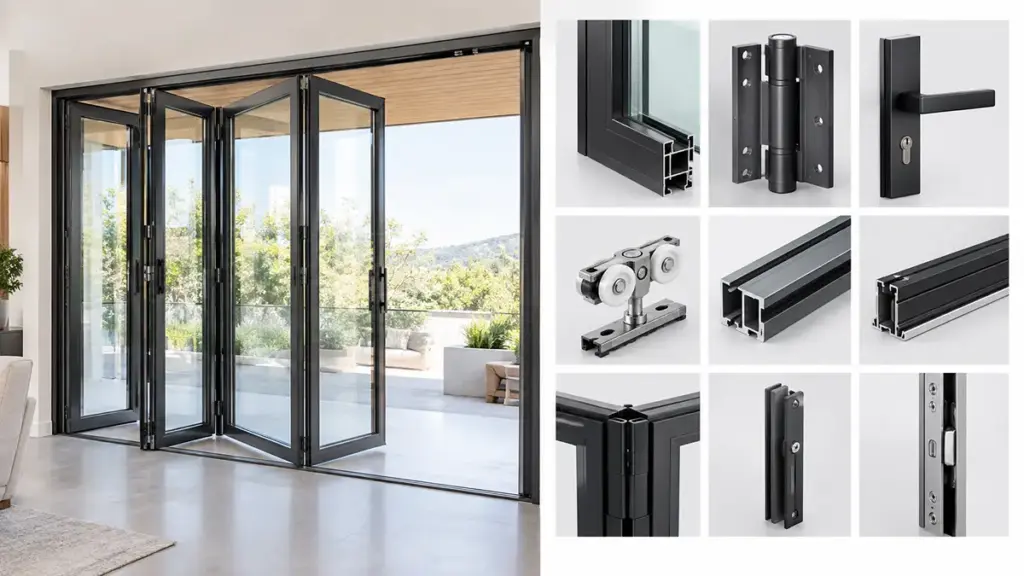
Choosing reliable garage door components means matching each part to the door’s weight, tamaño, and expected use. The right combination helps reduce premature wear and unexpected failures. Using poor-quality or mismatched hardware can lead to premature wear, warranty issues, and serious safety risks during installation or service.
This guide covers the key garage door components, including counterbalance springs, lifting cables, pistas, rodillos, and opener safety devices, with reference to relevant DASMA standards. It also explains common spring cycle ratings, track materials, and hardware specifications to help you choose compatible components.
Garage Door Components and Their Main Functions
A garage door is made up of several components that work together, including panels, ballestas, pistas, rodillos, cables, and the opener.
| Component Category | Primary Utility |
|---|---|
| Estructural & Lifting | Paneles, ballestas, cables, and tracks handle the physical load and define the movement path. |
| Hardware, Caza de focas & Automatización | Hinges join sections, weatherseals block elements, and motor drives automate control. |
Structural Framework and Mechanical Lifting Assemblies
A heavy garage door depends on several components to support its weight, guide its movement, and keep the door balanced during opening and closing. When these parts interact properly, the door feels lightweight and moves predictably.
- Sectional door panels and reinforcement struts provide structural strength and help the door resist wind loads when the system is properly designed and reinforced for the application.
- Torsion and extension springs counterbalance the door weight to allow smooth manual or motorized operation.
- Steel lift cables and drums work with the spring system to transfer lifting power safely and keep the door level.
- Metal tracks and rollers guide the door sections from vertical to horizontal positions with minimal friction.
Misaligned tracks or hardware can wear out rollers faster and put extra strain on the spring system. Regular inspections help identify track shifts before they cause a complete system lockup.
Hardware Connections, Protección contra el clima, and Automation Systems
Automation and weather management turn a basic physical barrier into a functional, secure system. These elements join the moving panels and seal out external environmental factors.
- Heavy-duty hinges and brackets connect door segments to allow smooth pivoting along track curves.
- Weatherseals and insulated panels seal out drafts, polvo, humedad, and pests to maintain thermal efficiency.
- Motorized openers automate movement using chain, belt, or screw drive systems to pull the door open or push it closed.
- Safety sensors detect obstructions, safety cables help contain broken extension springs, and emergency release cords allow the door to be operated manually when the opener is disconnected.
A damaged hinge or bracket can affect the door’s balance and movement, putting extra strain on the opener and other moving parts.
Garage Door Panels, Bisagras, and Brackets
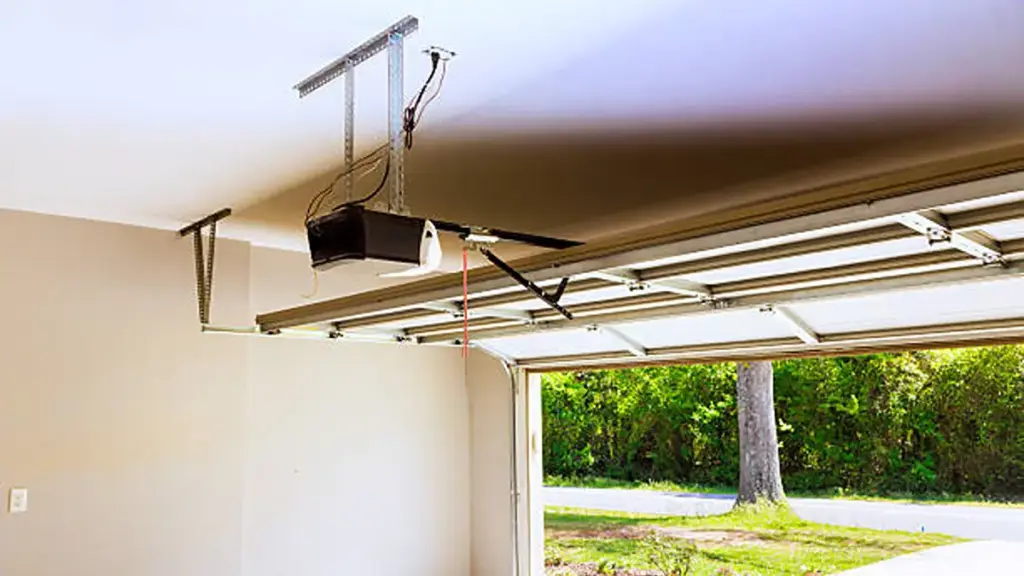
Sectional garage doors use connected panels, bisagras, paréntesis, pistas, and cables that need to work together properly. A damaged or loose component can cause binding, movimiento desigual, or cable problems.
Structural Roles and Identification of Door Components
Sectional garage doors are made up of several connected sections that move together as the door opens and closes. Individual panels form the main moving barrier, providing the door’s structural span, exterior face, y aislamiento. Manufacturers typically fabricate these sections from steel, aluminio, o madera, so choosing between steel vs. puertas de garaje de aluminio can depend on the project’s structural, actuación, y requisitos de diseño.
- Paneles: These sections form the primary barrier and structural span, utilizing steel, aluminio, or wood to provide insulation and aesthetic appeal.
- Bisagras: These components connect adjacent panels to allow smooth articulation. They use a numbered system from No. 1 to No. 3 to dictate placement and support roller stems.
- Bottom Brackets: Positioned at the lower corners, these parts anchor the high-tension lift cables that carry the door’s physical weight.
- Top Fixtures and Track Brackets: These assemblies guide the upper sections and secure the metal tracks to the building frame.
Because these parts work together, even a small problem can affect the rest of the door. A warped panel or loose hinge can cause the rollers to bind, leave the cables uneven, or put extra stress on the tracks.
Inspection, Mantenimiento, and Safe Replacement Practices
Regular maintenance helps keep the door balanced and reduces wear on the hardware. A quick monthly inspection can help you catch worn or damaged parts before they cause a bigger problem, while proper maintenance for aluminum garage doors can help extend the service life of the overall system.
- Visual Indicators: Look for stress cracks in the metal hinges, rust streaks near fasteners, sagging panels, and noisy operation during monthly inspections.
- Lubricación: Apply silicone or white lithium spray directly to hinge pivot points to reduce wear from daily operating vibrations.
- High-Tension Hazard: Bottom brackets hold extreme mechanical force from the counterbalance springs. Technicians must handle these parts with care to prevent sudden cable release.
- Hardware Matching: Replacement parts should match the original door system in size, hinge type, bracket configuration, y especificaciones de hardware. Proper installation is equally important when fitting replacement components or installing an aluminum garage door.
Mixing mismatched hardware disrupts the door’s travel path. Ensure all replacement parts match the door’s original load rating and structural design to keep the entire system balanced.
Reliable Aluminum Garage Doors for Global Projects
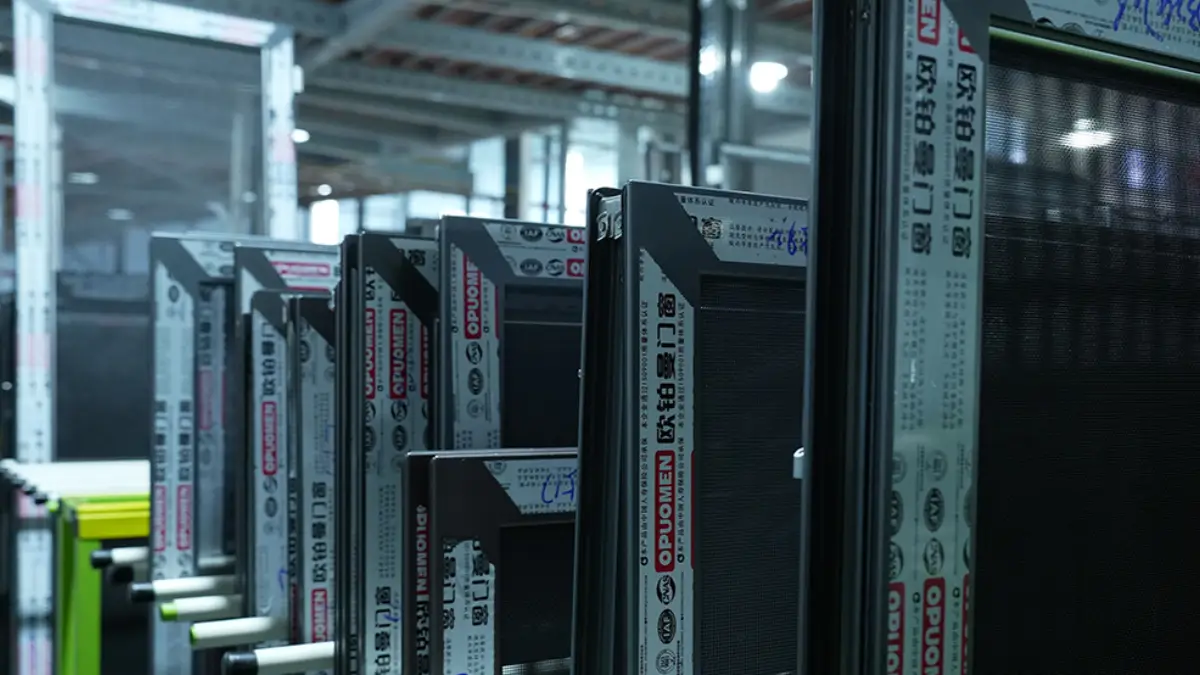
How Garage Door Tracks Guide Movement
Garage door tracks guide the rollers as the door moves from the closed position up the vertical tracks and across the horizontal tracks.
Track Segments and Hardware Components
An overhead garage door uses track sections and mounting hardware to guide the rollers and support the door as it moves between the closed and open positions.
- Continuous Pathway: Vertical, curved, and horizontal track sections work together to guide the rollers as the door opens and closes.
- Friction Reduction: Rollers fit inside channel-shaped steel rails, minimizing friction and preventing the door panels from shaking or derailing.
- Anchor Hardware: Jamb brackets, flag brackets, and track hangers anchor the metal rails to the wall and ceiling to support the weight of the door.
Operational Mechanics and Alignment Dynamics
The tracks, rodillos, ballestas, and door sections all need to work together properly. Even a small alignment problem can make the door harder to operate or cause uneven wear.
- Track Configurations: Track designs like standard-lift, high-lift, and low-headroom determine the specific travel path of the door panels based on available ceiling height.
- Precision Alignment: Properly aligned vertical and horizontal tracks help reduce binding, popping, and uneven roller wear.
- Distribución de carga: The tracks coordinate with springs and hinges to distribute the physical load smoothly as the door transitions from vertical to overhead storage.
Rodillos, Cables, and Lift Hardware Explained
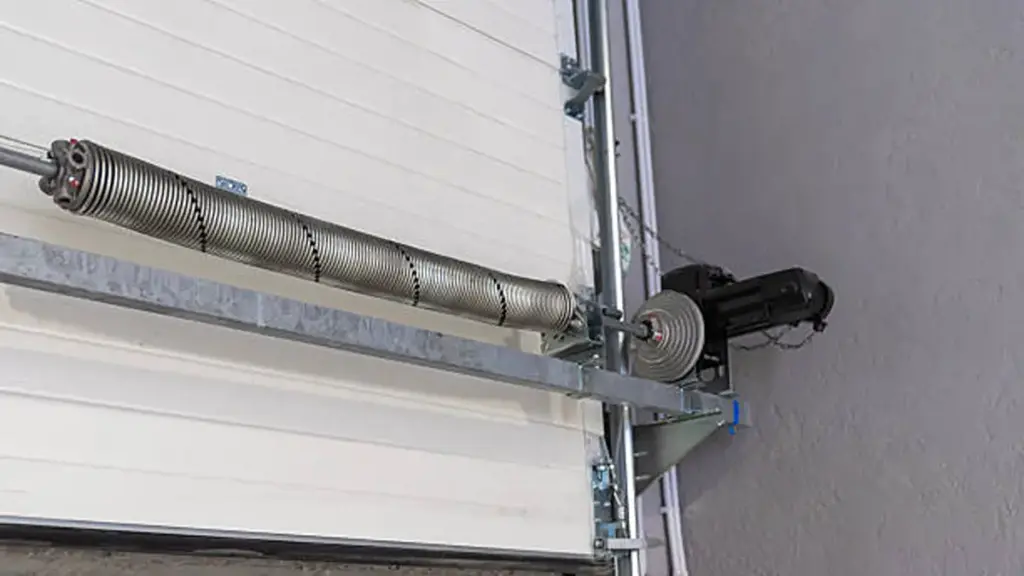
Rodillos, lifting cables, and related hardware help transfer the lifting force from the counterbalance system while guiding the door along the tracks.
Types and Construction of Rollers and Cables
The right roller and cable specifications help the door handle its weight and daily operating cycles without unnecessary wear.
- Nylon vs. Steel Rollers: Nylon rollers run quietly in residential setups, while steel rollers offer long-term durability for heavier physical demands.
- Roller Sizes and Bearings: Garage door rollers commonly come with 2-inch or 3-inch wheel diameters, depending on the track system. Ball-bearing rollers help reduce friction and allow the door to move more smoothly along the tracks.
- Cable Sizing and Materials: Garage door lifting cables are commonly made from galvanized steel and come in different diameters and constructions depending on the door’s weight and hardware system. Common residential systems may use 1/8-inch cable, while heavier applications can require larger sizes.
Integration and Mechanics of Lift Hardware
Lift hardware connects the door sections to the counterbalance system and transfers the lifting force to the door.
- Bottom Brackets and Drums: Bottom brackets anchor the lift cables at the lower corners, while drums at the top of the assembly spool the lines evenly.
- The Lifting Sequence: As the door opens, the torsion shaft turns the drums and winds the lift cables around them. The cables lift the bottom brackets while the rollers move through the tracks.
- Wear Signs and Operational Risks: Frayed cables, loose brackets, and flat-spotted rollers disrupt alignment, creating severe safety risks under high spring tension.
Technicians must treat these parts as a single matched assembly during maintenance, as a failure in one component immediately overloads the remaining hardware.
Garage Door Springs and Counterbalance Systems
The counterbalance system helps support the weight of a sectional garage door. Torsion and extension springs do this in different ways and require different amounts of available headroom.
Torsion and Extension System Configurations
The counterbalance system helps offset the weight of a residential sectional garage door. Torsion and extension spring systems are designed and tested according to applicable industry requirements, including relevant DASMA standards.
- Torsion Systems: These setups utilize springs mounted on a shaft above the door opening. The winding and unwinding actions transmit torque through the cable drums to lift the door panels.
- Extension Systems: These setups mount alongside the horizontal tracks, stretching and contracting to provide lifting force through a system of pulleys and lift cables.
- Clearance Requirements: System components dictate the headroom. Torsion and extension systems have different headroom requirements. Standard torsion setups often need more space above the door, while extension springs are used in some lower-clearance applications. The required space depends on the door and hardware configuration.
The right spring configuration depends on the door’s weight, tamaño, and the available space above and beside the door. An improperly matched spring system can make the opener work harder and increase wear on the door’s moving components.
Safety Standards and System Maintenance
High-tension components store extreme mechanical energy. This makes spring adjustment and replacement a strictly professional task rather than a routine DIY maintenance job.
- Safety Cables: Extension spring setups require continuous safety cables run through the center of the coils to prevent broken springs from launching as dangerous projectiles.
- Cycle Life Ratings: Spring life is commonly rated in cycles, referring to the number of complete open-and-close cycles a spring is designed to handle under specified conditions. Con el tiempo, repeated operation can lead to spring fatigue, cable fraying, and wear on other moving components.
- Routine Maintenance Steps: Technicians must check for broken coils, verify the manual balance of the door when unhooked from the opener, and lubricate all moving parts.
Regular testing prevents sudden failures. If a door fails to hold its position when halfway open, the counterbalance system requires immediate calibration or replacement.
Built for Reliable Garage Door Performance
The performance of a garage door depends on more than individual parts—it also depends on how the door system is engineered, assembled, and tested as a whole. Opuo applies this system-based approach to its aluminum puertas de garaje, using 6063-T5 aluminum profiles and precision-matched hardware for durable, stable operation. Its garage door mechanisms have been tested for up to 100,000 operating cycles, helping verify long-term performance under repeated use. For dealers, contratistas, y compradores de proyectos, Opuomen also provides support with product selection, technical drawings, hardware matching, and customization based on project requirements. With an integrated manufacturing facility covering more than 60,000㎡ and experience in aluminum door and window production since 2013, Opuomen can support garage door projects from design and sample approval through production and delivery.
Openers, Sensors, and Safety Components
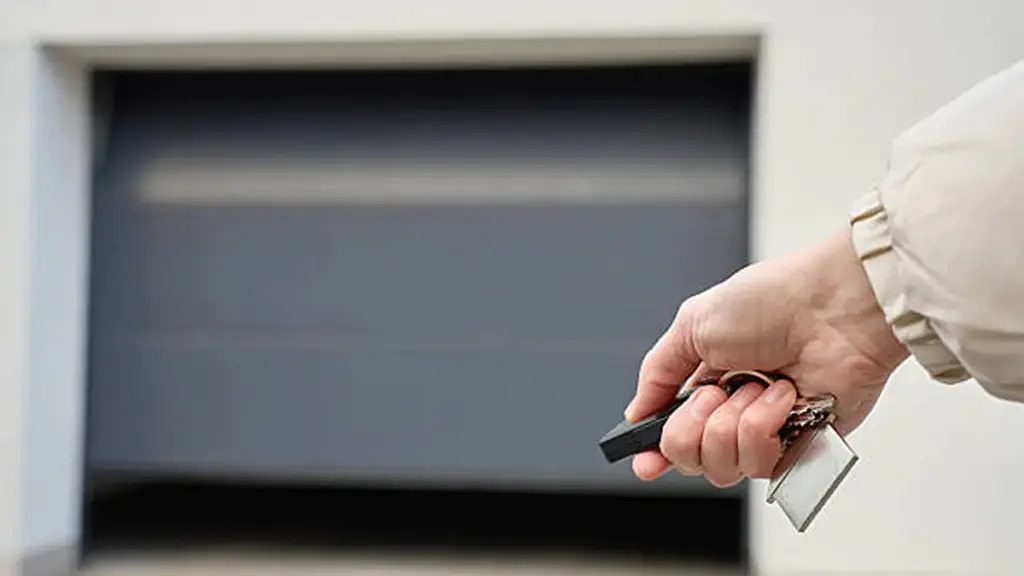
Modern garage door openers use safety sensors and other protective devices to help control door movement and meet applicable safety requirements, including UL 325 where applicable.
Drive Configurations and Core Motor Mechanics
An automatic opener translates electrical energy into precise mechanical force. The choice of drive and motor determines the system’s capacity, noise output, and operational lifecycle.
- Drive configurations: Chain, belt, screw, and jackshaft systems power different door weights and vertical track layouts to fit specific structural clearances.
- DC motors: These power units provide quiet, soft-start and soft-stop operations, which reduces structural wear by managing travel speed dynamically.
- Logic boards: Microcontroller-based control systems process real-time signals from safety sensors, radio remotes, and wall stations to coordinate motor output.
- Travel limits: Mechanical limit switches or electronic encoder feedback systems establish precise end points to stop the door and prevent rail damage.
Matching the motor power to the actual door weight protects the system. Selecting the wrong drive configuration creates unnecessary mechanical strain, accelerating wear on the counterbalance springs and hinges.
Entrapment Protection Systems and Code Compliance
Modern safety infrastructure relies on redundant electrical and mechanical systems. Applicable safety requirements call for appropriate entrapment protection and monitoring features based on the opener and application.
- Photoelectric sensors: Photoelectric safety sensors are typically mounted no higher than 6 inches above the garage floor, following the opener manufacturer’s installation instructions.
- Sensing edges: These contact-based pressure strips trigger immediate motor reversal upon physical contact with an obstruction.
- UL 325 cumplimiento: Depending on the opener and application, UL 325 requires appropriate entrapment protection and monitoring features, such as monitored photo eyes or sensing edges.
- Safety monitoring: The central logic board continuously sweeps the safety circuits, blocking automated downward travel if it detects any system fault.
- Obstruction testing: Technicians can perform the manufacturer-specified obstruction test, which may use a 2×4 placed flat under the door, to verify proper auto-reverse operation.
Neglecting these safety components can increase the risk of injury, equipment damage, and costly repairs. Regular inspection and testing help keep the opener and safety devices working properly and reduce stress on the door and surrounding hardware.
Preguntas frecuentes
What are the main components of a garage door?
A sectional garage door is made up of several main components that work together. The visible face consists of insulated or non-insulated door panels joined by section hinges. A counterbalance system, containing torsion or extension springs, lift cables, and drums, offsets the door’s weight. Galvanized steel tracks and ball-bearing rollers guide the door’s travel, while weather seals block drafts and moisture. Automated systems also include a motorized opener, drive rails, and photo-eye safety sensors.
What are garage door rollers called?
Garage door rollers are also known as track rollers or roller assemblies. These wheel-and-stem components mount into the side hinges of the door and roll within the tracks. Manufacturers classify them by wheel material and bearing type, offering options like quiet nylon ball-bearing rollers, heavy-duty steel rollers, or standard plastic bushing rollers.
What holds a garage door up?
The counterbalance spring system carries the physical weight of the door, keeping it balanced and suspended. When the door is fully open, the horizontal tracks and rear hangers physically support the panels overhead. The electric opener regulates the movement but does not support the static load; a balanced door must remain in place even when disconnected from the automatic opener.
What do garage door springs do?
Garage door springs are a key part of the counterbalance system. They store energy when the door is closed and release it to help lift the door as it opens, offsetting most of the door’s weight. This makes the door easier to operate manually during a power outage and reduces the load on the garage door opener.
What are garage door tracks made of?
Most garage door tracks are made of galvanized steel because it provides the strength needed to guide the door while helping resist corrosion. Residential garage doors commonly use 2-inch galvanized steel tracks, often in 14- or 16-gauge configurations, depending on the door and hardware system. Commercial and industrial doors may use heavier-gauge steel and either 2-inch or 3-inch tracks, depending on the door size, peso, and application.
What are the parts of a garage door opener?
A garage door opener typically includes a motor unit, drive system, carril, trolley, and control system. The motor unit contains the motor, engranajes, and electronic controls, while the rail guides the trolley that connects to the door through an adjustable arm. Depending on the model, the opener may use a chain, belt, screw, or jackshaft drive, with wall controls, remote transmitters, and photo-eye safety sensors helping control and protect the door.
Pensamientos finales
Choosing the right garage door components is about more than comparing prices. Springs, cables, rodillos, pistas, bisagras, and other hardware need to match the door’s size, peso, diseño, and expected use. Poorly matched or low-quality parts can lead to uneven movement, premature wear, extra strain on the opener, and repeated service calls. Using properly rated components and following the door manufacturer’s specifications helps keep the system balanced, confiable, and safe.
For replacement or new-build projects, check each component’s material, dimensiones, load requirements, and expected cycle life before making a decision. It is also important to consider how individual parts work together as a complete garage door system rather than evaluating hardware in isolation. For project-specific requirements, Opuo provides customized aluminum garage door solutions and engineering support to help match the door system to your design, actuación, and application needs.