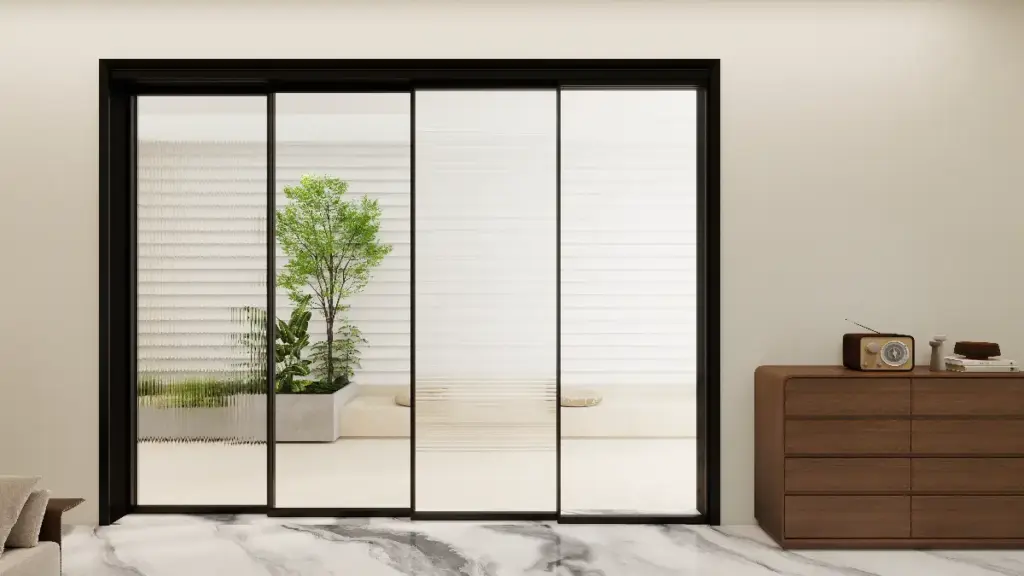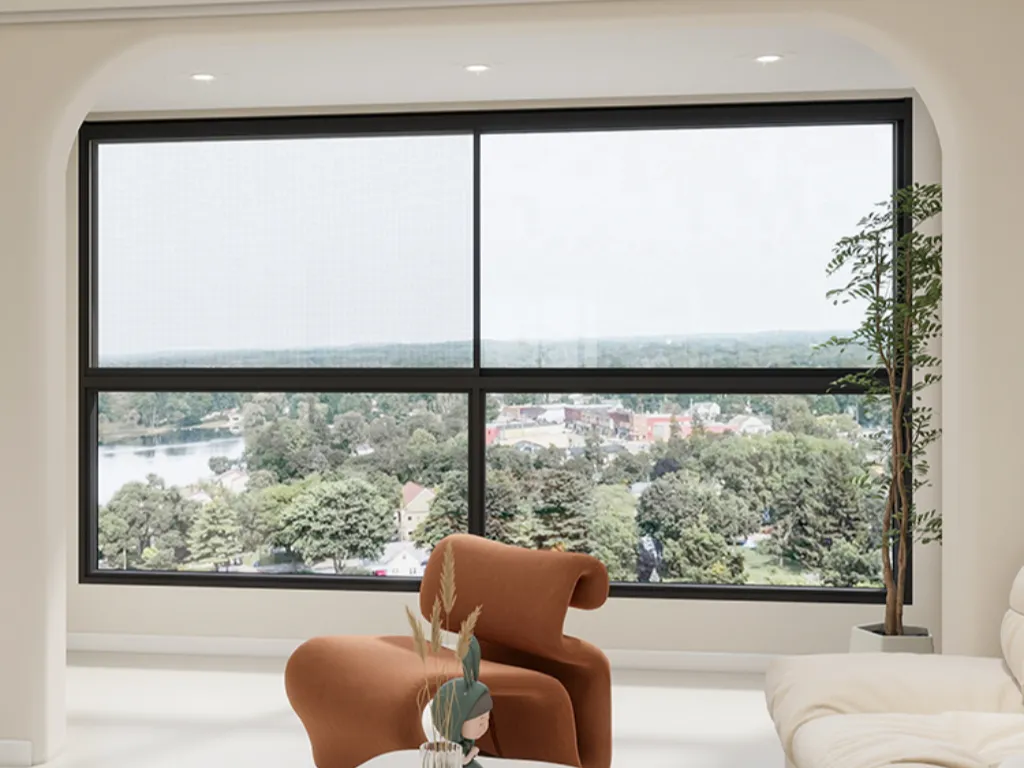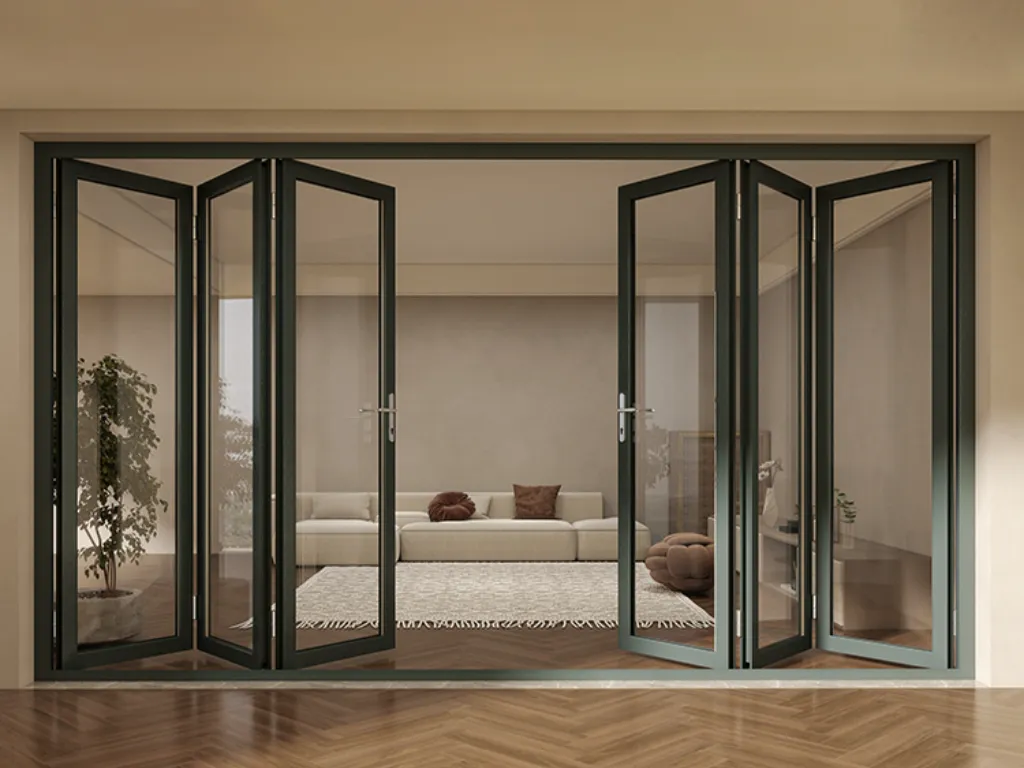
Balancing expansive glass views with extreme weather resilience is a persistent challenge for modern building envelopes. While standard sliders often compromise on airtightness or structural integrity, high-performance projects demand a more sophisticated engineering approach to handle massive spans and harsh environments.
This technical guide explores why aluminum lift and slide door systems are the definitive solution for architects and developers. We break down the innovative hardware, superior compression sealing, and long-term value that allow these systems to outperform conventional sliding doors in efficiency, durata, e funzionamento senza sforzo.
How Lift and Slide Systems Achieve Superior Sealing
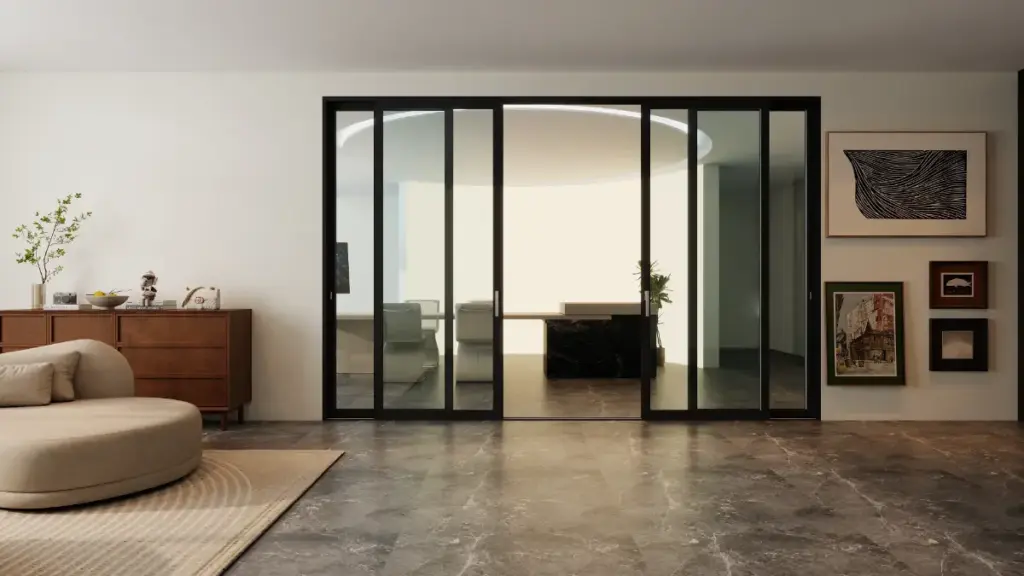
A differenza di traditional sliding doors that rely on friction-heavy brush seals, lift-and-slide systems achieve superior performance by decoupling movement from sealing. This is handled through a two-stage mechanical process:
- The Lift Phase: Turning the handle engages a cam-driven carriage that physically lifts the entire sash off the sill. This creates a 3/16” clearance, allowing massive panels to glide without seal drag or gasket wear.
- The Compression Phase: Quando è chiuso, the hardware lowers the sash, using its own weight to drive it against dense EPDM compression gaskets. This creates a continuous, high-pressure perimeter seal similar to a high-performance hinged window.
By replacing bypass brushes with ASTM C864-compliant elastomeric seals, these systems virtually eliminate air infiltration (down to 0.02 cfm/ft²) e penetrazione dell'acqua (fino a 12.11 psf), making them the gold standard for high-wind and coastal exposure.
Advanced Hardware: Engineering for 1,300 lb Panels
The true differentiator of a lift-and-slide system lies in its heavy-duty hardware. To manage panels up to 16 feet high and 1,300 libbre, the engineering must shift from simple friction to mechanical leverage.
Integrità strutturale: Frames are constructed from 6063-T5 thermally broken aluminum with 24–35 mm polyamide strips. This prevents “thermal bowing”—a common failure in standard sliders where temperature differentials cause the frame to warp and the seals to leak.
Precision Ball Bearings: Utilizing tandem roller kits and stainless steel wheel mechanisms to distribute extreme weights evenly.
Leverage Actuation: Ergonomic handles act as a force multiplier. A simple 180° turn provides the mechanical advantage needed to lift the sash, making massive glass walls feel “feather-light.”
Quantifying Performance: Air, Water, and Thermal Data
The technical superiority of aluminum lift-and-slide systems is validated through standardized testing. Unlike standard sliders that rely on “friction-fit” brush seals, these systems use active gasket compression to achieve performance metrics comparable to high-end fixed glazing.
| Performance Category | Technical Specification & Risultato | Relevant Standard / Nota |
|---|---|---|
| Air Infiltration | As low as 0.02 – 0.07 cfm/ft² at 1.6–6.2 psf | ASTM E283 (Ultra-Airtight) |
| Resistenza all'acqua | 0.0 leakage at 8–12.11 psf pressure | ASTM E547 / E331 |
| Pressione di progetto (DP) | Fino a +85 / −85 psf (Hurricane Rated) | AAMA CW-PG60-SGD |
| Isolamento termico | Whole-door U-value down to 1.5 W/m²·K | NFRC / Polyamide Thermal Break |
| Glazing Efficiency | NFRC U-factor ~0.33 (1″ IGU), 0.29 (Argon) | Center-of-glass U-factor: 0.24 |
| Acoustic Rating | Sound reduction up to 43 – 45 dB | ASTM E90 / STC Rated |
| Corrosion Protection | Tested for 3,000 ore salt spray | ASTM B117 (Coastal Grade) |
| Gasket Material | Dense EPDM compression glazing gaskets | ASTM C864 Compliance |
The Mechanism Behind the Numbers: Gasket Compression
The impressive data above is not just a result of high-quality materials, but of the active sealing geometry unique to lift-and-slide systems:
Longevity of Performance: Because the gaskets are only compressed when the door is closed (and lifted clear during movement), they do not suffer from the “friction-wear” that typically degrades the energy efficiency of sliding doors within the first 2-3 anni.
Active vs. Passive Sealing: While standard sliders use passive brush seals (weatherstripping) that allow air to “leak through” under pressure, lift-slide hardware drives the sash downward and inward against the frame.
Thermal Bridge Mitigation: By utilizing 24-35 mm Polyamide strips and multi-chambered profiles, these systems prevent the “thermal bowing” effetto, ensuring that the gaskets remain under uniform compression even when there is a 40°C temperature difference between inside and outside.
Premium Aluminum & Aluminum-Wood Solutions
Aesthetics and Integration: Designing for the “Seamless” View
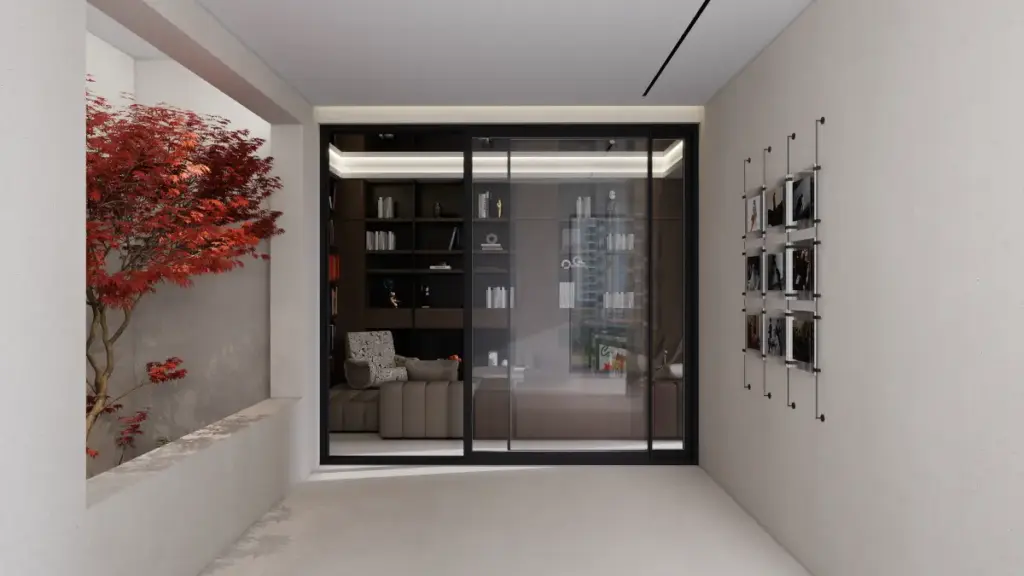
The mechanical strength of lift-and-slide systems isn’t just for performance—it’s the enabler of modern, minimalist architecture. By supporting heavier glass, these systems allow architects to push the boundaries of transparency.
Maximized Glazing and Slim Profiles
Standard sliding doors are limited by the weight their rollers can carry, often requiring extra mullions that break the view.
- Massive Spans: Support for panels up to 14–16 feet high allows for floor-to-ceiling glass that replaces entire walls.
- Narrow Sightlines: High-strength aluminum frames provide the necessary structural rigidity with a smaller footprint, maximizing the glass-to-frame ratio.
The True Flush Threshold (Zero-Barrier Design)
One of the most sought-after features in high-end projects is the seamless transition between indoor and outdoor spaces.
- Sunk Track Options: By integrating 304 stainless steel tracks (1″ or 1.5″ depth) directly into the finished floor, the system achieves a near-level transition.
- Accessibilità: Questi “barrier-free” thresholds meet ADA and Part M requirements without compromising the door’s ability to seal against driving rain—a feat nearly impossible for standard sliders.
Value Proposition: the ROI of Lift-and-Slide
Architects and developers often face the question: “Is the 30–50% price premium over standard sliders justified?” When analyzing the lifecycle cost and property value, the answer for high-performance environments is a resounding yes.
Initial Investment vs. Long-Term Value
| Feature Comparison | Standard Sliding Doors | Aluminum Lift-and-Slide |
|---|---|---|
| Initial Cost (Est.) | Baseline ($) | 30% – 50% Higher Premium |
| Price Benchmark | ~$1,000 – $1,200 per linear ft | $1,500 – $4,000 per linear ft |
| Prestazioni termiche | U-values: 2.0 – 3.0 Con/(m²·K) | U-values: 0.8 – 1.2 Con/(m²·K) |
| Max Panel Capacity | 100 – 200 kg | < 2.5 m wide | Fino a 600 kg | 3.5 m+ wide |
| Hardware Complexity | Simple friction rollers; brush seals | Cam-driven lift carriages; EPDM compression |
| Lifecycle Value | Higher HVAC loads; seal wear | Low HVAC load; 25+ year durability |
Why it’s the Definitive Choice
- Reduced HVAC Loads: In climi estremi, the superior U-values and airtightness (0.02 cfm/ft²) significantly lower monthly operational costs.
- Durability in Harsh Environments: In coastal or high-wind zones, standard doors often require replacement or expensive repairs after major weather events. Lift-and-slide systems are built for resilience.
- Market Premium: For luxury residential or Class-A commercial projects, IL “feather-light” operation of a 1,300 lb door provides a tactile sense of quality that directly translates to higher property valuations.
When to Choose Lift and Slide for High-Performance Environments
Aluminum lift-and-slide systems are not just an upgrade; they are a necessity for projects where environmental demands exceed the physical limits of standard sliding doors. Use the following criteria to determine if your project requires this high-performance solution.
Extreme Coastal Exposure: Projects in high-wind zones requiring superior protection against salt-laden air, wind-driven rain, and high design pressures.
Massive Architectural Spans: Openings requiring panels up to 14–16 ft high or weights exceeding 1,300 lb that must remain operable by a single user.
Stringent Energy Targets: Passive House or LEED-certified projects where air infiltration must be kept as low as 0.02 cfm/ft².
Urban Acoustic Control: High-density developments where an STC rating of 43-45 dB is required to mitigate external noise while maintaining large glazed areas.
Considerazioni finali
Aluminum lift-and-slide systems represent the pinnacle of fenestration technology. By decoupling the sliding and sealing functions, they solve the age-old compromise between expansive views and extreme weather protection. While they require a higher upfront investment, la loro durabilità, Efficienza energetica, and uncompromising aesthetics make them the strategic choice for architects and developers who refuse to settle for “standard.”
A Opuo, we specialize in engineering high-performance aluminum door and window solutions that push the boundaries of modern design. Our precision-engineered systems are meticulously crafted to withstand global climates—from corrosive coastal salt spray to extreme thermal shifts. Explore OPUOMEN’s customizable, certified solutions today to elevate your next high-performance project with unwavering quality.
Domande frequenti
What is the typical U-Value achieved by a lift and slide system?
Typical U-values for aluminum lift and slide door systems range from 0.33 A 1.7 W/m²K for whole door (Uhm) prestazione, depending on frame design, glazing, and edge seals. High-performance models can achieve as low as 0.33 (IP units) O 0.8 W/m²K.
How does the operation differ when the door is in the “lifted” position?
In the “lifted” position, the handle rotates the gear, decompressing gaskets and raising the panel slightly on its roller carriages. This reduces friction, allowing the panel to glide with very low operating force, even with sash weights up to 880 libbre (≈400 kg). In the lowered/closed position, the panel drops, compressing weather-seals and engaging multi-point locks for maximum air/water tightness and security.
Can a lift and slide door be locked in a partially open position for ventilation?
SÌ. Many aluminum lift-and-slide door systems offer dedicated “night ventilation” or micro-ventilation hardware. When specified, this allows the active panel to be mechanically secured in a slightly open position for controlled natural ventilation.
What is the longevity difference between standard sliding rollers and lift-and-slide hardware?
Lift-and-slide hardware offers significantly greater longevity due to minimal friction and wear during operation. Rollers are rated for hundreds of thousands of cycles, providing decades of smooth operation with minimal maintenance, unlike standard sliding doors that often require frequent roller replacements and adjustments.