콘텐츠로 건너 뜁니다

A window and door submittal package includes shop drawings, schedules, 제품 데이터, test reports and samples for project review before production. It confirms the approved product configuration, supports inspection and keeps manufacturing aligned with project requirements.
Missing details or mismatched references can delay approval. This guide covers the key documents in a submittal package and the common issues that lead to review comments.
What a Window Submittal Package Actually Is
A submittal is not a quotation. A quotation prices a product; a submittal is the record a reviewer signs, and it becomes the yardstick for the finished job.
Three documents travel on a fenestration order, and buyers mix them up. The specification states what the project wants. The quotation states what one supplier will build for what money. A window submittal package states what will actually be installed, in a form an architect, a curtain-wall consultant and the local building department can each mark up.
The distinction matters because the submittal outlives the purchase order. 승인되면, it is the reference for fabrication, for the labels that arrive on the glass, and for the field check at the end. The number printed on the glass and the number in the approved pack have to be the same number.
That is the commercial reason this document set deserves more care than a spreadsheet. When a build changes after a product is certified, the ratings that carried the file no longer describe what ships. Freezing the window submittal package before production costs less than negotiating it after the container ships.
On our side of the transaction, the package is also the trigger for the clock. Typical lead time is 15-25 도면 및 샘플 확인 후 며칠, 수량 및 구성에 따라. Drawings and samples are the gate before manufacturing starts.
Cover Sheet and the Review Log
The cover sheet is the index. 그것 없이는, a reviewer cannot tell which drawing answers which schedule line, and the whole pack gets read as unverified.
Every window submittal package we prepare starts with a transmittal page. It carries the project name, the purchase order or inquiry reference, the product series, a revision number and date, and a named contact. Below that sits a list of enclosed sheets with a status against each one. Those six fields cost nothing and prevent the most common return: a reviewer who cannot say which sheet is current.
Revision blocks belong on every drawing in the pack, not only the first one. A revised elevation with an unchanged section drawing is a contradiction waiting to be found. In our own files, a label that stops matching the submittal behind it nearly always starts with a change nobody wrote into a revision block.
We assemble the pack in the order the documents constrain each other. The table below maps that sequence and states what each sheet has to prove.
| Document | What It Proves |
|---|---|
| Shop drawings | The assembly to be fabricated |
| Window schedule | Every opening, counted and sized |
| Product data | The series exists as drawn |
| Test reports | Structural and weather performance |
| Energy label data | Certified whole-window ratings |
| 샘플 | 마치다, glass and hardware are real |
| Warranty terms | What the supplier stands behind |
Shop Drawings Carry the Approval
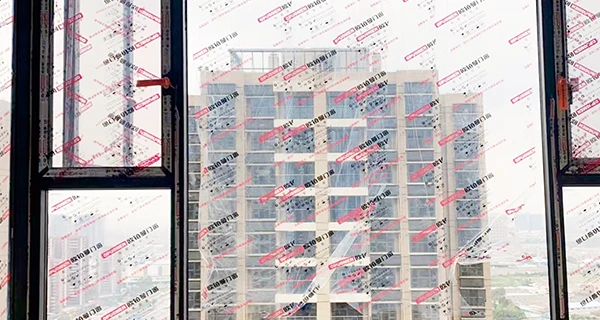
Shop drawings are the sheets everything else is indexed to. If a number is not on the drawing, the rest of the package is arguing with itself.
A shop drawing is the manufacturer’s version of the design intent, drawn from the profile system that will actually be extruded. On our side of the transaction it is the controlling document, which is why our team works from your drawings and standards, 각 배치가 귀하가 승인한 샘플과 일치하도록. 우리의 drawing and technical support covers CAD drawings, shop drawings and section details for exactly this step.
What a Shop Drawing Must Show
Four views and three callouts carry an aluminum window or door approval. Elevations, both faces where the hardware differs. A vertical section through the sill and head. A horizontal section showing the meeting stile. Frame and sash profiles at a scale that lets a reviewer count chambers and read the thermal break.
Then the callouts: wall thickness on the visible face, glass build quoted exactly as the certificate writes it, and the hardware set with operation arrows. Our own product pages publish the number a drawing has to repeat. The F16 casement lists a 3.0 mm profile wall inside a 116 mm 4챔버 프레임; 그만큼 127-90 lifting slider states 2.5 mm. A section drawing that gives no wall thickness proves nothing about stiffness.
Finishes need a standard, not a color name. The AAMA coating specifications are performance tiers, and exposure sets the tier. 아마마 2603 is the basic tier, measured against one year of Florida exposure. 아마마 2604 serves moderate climates, 그리고 AAMA 2605 is the superior tier: ten years of exposure, specified for coastal, industrial and high-UV work. Two quote sheets that both say “dark bronze” are not comparable until one of those numbers appears.
Where Shop Drawings Get Returned
The five returns we see most often are size, 유리, 하드웨어, interface and revision. 크기: the drawing shows an opening larger than any tested specimen in the report. 유리: the drawing quotes a build the certificate does not cover. 하드웨어: the set is named but not drawn, so the load path is invisible.
Interface: the anchorage, shim and sealant detail at the wall is missing, which is where water actually enters. Revision: the drawing is marked as a reissue while the section is still on the first issue. Our own drawing-review rule is blunt about this last one: no sheet goes out with a revision block that disagrees with its neighbor.
Product Data and the Window Schedule
The schedule lists every opening in the building. Product data proves each line on it is a system a factory actually builds.
Schedules fail in two directions. Too thin, and the fabricator guesses. Too fat, and the reviewer stops cross-checking. The workable middle carries the columns below, 이 순서대로, because each column is checked against a document in the pack.
| Schedule Column | Why a Reviewer Needs It |
|---|---|
| Mark and type | Ties the line to a drawing tag and a shop drawing |
| Quantity | Checks packing lists and label counts at delivery |
| 크기, width by height | Tests the opening against the largest approved specimen |
| Series and profile | Names the system carrying the rating, not a look |
| Glazing build | Copies the certificate wording, pane by pane |
| Operation and hardware | Sets load path, egress and hinge schedule |
| Finish standard | Fixes coating durability rather than a color word |
| Certificate reference | Lets inspection reconcile the label without a site visit |
Product data sheets then carry the burden the schedule asserts. For each series, the sheet lists profile dimensions and chamber count, extruded alloy and surface treatment, thermal-break geometry, and gasket type. Then the tested size range and the glazing options that hold a certification. Browse our aluminum window series and the same fields are the ones we quote against.
A data sheet that lists every option in the catalog is weaker than one that lists the three the project may buy, because rating data is option-specific.
Test Reports and Performance Grades
A test report proves one assembly at one size, under one standard. Read the specimen, the standard and the pressure numbers before trusting the cover page.
공기, water and wind load reports are the core of a North American submittal. We provide CE, ISO 9001 and performance test reports for air, water and wind load on selected systems. The first question back is always the same. Which market, and which standard does the project require.
In the United States and Canada that question usually lands on NAFS, the joint specification published as AAMA/WDMA/CSA 101/I.S.2/A440. Its useful idea is the performance class, a level of performance a specifier picks according to climate, height of installation and building type. Products inside one class have all been evaluated against the same minimum criteria, which is what makes two suppliers comparable.
The applicable NAFS edition sets minimum requirements for each performance class, including Performance Grade (PG), design pressure, structural test pressure and water resistance. 예를 들어, Class R starts at PG 15, LC at PG 25 and CW at PG 30, with corresponding minimum design pressures of 720 아빠, 1,200 Pa and 1,440 아빠. Confirm the required class and grade against the project specifications and the specifying engineer’s requirements.
What a Test Report Page Must Carry
Six fields make a report usable: the laboratory, the report number, the tested specimen dimensions, the standard and its edition, the pressures reached in each direction, and the date. A page missing any of those six is a marketing document.
ASTM E330 하에서, the chamber applies a uniform load of 1.5 times the design pressure, from the exterior and then the interior, held for ten seconds each. Permanent deflection past the class limit fails the specimen, and the unit must still open and close. Specify against the design pressure, not the higher test pressure.
The load runs in two directions, positive from outside and negative from inside, so ask for both readings in psf or Pa. A single figure hides the weaker one. Size coverage gets the same treatment in our review. A report for a 1.2 m by 1.2 m specimen does not automatically cover a 2.4 m 슬라이더. Confirm the permitted size range and configuration in the test report or certification record.
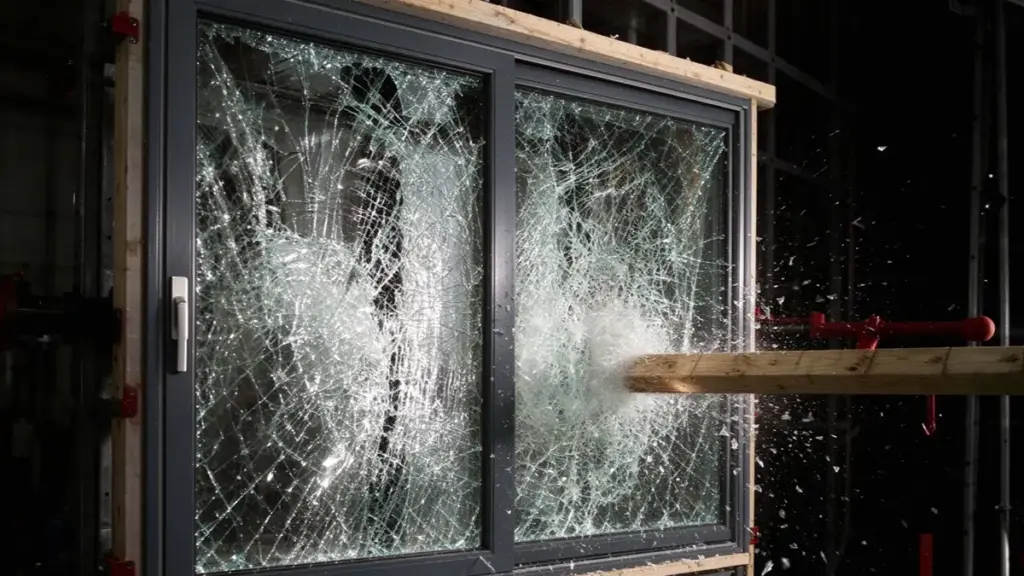
Coastal projects involve specific approval requirements. 플로리다에서, products may require a Miami-Dade Notice of Acceptance (남자 이름) or Florida Product Approval. Testing can involve TAS protocols, ASTM E1886 and ASTM E1996. Intertek’s hurricane testing services cover impact and cyclic pressure testing.
In the impact test, a 2×4 projectile strikes specified locations before the assembly undergoes 9,000 pressure cycles. Check which approval route the certificate in your submittal package follows. 우리의 가이드 허리케인 영향 창 등급 explains how to read these certificates and check public registers.
그림 보내기, 규모와 목표 시장. We return shop drawings, schedule lines, performance data and certificate references you can submit as one file.
ISO 9001 인증됨 | 60,000 m² 공장 | 15-25 하루 리드타임
NFRC Ratings and Glazing Data
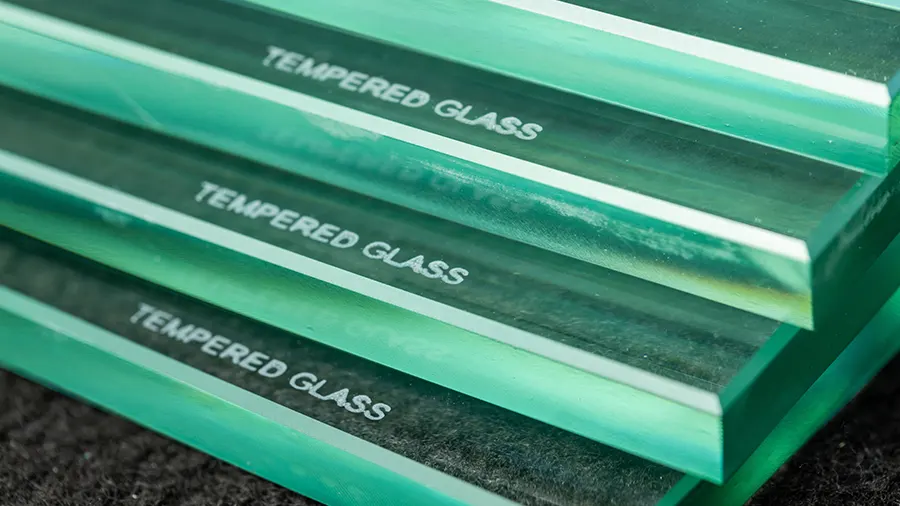
Energy numbers only count when they are certified for the exact build on the drawing. A value for the glass alone is not a certified rating for the unit.
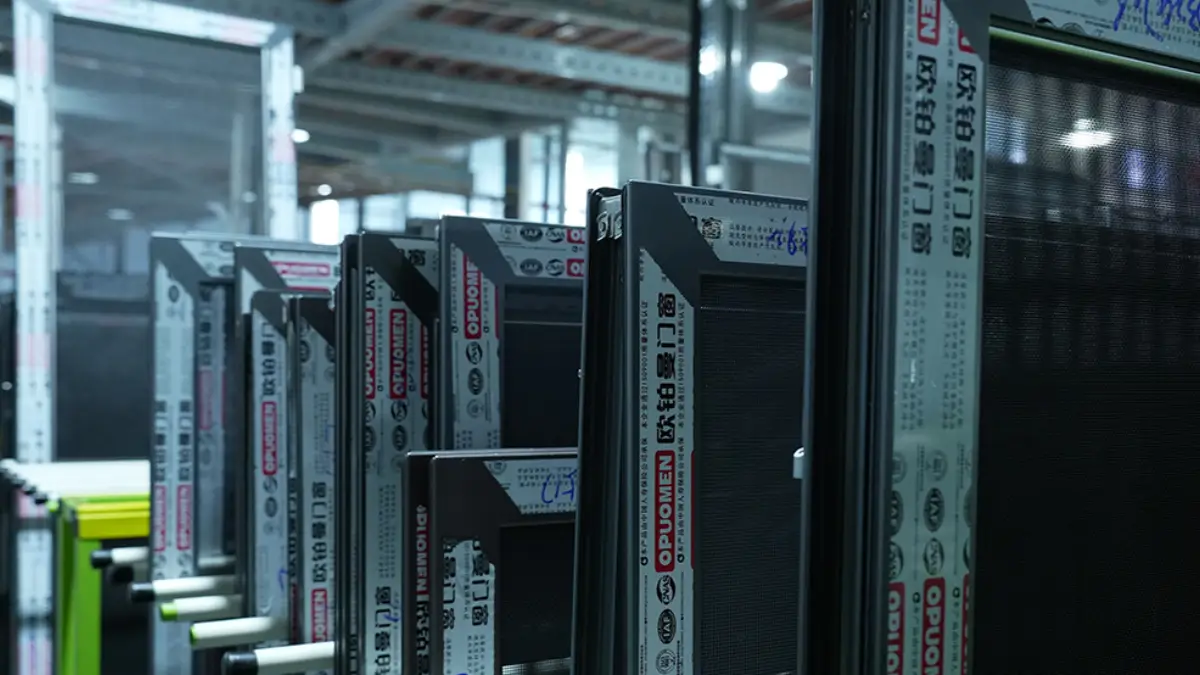
The National Fenestration Rating Council certifies the window, not the pane. Under NFRC residential certification, computer modeling sets U-factor, SHGC and VT for a product line, and physical testing under NFRC 102 validates those models. Every laboratory in that chain must hold NFRC 701 accreditation, and an independent inspection agency reviews the reports and audits the plant before NFRC certifies the product.
Certified products are then listed in the public directory, and the unit must display the label carrying those ratings. Read that label as the physical copy of the submittal data: it is the version a site check can see when the pack is not on the scaffolding.
Reading a Certified Record Line by Line
Open any public entry in the NFRC certified product directory and read it field by field. This record for a 105 tilt-and-turn aluminum window with thermal breaks shows what one line of certified data actually looks like. The record prints bare numbers, so the last column gives each unit and scale.
| Record Field | Value on This Record | Unit and What It Measures |
|---|---|---|
| 시리즈 | 105 틸트 앤 턴 윈도우 | As filed. The record does not state profile depth. |
| Operator type | DATT | NFRC code for a dual-action window, the directory term for tilt and turn. |
| Air leakage | Not more than 0.3 | Cubic feet per minute per ft² of window area, 테스트를 거친 곳 75 아빠. Model energy codes cap it at 0.3. |
| U-인자 | 0.20 | Btu per hour through one ft² per °F of difference. Whole-window heat loss, so lower is better; NFRC values run 0.20 에게 1.20. |
| SHGC | 0.13 | Share of solar heat admitted, 0 에게 1. Lower blocks more sun. |
| 가시투과율 | 0.13 | Share of daylight admitted, 0 에게 1. Higher is brighter. |
| Condensation resistance | 71 | Scored 1 에게 100, higher resists condensation. An optional rating, not a code requirement. |
| Certified products | 하나, in a triple-glazed argon build with two low-E coatings | One product code and one glazing build carry every number above. |
Two readings matter. 첫 번째, the certified record names frame and glass in one line: aluminum with thermal breaks, beside a 6 mm low-E, 아르곤, 6 mm low-E, 아르곤, 6 mm clear build. That entry lists one certified product. 두번째, the key printed on the same page states that a dash in a rating column means there are no certified values for that individual product. Both readings explain why a series name proves nothing without the build quoted beside it.
포장 목록의 각 제품 라인에 대해 일치하는 NFRC 인증서 번호를 나열하도록 공급업체에 요청하세요., 따라서 제출물은 현장 방문 없이 실제 라벨과 일치합니다.. 우리의 분석 U-요인 창 설명 covers where those numbers come from and how they read against climate zones.
샘플, 보증, and Rejection Triggers

A window submittal package gets a project approved on paper. The sample is what finished units get compared against once the paperwork is over.
Our support package names three physical confirmations: 제품 샘플, color samples and glass options with hardware confirmation. In the sample-approval stage we lock down a physical corner sample, the thermal-break cross-section, the spacer type and the hardware set. That gives the inspector and the quality team one physical reference object.
Mock-ups are the heavier cousin of the sample, and a project decides whether it needs one. If the project authority asks for one, settle three points in writing before it is built: the scope, the acceptance criteria, and what happens to the units after review. A mock-up built against a drawing nobody signed is an expensive way to learn that the pack is not frozen.
Who Pays for the Sample and the Mock-Up
On our side, MOQ starts from ten sets for custom doors, and sample or small trial orders may be available on request. The production clock quoted above starts only after drawing and sample confirmation, which is why the sample stage belongs in the pack rather than in an email thread.
Warranty closes the file. We provide a ten-year warranty on frame structure and finish, with spare-parts support for the doors we supply. One limit belongs in the same conversation, because it shows up in returns. A certified record describes one product code and one build; change a profile or a fastener set and the record no longer describes what shipped.
Six triggers account for most of the rejections we meet, and all six are avoidable inside the pack. A label pulled off the glass before the units are signed for. A label that does not match the approved submittal.
Ratings taken from an expired, unaccredited or preliminary manufacturer estimate. Ratings copied from the glass alone, not the certified rating for the assembled unit. A test specimen smaller than the ordered unit. A configuration change never written into a revision block.
자주 묻는 질문
What documents are in a window and door submittal package?
The pack carries a cover sheet with revision data, 상점 그림, and a window and door schedule. Then product data, 공기, water and wind load test reports, NFRC label data, sample records, and warranty terms. Each sheet indexes back to a schedule line, so a reviewer can trace any number to a document.
Who prepares the submittal on an imported order?
The manufacturer prepares the window submittal package: 상점 그림, product data and test records. The buyer or the general contractor assembles them against the schedule and files the pack. On our orders the factory issues drawings and data against the buyer’s drawings and standards, so the assembly step happens on the project side.
Can a shop drawing replace test reports?
아니요. A shop drawing states what will be built; a test report states what a laboratory proved, on a specimen of a given size, under a named standard and edition. Both are approved separately, and neither substitutes for the other. If an opening exceeds the tested specimen, the drawing is correct and the report still fails.
Does one NFRC certification cover every glass option in a series?
항상 그런 것은 아니다, and you can check. A directory record lists certified products one build at a time, and a dash in a rating column means there are no certified values for that individual product. Some records carry a single certified build for an entire series, so confirm the exact pane, coating and gas fill beside the series name.
What happens when a site substitution changes the build?
When the glass on site no longer matches the certified record, the ratings in the approved pack describe a product that was not installed. A certified record covers one product code and one build, so a profile or fastener change makes it a new product on paper. Freezing the specification before production costs less than negotiating it after shipment.
When does production start after the package is submitted?
After drawings and samples are confirmed, not after the purchase order is signed. Typical lead time is 15-25 days following drawing and sample confirmation, 수량 및 구성에 따라. Approval timelines belong to the project review chain. Build the reviewer’s turnaround into your own schedule.