Specifying a window system that balances aesthetics, performance, and operational efficiency is a key challenge for business decision-makers in commercial and multi-family projects. Beyond just providing a view, modern designs demand enhanced security, energy optimization, and low maintenance, all within stringent regulations.
This guide explores the advanced features of aluminum tilt-and-turn windows, from multi-point locking systems to exceptional thermal performance. Learn how these windows deliver unmatched security, energy efficiency, and ease of maintenance, especially in high-rise applications.
What Are Tilt-and-Turn Windows and How Do They Work?
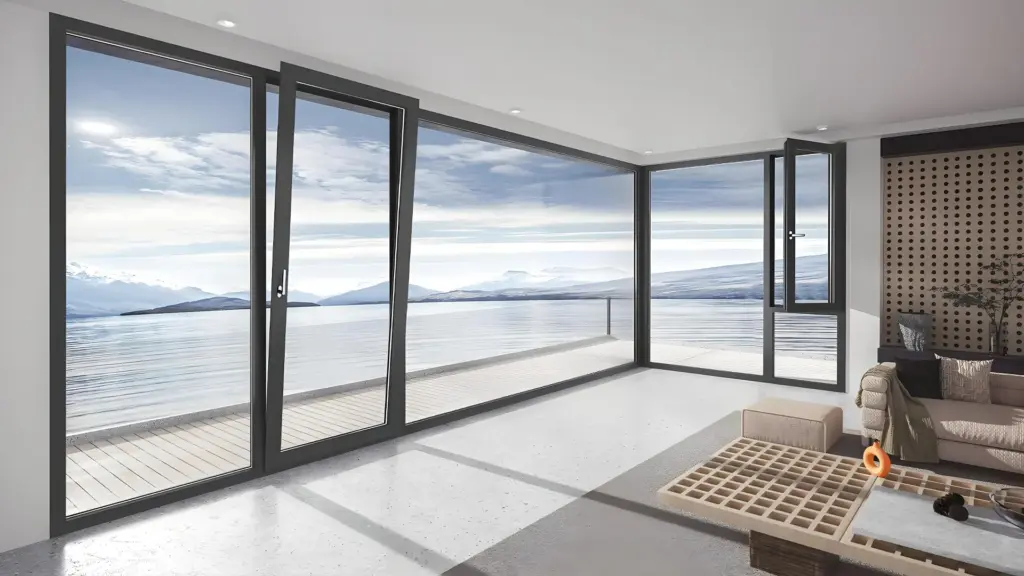
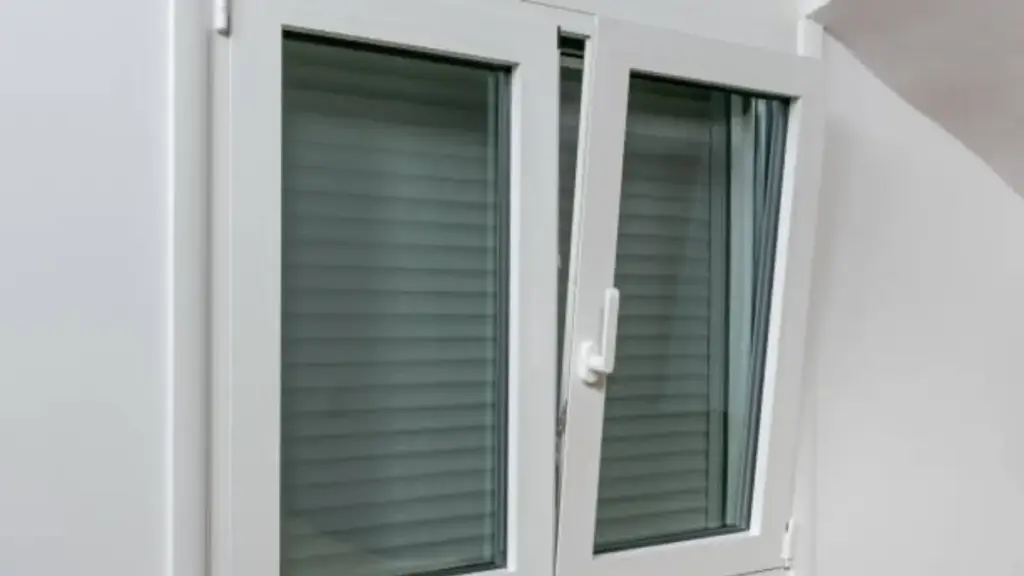
Tilt-and-turn windows are versatile inward-opening units that combine two operating modes in a single sash.
- The ‘turn’ mode allows the sash to swing inward on vertical hinges for a full opening, enabling easy cleaning from the interior and unobstructed egress.
- The ‘tilt’ mode opens the top of the sash inward by a controlled 130 mm (≈5 inches), providing secure, passive ventilation without compromising safety.
Both modes are operated by a single multi-position handle that engages a concealed tilt-and-turn hardware system. Rotating the handle approximately 90° activates full turn mode, while roughly 180° engages tilt mode.
Key features include multi-point locking systems around the sash perimeter and robust, high-capacity hinges, ensuring enhanced security, airtightness, and structural integrity. This design is especially beneficial for high-rise and multi-family buildings, where external access for cleaning or maintenance is limited.
How Does Tilt Mode Compare to Full Casement for Ventilation?
For modern buildings, choosing the right ventilation often comes down to comparing tilt-and-turn windows with full casement windows, as each offers distinct airflow and security benefits.
Controlled Airflow
Tilt-and-turn windows provide controlled, passive ventilation through a small top opening, typically around 150 mm (≈6 inches). This allows continuous air exchange while limiting heat loss and drafts, making it ideal for multi-family and high-rise buildings where security and energy efficiency are critical.
Some systems offer a micro-vent setting of 10 mm (≈3/8 in) for very slow, continuous airflow, suitable for overnight use. Tilt mode’s restricted opening ensures secure partial ventilation without compromising safety.
Rapid Airflow
In contrast, full casement windows, or the turn mode of tilt-and-turn windows, open the sash inward up to 90% of its width, delivering rapid, high-volume airflow. This is excellent for quick purge ventilation or smoke clearance, but it provides less control over heat loss and security compared to tilt mode.
Tilt mode is most commonly used for everyday ventilation, offering energy-efficient, secure airflow. Full casement or turn mode is best for occasional, high-volume ventilation, prioritizing speed over control.
What Security Features Set Tilt-and-Turn Windows Apart?
Aluminum tilt-and-turn windows deliver robust security while allowing controlled ventilation through tilt mode. Their strength comes from multi-point locking, reinforced frames, and advanced safety glass, combined with precise hardware that secures the sash at all points. The controlled tilt opening provides airflow without compromising safety.
| Security Feature | Key Specification / Description | Security Contribution |
|---|---|---|
| Multi-Point Locking Systems | At least 3 locking points or 5 metal locking pins securing the sash at multiple frame locations. | Prevents prying and forced entry by distributing resistance across the entire window frame. |
| Reinforced Frames & Sashes | Constructed with steel or aluminum materials for enhanced structural strength. | Increases impact resistance and structural integrity against forced breaches. |
| Security Glass | Laminated or toughened glass with a minimum thickness of 4mm or 5mm. | Resists shattering, holds fragments together upon impact, and deters forceful break-ins. |
| Restricted Tilt Opening | 10-15 cm (4-6 inches) opening range for ventilation; micro-ventilation gap of 1-2 mm. | Allows secure ventilation without providing sufficient space for unauthorized human access. |
| Integrated Locking Handle | Engages multiple locking points (top, bottom, sides) with a single, intuitive operation. | Ensures even force distribution and a tight seal, eliminating perimeter weak points for intruders. |
This combination of durability, secure locking, and controlled ventilation makes tilt-and-turn windows ideal for high-rise and multi-family buildings, a performance focus reflected in Opuomen’s aluminum window systems.
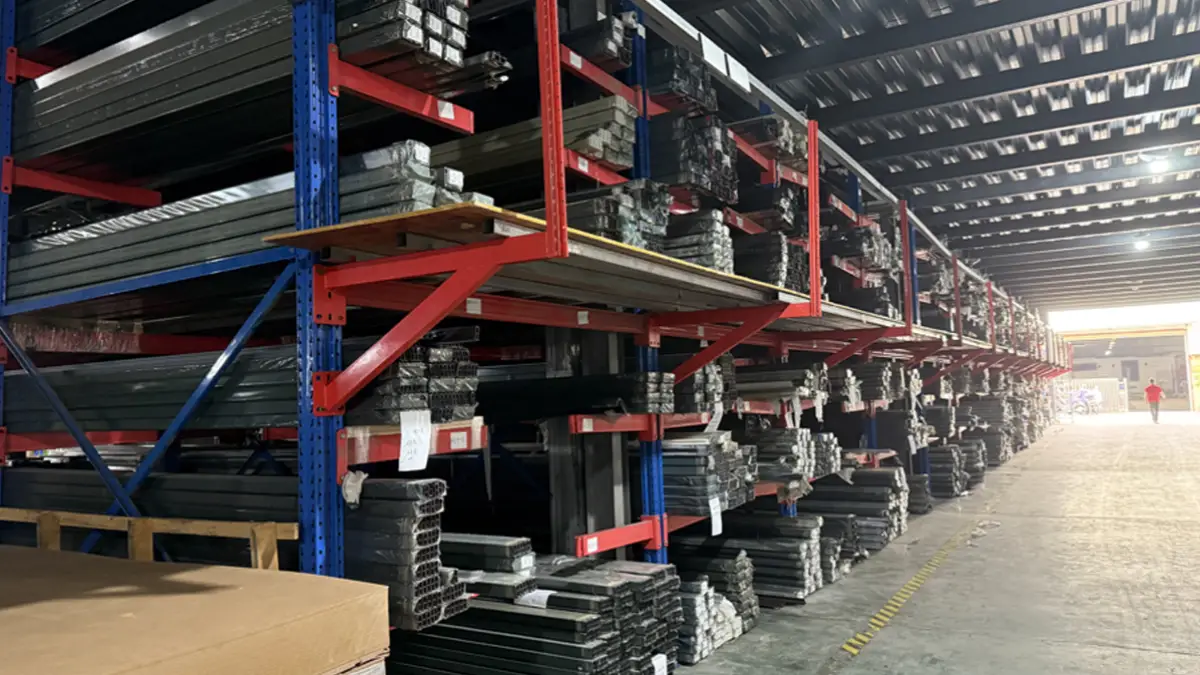
Unlock Superior Performance with OPUOMEN Window Systems
How Easy Is Maintenance and Cleaning for High-Rise Applications?

In high-rise buildings, ease of cleaning and safe maintenance are constant concerns, especially where external access is limited or costly. Tilt-and-turn windows are designed to simplify both.
Inward-Opening Design for Safe High-Rise Cleaning
In turn mode, the sash opens fully inward, allowing both the interior and exterior glass surfaces to be cleaned safely from inside the building. This eliminates the need for ladders, scaffolding, or exterior access equipment, significantly reducing safety risks and maintenance costs.
When positioned in tilt mode, integrated safety stay-arms stabilize the sash during cleaning and help prevent sudden movement or slamming, further improving user safety.
Recommended Maintenance Schedules
- Regular cleaning of glass is recommended 2 times per month using tepid water and non-aggressive agents; avoid standing on frames.
- Lubricate hinges, locks, and mechanisms 2 times per year with spray lubricant; inspect hardware quarterly for wear.
- Every 6 months for painted aluminum surfaces
- Every 90 days for stained finishes; do not power-wash.
What Makes the Hardware of Tilt-and-Turn Windows Unique?
Tilt-and-turn windows are equipped with high-performance hardware designed to support large sash sizes, heavy weights, and demanding environmental conditions. Their multi-functional operation combines tilt ventilation and full turn-open capability in a single mechanism, offering both security and flexibility.
| Component/Feature | Specification/Capability | Significance/Details |
|---|---|---|
| AGB ø 34/4 mm fittings | Supports maximum sash weight of 278 lbs (130 kg) | Ensures robust load-bearing for heavy single and double-sash applications. |
| Roto AL Designo | STS 180° concealed hinge | Handles sashes up to 176 lbs (80 kg) with 180° opening; 304 SST; 14 mm groove profiles. | Provides aesthetic integration, smooth function, and enhanced corrosion resistance for aluminum systems. |
| DIN 18357 standard | German standard for hardware quality and material corrosion resistance. | Requires fasteners through at least 2 PVC walls, guaranteeing secure and durable installation. |
| Sash dimensions | Width 480-1000 mm, height 595-2600 mm | Accommodates a wide range of window sizes, offering design flexibility. |
| Tilt position angle | Standard 15° for ventilation gap | Allows for controlled and secure ventilation without full opening. |
| Design Pressure (DP) ratings | 80 psf (residential, AAMA R80); 90 psf (commercial, AAMA C90), tested at 1.5 times DP. | Indicates high structural performance and resistance to extreme weather conditions. |
| Integrated hardware restrictors | ‘Turn Only’ retaining restrictor and ‘AL | ELA’ opening restrictor with end position locking. | Enhances safety by preventing over-opening and providing controlled ventilation/cleaning options. |
How Do Tilt-and-Turn Windows Perform in Terms of Thermal and Acoustic Insulation?
When it comes to thermal and acoustic insulation, tilt-and-turn windows stand out for their exceptional performance. Designed for high efficiency, these windows are equipped with advanced sealing systems and insulation features that help maintain indoor comfort, regardless of external conditions.
Enhanced Thermal Insulation
- Full-perimeter compression seals and multi-chamber frames ensure excellent airtightness.
- Can achieve U-values as low as 0.60-0.71 W/m²·K (R-8), significantly outperforming standard windows.
Superior Acoustic Performance
- Thick insulated glazing (up to 42 mm) and advanced gasketing systems reduce noise.
- Sound reduction ratings (Rw) range from 37-42 dB, ideal for noise-sensitive environments.
Industry Standards and Certifications
- Compliant with Passivhaus, ENERGY STAR, ASHRAE 90.1, and more.
- Meets stringent criteria for energy and noise performance, making it a top choice for high-performance buildings.
When Should You Choose Tilt-and-Turn Over Traditional Casement Windows?
If long-term airtightness and security are your top priorities, tilt-and-turn windows are the better choice. They offer superior multi-point locking systems (4-12 points), far surpassing the 1-2 locks typical of casement windows, making them ideal for high-rise buildings.
If durability is crucial, tilt-and-turn windows outlast casement types. They maintain full function even after 40,000 opening cycles, while casement windows may show wear after just 10,000 cycles.
If you’re concerned about child safety or need secure ventilation, tilt mode allows for ventilation without fully opening the window, providing both airflow and security.
If you live in high-wind or exposed locations, tilt-and-turn windows are the better option. Their sash remains mostly within the frame, offering superior wind resistance.
If you need a custom solution for your project, tilt-and-turn windows can be fully tailored with various frame finishes, glass types, and locking systems—choose Opuomen for exceptional customization options that meet your specific needs.
Lastly, if easy maintenance is a priority, tilt-and-turn windows allow for exterior cleaning from the inside, making them perfect for high-rise or difficult-to-reach areas.
Final Thoughts
In conclusion, aluminum tilt-and-turn windows offer unmatched performance for modern building projects. With their dual-action mechanism, robust security features, and exceptional thermal and acoustic insulation, they outperform traditional windows. Their durability, low maintenance, and compliance with top building standards like Passivhaus and ENERGY STAR ensure long-term value and cost savings.
For architects and developers, choosing Opuomen‘s tilt-and-turn windows means investing in a secure, energy-efficient solution that meets the complex needs of commercial and residential buildings. Explore our range today to elevate your project with superior window technology.
Frequently Asked Questions
What is the lifespan of the gear mechanism in a standard tilt-and-turn window?
The gear mechanism in standard tilt-and-turn windows has a 10-year warranty as an industry standard, with corrosion resistance tested to 2,000+ hours salt spray for Activage finishes and 1,000 hours for MACO TRICOAT systems.
Can tilt-and-turn windows be made with minimalist aluminum profiles?
Yes, tilt-and-turn windows can be made with minimalist aluminum profiles, such as the VR55 system (55 mm frame width, 59 mm sash width, 1.6–2 mm wall thickness) from Vision Art Aluminium and narrow profiles (1.4–2.0 mm wall thickness) in 6063-T5/6061-T6 aluminum from Yajia Aluminum.
How does the tilt position prevent rain ingress during ventilation?
The tilt position prevents rain ingress during ventilation by creating a small inward opening at the top of the window (like a hopper), which directs airflow upward and outward while angled seals and EPDM foam weather stripping block water penetration under pressure; this design achieves industry-standard watertightness ratings up to 600 Pa per AS/NZS 4420.1.
What are the size limitations for a single tilt-and-turn sash?
Industry standard size limitations for a single tilt-and-turn sash are typically a maximum width of 60 inches (1524 mm), maximum height of 84 inches (2134 mm), and maximum sash area of 2.5 m² (approximately 27 sq ft), with a maximum weight of 130 kg (278-320 lbs) depending on the system; specific configurations limit sizes to ratios like 60 in wide x 48 in high or 40 in wide x 84 in high to ensure NAFS compliance and structural integrity.