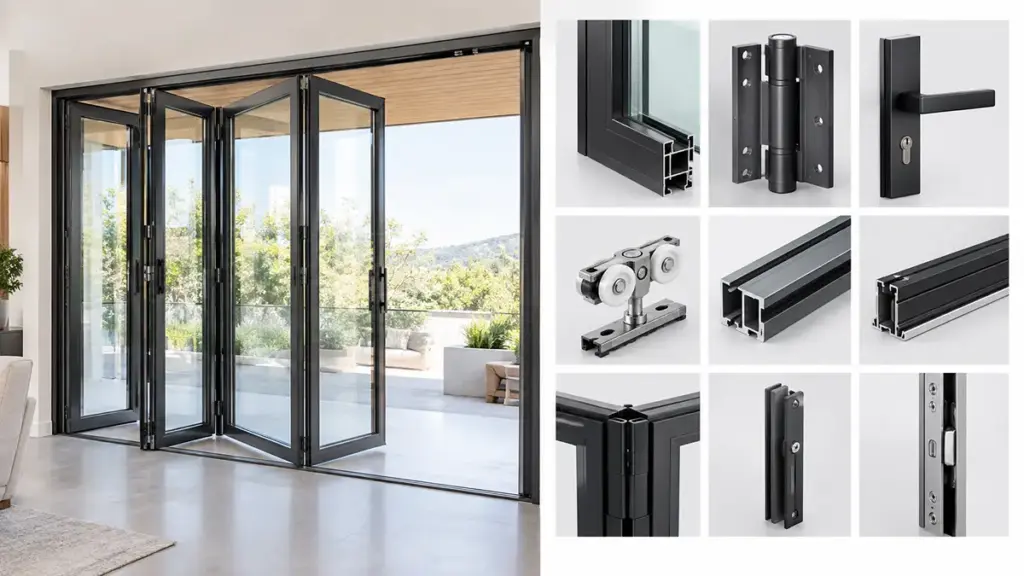
Among the most commonly specified materials in modern construction, aluminum and steel remain the leading options. Both materials have established reputations for strength and reliability, yet they serve different project objectives. Understanding the differences between steel doors vs aluminum doors helps project stakeholders select a solution that aligns with environmental conditions, design goals, operational demands, and lifecycle expectations.
This guide explores the key differences between steel doors vs aluminum doors and provides practical insights to help determine which material is best suited for specific building projects.
Aluminum Doors vs Steel Doors

Before comparing specific performance characteristics, it is important to understand the fundamental differences between aluminum and steel door systems. Each material possesses unique physical properties that influence how doors are manufactured, installed, and used throughout their service life.
Understanding the Core Material Characteristics
The discussion of steel doors vs aluminum doors begins with the materials themselves. Steel is known for its strength, rigidity, and resistance to physical impact. It has been widely used across commercial and industrial construction because of its ability to withstand demanding operational environments.
Aluminum, on the other hand, offers a combination of strength and lightweight performance. Modern aluminum door systems are engineered to provide structural stability while remaining significantly lighter than comparable steel products. This characteristic makes aluminum particularly attractive for projects that prioritize ease of operation, modern aesthetics, and design flexibility.
Both materials can be incorporated into a variety of door configurations, including entry doors, commercial storefront systems, garage doors, and customized architectural solutions. As a result, the comparison of steel doors vs aluminum doors is often less about determining a universally superior material and more about selecting the material that best supports project requirements.
Applications Across Different Building Types
The choice between steel doors vs aluminum doors frequently depends on the intended building application. Industrial facilities often prioritize durability and impact resistance, while commercial and architectural projects may place greater emphasis on appearance, natural light integration, and corrosion resistance.
Modern construction increasingly demands solutions that balance performance and aesthetics. Consequently, both aluminum and steel continue to play important roles in contemporary building design.
For project planners, understanding the fundamental strengths of each material provides the foundation for making informed specification decisions.
Structural Strength and Impact Resistance Comparison
Strength remains one of the most frequently discussed topics when comparing steel doors vs aluminum doors. While both materials can provide reliable performance, their structural behavior differs under load and impact conditions.
Why Steel Is Often Associated with Maximum Strength
Steel possesses a high strength-to-volume ratio and is widely recognized for its ability to withstand physical abuse. This characteristic makes steel doors a popular choice in environments where security, durability, and impact resistance are primary concerns.
In the comparison of steel doors vs aluminum doors, steel generally offers greater resistance to dents and deformation caused by accidental collisions or heavy use. Warehouses, industrial plants, logistics facilities, and high-traffic commercial properties often favor steel because of its robust performance characteristics.
For projects that require doors to endure frequent physical contact or challenging operating conditions, steel can provide valuable advantages.
Modern Aluminum Strength Capabilities
Although aluminum is lighter than steel, modern engineering techniques have significantly enhanced its structural performance. Advanced extrusion processes allow aluminum profiles to achieve impressive strength while maintaining reduced weight.
When evaluating steel doors vs aluminum doors, it is important to recognize that aluminum is not inherently weak. Many contemporary aluminum door systems are specifically designed for demanding commercial and architectural applications.
Aluminum’s strength is often sufficient for a wide range of projects, particularly where extreme impact resistance is not the primary requirement. In these situations, the material’s lighter weight may actually contribute to overall operational efficiency.
Matching Material Strength to Project Needs
Not every building project requires maximum impact resistance. Therefore, the decision between steel doors vs aluminum doors should be based on actual project demands rather than assumptions about material superiority.
For industrial environments with heavy equipment traffic, steel may offer advantages. For modern commercial developments emphasizing appearance and ease of operation, aluminum may provide a more balanced solution. Understanding the expected operating environment helps determine which material delivers the most practical benefits.
Elevate Projects with Premium Aluminum-Wood Doors
Weight Differences and Impact on Hardware Wear Over Time
Weight is one of the most significant distinctions between aluminum and steel. Although often overlooked during material selection, door weight can influence installation, operation, maintenance, and long-term hardware performance.
The Operational Impact of Material Weight
One of the key considerations when comparing steel doors vs aluminum doors is the difference in overall system weight. Aluminum is substantially lighter than steel, which can affect nearly every aspect of door operation.
Lighter doors typically require less force to move, reducing stress on hinges, rollers, tracks, operators, and other hardware components. This can contribute to smoother operation and lower mechanical wear over time.
For projects involving frequent daily usage, weight reduction may provide meaningful operational benefits.
Hardware Longevity and System Efficiency
Every opening and closing cycle places stress on a door’s supporting hardware. Over thousands of operating cycles, cumulative wear can affect performance and maintenance requirements.
When discussing steel doors vs aluminum doors, aluminum’s lighter weight often results in reduced loads on mechanical systems. This may help extend the lifespan of hardware components and support more consistent operation over time.
Steel doors can certainly provide reliable long-term performance, but their additional weight may require more robust hardware systems to maintain smooth operation under demanding conditions.
Installation Considerations
Weight differences also influence installation procedures. Lighter aluminum systems can often simplify handling and positioning during installation, particularly for larger door configurations.
In the broader comparison of steel doors vs aluminum doors, installation efficiency can become an important consideration for contractors managing large-scale developments or projects with multiple door openings.
Corrosion and Rust Resistance in Coastal and Humid Climates
For many project owners, corrosion resistance is one of the most important aspects of the steel doors vs aluminum doors discussion.
How Steel Performs in Challenging Environments
Steel doors typically incorporate protective coatings designed to reduce exposure to moisture and environmental contaminants. These coatings help preserve the material and maintain appearance throughout the product lifecycle.
However, if surface protection becomes damaged through scratches, impacts, or prolonged wear, exposed steel may become susceptible to corrosion. Regular inspections and maintenance are therefore important in environments where moisture exposure is common.
When comparing steel doors vs aluminum doors, steel remains highly durable but may require more attention in regions with harsh environmental conditions.
Aluminum’s Natural Corrosion Resistance
One of aluminum’s most recognized advantages is its natural resistance to corrosion. Unlike steel, aluminum does not rust in the conventional sense, making it particularly attractive for coastal and humid environments.
In discussions of steel doors vs aluminum doors, aluminum is frequently recommended for projects located near oceans, lakes, or other areas where moisture exposure is continuous. The material’s corrosion-resistant properties help support long-term durability while reducing maintenance concerns.
This advantage has contributed to the growing popularity of aluminum door systems in modern architectural and commercial applications.
Climate-Specific Material Selection
Environmental conditions should play a significant role in the material selection process. Projects in coastal regions often prioritize corrosion resistance, while inland industrial facilities may place greater emphasis on impact resistance and structural strength.
The decision between steel doors vs aluminum doors should therefore reflect the realities of the installation environment rather than relying solely on generalized performance assumptions.less steel doors, particularly with 304/316 stainless and coastal-specific coatings, can equal or surpass aluminum doors in real-world coastal and humid applications. They combine strong corrosion resistance with superior structural robustness and more predictable performance.
Thermal Efficiency: Comparing Insulation Cores and Thermal Breaks
Energy efficiency has become an increasingly important consideration in contemporary building design. Door systems contribute to overall thermal performance, particularly in commercial buildings and climate-controlled environments.
Understanding Thermal Performance Factors
When comparing steel doors vs aluminum doors, thermal efficiency is influenced by more than just the base material. Factors such as insulation cores, panel construction, weather sealing, and thermal break technology all affect overall performance.
Modern door systems can incorporate insulated designs that help reduce heat transfer and improve energy management. Therefore, evaluating complete system specifications is essential when assessing thermal performance.
The Role of Insulation Cores
Insulation cores contribute significantly to thermal efficiency by reducing the transfer of heat between interior and exterior environments.
In the discussion of steel doors vs aluminum doors, both materials can be paired with insulated configurations designed to support energy-saving objectives. The effectiveness of insulation depends on door design, installation quality, and sealing performance rather than material selection alone.
For commercial projects seeking improved thermal performance, attention should be focused on complete door system construction.
Thermal Break Technologies
Thermal breaks are specialized design features that help minimize conductive heat transfer through metal framing systems.
Modern aluminum door systems often incorporate thermal break technologies to enhance energy performance. Likewise, insulated steel systems can be engineered to support thermal efficiency goals.
As a result, the comparison of steel doors vs aluminum doors in terms of energy performance should consider overall system design rather than relying exclusively on the properties of the base material.
Design Flexibility: Profile Slimness and Surface Finish Options
Architectural appearance has become an increasingly important aspect of door specification. Modern projects frequently require products that support both performance objectives and design aspirations.
Achieving Contemporary Architectural Aesthetics
One of the most noticeable differences between steel doors vs aluminum doors lies in design flexibility. Aluminum’s lightweight nature allows manufacturers to create slimmer profiles while maintaining structural integrity.
These slimmer profiles can support larger glass areas and create clean, contemporary visual effects. Architects often select aluminum systems when seeking modern aesthetics and enhanced natural light integration.
As contemporary design trends continue to emphasize transparency and minimalism, aluminum has become increasingly popular in commercial and architectural applications.
Surface Finishes and Customization Options
Both steel and aluminum doors can be customized with a wide range of finishes, colors, and surface treatments. This flexibility allows project designers to align door systems with broader architectural concepts.
However, when evaluating steel doors vs aluminum doors, aluminum often offers greater versatility for projects requiring modern visual appeal and extensive customization possibilities.
The ability to accommodate diverse finishes and design configurations makes aluminum particularly attractive for high-end residential and commercial developments.
Integrating Glass and Modern Façade Concepts
Many contemporary projects incorporate large glazed areas to enhance visibility and natural light.
The comparison of steel doors vs aluminum doors frequently highlights aluminum’s suitability for glass-intensive designs. Its lightweight structure allows for expansive glazing while maintaining smooth operation and visual consistency.
For architects pursuing modern façade concepts, aluminum systems often provide additional design opportunities.
Long-Term Maintenance Costs and Lifecycle ROI

Material selection should always consider the total cost of ownership rather than focusing solely on initial acquisition expenses.
Analyzing Ongoing Maintenance Costs
Steel doors generally require low maintenance. However, they need periodic repainting or refinishing to prevent corrosion and maintain their appearance. This is especially true for exterior units exposed to moisture and salts. Maintenance includes cleaning, inspecting coatings, touch-ups, or full repaints at multi-year intervals, plus standard hardware lubrication.
Aluminum doors require minimal maintenance. They are naturally corrosion-resistant, so they usually don’t need painting unless it’s for aesthetic reasons. Routine cleaning and hardware checks are typically enough. Surface staining or oxidation can be managed with periodic cleaning, but full refinishing is uncommon.
Commercial analyses show aluminum doors have lower routine maintenance costs per year. Conversely, steel doors tend to have lower major repair and replacement costs due to their higher durability and repairability.
Lifecycle Value Across Diverse Applications
Steel doors might have a higher upfront cost, especially for commercial hollow metal and insulated systems. However, they offer exceptional long-term value. This comes from extended durability, lower replacement frequency, and better insulation, which reduces energy costs in exterior applications. Steel’s superior performance in fire, security, wind, and blast scenarios also lowers risk-related costs and insurance.
In demanding environments, dents and local damage on steel doors are often repairable in the field. This keeps repair costs lower compared to full replacements. Steel doors typically show superior lifecycle ROI in commercial, industrial, and institutional facilities because of their robust security, durability, performance certifications, energy savings, and repairability.
Aluminum doors are generally more affordable upfront in many commercial storefront and light-duty configurations. Their lighter weight also reduces installation costs. They offer strong value in corrosive environments, where minimal maintenance leads to a lower total cost of ownership. Aluminum’s inherent corrosion resistance means no rust-prevention painting is necessary, minimizing ongoing material and labor expenses.
Which Material Fits Your Specific Build?
The choice between steel doors vs aluminum doors ultimately depends on project-specific priorities. There is no single material that is universally superior for every application.
Projects Prioritizing Strength and Durability
Industrial facilities, logistics centers, and high-traffic commercial environments often emphasize strength and impact resistance. In these situations, steel may provide advantages that align with operational requirements.
When durability under demanding conditions is the primary objective, steel frequently remains a strong candidate.
Projects Prioritizing Modern Design and Corrosion Resistance
Contemporary commercial developments, hospitality projects, residential communities, and coastal properties often prioritize aesthetics, corrosion resistance, and ease of operation.
For these applications, aluminum may provide a balanced combination of performance and visual appeal. Its ability to support large glass sections and modern architectural styles makes it especially attractive for design-focused projects.
Evaluating the Complete Project Context
Rather than viewing steel doors vs aluminum doors as a simple material comparison, project teams should consider environmental conditions, design objectives, maintenance capabilities, expected usage levels, and long-term investment goals.
A comprehensive evaluation helps ensure that the selected material supports both immediate project requirements and future operational expectations.
Final Thoughts
The comparison between steel doors vs aluminum doors involves multiple factors, including structural strength, weight, corrosion resistance, thermal performance, design flexibility, maintenance requirements, and long-term value. Both materials have proven capabilities and continue to serve important roles across residential, commercial, and industrial construction projects.
Explore Opuomen’s customized door and garage door solutions to discover how the right material choice can enhance project performance, improve long-term value, and support the success of your next development.