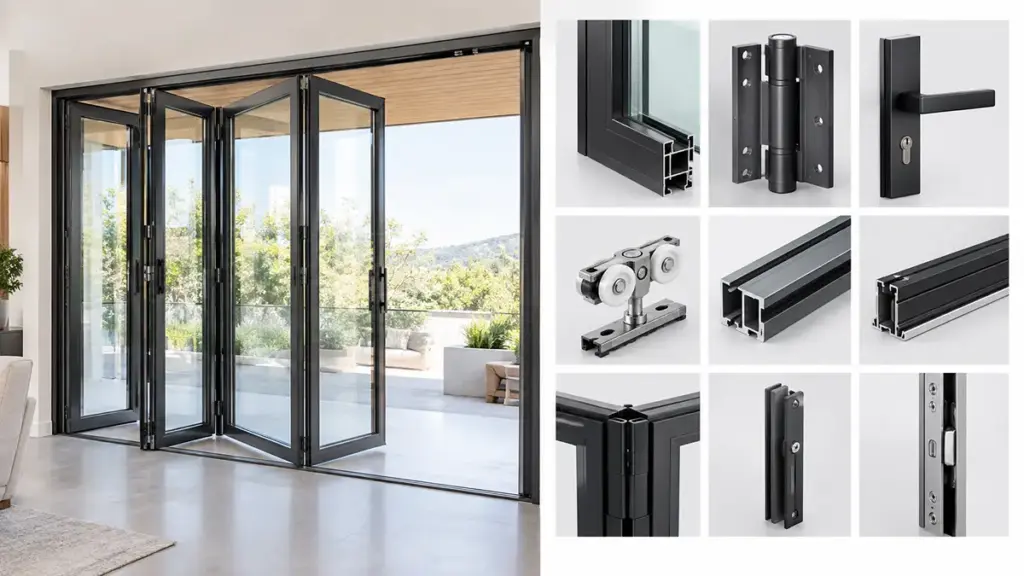
When planning an interior construction or renovation project, door selection is often viewed as a design decision. However, for developers, contractors, distributors, architects, and procurement managers, understanding the cost of aluminum door systems is equally important. The final investment extends beyond the door panel itself and includes material specifications, hardware selections, surface finishes, glazing options, installation requirements, and long-term operational expenses.
This guide examines the major factors that influence the cost of aluminum door systems for interior applications and helps project decision-makers make more informed purchasing decisions.
Factors Influencing the Cost of Aluminum Doors for Interiors
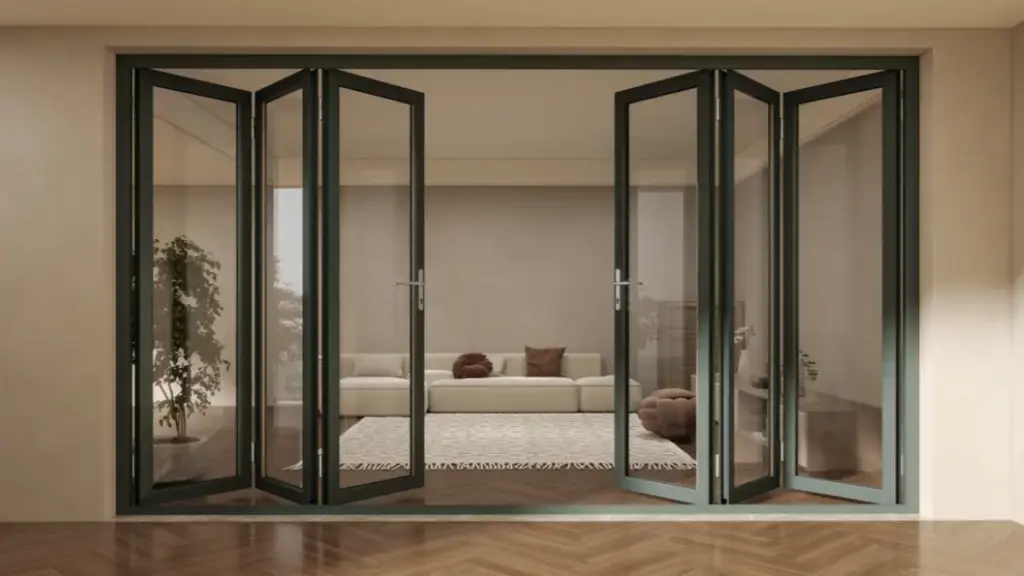
The pricing of aluminum doors is influenced by multiple variables. Understanding these factors helps project teams compare products more accurately and avoid focusing solely on initial unit pricing.
Why Door Pricing Varies Across Projects
The cost of aluminum door systems is rarely determined by a single factor. Even doors with similar dimensions can differ substantially in price due to variations in profile thickness, hardware quality, glazing configurations, surface treatments, and manufacturing complexity.
For example, a minimalist office partition door may require different structural specifications than an interior door used in a hospitality project. Consequently, comparing doors solely on dimensions often provides an incomplete picture of actual value.
Project requirements, expected usage frequency, and design objectives all influence the final cost structure.
Customization and Specification Requirements
Modern aluminum doors are frequently customized to match architectural requirements. Custom sizes, unique finishes, specialized glazing, and integrated hardware can all affect the cost of aluminum door solutions.
The greater the level of customization, the more manufacturing resources are typically required. While customization may increase initial investment, it often delivers greater alignment with project goals and architectural design standards.
For commercial projects, balancing customization with budget objectives is an important procurement consideration.
Looking Beyond Initial Purchase Price
Experienced buyers understand that the cost of aluminum door systems should be evaluated through a lifecycle perspective. Initial acquisition costs represent only one component of the overall investment.
Maintenance requirements, operational reliability, durability, and expected service life all contribute to the true cost of ownership. As a result, a comprehensive cost analysis often provides a more accurate basis for decision-making.
Raw Material Impacts: Aluminum Profile Weight and Alloy Grade Pricing
One of the most significant factors affecting the cost of aluminum door products is the aluminum profile itself. Material specifications directly influence both manufacturing expenses and product performance.
How Profile Weight Influences Cost
Aluminum profiles serve as the structural framework of the door system. The amount of material used in the profile directly affects production costs.
In general, heavier profiles require more aluminum and therefore contribute to a higher cost of aluminum door system. However, profile weight is not simply a pricing consideration. It also influences structural stability, durability, and long-term performance.
For high-traffic commercial environments, stronger profile systems may provide greater value despite higher initial costs.
The Role of Alloy Grades
Not all aluminum materials are identical. Different alloy grades offer varying combinations of strength, corrosion resistance, machinability, and structural performance.
The selected alloy grade can significantly affect the cost of aluminum door manufacturing. Higher-performance alloys often require greater material investment but may provide advantages in durability and dimensional stability.
Project teams should evaluate alloy specifications alongside performance requirements rather than focusing exclusively on material cost.
Balancing Material Cost and Performance
The goal is not necessarily to choose the lowest-cost profile but to select a profile that aligns with the intended application.
When evaluating the cost of aluminum door systems, understanding the relationship between profile design, alloy selection, and long-term performance helps buyers make more informed procurement decisions.
Elevate Projects with Premium Aluminum-Wood Doors
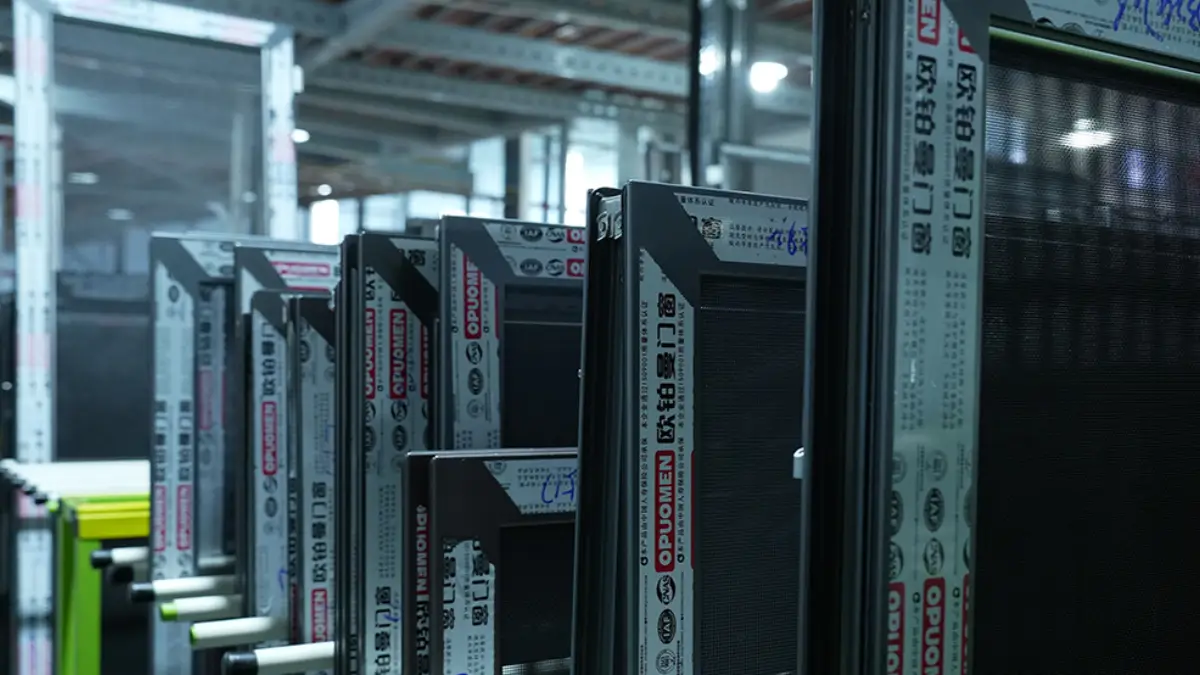
Cost Differences Between Clear, Frosted, and Tinted Glass
Clear glass is the lowest cost, tinted glass is mid-range, and frosted glass costs the most due to specialized treatments. Each choice directly impacts the total aluminum door project budget.
Detailed Cost and Performance Overview
Clear glass has the lowest upfront cost. We use standard fabrication for it. It offers maximum visibility, letting 85%–90% of visible light through.
Tinted glass sits in the mid-range. It costs more than clear glass because it uses specialized materials and processes. It reduces glare, offers partial privacy, and improves solar control.
Frosted glass is usually the most expensive. It needs extra surface treatments like sandblasting or acid-etching. This gives you the highest privacy while still diffusing 70%–80% of visible light.
Strategic Selection for Aluminum Door Projects
The glass finish you pick significantly changes the total quote for aluminum door systems. This holds true even if the frame is identical.
Clear glass aluminum doors are the most economical choice. Pick them when visual openness matters more than privacy.
Tinted glass aluminum doors offer a good balance. They cost more than clear. You get glare reduction and moderate privacy, useful for sunny areas.
Frosted glass aluminum doors have a higher material cost. But they are best when privacy is critical, like in bathrooms or office interiors. They still let natural light in.
Standard Latches vs. Premium Silent Magnetic Lock Pricing
Standard latches offer basic function at a low cost. Premium silent magnetic locks, with their advanced design and quiet operation, come at a higher price for aluminum doors.
Cost Factors and Hardware Design
Standard mechanical latches use a spring-loaded latch bolt that engages a strike plate in the aluminum frame. They are widely available, mass-produced, and compatible with most door and handle sets, keeping their unit cost low. These latches typically generate audible noise when a door closes due to the mechanical impact of the latch bolt and strike plate. Manufacturers build them with steel or zinc components and basic finishes, rarely optimizing them for silent operation.
Premium silent magnetic locks, on the other hand, use magnetic attraction instead of a noisy mechanical latch bolt to hold the door closed. Builders integrate these as magnetic door latches for interior doors or electromagnetic locks (maglocks) for commercial aluminum framed glass doors.
When looking at cost components, standard latches represent minimal hardware expense per opening. Most of the cost in such a door package comes from the aluminum door and frame itself. For premium magnetic solutions, the components include:
- Magnetic Latch Hardware: Precision magnets housed in non-ferromagnetic materials, typically with metal strike plates. They cost more to manufacture than simple latch bolts.
- Electromagnetic Lock Hardware: A lock body with an electromagnet, an armature plate, mounting brackets specific to aluminum frames, a power supply, and often control devices. This significantly raises per-unit cost because of the electronics, magnet size, and access-control integration.
- Installation and Integration: Surface-mounted maglocks install faster on aluminum framed glass doors but need electrical wiring. Concealed magnetic latches may require precise routing or factory preparation of aluminum door and frame profiles, adding fabrication cost.
- Maintenance: Magnetic latches have fewer moving parts, reducing mechanical wear and long-term rattle. Maglocks require ongoing power and periodic electrical checks.
Market Positioning and Application Value
In the aluminum door market, standard mechanical latches sit at the “economy” level. Builders consider them low-cost hardware for interior and light commercial aluminum doors. Their economy pricing suits budget aluminum door packages where sound level and design are not priorities. Hardware is generally part of standard locksets, with the latch component adding a small incremental cost. These are chosen when basic security and code compliance are needed, but not premium acoustic or design features. Inventory and availability are high, keeping prices stable and low.
Premium silent magnetic latches and maglocks occupy a higher “premium” tier. They are marketed for their quiet operation and modern design, explicitly priced above standard latches. Cost factors include precision-engineered magnet systems, durable casings, concealed mounting, and high aesthetic demands. Brand positioning highlights noise reduction, gap-free closing, and a modern, minimal look.
Maglocks find use on glass storefronts with aluminum frames and other commercial aluminum doors. They come in kits with the lock, bracketry, and access control components. Maglocks are significantly more expensive per opening than a simple mechanical latch and strike.
Powder Coating vs. Specialized Wood Grain Premiums
Surface finishing significantly affects both the appearance and the cost of aluminum door products. Different finishing technologies provide different aesthetic and performance characteristics.
Powder Coating as a Popular Finish
Powder coating is widely used because it offers durable surface protection and a broad range of color options. For many interior applications, powder-coated finishes provide an effective balance between appearance, durability, and the overall cost of aluminum door systems. The versatility of powder coating makes it suitable for a variety of architectural styles and commercial environments.
Wood Grain Finishes and Premium Positioning
Wood grain finishes are increasingly popular in projects seeking the visual warmth of wood combined with the durability of aluminum. Achieving realistic wood grain effects typically involves additional manufacturing processes, which can increase the cost of aluminum door systems compared to standard powder-coated finishes. Despite the higher cost, many designers appreciate the ability to achieve a natural appearance without the maintenance challenges associated with traditional wood.
Selecting the Right Finish for the Project
The choice between powder coating and wood grain finishes should be based on project objectives rather than pricing alone. Understanding how surface treatments affect the cost of aluminum door products helps project teams balance aesthetics, durability, and budget considerations.
Labor and Installation Economics for Commercial Fit-Out Projects
Commercial aluminum door fit-out costs blend labor, hardware, and site specifics. Expect $2,200-$2,600 for a single installed door, varying with project complexity.
Core Cost Components and Labor Dynamics
Commercial aluminum door installations tie directly to labor, hardware, and the complexity of the fit-out. You cannot just look at the door itself. For a standard commercial storefront-style aluminum system, an installed single door usually costs around $2,200–$2,600. A double door or pair goes for about $4,200–$4,800. More complex commercial jobs can cost much more, depending on the specifics and upgrades.
- Door unit cost: Basic commercial aluminum doors run from a few hundred to a few thousand dollars, depending on size, finish, glazing, and security features.
- Labor: Installation labor tiers are usually $150–$300 for simple installs, $200–$600 for standard aluminum door installs, and $500–$1,200 for more complex or custom jobs.
- Hardware and accessories: Expect $50–$200 per door for hardware allowances. Upgrades like push bars, automatic operators, better glass, or security hardware add $800–$6,000+.
- Frame and wall work: Fit-outs often need coordination with storefront framing, anchoring, shimming, sealing, and finish repairs. These items push labor costs beyond the basic installation range.
- Site conditions: Occupied tenant spaces, phased construction, after-hours work, or access restrictions increase labor costs. These situations require more time, coordination, and supervision.
Economic Factors and Budgeting Strategies
Several economic factors significantly influence the overall cost of commercial aluminum door installations. Labor productivity rises with repetition. Large commercial fit-outs with many identical openings see lower labor costs per door. Crews can standardize measuring, preparation, and hardware installation. Customizations are a major cost driver. Special finishes, built-in glass, double-swing configurations, security upgrades, and automatic operators push jobs from basic labor into a premium cost bracket.
On some projects, hardware scope can rival labor costs. Packages for closers, locks, panic bars, and operators contribute as much to the installed price as the physical door leaf and basic installation labor. Also, lead times affect economics. Stocked standard systems usually install in 2–4 weeks. Custom configurations can take 4–8 weeks, impacting project scheduling, general conditions, and occupancy timing.
Comparing Lifespan Costs of Aluminum vs. PVC and Wood Doors
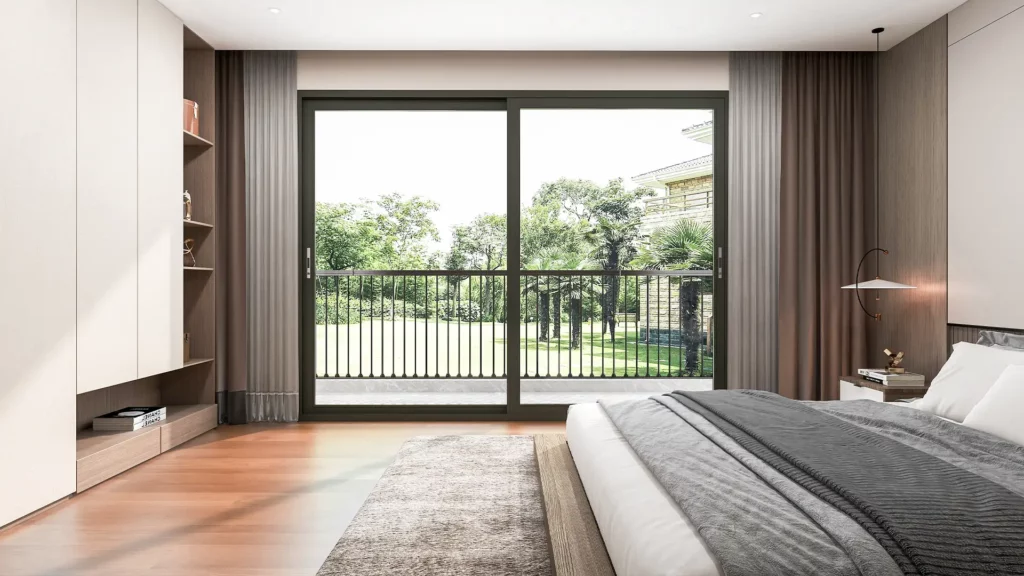
Initial pricing is only one part of the ownership equation. Long-term performance often has a greater impact on overall value.
Maintenance Considerations for PVC and Wood
PVC and wood doors may require varying levels of maintenance depending on environmental conditions and usage patterns. Wood doors may involve refinishing or repair activities over time, while PVC systems can experience wear associated with prolonged use.
These maintenance factors influence the long-term cost of aluminum door alternatives when comparing total ownership expenses.
Aluminum and Long-Term Durability
Aluminum doors are often selected because of their durability and low-maintenance characteristics. Their resistance to moisture-related issues and dimensional instability can help reduce ongoing maintenance requirements. For many projects, these advantages contribute positively to the overall cost of aluminum door equation over the product lifecycle. Reduced maintenance demands can translate into meaningful operational savings.
Understanding Total Lifecycle Economics
Lifecycle analysis provides a more accurate comparison than initial pricing alone. When evaluating the cost of aluminum door systems against alternative materials, project teams should consider service life, maintenance frequency, operational performance, and replacement cycles. This broader perspective often reveals important differences in long-term value.
Sourcing Direct from Factory Lines
Direct factory sourcing cuts costs, but demands rigorous supplier evaluation and risk management to ensure quality and timely delivery.
Evaluating Feasibility and Supplier Selection
To truly benefit from direct sourcing, analyze your full cost structure. This includes raw materials, manufacturing, and logistics. It helps you understand where direct engagement offers savings compared to using distributors. Remember, your unit cost drops, but you pick up freight, duties, and quality assurance overhead.
When selecting factories, establish clear criteria. Focus on their actual production capacity and their quality control processes. A factory’s reputation also matters, as does their certifications. You want partners who can consistently deliver what you need, not just bid low.
- Capacity: Verify their monthly or annual output. They must scale with your demand.
- Quality Control: Look for ISO 9001 or similar systems. Ask for documented inspection processes at each stage.
- Reputation: Check their track record for on-time delivery and product consistency. Client testimonials help.
- Transparency: Request detailed bills of material. Understand their sourcing for profiles, glass, and hardware.
Identify specific cost drivers influencing your door orders. These include order volume, how customized your products are, and finishing requirements. Standardized designs and larger orders generally yield better pricing. Don’t forget potential risks. These include quality inconsistencies, delays in lead time, and poor after-sales support. These problems turn cheap units into expensive projects if not managed correctly.
Implementing and Managing Direct Supply Relationships
Once you have a shortlist, move to prequalification and technical evaluations. Then, commercial negotiations begin. Your goal is a partner, not just a vendor. Ensure they understand your specifications and can deliver against them.
Develop comprehensive contracts. These must detail product specifications, quality assurance protocols, and clear delivery schedules. Define expectations upfront, particularly around defect rates and resolution.
Integrate sustainability and life-cycle cost into your supplier selection. Look for factories using recycled aluminum or energy-efficient processes. This supports your long-term value goals and future-proofs your supply chain.
Apply practical risk mitigation steps. For example, use third-party inspections of production batches. Structure staggered payments tied to milestones like passing those inspections. This ensures product quality and protects your investment.
Final Thoughts
Choosing aluminum doors, despite their higher initial investment, secures your project’s longevity and reputation. Their superior durability and minimal maintenance offer the lowest total cost over a long service life, outperforming short-lived PVC or high-upkeep wood options. This strategic decision protects your business against unforeseen replacements and escalating maintenance expenses.
Ready to optimize your project budgets with aluminum’s proven value? Connect with our team to explore tailored bulk pricing, detailed component breakdowns, and direct factory sourcing options that maximize your commercial advantage.