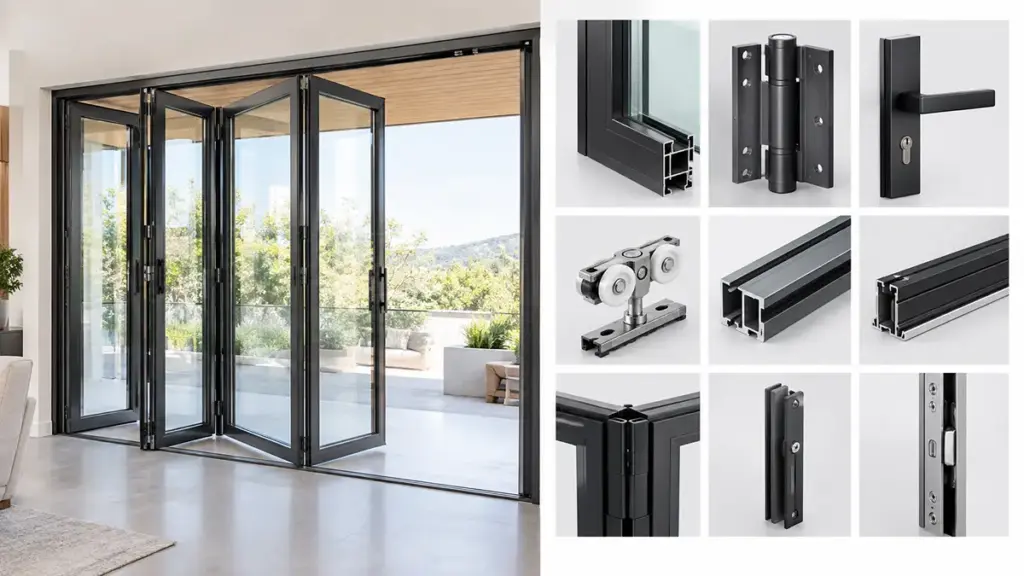
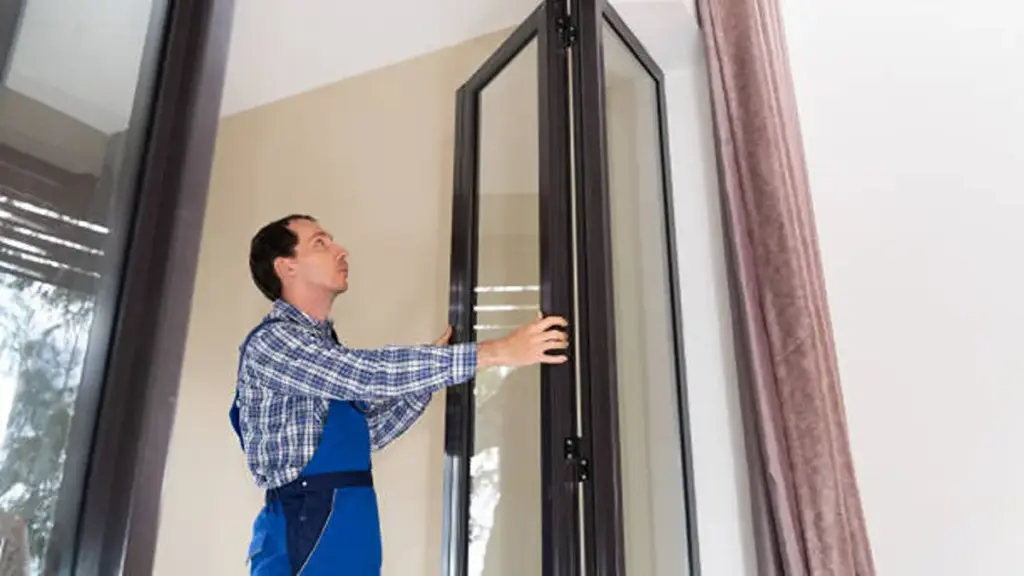
Installing bifold doors correctly helps prevent common problems such as sticking panels, असमान अंतराल, and premature hardware wear. Even small alignment errors or out-of-square frames can cause the doors to rub, bind, or operate unevenly over time.
This guide walks through the key installation steps, including measuring the opening, preparing the frame, installing the hardware, and adjusting the finished door. Following proper alignment practices helps create consistent gaps and allows the door panels to operate smoothly with minimal friction.
How to Install Bifold Doors: Preparation Steps
Precise upfront measurements and clean framing surfaces prevent binding and guarantee smooth track operation before you hang bifold door panels.
Measuring Openings and Checking Structural Alignment
An out-of-square opening can make bifold doors difficult to align and may cause rubbing during operation. You must establish the actual dimensions of the finished opening before purchasing or modifying your door slabs.
- Finished Dimensions: Measure height and width in at least three places—top, मध्य, और चौड़ाई के लिए नीचे; बाएं, केंद्र, and right for height—to quickly identify any bowing in the framing.
- Operating Clearances: Leave enough space for the track system, pivot hardware, and door movement. Always follow the clearance requirements provided by the door manufacturer.
- संरचनात्मक संरेखण: Use a spirit level on both side jambs to check vertical plumb, and confirm the top header runs completely horizontal.
- Corner Squareness: Measure the opening diagonally from corner to corner; matching diagonal numbers confirm the frame is perfectly square.
- Header Capacity: Confirm that the overhead structure can support the weight of the bifold door system, especially for large aluminum or exterior folding doors.
Preparing Frame Surfaces and Organizing Installation Hardware
A clean workspace helps prevent dust, मलबा, and construction residue from affecting the track, रोलर्स, and pivot hardware during installation. Preparing the surfaces and organizing the components upfront streamlines the final assembly.
- Surface Preparation: Clear all dust, plaster splatters, and old fasteners from both the header and the floor sill to ensure secure hardware seating.
- Wood Treatment: Apply paint, stain, or protective sealants to wood frames and stiles before installing pivots and tracks to avoid dripping finish onto the mechanical hardware.
- Inventory Check: Lay out the hardware kit to verify that the track, pivot pins, jamb brackets, रोलर्स, and fasteners are all present before starting.
- Pivot Pin Assembly: Tap the top and bottom pivot pins into the pre-drilled holes in the door stiles while the panels lie flat on the floor.
- Layout Markings: Mark the centerline of the track on the header and draw exact placement guides for the bottom jamb bracket on the floor.
- Floor Clearance: Factor in the finished floor thickness—including carpet, टाइल, or laminate—so the doors do not drag after hanging.
Measuring Openings Before Bifold Door Installation
Accurate three-point measurements prevent bifold doors from binding. Always base your rough opening calculations on the absolute smallest height and width of the structural space.
Three-Point Measurement Process for Width and Height
Wall openings are rarely perfectly square. Settling wood, bowed studs, and uneven headers create hidden tight spots that trap bifold panels during operation. You must identify the narrowest point of the opening before purchasing materials or ordering custom door sizes.
- Width measurements: Record the width at the top, मध्य, and bottom of the frame to find the smallest overall dimension.
- Height measurements: Measure the height on the left, केंद्र, and right sides to identify the minimum vertical clearance.
- Dimension selection: Select the smallest width and height measurements so the new doors do not bind in out-of-square structural openings.
Calculating Rough Opening Adjustments and Clearance Allowances
Once you have the smallest opening dimensions, calculate the rough opening to accommodate the door slabs, खम्भे, and tracking hardware. For standard measurements and planning considerations, you can also refer to this guide on standard bifold door sizes and dimensions. Precise allowances ensure you have enough room for vertical and horizontal adjustments without leaving massive cosmetic gaps.
- Width adjustment: Add the clearance specified by the manufacturer to accommodate the door panels, खम्भे, और हार्डवेयर.
- Headroom clearance: Allow sufficient vertical space for the top track and pivot hardware based on the selected bifold door system.
- Flooring deduction: Subtract the thickness of planned future floor coverings to preserve proper bottom clearance and avoid floor drag.
- Plumb and level evaluation: Assess the framing with a spirit level to plan for necessary shim adjustments during frame installation.
High-Performance Bifold Door Solutions
Installing Bifold Door Tracks and Hardware Systems
Reliable bifold performance depends on proper alignment between the track system, pivot hardware, and door panels. Choosing the correct hardware configuration is especially important for larger aluminum folding doors, where panel weight and opening size directly affect long-term operation. Selecting suitable components, including rollers, संभालती है, and other door hardware, also helps maintain smooth operation over time. Learn more about aluminum door hardware selection when planning a complete door system.
| Hardware Component | Standard Bifold Door Systems | Large Aluminum Bifold Door Systems |
|---|---|---|
| Track System | Single overhead track or guide system designed for lightweight door panels | Heavy-duty track systems engineered for larger aluminum panels and higher load capacity |
| Pivot & Hinge Hardware | Pre-designed pivot brackets and adjustment components supplied with the door kit | Reinforced pivot assemblies and customized hardware configurations based on panel size and door weight |
| रोलर्स & Guides | Standard rollers or guide pins for smooth folding movement | Multi-wheel rollers, reinforced guides, and alignment components for frequent operation |
| Fasteners & Support | Installation screws selected according to the frame material and manufacturer requirements | Structural fasteners and reinforced fixing methods to secure tracks and hardware to the supporting structure |
Track Preparation and Overhead Mounting
Before mounting the track, check the header alignment and mark the correct installation position to ensure the rollers and pivots move smoothly. Before mounting any hardware, the crew measures and marks a precise centerline on the header frame. This layout establishes consistent setback clearance, keeping the track at least 3/4 इंच से 1 inch from the front edge of the header so the doors do not project past the casing.
अगला, technicians cut the track to length. They use a fine-tooth hacksaw to make a clean cut, leaving a small gap of about 1/16 inch at each end to prevent the track from binding against the side jambs. They immediately deburr the cut ends using a metal file or sandpaper to prevent rough edges from shredding the rollers over time.
Before securing the track to the header, installers slide the pivot brackets and rollers directly into the track channel. This step is critical; skipping it means removing the fastened track later just to get the hardware inside. अंत में, crew members secure the track directly to solid wood framing using 1-to-1-1/4-inch flat-head wood screws. Driving fasteners solely into drywall will cause the system to sag and fail under load.
Pivot Installation, Hanging, and System Alignment
The bottom floor bracket, whether a floor plate or jamb bracket, must align vertically with the overhead track pivot point. Installers use a plumb bob or spirit level to match the track centerline. Any offset here introduces angular strain, which binds the door and causes rough operation.
For heavy-duty hardware setups, technicians drill precise pivot holes on the door stiles. This requires drilling 3/8-inch diameter holes at least 1-3/4 inches deep, spaced exactly 2 inches from the door edge. The team then taps the pivot pins securely into place.
Hanging the door panels typically requires a two-person crew. Workers lift the doors to seat the top pivot pins into the track bracket first. Once the top is stable, they snap the lead rollers into the guide plates and seat the bottom pivot pin into the floor bracket.
Post-installation, installers rotate the threaded pivot pins and adjust the roller plates to establish a uniform 1/8-inch reveal. These minor, incremental adjustments raise or lower the doors to clear flooring, correct lean, and prevent rubbing against the jamb. अंत में, technicians attach back-mounted metal door aligners to the lead doors to stabilize four-panel configurations and keep them perfectly flush when closed.
Adjusting Bifold Door Panels for Smooth Operation
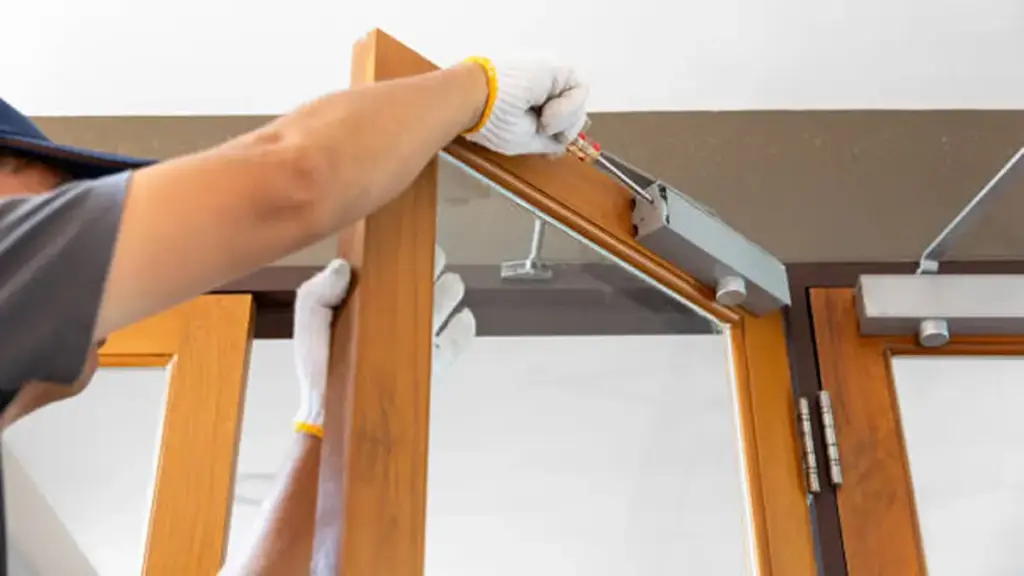
Correct bifold alignment relies on systematic height and track adjustments. Finding the exact binding points first ensures your adjustments resolve dragging and panel gaps permanently.
Diagnosing Alignment Issues and Adjusting Panel Height
Inspect the door movement during travel to pinpoint dragging at the floor or binding in the head track. Measure the gaps between panel edges, खम्भे, and meeting points to check for squareness and plumb before turning any screws.
Turn the adjustment screw on top hangers clockwise to raise the panels or counterclockwise to lower them. When dealing with floor obstructions, shift the bottom pivot pins to alternative toothed positions to clear the ground and set the correct seating height.
Correcting Side-to-Side Position and Maintaining Hardware
Loosen the top and bottom pivot bracket screws to slide the doors parallel to the jambs and even out vertical gaps. Align the connecting arms and bottom track guides to eliminate panel-to-panel offset and keep the doors flush across the opening.
Tighten all hinge screws to prevent panels from sagging or pulling away from each other over time. Finish by cleaning the tracks of any debris and applying a light silicone spray lubricant to ensure low-friction, reliable operation.
Choosing a Reliable Aluminum Bifold Door Manufacturer for Long-Term Performance
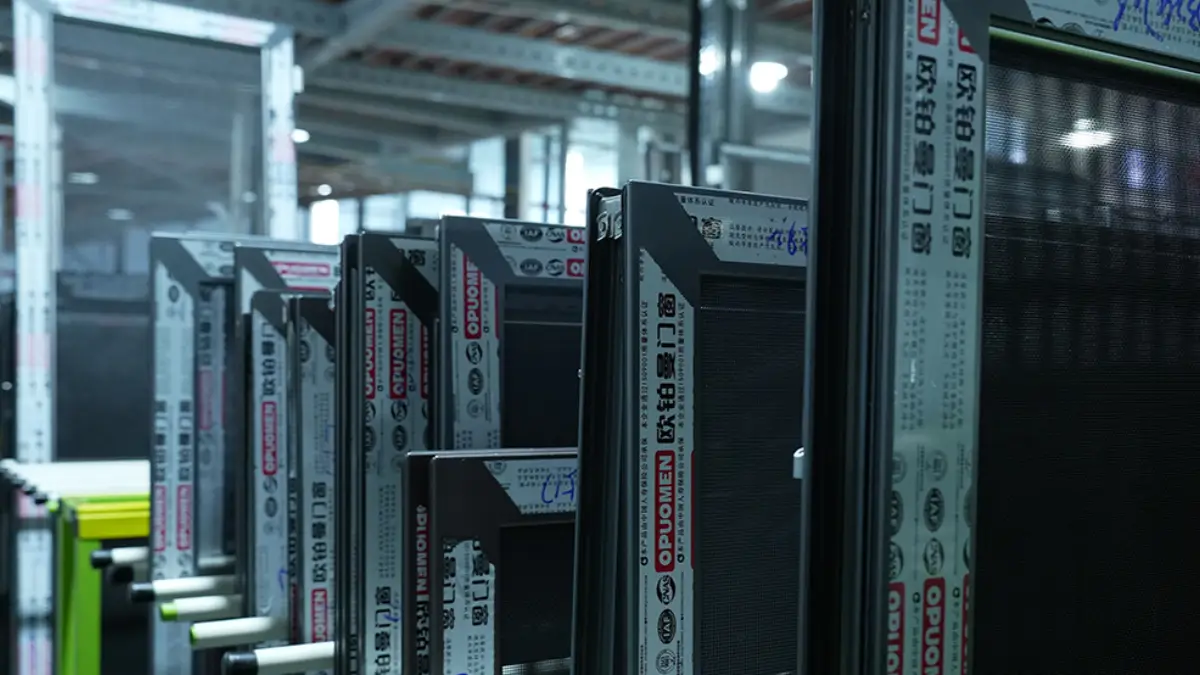
For large residential and commercial bifold door परियोजनाओं, installation accuracy is only one part of achieving reliable performance. The quality of the door system, एल्यूमीनियम प्रोफाइल, हार्डवेयर एकीकरण, and manufacturing process also play an important role. ओपूओ specializes in customized aluminum doors and windows, providing folding doors, फिसलते दरवाज़े, घाटी -खिड़कियां, and complete door solutions for different climates and building requirements.
With a 60,000㎡ production facility, experienced engineering and quality control teams, and ISO9001-certified manufacturing processes, OPUOMEN focuses on delivering stable product quality from design to final production. The company also supports customized sizes, विन्यास, and finishes to meet the requirements of residential projects, विला, and commercial applications worldwide.
Testing Bifold Door Alignment and Final Performance
Final bifold performance depends on confirming the alignment of the frame, हार्डवेयर, and door panels after installation. Skipping these physical checks guarantees dragging, uneven margins, and early hardware failure.
Structural Geometry and Hardware Tuning
We start with the frame opening itself. Before adjusting any panel, you must establish a stable geometric baseline. Use a spirit level on both side jambs to check for vertical plumb, and inspect the header and floor to ensure they are horizontal. Take diagonal measurements to confirm the opening is square. If you detect bowing or skewing, use shims behind the jambs to correct the framework before tightening hardware.
Once the structural frame is verified, set up the pivot points to maintain vertical alignment and proper operating clearances. Align the top and bottom pivot brackets along the same vertical plane to prevent the door leaves from leaning, which causes uneven wear on the guide pins.
- Horizontal adjustment: Slide the bottom pivot bracket within its slotted base to set equal side clearance between the door panel and the jamb.
- Vertical height setting: Rotate the threaded bottom pivot pin to raise or lower the entire door leaf, establishing sufficient floor clearance.
- Overhead track mounting: Secure the track straight and level along the header, anchoring screws directly into solid wood framing.
- Snugger guide alignment: Position the sliding snugger guide in the top track to control closing tension and hold the doors firmly in place.
Operational Testing and Troubleshooting
With the hardware locked into position, run the door panels through repeated open-and-close cycles. Listen closely for popping, scraping, or dragging. The movement must be quiet and fluid. Close the panels fully to inspect the margins, checking that the gaps between panels and the side jambs remain uniform from top to bottom.
If the doors rub or fail to fold flat, target the specific hardware components rather than forcing the panels. Minor structural settling in a building can alter alignment over time, requiring quick, targeted adjustments.
- Floor dragging: Lift the panel slightly and turn the threaded bottom pivot stem clockwise to raise the door away from the carpet or sill.
- Door binding at jambs: Loosen the set screw on the top track bracket, shift the bracket slightly away from the jamb, and retighten.
- Drifting or popping open: Slide the snugger guide closer to the pivot side or increase pivot pin tension to ensure the doors snap shut.
- Center margin misalignment: For double bifold installations, adjust the lateral position of both sets to ensure the meeting stiles run parallel.
Bifold Door Installation Tips for Better Results
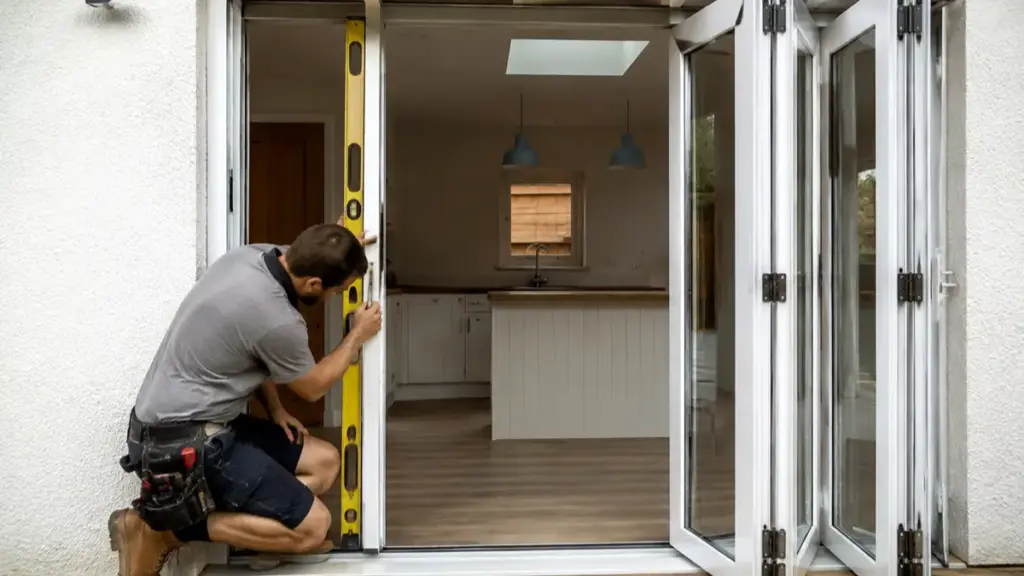
Precise track alignment and exact rough opening clearances prevent bifold doors from binding, dragging, or popping out of their tracks during daily operation.
Preparation and Hardware Setup
Before hanging bifold panels, installers must establish a square opening and secure the foundational hardware. Skipping these structural checks leads to uneven gaps and dragging doors.
- Clearance check: Verify that the rough opening measures 1½ inches taller and ½ inch wider than the door unit to guarantee adequate operating clearance.
- Frame alignment: Check the header and side jambs with a spirit level, fixing any out-of-level areas before you mount the track.
- Top track installation: Fasten the top track to the center of the header, positioning the pivot bracket toward the jamb side.
- Jamb bracket alignment: Line up the bottom floor bracket directly with the centerline of the top track to prevent the doors from binding.
- Hardware attachment: Drill the specified pivot holes if the manufacturer did not pre-drill them, then mount the hinges along the panel edges.
Plumbing the jambs and verifying that the header does not sag protects the rollers from premature wear. Spending time on this layout ensures the panels slide effortlessly.
Hanging and Fine-Tuning the Assembly
Hanging bifold panels requires careful physical handling followed by systematic adjustments to finalize the fit. Minor tweaks at this stage dictate the long-term performance of the system.
- Panel mounting: Grab a helper to lift the doors, insert the top pivot pin first, and then seat the bottom pivot securely into the floor bracket.
- Reveal adjustment: Adjust the track brackets and threaded pivot pins to achieve a uniform 3 मिमी (1/8 इंच) gap around the top and side edges.
- Floor clearance: Raise or lower the panels using the adjustable pivot pins to eliminate carpet drag or header rubbing.
- Pull handle placement: Mount the door pulls roughly 12 inches from the floor on the back of the guide panels to optimize opening leverage.
- Double door alignment: Install door aligners on the back meeting edges of double bifold configurations to keep both sets flush when fully closed.
Testing the folding action several times reveals hidden friction points. Tighten all hardware once the panels operate quietly and sit parallel to the jambs.
अक्सर पूछे जाने वाले प्रश्नों
How do you install bifold doors?
Installing bifold doors involves several key steps. Start by measuring the opening to confirm the frame is level, साहुल, और चौकोर. Install the top track according to the manufacturer’s layout requirements, then secure the pivot hardware and guides in the correct positions. Attach the pivot pins and rollers to the door panels, hang the panels onto the track system, and adjust the hardware until the doors operate smoothly with consistent gaps.
Can I install bifold doors myself?
Standard interior bifold doors can often be installed by homeowners with basic tools and some DIY experience, especially when the opening is already square and properly prepared. तथापि, larger exterior aluminum bifold doors usually require professional installation because they involve heavier panels, structural considerations, and more complex hardware adjustment.
How long does it take to install bifold doors?
Standard interior bifold doors for closets or small openings typically take a few hours to install. Larger exterior bifold door systems, especially multi-panel aluminum folding doors, may require more time due to heavier panels, structural preparation, and additional hardware adjustments.
What tools are needed to install bifold doors?
You need basic tools such as a tape measure, pencil, spirit level, drill, screwdriver, hammer, and safety glasses. Depending on the door system, additional tools may be required for cutting tracks, adjusting hardware, or securing the frame.
Do bifold doors need a track?
Most bifold doors use a track or guide system to control panel movement. Many interior bifold doors rely on a top track with a bottom pivot, while larger aluminum bifold door systems may use different configurations depending on the panel weight, खोलने का आकार, and manufacturer design. Always follow the hardware specifications provided for the specific door system.
What is the correct opening size for bifold doors?
The correct opening size depends on the specific bifold door system and manufacturer requirements. सामान्य तौर पर, the rough opening must provide enough clearance for the door panels, चौखटा, रास्ता, and adjustment hardware. Always confirm the required dimensions before installation, especially for large aluminum bifold doors where panel weight and hardware configuration affect the installation requirements.
अंतिम विचार
While budget-grade bifold hardware saves money upfront, investing in precision-engineered aluminum tracks and structural-grade pivots protects your business reputation against sagging panels and costly customer call-backs. High-performance rollers and heavy-duty components help maintain smooth and stable operation under frequent daily use. Delivering this level of reliable craftsmanship builds long-term client trust and secures future contract referrals.
We recommend testing our architectural-grade bifold hardware systems firsthand by requesting a product sample for your next installation. You can also explore our wholesale catalog to find the exact track configurations and weight ratings that match your project specs. Contact our commercial specialists today to secure bulk pricing or discuss custom OEM solutions.