Using incompatible bifold door parts can lead to poor alignment, operazione difficile, and premature hardware wear. Track and hardware specifications should be matched to the panel size and weight to keep the system running smoothly.
This guide explains the main bifold door parts, how they work together, and what to consider when matching hardware to the door panels and opening.
Bifold Door Parts and Their Main Functions
Bifold door systems rely on a modular network of structural tracks, load-bearing pivots, and guided rollers working in unison to translate user force into smooth folding motion.
| Component Group | Funzione primaria | Key Characteristics |
|---|---|---|
| Track Assemblies | Guide panel movement along the opening | Aluminum or steel; available in top-hung or bottom-rolling configurations |
| Pivot Hardware | Establish fixed rotation axes; support door weight | Threaded for height/plumb adjustment; top/bottom brackets |
| Rulli & Guides | Ensure smooth lateral translation along tracks | Nylon or steel wheels; often spring-loaded |
| Cerniere | Join panels edge-to-edge; enable folding movement | Surface-mounted, straight, offset, or recessed configurations depending on the system |
Core Structural and Guidance Components
The skeletal framework of a bifold system dictates both its structural integrity and its path of travel. Heavy panel configurations require precise weight distribution to prevent structural sag and track derailment over extended duty cycles.
- Track assemblies: Extruded aluminum or stamped steel top tracks provide the primary runway for the guide rollers. Heavy-duty or exterior systems may also use bottom tracks or guides to control panel movement and improve stability, particularly on larger openings.
- Pivot hardware: Fixed top and bottom pivots anchor the jamb-side panel, establishing the vertical rotation axis. In top-hung systems, the upper carriers and track support the door panels, while the pivot hardware helps establish the fixed rotation axis. In bottom-rolling systems, the lower running hardware carries the panel weight.
- Guide rollers: Rollers or carriers run within the track to guide panel movement. Their wheel and bearing design varies by system, panel weight, and operating requirements, helping keep the panels aligned and moving smoothly during opening and closing.
- Panel hinges: Surface-mounted or recessed hinges connect adjacent door leaves and allow the panels to fold smoothly. The required clearance between panels depends on the hinge design and the door system and should follow the manufacturer’s installation specifications.
Allineamento, Sigillatura, and Operational Accessories
Additional hardware and seals help the door close securely, limit air and water leakage, and improve day-to-day operation. These parts absorb impact, seal gaps against environmental exposure, and provide the mechanical leverage required for manual user operation.
- Mounting brackets: Jamb-mount and floor-mount brackets anchor the pivot pins to the surrounding building framing. Mounting brackets secure pivots and other hardware to the surrounding structure, with the final load path depending on whether the door is top-hung or bottom-rolling.
- Snuggers and aligners: Spring-loaded snuggers fit inside the head track to pull the rollers to a centered, firm stop when closed. Interlocking floor-level door aligners prevent adjacent panel pairs from drifting out of plane.
- Weatherstripping and gaskets: Compressible jamb, head, and sill seals isolate the interior environment. On external patio doors, continuous gaskets prevent draft and water infiltration under driving rain.
- User controls and fasteners: Pull knobs, low-profile lever handles, and multipoint locks provide targeted user inputs. Heavy-duty fasteners secure all brackets, cerniere, and tracks to prevent thread stripping under high cycle counts.
How Bifold Door Hinges Connect Panels Together
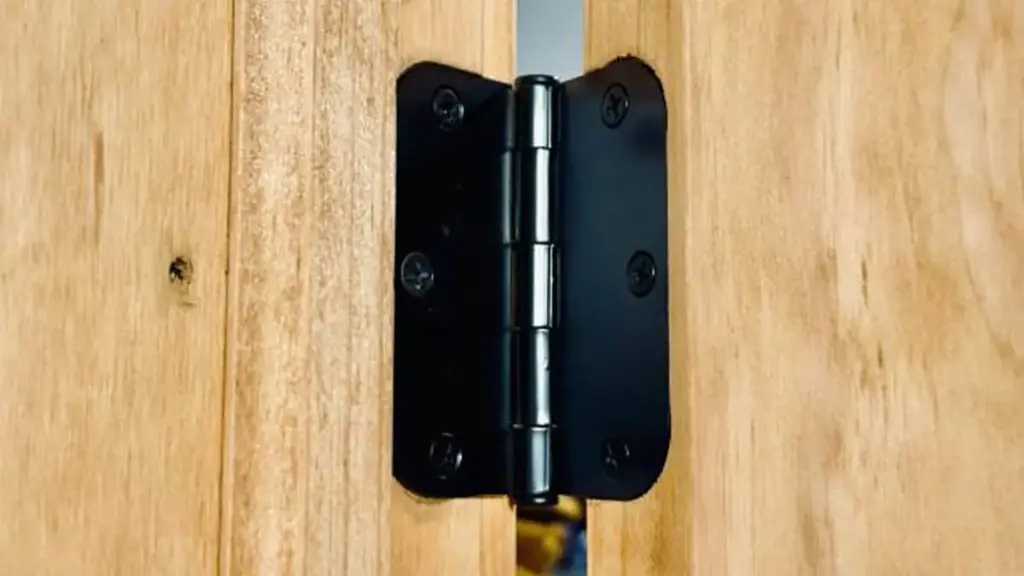
Bifold hinges tie adjacent panels edge-to-edge, forming a synchronized folding system that coordinates with pivots and tracks to control the door’s lateral translation.
Physical Edge-to-Edge Alignment and Installation Dynamics
Installers mount hinge leaves flush to the panel edges, positioning the center pin directly over the vertical joint line. This precise placement ensures the leaves rotate around a single, shared axis without twisting or binding.
Leaving a 1/8-inch clearance gap between the panels is critical. This small gap prevents the panel edges from colliding during the fold cycle and accommodates natural material expansion from humidity and temperature changes.
Hinge quantity and spacing depend on the panel size, peso, and hardware system. Hinges should be positioned according to the manufacturer’s installation specifications to keep adjacent panels aligned and reduce stress during repeated operation.
Structural Integration with Tracks, Pivots, and Roller Systems
Hinges connect adjacent panels and allow them to fold into a compact stack. Depending on the hardware system, straight or offset hinge configurations may be used to achieve the required folding geometry. This staggered design allows the entire assembly to stack compactly when open.
Anchoring the top and bottom pivots on the jamb-side panel secures the assembly to the frame. These fixed anchors define the main rotation axis while the remaining panels fold along their hinged joints.
Connecting intermediate hinges to track-guided rollers maintains vertical and lateral alignment. The rollers guide the moving leaves along the track channel, preventing panel sag and travel drift during opening and closing cycles.
Premium Bifold Door Solutions for Global Projects
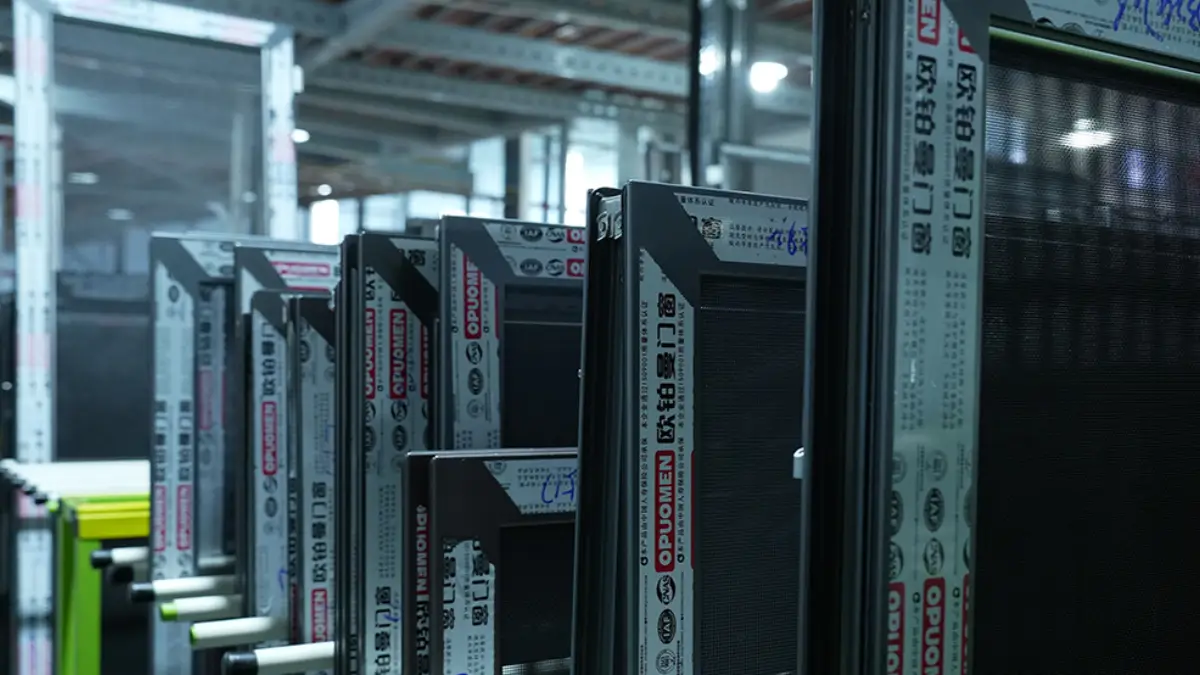
Understanding Bifold Door Rollers and Tracks
Rulli, portatori, and tracks play an important role in the load capacity, allineamento, and operation of a folding door system, so the hardware should be matched to the panel size and weight. For a broader comparison of folding and sliding configurations, see our guide to sliding and folding door systems.
Structural Components and Mechanical Roles of Rollers and Tracks
Bifold hardware works as a complete system, with the track, portatori, perni, cerniere, and other components each handling a different part of the door’s movement and alignment.
- Track Configurations: Rigid extruded aluminum or steel top tracks house the roller carriages to establish the primary sliding path. For heavier panels, bottom guide channels manage lateral movement and prevent panel swing.
- Gruppi di rulli: These parts transfer panel weight and facilitate low-friction translation. Lightweight interior systems may use nylon wheels or other low-friction components, while larger or higher-cycle applications may use more robust roller and bearing assemblies. The correct choice depends on the system’s load and duty requirements.
- Auxiliary Hardware: Adjustable track stops limit carrier travel to protect the end brackets from impact. Spring-loaded snuggers draw the panels tightly shut at the end of the run, keeping the doors centered without drifting.
System Configurations and Design Selection Factors
Specifying the correct components requires matching hardware capabilities directly to the local environment and structural loads. Choosing hardware without checking the panel weight and system requirements can contribute to poor alignment, excessive roller wear, or difficult operation.
- Application Environments: Interior applications often use lightweight top-hung systems, while larger exterior openings may use top-hung or bottom-rolling designs depending on panel weight, dimensione di apertura, structural conditions, and weather exposure. Hardware should also be selected for the required corrosion resistance and sealing performance.
- Load Capacity Specifications: Specifiers must calculate panel weight margins before selecting hardware. Matching track stiffness and roller load ratings to the weight of solid wood or glazed panels prevents track bending and structural sagging.
- Installation Alignment: Install and align the track carefully, keeping it straight and properly aligned with the rest of the hardware to prevent uneven operation. For more detailed installation steps, see our guide on how to install bifold doors. Threaded height-adjustment screws and sliding pivot brackets allow installers to set uniform gaps and prevent the rollers from binding in the track channel.
Where Pivot Hardware Supports the Door System
Pivot hardware anchors bifold systems, establishing the fixed rotation axis and transferring panel weight directly into the floor and header framing.
The jamb-side panel is secured with the appropriate top and bottom pivot hardware, while the remaining panels move through the hinge and track system.
Physical Placement on Panels and Surrounding Framing
- Top Pivot Pin: Sits inside pre-drilled holes on the upper edge of the jamb-side panel.
- Bottom Pivot Pin: Inserts into the bottom edge of the same jamb-side panel near the frame.
- Upper Pivot Bracket: Integrates directly within the overhead track to lock the top pivot pin.
- Lower Pivot Plate: Mounts to the floor or jamb to support and seat the bottom pivot stem.
These parts establish the main pivot axis of the system. Misalignment can cause the panels to bind, rub against the frame, or run unevenly, which is why most systems include adjustment points during installation.
Structural Weight Distribution and Alignment Control
Bifold hardware does more than guide movement; it manages physical loads. Dividing these mechanical duties between the top and bottom assemblies keeps the panels stable under heavy daily cycles.
- Bottom Pivot Load: Helps establish the lower end of the pivot axis and, a seconda della progettazione del sistema, may also transfer part of the panel load to the floor structure.
- Top Pivot Axis: Anchors the rotation axis to prevent upper panel deflection and twist under load.
- Threaded Stems: Allow simple vertical height adjustments by turning the threaded bolt to raise or lower the door.
- Slotted Brackets: Facilitate horizontal movement within the track and floor plates for easy plumb alignment.
This division of labor prevents the header from sagging over time. In bottom-rolling systems, the lower running hardware transfers most of the door weight to the floor, while the upper track primarily guides movement. Top-hung systems use the upper track and carriers to support the panels, so the structural requirements are different.
Bifold Door Handles, Serrature, and Latches
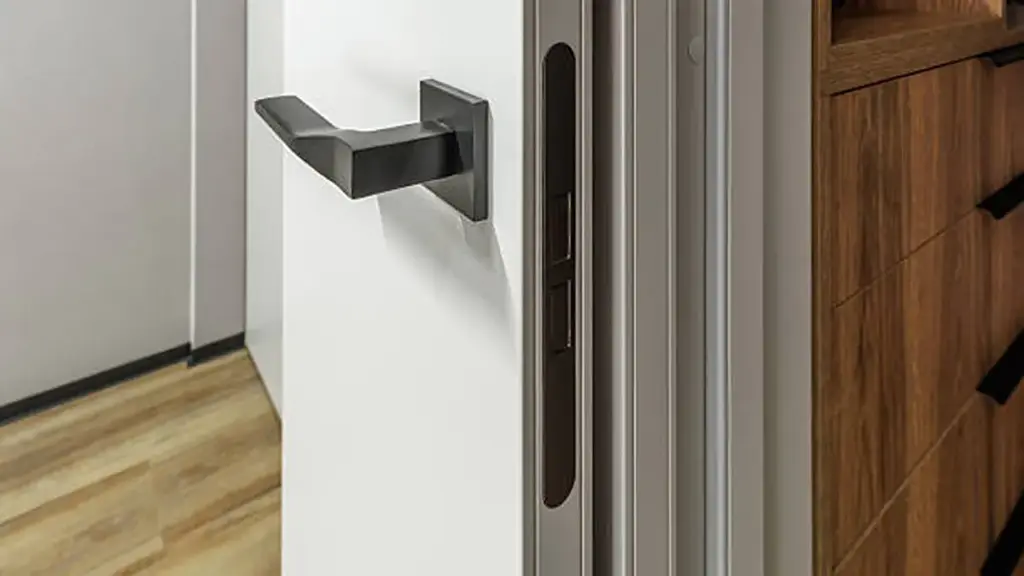
Bifold door performance rests on coordinating the correct handle grip with security locks and weather-tight latches. Matching these components to your frame material ensures long-term operational durability.
Types and Operations of Handles, Serrature, and Latches
Choosing bifold hardware requires a clear understanding of how panels interact during the folding cycle. On folding doors, the handle size and position should allow the panels to move and stack without interfering with adjacent leaves.
- Internal Handles: Options include levers, doorknobs, pull handles, and recessed flush pulls. Flush pulls allow panels to stack flat against each other without collision or damage.
- External Hardware: Features high-security lever/lever systems with euro cylinders and central twin-point mechanisms to manage exterior access and security.
- Chiusure multipunto: These systems secure the active door leaf at multiple points around the frame and are commonly used on exterior porte bifold for improved security.
- Concealed Bolts: Twin-point, shoot-bolt, and drop-bolt systems lock intermediate panels directly into the head track and sill.
- Interior Retention: Tubular mortice latches, roller catches, and edge-recessed flush bolts hold non-passage leaves firmly in place during daily folding.
The right combination of handles, serrature, latches, and bolts helps keep the door secure without interfering with normal folding operation.
Security Standards and Application-Specific Configuration
Security demands vary widely between a simple bedroom closet partition and an exposed commercial storefront. Environmental exposure and local building codes dictate the physical strength your lock and latch systems must deliver.
- Resistenza al carico del vento: Exterior installations in exposed locations require locking and anchoring hardware designed for the anticipated wind loads and system specifications.
- Anti-Burglary Defenses: Exterior bifold systems may use security-rated cylinders, multi-point locking mechanisms, reinforced keeps, and other hardware appropriate to the local security requirements.
- Residential Configurations: Interior closets prioritize tight physical clearance and clean aesthetics, while external patios demand heavy gaskets and weatherproofing.
- Commercial Systems: High-traffic applications may require heavier-duty locking hardware designed for frequent operation and higher security requirements.
- Material Integration: Installers must match the backset depth and load rating of locks to the panel material, whether working with aluminium, composite, rivestire di legno, o acciaio.
Selecting the right specification ensures your door set meets local safety ratings while maintaining easy operation over thousands of cycles.
Why Complete Door System Coordination Matters
Choosing bifold door parts is easier when the panels, profili, bicchiere, hardware, and frame are considered together rather than sourced separately. This is where an experienced door manufacturer can add value, especially for projects with different sizes, finiture, or performance requirements. Opuo provides customized door and window solutions backed by a 60,000+ m² production facility, 200+ dipendenti, and dedicated production lines for sliding doors and windows, casement doors and windows, porte in alluminio-legno, e verande. The company can customize door sizes, stili, colori, bicchiere, and hardware according to project requirements, helping buyers coordinate specifications before production. Its ISO9001-certified quality management system and 5-year quality warranty also provide additional support for long-term project supply. Per gli appaltatori, distributori, and other project buyers, this integrated approach can reduce the need to coordinate multiple suppliers while keeping product specifications consistent from design through production.
Weather Seals and Frame Components Explained
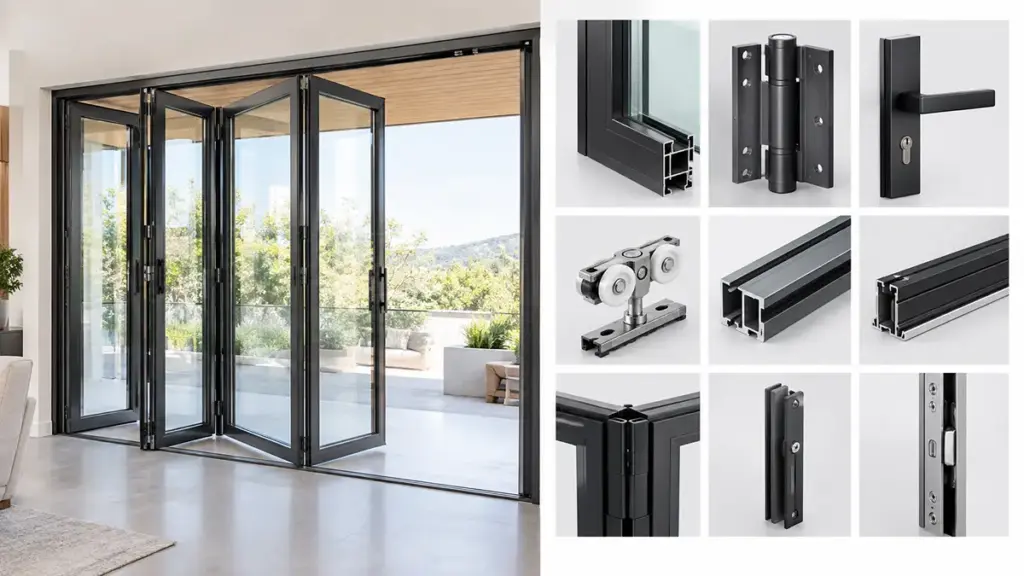
Weather seals and structural frame alignment must work in tandem to eliminate perimeter drafts and water ingress in exterior bifold installations.
Types and Locations of Perimeter Weather Seals
Protecting a folding door opening from the elements requires a multi-layered barrier. Gaps occur at several moving junctions where panels fold, stack, or meet the structural opening.
- Head, stipite, and sill weatherstrips: Form a continuous perimeter seal to block air and water infiltration at the outer door edges.
- Center foam cushion seals: Compress between matching vertical panel stiles to close gaps between paired folding leaves.
- Bottom rubber gaskets: Work alongside the lower frame to close the gap between the door panel bottom and the finished floor.
- Column-mounted weatherstripping: Seals the outer edge of the door frame securely against the main structural building columns.
Standard interior doors can rely on basic felt seals, but exterior installations demand high-grade elastomeric materials to withstand driving rain, ultraviolet exposure, and seasonal temperature swings.
Structural Frame Components and Sealing Dynamics
The performance of these seals also depends on the stability and alignment of the surrounding frame. They rely on the structural stability of the surrounding frame to maintain tight tolerances and ensure even compression when the door is closed.
- Head, stipite, and sill members: Form the main structural frame that houses running rollers, track assemblies, and perimeter weatherstrips.
- Frame corner keys and cladding: Stabilize frame corners to keep the assembly square and protect underlying wood or metal substrates from moisture damage.
- Precision frame alignment: Guarantees uniform compression across all gaskets, stopping localized drafts and water leaks.
- Weathered thresholds: Help direct rainwater away from the opening and can provide additional protection against water ingress on exposed exterior installations.
Excessive frame movement can reduce gasket compression and increase the risk of air or water leakage, particularly on exposed exterior installations. Specifiers must choose weathered threshold profiles and rigid frame corners for any exposed outdoor bifold run.
Domande frequenti
What hardware is needed for bifold doors?
Bifold doors require a coordinated hardware group to fold and slide. The core setup includes a top track, top and bottom pivots with matching brackets, guide wheels or rollers, hinges to join the panels, door snuggers or aligners to hold them closed, and pulls or handles. Heavy-duty or exterior systems also require bottom running tracks, structural threshold sills, and dedicated locksets.
What are bifold door pivots used for?
Pivots help establish the main rotation axis of a bifold door and keep the jamb-side panel properly positioned. Their exact role depends on the hardware design: in top-hung systems, the upper carriers support the panels while the pivots guide their rotation; in bottom-rolling systems, the lower running hardware carries most of the panel weight. Many systems also provide adjustable pivot or carrier hardware, allowing installers to fine-tune panel height and alignment during installation.
How do bifold door rollers work?
Rollers translate pulling force into lateral rolling movement inside the track. When you pull the handle, the rollers guide the leading edge of the active panel along the top or bottom rail while the hinges allow the panels to fold together like an accordion. The track profile keeps the rollers captive, which prevents the panels from shifting out of alignment.
What keeps bifold doors aligned?
Alignment depends on a multi-part mechanical system. Top and bottom pivots anchor the door next to the jamb on a straight vertical axis. The top track guides the horizontal path of the lead panel. Inside the track, spring-loaded snuggers center and hold the closed doors, while wedge-shaped door aligners mounted on panel bottoms pull the adjacent edges flush.
Can you replace individual bifold door parts?
SÌ. Bifold door systems are highly modular, so you can swap out worn components without buying new door panels. Manufacturers supply replacement kits containing individual rollers, perni, parentesi, and hinges. If a pivot hole in a wood or MDF door gets stripped out, metal repair brackets can reinforce the edge to accept a new pin.
Which bifold door components wear out first?
Wear usually depends on the hardware design, panel weight, operating frequency, ambiente, e manutenzione. Rulli, perni, cerniere, and locking components can all require servicing over time, especially in high-use or poorly maintained systems. Bottom pivots also wear over time because they carry the door’s full weight. You can extend their lifespan by cleaning tracks and lubricating metal contact points.
How do I know which bifold door hardware I need?
Match the replacement parts to your panel weight, door thickness, and track dimensions. Per installazioni più grandi, controllo standard bifold door sizes first can also help determine the appropriate panel and hardware configuration. Measure each panel’s height, larghezza, and thickness to ensure brackets and hinges fit correctly, and see our guide to selezione dell'hardware della porta in alluminio for more guidance on matching hardware to door requirements. Calculate the panel weight to select rollers with the proper load rating, and measure the inner width of your existing track channel to ensure the new rollers slide freely.
Do bifold doors use top or bottom rollers?
They use either depending on the structural design. Top-hung systems suspend the doors from overhead rollers, requiring a heavy structural beam to carry the load. Bottom-rolling systems transfer all weight to the floor track, using the top track only for guidance. Interior closet bifold doors often use lightweight top-hung hardware, while larger exterior systems may use either top-hung or bottom-rolling designs depending on the panel weight, dimensione di apertura, e requisiti strutturali.
Considerazioni finali
While cheap, generic hardware kits may reduce upfront costs, choosing properly rated components that match the panel weight and system design can help reduce alignment problems, excessive wear, and premature hardware failure. Matching the correct roller, perno, and track configuration to your specific panel weight prevents costly callbacks and protects your reputation. Your clients deserve smooth, reliable door operation that lasts through thousands of daily cycles.
Do not guess on hardware compatibility or load tolerances. We recommend requesting a sample hardware kit or downloading our component catalog to inspect our manufacturing tolerances firsthand. Contact our product specialists today to discuss your project specs or to configure custom OEM parts for your inventory.