Two quotes for the same eight openings can differ by forty percent. The gap rarely sits in workmanship. Impact windows cost what they cost because of five measurable inputs: the laminated glass build-up, the reinforced frame, the hardware set, the approval paperwork, and local labor.
A retail quote carries the permit, the dealer margin, and an installer’s crew. A factory quote carries none of those three. Most homeowner quotes still land between $800 E $1,400 per apertura. This guide separates the layers and shows what impact windows cost at each one.
Impact Window Cost Ranges at a Glance
Per-window averages hide the real variable, which is price per square foot of glazed opening.
Angi’s 2026 dataset puts professional impact window installation between $700 E $2,875 per finestra, con $150 A $600 of that figure as labor. This Old House reports a national average near $1,250, E $30 A $60 per square foot before installation. Modernize lands lower, at a $950 average. Its own Florida row reads $700 A $1,600, e un $300 installed impact window is not a real product in that market.
All three are compiled retail datasets for the United States, not factory terms. They bound what impact windows cost inside one market.
| Pricing View | Published Range | Where It Misleads |
|---|---|---|
| Single window installed | $700–$2,875, most quotes $800–$1,400 | Hides unit size; UN 2 ft opening and a 6 ft opening rarely match |
| Glass area | $30–$60 per sq ft before installation | Excludes permit, hoisting, and interior trim |
| Whole house, 15–20 openings | $12,000–$32,000 | Assumes standard openings; shaped heads and third-floor access push past it |
Why Per-Square-Foot Comparison Beats Per-Window
A dealer quoting $1,100 per window and a dealer quoting $2,600 may be pricing the same house. The second proposal often carries larger fixed panes, fewer operating sashes, and a higher design pressure target. Divide each total by the glazed square footage in that proposal. Armor Pro publishes $55 A $100 per square foot installed, and that band holds across product tiers.
What Separates Impact From Standard Pricing
A comparable non-impact aluminum casement runs $400 A $700 per opening installed in most Florida markets. South Florida installers price the impact premium at 40 A 60 percent where the frame stays and only the glazing changes. It rises to 50 A 80 percent per opening once reinforcement and hardware move with it. Aggregators quoting a 20 A 40 percent premium usually compare a vinyl standard unit with an aluminum impact unit. That is not the same window twice.
Window Type Moves the Number Before Brand Does
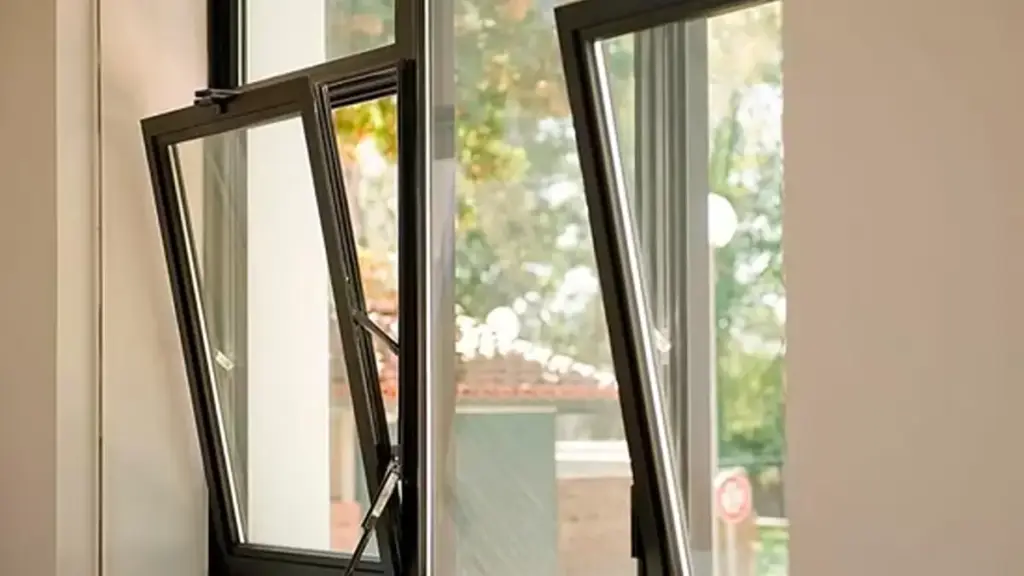
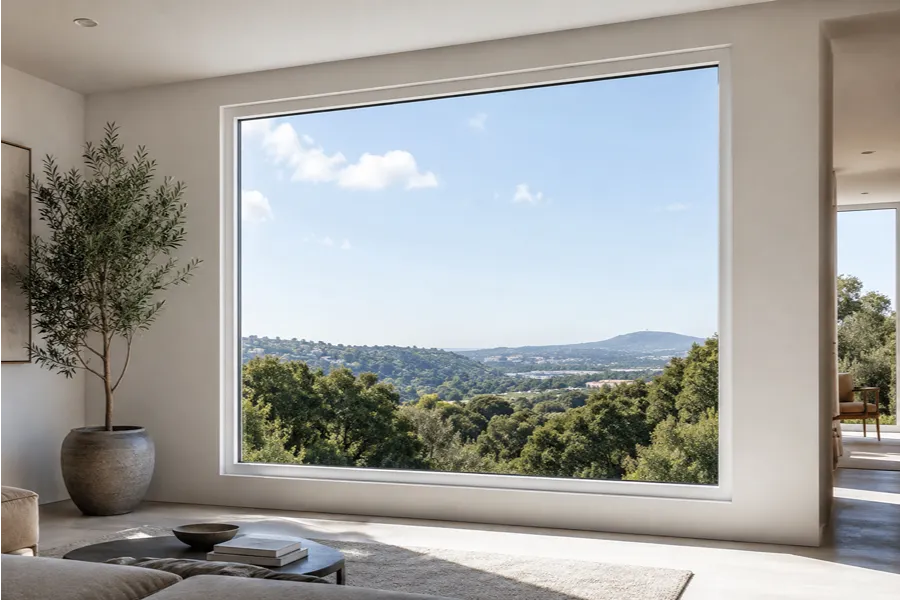
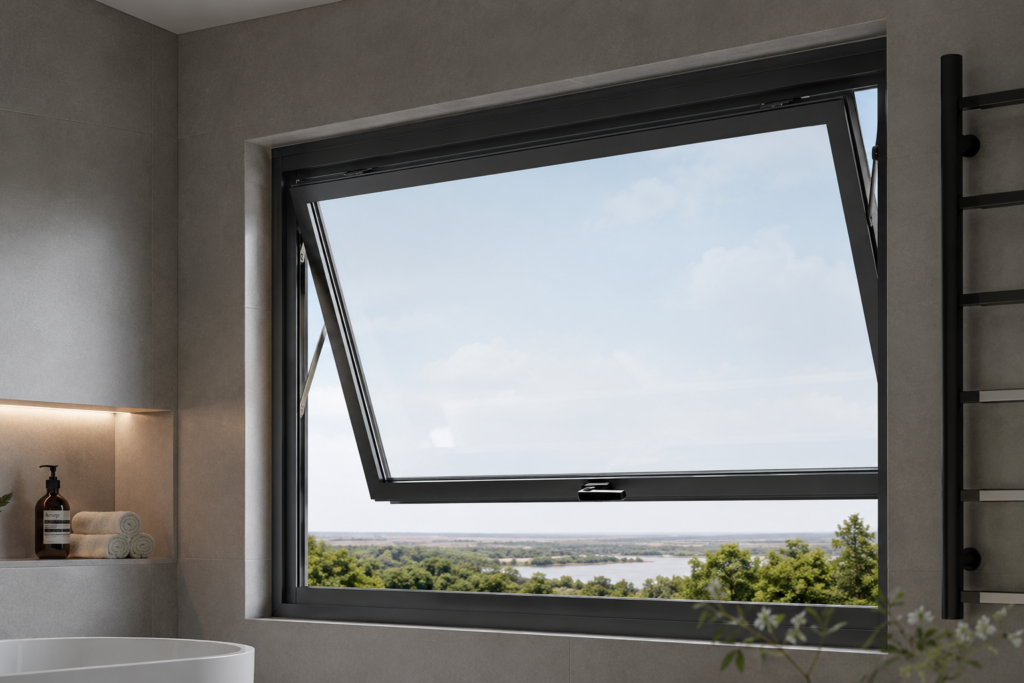
Type comes before brand in what impact windows cost. Fixed and picture openings are cheapest per square foot, because nothing operates and the frame carries no hardware pocket. Shaped or architectural units start near $800 per opening and climb past $3,800 installato. Sliding systems need larger glass to keep the clear opening, which raises the laminated area. Casements trade glass area for hardware and anchorage.
Routing each room to the cheapest suitable type saves more than a brand switch. Nostro casement window line E sliding window line share one profile family for exactly that reason.
Glass Frame and Hardware Cost Drivers
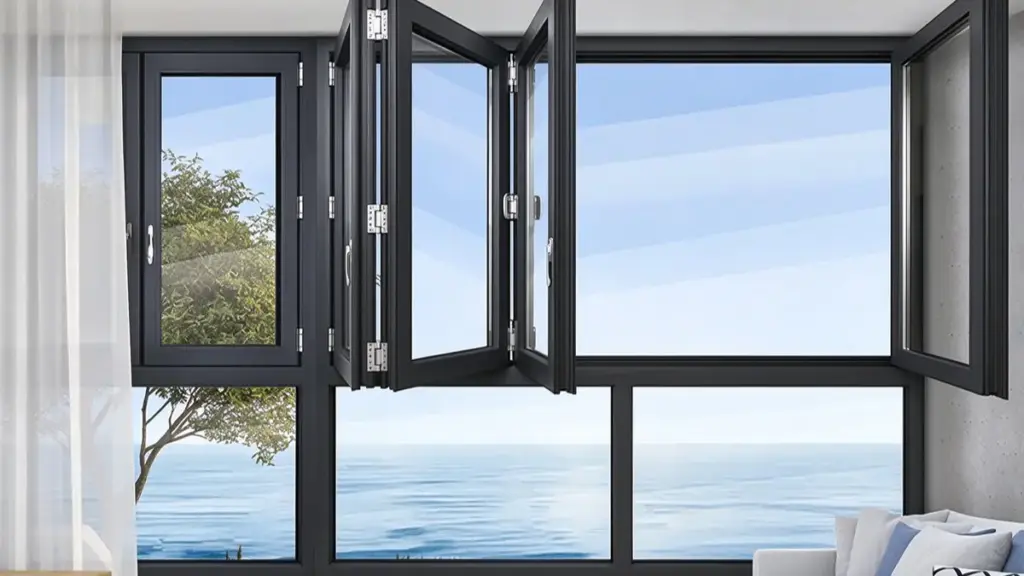
The interlayer and the reinforcement are where a low quote quietly loses money.
Impact glazing is laminated glass outside, a cavity in the middle, and a tempered lite inside. What buyers skip is the middle layer of that outside lite: a polyvinyl butyral (PVB) interlayer bonded between two glass plies. On an impact spec, that interlayer is measured in inches, E 0.030 pollice (0.76 mm) is the minimum you should expect in writing. Ask for the number, not the phrase laminated glass. Two lines decide most of what impact windows cost at the factory gate: glass and reinforcement.
Interlayer Choice Sets the Glass Line
UN 0.060 pollice (1.52 mm) interlayer costs more than 0.030 inch and holds larger fragments at higher design pressure. Ionoplast interlayers such as SentryGlas are stiffer than PVB, so a thinner lite survives the same load. South Florida dealers price that option 12 A 18 percent above the PVB baseline on a comparable unit.
Code splits the requirement by zone. Inside the High-Velocity Hurricane Zone, large-missile debris exposure drives heavier build-ups than the small-missile standard used inland. Glazing thickness follows the test report, and a shop quoting one package for both zones chose the cheaper option.
Thermal Upgrades Change Price Without Changing Rating
Dealers publish consistent upgrade deltas. A Low-E coating adds $30 A $80 per finestra. Argon fill and a wider insulating glass unit (Per me) aggiungere $50 A $120. Tinted glass adds $20 A $50, and an acoustic laminate $40 A $100. On a 20-opening project, choosing Low-E plus argon across the board moves the glass line by $1,600 A $4,000.
Moving from 5/16 pollice a 9/16 inch insulating laminated glass runs $300 A $600 per window in that market. Nostro double versus triple pane comparison covers whether the thermal gain justifies it.
Frame Reinforcement and Wall Thickness
A frame that survives a post-impact pressure cycle needs section, not just profile. Compare a published structural spec for a thermal-break casement. The list reads 6063-T5 native aluminum at 3.0 spessore della parete mm, UN 132 larghezza telaio mm, PA66GF-25 nylon thermal barrier, and EPDM composite foam in a three-gasket layout. Steel reinforcement inside the cavity and extra anchorage points per opening sit on top of that list.
Each of those items is a cost line a quotation can inflate or shrink. Wall thickness at 1.4 mm instead of 3.0 mm is the cheapest way for a factory to come in 20 percent under market. It is also the failure mode importers find after installation, when the sash sags. Ask for measured wall thickness, reinforcement gauge, and the profile drawing in one document.
Hardware That Carries Storm Load
Multipoint espagnolette locking, forged handles, cerniere rinforzate, and structural glazing beads raise the hardware set above a standard window’s. Itemize hardware in a pro forma instead of accepting a blended unit price, because it is the line most often substituted when a project needs to look cheaper. Request the cycle-count rating and the stainless grade for coastal sites, where salt air ends plain-plated hardware in a few seasons.
Certification Cost and Report Amortization
Approval is paid for per tested configuration, and that amortization sits inside your unit price.
Miami-Dade County issues a Notice of Acceptance (NOA) against one tested configuration. The report names a model, a size range, the glass build-up, the reinforcement, and the anchorage and installation details. A state Florida Product Approval (FPA) number covers the wider market outside the High-Velocity Hurricane Zone. Every NOA product qualifies for FPA. The reverse does not hold. Certification is one of the lines that decide what impact windows cost on a certified model.
Test protocols split into two families. Miami-Dade runs the TAS 201, TAS 202, and TAS 203 sequence, while the rest of the state uses ASTM E1886 with E1996 performance classes. Our ratings guide explains what an impact rating actually measures.
Why One Model Costs More Than Its Neighbor
A lab program bills for specimens, engineering support, and re-tests when a specimen fails. Add a larger size, a different sash arrangement, or a heavier glass package, and the tested configuration changes. Factories recover that spend across the volume of the approved model, which is why a certified line commonly carries 10 A 20 percent over a similar non-certified unit.
The corollary catches buyers. A factory with an NOA on model X has no approval on model Y. Model Y at X’s price is a standard window sold at impact pricing. Nothing in the paperwork says so, and the sales sheet may display the X certificate.
How to Check the Paper Before You Commit
Ask for the NOA or FPA number in the quotation. Then look it up in the Miami-Dade public product control record and read three fields against your order: model designation, size limits, and installation drawings. An approval valid for a fixed window does not cover a casement in the same profile. A report past its five-year listing period is not an approval.
Installation must match the approved drawings, which fix anchor type, embedment depth, edge distance, and maximum fastener spacing. Generic screws, skipped noncompressible shims, or widened spacing void the rating. A field inspector rejects the assembly on that alone.
Installation Labor Permits and Site Conditions
Labor is priced per opening, and site conditions decide how many openings one crew-day covers.
Published labor figures run $150 A $600 per finestra, and South Florida installers quote $200 A $600 per opening for straightforward retrofits. A two-person crew typically turns around two to four hours per opening. That clears four to six windows in one crew-day on a single-story house with unobstructed elevations. Installers price by opening rather than by hour, because a day rate spread across six openings beats the same rate spread across two.
Retrofit Against Full-Frame Replacement
A pocket retrofit keeps the existing frame and trades labor for a smaller reveal on sound jambs. Full-frame removal takes the unit down to the rough opening, the correct call where jambs are corroded or the wall needs a new attachment flange. That route adds stucco repair, ordinare, and paint. South Florida installers price structural repair at $200 A $800 per opening on homes built before 1990.
Multi-Story and Condominium Work
Elevation changes the product and the crew. Design pressure targets rise with floor height and exposure, so a tower unit may need a heavier assembly than the same window at grade. Rope access or a boom lift resets the labor day, and interior-only access stretches a four-hour opening into a full shift. Condominium boards add a third cost: an approved product list that narrows your options before anyone quotes.
Permits, Inspections, and the Licensed Contractor Rule
Most Florida counties pull a permit for impact window replacement, and each publishes its own fee schedule. Budget the county figure rather than a national average. A wind-mitigation re-inspection for the insurance credit is a separate visit and a separate report. Unpermitted work carries the sharper penalty: the credit can be withdrawn at renewal.
Owner installation fails for the same reason. Residential window work in the hardest-hit counties proceeds through a licensed contractor, and a self-installed unit voids the warranty and the rating in the same afternoon.
Landed Cost Model for Importer Orders
What impact windows cost at the port is not what they cost at the jobsite.
Importers who bid impact packages off an FOB number alone owe two bills they did not classify: duty and labor. Build the model in the order a customs entry is assessed, and demand each line in writing.
A transparent pro forma splits into five lines, and the glass line swings hardest. Interlayer choice and cavity width are spec decisions rather than shop habits, and frame cost tracks the aluminum price plus the wall thickness you ordered.
| Cost Line | Set By | Demand in Writing |
|---|---|---|
| Product FOB | Bicchiere, telaio, hardware, confezione | Five-line pro forma per model |
| Freight and insurance | Lane, season, container mix | Factory loading plan per container |
| Duty classification | Harmonized Tariff Schedule line | Broker ruling before the order |
| Trade remedy exposure | Section 232, Section 301, AD/CVD scope | Component origin declaration |
| Entry fees | Customs value and transport mode | MPF and HMF shown per entry |
| Port and delivery | Drayage, hoisting, jobsite access | Named-rate drayage quote |
Tariff Exposure Is a Classification Question
IL 2026 tariff base moved three times. The Supreme Court struck the International Emergency Economic Powers Act tariffs in February, and a replacement Section 301 regime took effect in July. Section 232 duties on aluminum were restructured in April into a two-tier system: 50 percent on metals, 25 percent on qualifying derivative articles. The administrative review of antidumping and countervailing duties on Chinese aluminum extrusions published rates above 80 percent for the reviewed exporters.
Whether a finished window falls under an extrusion order is a fact-specific scope question, not a price-list question. Get the classification from a licensed customs broker and a written scope determination before you commit to a unit price.
Fees You Can Calculate From Entered Value
Merchandise processing fee runs 0.3464 percent of entered value. The fiscal 2027 range is $34.58 minimum and $670.86 maximum per entry. Harbor maintenance fee is 0.125 percent on ocean cargo, with no cap. On a $60,000 iscrizione, that is $207.84 in processing fee and $75 in harbor maintenance.
Lead Time and Seasonal Pressure
Certified assemblies run four to ten weeks in production, and shaped units run longer because a new configuration can trigger engineering work. Demand rises from June through November, so hurricane season stretches slots and freight together.
Insurance Credits and Long Run Value
The insurance credit shortens the payback; it rarely produces it on its own.
Florida Statute 627.0629 sets the terms. Every residential rate filing in the state must include actuarially reasonable discounts for fixtures that cut wind loss, and the section names opening protection and window strength. Assemblies meeting the minimum of the Florida Building Code qualify on their face. Since October 2023 each insurer must publish its hurricane mitigation credits on its own website, so the numbers are checkable before you sign a purchase order. The credit applies to the wind portion of the premium rather than the whole policy, and carriers commonly show discounts between 10 E 45 per cento. The top figure requires protection at every opening.
Run the arithmetic on a real project. Twenty openings at $1,400 each is a $28,000 spend. UN $2,400 wind premium with a 25 percent mitigation credit returns $600 a year, which repays the project in 47 anni. A 45 per cento, the credit returns $1,080 a year and the payback is still 26 anni. Anyone promising that impact windows pay for themselves through insurance alone is describing a different house than yours.
The financial case sits in avoided loss. Coastal policies commonly carry a wind deductible of 2 A 5 percent of dwelling value. On a $400,000 casa, that is $8,000 A $20,000 before coverage starts after a storm. A certified assembly that keeps rain and debris outside buys back that exposure, plus the interior damage behind it.
Document the Credit on the State Form
Insurers credit documented features, not claimed ones. The state form is the Uniform Mitigation Verification Inspection Form, numbered OIR-B1-1802 and issued by the Florida Office of Insurance Regulation. The statute points to an inspection by a licensed home inspector, and the insured may pay for it. A completed report holds for up to five years from the inspection date. A revision of that form took effect on April 1, 2026, so confirm your inspector files the live version before the carrier rejects the paperwork. The section also requires the premium notice to show the rate adjustment, so the credit belongs on your renewal declaration as its own line.
Tax Credits Changed, So Check the Year
The federal Section 25C credit for energy-efficient windows applied to property placed in service through December 31, 2025. It capped at $600 a year for windows inside a $1,200 annual limit. IRS guidance on the credit is explicit about that end date, yet many 2026 buying guides still quote the $600 figure as if it were live. The state’s My Safe Florida Home Program has matched homeowner money for hardening upgrades in past cycles. Grant ratios depend on legislative appropriations, so confirm program status in the year you sign.
What the Windows Do Not Fix
Impact openings address wind-borne debris, not water moving up from the ground. A certified window package does not reduce a flood premium priced on FEMA zone and elevation. Dealer materials quote resale uplift at three to five percent of value, without a study behind it. Treat both claims as neutral, and buy the assembly for the storm it is rated against.
Red Flags in a Low Impact Window Quote
When a quote is 40 percent under market, the cut sits in glass or paperwork rather than efficiency.
Two numbers bound what impact windows cost per installed opening. Below roughly $900 inside a certified-product claim, a quote cannot cover product approval, licensed labor, and permit at the same time. Above roughly $4,200, the question flips: what is in the scope that you did not ask for. Between those bounds, differences are explainable, and an explainable difference is the point of asking.
Work the gap line by line. Ask which interlayer thickness sits in the outside lite, then match the approval number to model, size range, and installation detail. Then ask what the permit, the haul-away, stucco repair, and the re-inspection cost. Installers price those omissions at $1,000 A $2,000 to make two quotes comparable.
| Red Flag | What It Usually Means | Ask for |
|---|---|---|
| Installed price under $900 | Non-approved product or unpermitted work | Approval number and permit responsibility |
| Certificate for another model | Standard window priced as impact | Model, size range, glass build-up match |
| Laminated with no interlayer note | Thinner interlayer than the report requires | Interlayer thickness in inches |
| Blended unit price | Hardware and sealing substituted later | Itemized pro forma and hardware set |
A blended price is the quietest problem on the list. Substitutions at the hardware and sealant lines appear only when the sash sags or the water test fails. By then the savings have left the building.
Domande frequenti
What is the average cost of impact windows for a house?
UN 15 A 20 opening house in South Florida runs $12,000 A $32,000 installato, con $800 A $1,400 per window as the common band. Homes with shaped openings, tall sliders, or third-floor access push higher.
Are impact windows worth the cost in Florida?
For most coastal owners, yes, on risk rather than on savings. UN $28,000 package returns $600 A $1,080 a year in wind credits, which does not repay the cost. It removes a 2 A 5 percent wind deductible and the interior damage behind a breached opening.
How much do impact windows save on insurance?
Carriers commonly publish mitigation credits between 10 E 45 per cento, applied to the wind portion of the premium. The exact figure depends on your carrier, your rating zone, and whether every opening is protected. Ask for the credit shown as its own line on the renewal notice.
Why are some impact window quotes so much cheaper?
Most of what impact windows cost sits in three lines: bicchiere, approval, and scope. A thinner interlayer or a non-approved model removes cost the quote does not show. A permit, haul-away, or stucco repair left out of the proposal shifts $1,000 A $2,000 onto the invoice later.
Are hurricane shutters cheaper than impact windows?
Upfront, yes. Panels and rolling shutters for a whole house commonly cost $2,000 A $8,000 against $12,000 A $32,000 for certified openings. Shutters require every opening covered before the storm and still block light. A missed window can void the full mitigation credit.
What voids an impact window warranty and rating?
Field changes outside the approved drawings void both. Generic fasteners instead of the specified anchors, widened fastener spacing, missing noncompressible shims, substitute glazing beads, and unpermitted installation each cancel the warranty, the rating, or the insurance credit.