Most procurement disputes over hurricane impact windows start with one mistake: buyers treat the impact rating as a glass spec. It is not. A rating is a certificate on a complete assembly, and swapping one profile or fastener can void it.
This guide reads those certificates. We cover what a Miami-Dade Notice of Acceptance (NOA) number means and how the TAS impact and pressure protocols run. We also show what the labels must carry, and which paperwork a buyer outside Florida should request before signing a purchase order.
What Impact Rating Actually Means
An impact rating verifies how a whole window assembly holds together under storm loads, not how hard the glass is.
Assembly Performance Versus Glass Strength
Laminated glass alone does not make a window impact-rated. Laboratories test the fenestration assembly as one system: ガラス, 中間層, frame profile, sealant, ハードウェア, and the fasteners fixing the frame to the wall. Every part has to transfer storm load back into the building structure.
In a major hurricane the glass in certified units still cracks or shatters. The product passes because the polymer interlayer keeps the fragments anchored inside the frame. That intact barrier is what separates certified hurricane impact windows from plain laminated glazing, and it stops the internal pressurization that lifts roofs and pushes walls out from the inside.
Two Separate Numbers on the Same Spec Sheet
Impact resistance and structural pressure capacity are certified independently. The debris test proves the unit will not open up when struck. The design pressure (DP) rating proves it survives hours of alternating push and pull afterward.
A catalog page carrying only one of the two numbers is not a hurricane product. Request both, plus the approval document that names the tested size range. 私たちのガイド u-factor windows follows the same logic: certified values travel with the whole assembly, never with one component.
Debris Impact vs Wind Pressure Tests
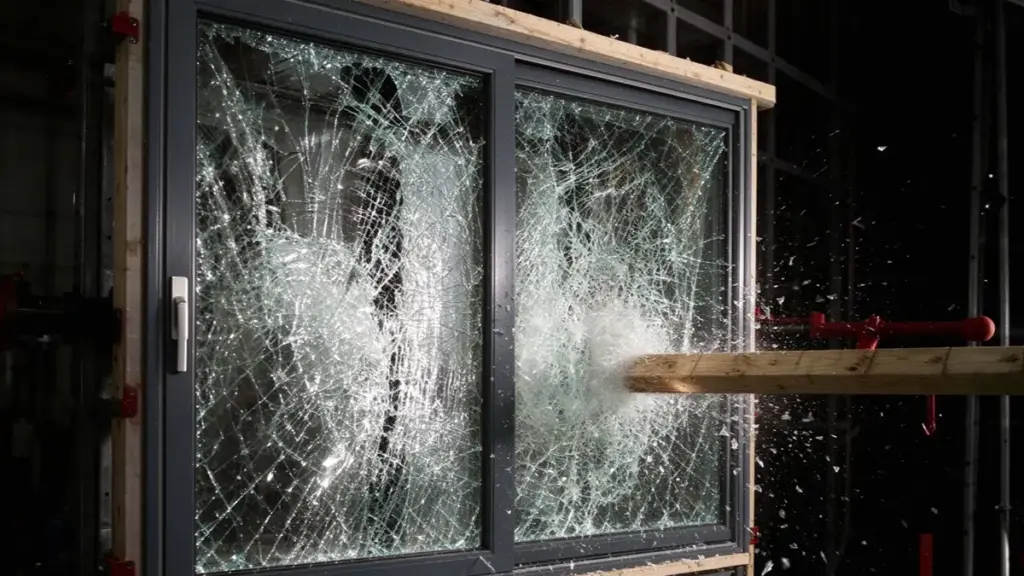
Debris testing proves a window resists a strike; cyclic pressure testing proves the cracked unit survives the storm that follows.
Missile Sizes, Speeds, and Failure Limits
Florida building code language sets the missile type by height. Openings within 30 feet of grade take the large-missile test: a 9-pound nominal 2×4 fired at 50 feet per second. Openings above 30 feet take the small-missile test: 2-gram steel balls at 130 feet per second.
Projectile speed is not universal. It follows the building category and the wind-borne debris exposure of the site. Schools and hospitals in a debris region can face a heavier or faster launch than a house on the same street. Confirm the required missile level with the engineer of record instead of copying a number from a brochure.
The same physical test reaches different paperwork by code path. Miami-Dade cites TAS 201 and TAS 203, while most other US coastal jurisdictions cite the ASTM E1886 and ASTM E1996 framework for hurricane impact windows. Ask which standard the report follows before you compare two suppliers’ documents.
Passing does not mean pristine glass. The pane is expected to crack. The specimen fails if the broken area opens a gap wider than 1/16 inch and longer than 5 inches that lets air through.
Static Load and 9,000 Pressure Cycles
A single blow is half the problem. Storm wind pushes and pulls on the same frame for hours, working any crack open.
- Static pressure testing: Constant positive and negative loads measure frame deflection, glass breakage, and fastener limits.
- Cyclic pressure testing: The chamber runs 9,000 pressure repetitions, split into 4,500 positive and 4,500 negative cycles, on the already-impacted specimen.
Both phases hit the same window in one sequential run. The unit is struck first, then pressurized while still broken. Testing an undamaged sample for the cycling phase proves nothing about post-impact behavior.
Miami-Dade NOA and Florida Building Code
Miami-Dade acceptance is the strictest path in the United States, and its certificate covers only the assembly and installation shown in its drawings.
| Protocol | 一次機能 | Key Test Metric |
|---|---|---|
| TAS 201 | Missile impact | Timber or steel-ball launch, then breach check |
| TAS 203 | Cyclic pressure loading | 9,000 positive and negative cycles after impact |
| TAS 202 | Uniform static pressure | Structural load, 空気漏れ, 水の浸透 |
High-Velocity Hurricane Zone Rules
The Florida Building Code designates Miami-Dade and Broward counties as the High-Velocity Hurricane Zone (HVHZ). Baseline design wind speeds there reach 175 mph in Miami-Dade and 170 mph in Broward, the highest mandatory values in the state.
Inside that zone, products must follow the TAS protocols. ASTM routes accepted in other Florida counties do not satisfy HVHZ requirements. Local building departments in the zone keep final authority to accept or reject a submittal for a specific site.
Outside the zone, engineers still calculate site loads under the current code edition. The Florida Building Code Eighth Edition (2023) is the version in force; the Ninth Edition takes effect on December 31, 2026.
Statewide Approval and Installation Limits
Florida maintains a statewide product approval registry covering the rest of the state. A statewide approval is broader than an HVHZ notice but does not by itself authorize installation inside Miami-Dade or Broward.
Certification covers the installation, not just the window. Anchors must match the rough opening material: コンクリート, hollow masonry, 鋼鉄, or wood framing. The approval drawings dictate embedment depth, edge distance, and maximum fastener spacing.
Substituting generic screws, skipping noncompressible shims, or widening fastener spacing voids the rating. Field inspectors reject any physical detail that deviates from the certified documents.
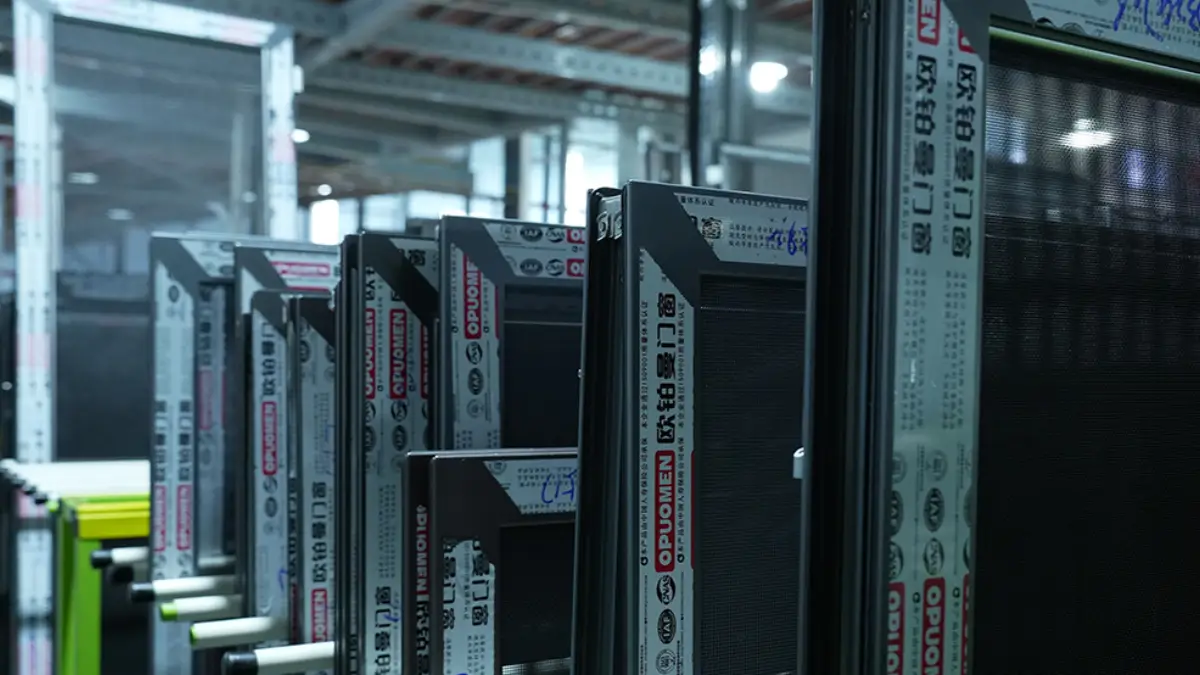
How the Hurricane Test Sequence Runs
One window assembly must survive impact first, then cycling, then static load, in that fixed order.
Impact First, Then Cycling, Then Static Load
Laboratories cannot run these protocols in a random order. The cracked glass from the impact phase determines how the system behaves under every later load.
- TAS 201 (インパクト): Technicians fire the required missile at the glazed unit, fracturing the glass to simulate windborne debris before any pressure load is applied.
- TAS 203 (cycling): The damaged specimen then faces 9,000 positive and negative cycles, testing whether the interlayer keeps broken fragments seated.
- TAS 202 (static): Air infiltration runs first, then load steps up to the design pressure, 水の浸透, and the structural check that establishes peak capacity.
That progression mirrors a real storm. Debris strikes early, gusts work the weakened panel for hours, and the building still has to keep rain out.
Specimen Limits That Define a Valid Report
Test reports are only as useful as their boundary conditions. Laboratories mount the complete system, ガラスを含む, フレーム, ロック, ヒンジ, fasteners, and the supporting substrate, exactly as crews install it in the field.
Manufacturers test the largest configuration of a series. Approval then covers smaller units of the same build, and nothing larger. A report showing a 1.2 メートル× 1.2 m specimen does not support a 2.4 m slider.
Verifying Approval Records and Labels
Check every NOA number against the public register before you pay a deposit; approval records expire and cover fixed size limits.
Query the Public Product Control Search
Miami-Dade publishes its product control search so anyone can confirm a Notice of Acceptance. The county product control search lists the NOA number, holder, issue and expiry dates, and the product description on file.
A Notice of Acceptance runs for five years and must be renewed. Read three fields before you trust a quotation: the maximum tested width and height, the positive and negative design pressures, and the installation substrate the approval drawings assume.
If a supplier quotes an approval number you cannot find, treat the offer as unverified. Statewide Florida approvals, Caribbean authorities, and Texas TDI evaluations each carry their own registries and their own validity windows.
Label Checks That Catch Substitutions
Miami-Dade requires the manufacturer to attach a label to every approved unit. The county’s NOA labeling guidelines list the minimum content: maker name, model or product line, positive and negative design pressures, the impact designation, the NOA number, and the approval statement.
Compare the label with the approval document and the packing list, on the same shipment, before unloading. A mismatch in fastener schedule, 中間層, or glass build means the units on your site are not the units that were tested.
Design Pressure and Load Ratings
Design pressure ratings set structural survival, and they vary opening by opening on the same building.
Wind Speed Zones and Site Loads
Wind load grows with the square of velocity. A modest rise in design wind speed produces a jump in pressure, which is why hurricane-zone windows carry heavier glass and deeper frames than inland product.
Windward faces push inward while leeward surfaces pull outward. Corners and roof edges see concentrated suction, so they often demand higher negative ratings than the middle of a wall.
Engineers derive each opening’s requirement from terrain exposure, mean roof height, and the enclosure classification of the building. Buy to those numbers, not to a regional headline wind speed.
Rating Structure and Performance Classes
Ratings appear as paired numbers, positive and negative, in psf. Ask for both. A single figure hides the weaker direction, usually suction at corners.
North American fenestration practice also groups products into performance designations. The residential ladder runs from R for standard work, through LC for large glass in high-rise openings, to CW and AW for curtain wall. Confirm the letters your market requires with the specifying engineer.
Under ASTM E330, the chamber holds each pressure step for 10 seconds. Structural verification runs at 1.5 times design pressure, while the proof test applies design pressure itself with no damage allowed.
Glass and Frame Construction Choices
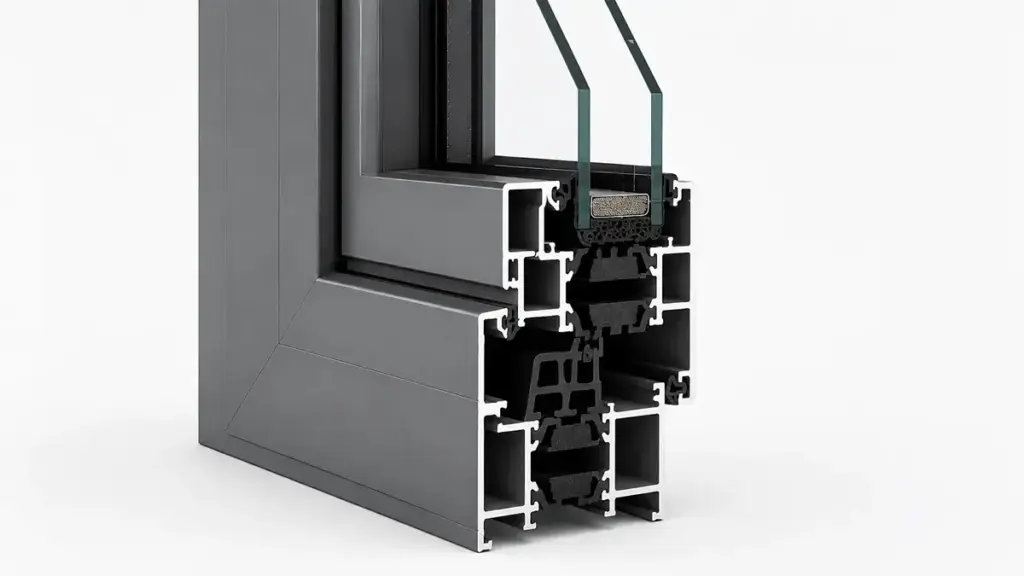
Impact performance comes from the interlayer and the frame together, while thermal upgrades change weight and load paths.
Interlayers, ガラスの種類, and Thermal Upgrades
Standard impact glazing bonds two glass plies to a tough polymer interlayer. Debris cracks the outer pane; the interlayer holds the fragments inside the frame and keeps the envelope closed.
- ポリビニルブチラール (PVB): The common choice, with strong fragment retention and sound damping.
- Ethylene-vinyl acetate (エヴァ): Chosen where edge moisture resistance matters.
- Ionoplast: Stiffer than PVB, so it limits glass deflection and supports thinner high-pressure builds.
Glass strength follows the target load. Annealed glass handles basic loads, heat-strengthened glass roughly doubles that capacity, and tempered glass resists surface stress but breaks into small granules when compromised. Thicker laminates also raise the acoustic floor, a trade-off we cover separately in the acoustic glass guide.
Single laminated glazing stays light and thin, the economical storm option. Insulated laminated units add a second pane and a gas cavity for thermal performance, then shift weight onto sashes, ヒンジ, and rollers. Put the window R-value figures on the same submittal as the structural ones, so the thermal package and the impact package are approved as one assembly.
Frame Materials and Anchorage Details
Cyclic suction finds the frame that buckles, no matter how good the glass package is. That is why hurricane impact windows are sold as engineered systems, with the frame profile named on the approval document.
- 熱で壊れたアルミニウム: A polyamide barrier separates exterior and interior metal, pairing rigidity with thermal isolation and salt-air tolerance.
- Reinforced vinyl: Multi-chambered profiles carry internal steel or aluminum to hold high design pressures without warping.
- Fiberglass and hybrids: Near-zero thermal expansion and immunity to salt spray suit oceanfront work.
Interlocking stiles and reinforced meeting rails stop sash separation under cycling, the same load path that makes our comparison of thermal-break aluminum assemblies relevant to storm-rated walls. Dense seals and clear drainage channels keep wind-driven rain from bypassing the unit.
The last load path is anchorage. Frames must fix directly into structural substrate at the specified spacing, with no gap between the anchor schedule on the drawings and the screws in the installer’s bucket.
Certifying for Export Markets
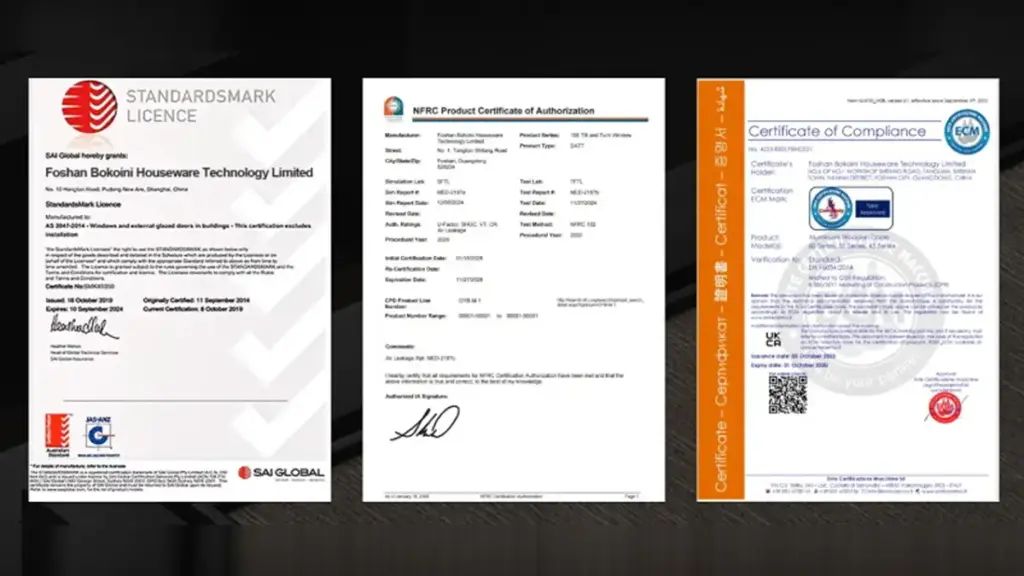
A Florida approval is not a global passport; each destination runs its own code, registry, and label rules.
Regional Codes and Test Standards
Buyers adapt the same core engineering to different rulebooks:
- Caribbean and Latin America: Projects frequently specify Florida Building Code compliance and Miami-Dade NOA parameters to satisfy insurance underwriters.
- 欧州連合: CE marking under EN 14351-1 and the Construction Products Regulation requires a Declaration of Performance, but no windborne debris test.
- Australia and New Zealand: AS/NZS 2047 governs structural wind performance, while cyclone-region debris requirements come from AS/NZS 1170.2 and the National Construction Code.
- Middle East: Designs face thermal cycling, sand exposure, and local wind loads that do not match US debris maps.
Change one profile or lock to hit a local aesthetic and the original test report no longer describes the product you shipped.
Export Documentation and Factory Control
Paperwork delays shipments more often than failed tests. Customs officers and building officials read your submittals before they release cargo.
- Accredited laboratory reports: The lab must hold ISO/IEC 17025 accreditation for the structural, 空気, 水, and impact results you submit.
- Factory production control: Continuous checks must prove every laminated pane, glass ply, and hardware set matches the tested specimen.
- Technical export package: Assembly drawings, anchorage schedules, and compliant labels travel with the containers.
Regulators rarely accept self-declarations for life-safety products. Expect third-party audits of your line as a condition of keeping export approvals.
最終的な考え
Uncertified glass imports look cheaper until an inspector rejects the submittal. Real protection in hurricane impact windows is a system: 強化されたプロファイル, correct anchor spacing, certified laminates, and paperwork naming the exact assembly on your site.
Build the specification around four items before you request pricing. Name the required missile level, the design pressure for each opening, the tested maximum size of the series, and the approval number you will verify. That list separates a compliant order from an expensive argument.
Send us the wind loads for your project and we will return test documentation for the specific assembly, not a generic brochure. Sample frames and full submittal packages are available for engineering review.
よくある質問
Is laminated glass the same as an impact rating?
いいえ. Laminated glass holds shards together for security or sound control, using a plastic interlayer. An impact rating means a laboratory tested the complete assembly, フレームを含む, ハードウェア, and anchors, against missile impact and cyclic pressure without a breach.
What is the difference between an impact rating and a hurricane rating?
An impact rating covers debris strikes, such as a flying 2×4. A hurricane rating covers structural survival, including wind pressure, water leakage, and air infiltration. Certified hurricane impact windows clear both tests on one assembly, so verify both numbers on the approval document.
Do impact windows keep glass intact during a storm?
Expect cracking, not clear glass. The interlayer catches the fragments and keeps the opening sealed. Certification fails only when the broken area opens a gap wider than 1/16 inch and longer than 5 inches that passes air.
Does a Florida approval work in other states?
Not automatically. Miami-Dade approval is the strictest route, but Texas, the Carolinas, and other coastal states run their own product evaluation and wind load rules. Match the missile level and design pressure to the local engineer’s calculation, then submit the matching test report.
Do impact windows lower insurance premiums?
They support a wind-mitigation credit rather than a guaranteed discount. Florida requires carriers to file mitigation credits with the Office of Insurance Regulation, covering protected openings and other hardened features. Rates vary by carrier, and credit applies only when every opening, including garage doors, is documented.
Are impact windows better than storm shutters?
For a project that needs day-one protection, はい. Impact windows protect the opening permanently, keep daylight, and add thermal and acoustic value. Shutters cost less per opening but depend on someone deploying them before the storm arrives, which is why spec-driven buyers treat them as separate line items.