Selecting an aluminum door system requires careful consideration of thermal performance, confidentialité, design requirements, et durabilité à long terme. This guide reviews modern aluminum door solutions, focusing on system design, performances matérielles, and practical applications in residential architecture.
L'évolution de l'architecture domestique minimaliste en 2026
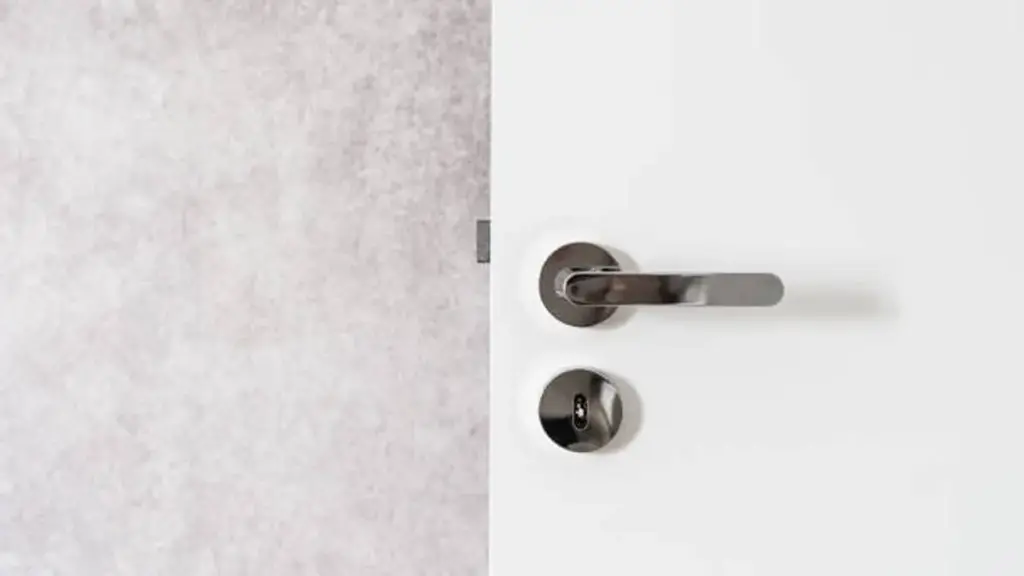
Dans 2026, minimalist residential architecture continues to focus on energy efficiency, qualité des matériaux, and seamless integration between indoor and outdoor spaces. Aluminum doors support these goals through energy efficiency, durabilité, and refined architectural aesthetics.
Esthétique évolutive: Warmth, Tactile, et luxe calme
Modern minimalism has evolved beyond visual simplicity into a design philosophy focused on performance, material authenticity, et valeur à long terme. “Moins” now means optimized material use, carbone incorporé inférieur, and durable construction.
Le 2026 aesthetic embraces natural textures and refined finishes. Materials such as stone, bois, béton texturé, métaux brossés, and aluminum create warmth without excessive decoration. In residential architecture, “quiet luxury” is expressed through precise proportions, refined finishes, high-quality materials, and carefully integrated details rather than excessive decoration.
Intégration fonctionnelle: Durabilité, Adaptabilité, et conception intelligente
Sustainability is integrated through efficient layouts, matériaux durables, and high-performance building systems. Premium minimalist homes increasingly incorporate passive design, energy-efficient glazing, contrôle solaire, and recyclable materials.
Aluminum door systems support these requirements with thermally broken profiles, energy-efficient glazing, durable finishes, concealed hardware, and smart access solutions. They provide thermal performance, sécurité, and design continuity while maintaining minimalist aesthetics.
Lignes de visibilité ultra fines et esthétique du verre expansive
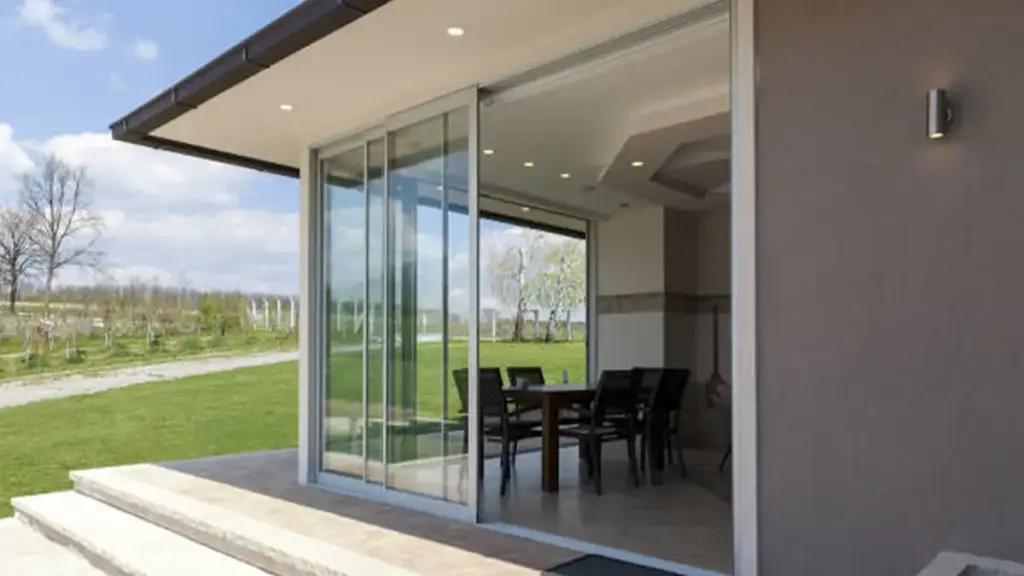
Ultra-slim aluminum door systems are designed with reduced frame visibility, creating larger glazed areas and cleaner architectural lines while maintaining required structural performance.
Ultra-slim designs focus on minimizing visible frame sections, especially at the center meeting stile where sliding panels connect. The objective is to create a near-continuous glass appearance without compromising the strength required for large-format openings.
| Fonctionnalité | Considération |
|---|---|
| Largeur de verrouillage visible | Quelle est l'étroitesse du cadre où les panneaux se rencontrent? |
| Visibilité du cadre périphérique | Combien de cadres s'affichent en tête, montant, et seuil? |
| Style de seuil | Est-ce affleurant, profil bas, ou élevé? |
| Caché vs. Pistes visibles | Les pistes sont-elles masquées pour un look plus net? |
| Taille du panneau et limites de poids | Quelles sont les dimensions et le poids maximum supportés par le système ?? |
| Accumulation de vitrage | Quelle épaisseur et quel type de verre sont utilisés? |
| Performance thermique | Quelle valeur U le système atteint-il? |
| Résistance à l'air et à l'eau | Dans quelle mesure est-il étanche aux fuites et aux courants d'air? |
| Intégration du verrouillage et de la poignée | Comment sont gérées la sécurité et le fonctionnement? |
Principes fondamentaux et spécifications techniques
Ultra-slim systems are engineered to minimize visual barriers and emphasize the glass itself. Premium sliding systems may achieve interlock widths of around 20–21 mm, creating a cleaner architectural appearance.
Aluminum enables these narrow profiles because of its high strength-to-weight ratio and structural rigidity. Advanced systems may also incorporate flush thresholds and concealed tracks to create seamless transitions between spaces.
When specifying ultra-slim doors, evaluate the complete frame system rather than only the interlock width. Head, montant, and threshold dimensions directly influence the overall visual effect.
Intégration de la conception et avantages en termes de performances
Ultra-slim aluminum doors are ideal for residences that prioritize daylight, vues, and indoor-outdoor connections. They create a glass-wall effect while maintaining practical operation.
Cependant, slimmer sightlines require careful engineering. Large glass panels increase structural loads and installation requirements, while exterior applications must consider drainage, scellage, performances thermiques, et résistance aux intempéries.
For interior applications, aesthetic considerations often take priority because weather exposure is limited. Pour les systèmes extérieurs, achieving minimal sightlines with high performance typically requires more advanced materials, matériel, and manufacturing precision.
Élevez vos projets avec des solutions en aluminium haut de gamme
Systèmes Grand Pivot pour les entrées résidentielles de luxe
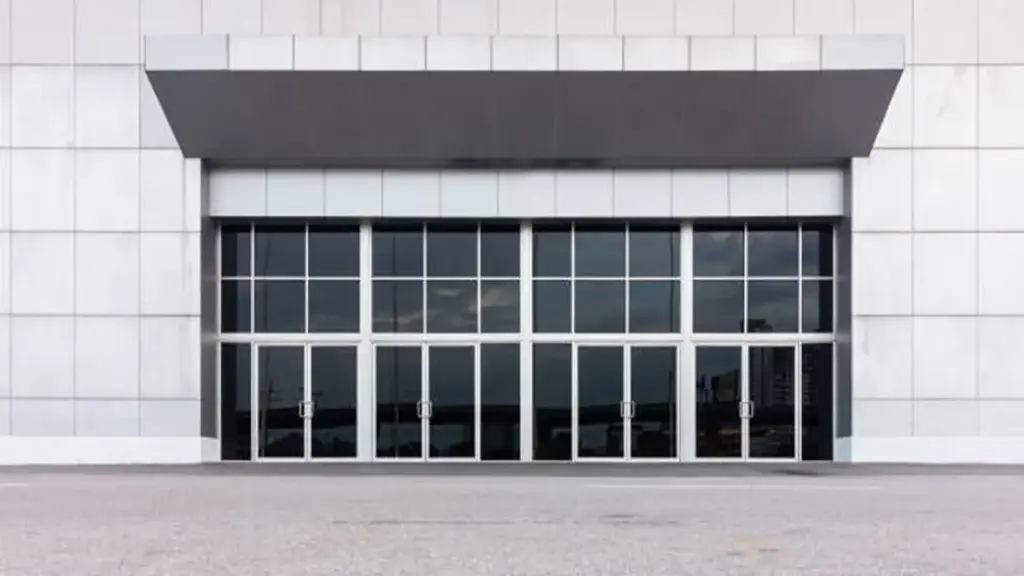
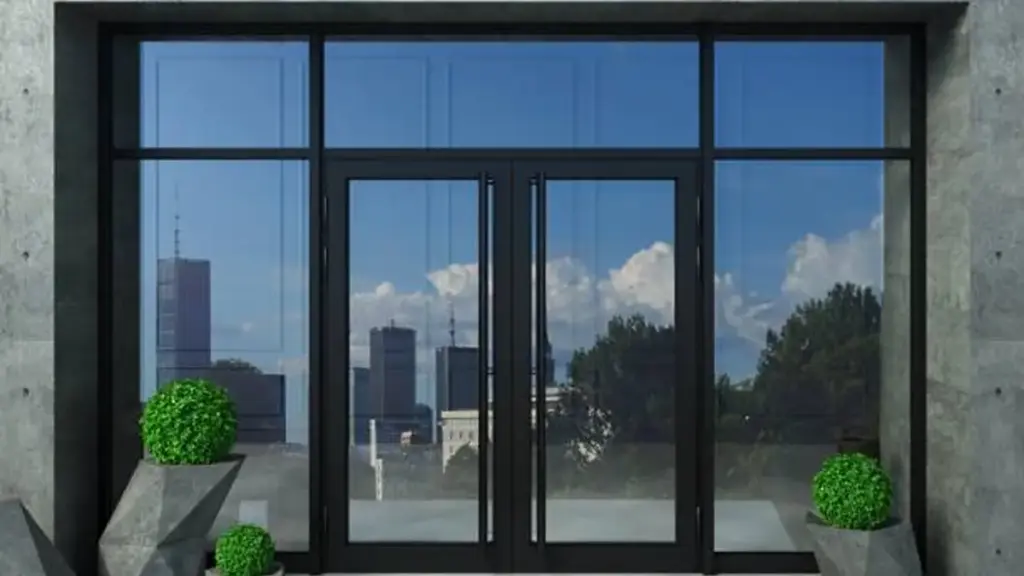
Grand pivot doors are large-format aluminum entrance systems designed for luxury residences where scale, proportion, and entrance impact are important design considerations. Often specified as full-height and extra-wide doors, they combine large-scale proportions with minimalist detailing to create dramatic residential entrances.
Impact architectural et principes de conception
Unlike standard swing doors, grand pivot systems use a central or offset pivot mechanism to support larger door leaves while maintaining a clean, balanced appearance. They are commonly integrated with modern façades, large-format glazing, and aluminum cladding systems, reinforcing contemporary architectural styles based on simplicity, proportion, and material expression.
Key design options include:
- Finitions: Powder-coated, anodisé, métallique, and matte textures highlight aluminum’s refined appearance and durability.
- Panel configurations: Solid aluminum panels or glazed inserts provide different levels of privacy, lumière du jour, and visual impact.
- Hardware and detailing: Oversized handles, concealed pivot hardware, montures minces, and low-profile thresholds maintain a seamless luxury aesthetic.
Advanced Functionality and Performance
Grand pivot systems combine high-strength aluminum profiles, heavy-duty pivot hardware, and advanced locking systems to support large door dimensions while maintaining smooth operation and long-term reliability.
Aluminum provides the structural strength, résistance à la corrosion, and dimensional stability required for oversized entrance doors. High-performance systems typically include:
- Profils à rupture de pont thermique to reduce heat transfer between interior and exterior surfaces.
- Insulated glazing and weather seals to improve thermal, acoustique, and air-tightness performance.
- Systèmes de verrouillage multipoints to enhance security for large residential entrances.
The pivot mechanism transfers the door load through dedicated top and bottom pivot hardware, allowing oversized panels to operate smoothly with proper engineering. Premium hardware may include concealed bearings, adjustable pivot points, and soft-close functions to improve user experience and reduce long-term maintenance.
Project Specification Considerations
When specifying aluminum grand pivot doors, key factors include:
- Door size and weight: Confirm maximum panel dimensions and structural requirements.
- Pivot configuration: Select pivot position to achieve the desired opening effect and clear passage width.
- Profile system: Verify thermal break design, glazing compatibility, et performances structurelles.
- Hardware package: Specify pivot load capacity, systèmes de verrouillage, poignées, et intégration du contrôle d'accès.
- Exigences de performances: Define U-value, air, eau, acoustique, and security targets according to project standards.
- Finish and threshold design: Coordinate aluminum finishes and floor integration for a seamless architectural result.
Grand pivot aluminum doors provide a balance of dramatic scale, esthétique minimaliste, and engineered performance, making them a preferred choice for premium residential entrances where architectural impact and long-term durability are equally important.
Configuration de poche multi-diapositives, conceptions peu encombrantes
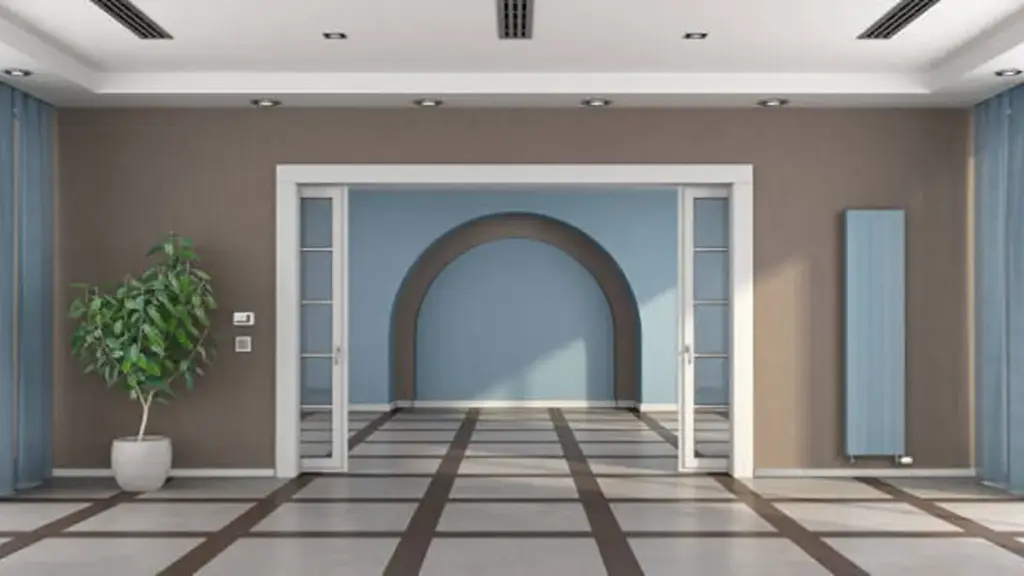
Multi-slide pocket doors create wider clear openings by allowing panels to slide completely into concealed wall cavities. This creates wide, unobstructed openings while maintaining a clean minimalist appearance, making them ideal for modern residential layouts and indoor-outdoor connections.
Principes de conception de base pour l’efficacité spatiale
Multi-slide pocket aluminum doors operate by sliding panels horizontally into concealed wall pockets. Unlike traditional sliding systems, the panels disappear completely when opened, eliminating visible stacking areas and maximizing the clear opening width.
This configuration is especially effective where floor space is limited. Without swing clearance or exposed door panels, rooms can maintain flexible layouts with fewer circulation restrictions.
Aluminum frames support large glass panels while maintaining slim profiles and structural stability. The combination of minimal framing and concealed operation creates a seamless glass-wall effect suited to contemporary architecture.
When planning pocket systems, designers should consider wall cavity dimensions, panel weight, track configuration, and access requirements. Proper coordination ensures smooth operation and long-term reliability.
Practical Applications and Design Considerations
Multi-slide pocket doors are commonly used as room dividers, patio openings, terrace connections, and large exterior transitions. Fully retractable panels allow spaces to transform between enclosed and open configurations without visual barriers.
Available configurations include single-wall pocket systems, bi-part designs with panels moving in opposite directions, and corner pocket systems that open larger areas by removing corner posts. These options provide flexibility for different architectural concepts.
For exterior applications, wall pockets require careful detailing. Structural space, drainage, isolation, and weather sealing must be considered to maintain thermal and operational performance.
By combining expansive glazing, minimal framing, and flexible opening options, multi-slide pocket aluminum doors provide a practical solution for projects that prioritize space efficiency, lumière du jour, and modern architectural continuity.
Innovation matérielle: Alliages d'aluminium à haute résistance
High-strength aluminum alloys enable slimmer door profiles, larger glazed areas, and improved structural performance while maintaining long-term durability. They are essential for modern architectural doors that require minimal framing, grandes ouvertures, et des performances fiables.
Alliages d'aluminium à haute résistance: Types and Applications
Aluminum alloys provide the strength needed for door frames, ceintures, and hardware while keeping overall weight low. This allows manufacturers to create larger panels and slimmer profiles without excessive frame thickness.
Common architectural alloys include:
- 6063 alliage d'aluminium: The most widely used alloy for extruded door and window frames. It offers excellent surface finish, bonne résistance à la corrosion, and efficient extrusion performance.
- 6061 alliage d'aluminium: Provides higher strength than 6063 and is commonly used where additional structural capacity is required for sliding and entrance door systems.
- 6082 alliage d'aluminium: A stronger structural alloy suitable for large door panels, heavy glazing, and applications requiring higher load resistance.
- 5086 alliage d'aluminium: Known for excellent corrosion resistance, making it suitable for coastal, humide, and industrial environments.
- 7075 alliage d'aluminium: An ultra-high-strength alloy used in specialized applications where maximum strength-to-weight performance is required.
The selection of alloy depends on door size, conditions environnementales, charges structurelles, and performance requirements rather than strength alone.
Mechanical Performance and Design Advantages
Architectural aluminum alloys provide several advantages for modern door systems:
Slim profiles with larger openings:
The high strength-to-weight ratio of aluminum allows large-format sliding doors, pivot entrances, and floor-to-ceiling glazing systems to maintain rigidity without oversized frames.
Durability and dimensional stability:
Aluminum naturally forms a protective oxide layer, providing corrosion resistance and reducing the risk of rust, déformation, or long-term deterioration. With proper finishes, aluminum doors can maintain performance for decades with minimal maintenance.
Flexibilité de conception:
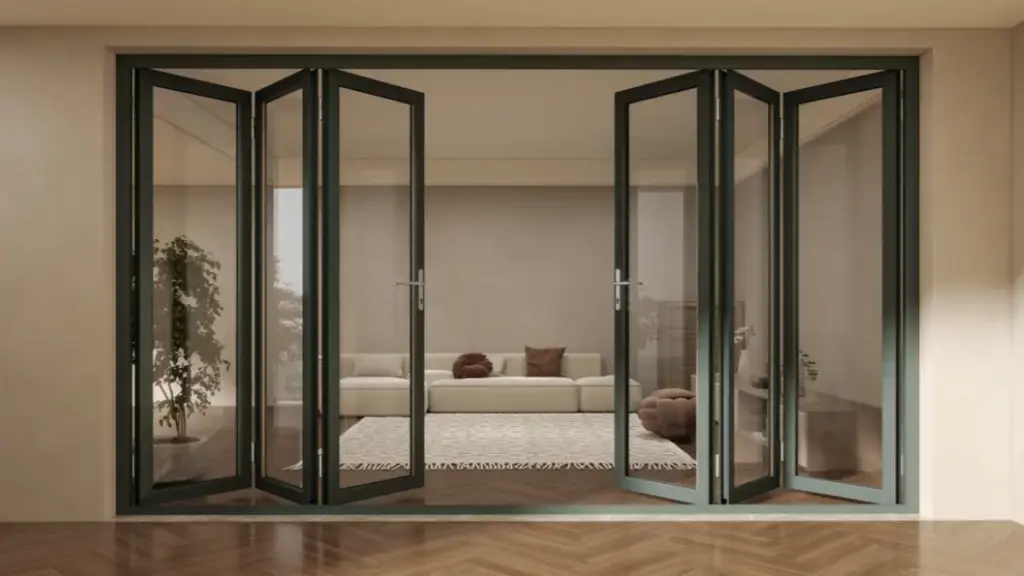
Extrusion technology allows aluminum alloys to be formed into complex multi-chamber profiles that integrate glazing, scellés, ruptures thermiques, and hardware components. This supports a wide range of systems, y compris coulissant, balançoire, pliable, et portes pivotantes.
Integration with Modern High-Performance Door Systems
High-strength aluminum works together with other door technologies to improve overall performance:
- Thermal efficiency: Thermal break materials, such as polyamide strips, can be incorporated into aluminum profiles to reduce heat transfer and improve energy performance.
- Sécurité: Rigid aluminum frames support reinforced locking areas, systèmes de verrouillage multipoints, and advanced access-control hardware.
- Durabilité des surfaces: Powder coating and anodized finishes enhance resistance to weathering, rayures, and discoloration while maintaining the architectural appearance.
Application-Specific Alloy Selection
For most residential and commercial aluminum doors, 6063 et 6061 alliages provide the best balance of strength, apparence, fabrication efficiency, et coûter.
Pour large-format doors, high-wind areas, ou systèmes de vitrage lourds, stronger alloys such as 6082 ou 7075 may be selected to improve structural performance.
Pour côtier, marin, ou environnements difficiles, corrosion-resistant alloys such as 5086 offer enhanced durability and long-term reliability.
By selecting the appropriate alloy based on project requirements, architects and manufacturers can achieve thinner profiles, de plus grandes surfaces vitrées, and durable aluminum door systems without compromising performance.
Isolation à rupture de pont thermique et double vitrage économe en énergie
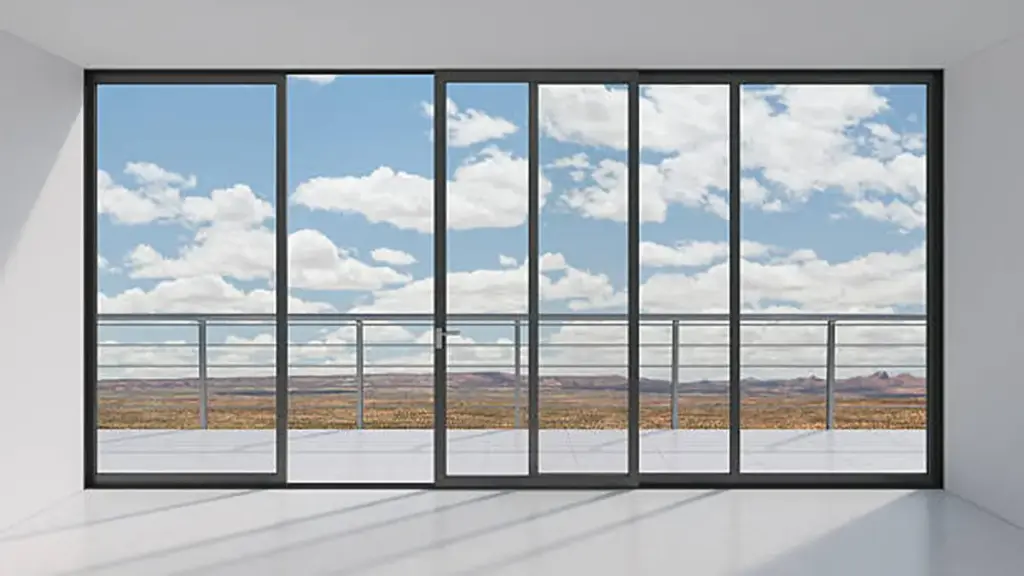
Châssis à rupture de pont thermique avec double vitrage coupé transfert thermique, rendant les pièces plus confortables et réduisant considérablement le risque de condensation.
Performance combinée des châssis à rupture de pont thermique et des vitrages économes en énergie
Traiter le cadre aluminium et le vitrage comme un tout, le système intégré garantit des performances thermiques optimales.
Un cadre en aluminium à rupture de pont thermique, associé à un double vitrage, réduit le transfert de chaleur à travers les composants du cadre et les vitres.
Les espaceurs à bords chauds à l'intérieur de l'unité à double vitrage fonctionnent avec des interfaces cadre-verre isolées. Cela minimise les pertes de chaleur au périmètre du verre.
Cette intégration conduit à des températures de surface intérieure plus uniformes pour la porte, qui booste le confort thermique.
Les portes hautes performances utilisent une stratégie de rupture de pont thermique multicouche. La pause principale est dans le cadre (bande de polyamide), le secondaire au sein du double vitrage (cavité de gaz et espaceur à bord chaud), et des pauses supplémentaires sont dans les seuils et les joints.
Confort amélioré et économies d’énergie en pratique
Le blocage des voies conductrices signifie que les portes de pièce en aluminium à double vitrage à rupture de pont thermique réduisent considérablement les besoins de chauffage en hiver.. Ils réduisent également les charges de refroidissement en été.
De telles portes créent des températures intérieures stables. Cela réduit les variations de température malgré les conditions extérieures, rendre les pièces comme les chambres et les bureaux plus confortables.
La réduction du rayonnement froid des surfaces de porte contribue au confort, en particulier près des sièges ou des lits.
Le système améliore également le confort acoustique. Il atténue le bruit des couloirs adjacents ou des environnements extérieurs.
Des températures de surface intérieures plus élevées sur les cadres et le verre réduisent considérablement le risque de condensation, même dans les climats froids ou dans les espaces intérieurs très humides.
Cette combinaison est particulièrement intéressante pour les portes de pièces se connectant à des environnements extérieurs., espaces semi-extérieurs, ou dans des pièces où un confort constant est essentiel sous différents climats.
Finitions de surface noir mat et tons terre naturels
Les finitions noir mat et tons terre sur les portes en aluminium offrent des avantages esthétiques et fonctionnels distincts, essentiel pour l'intégration de la conception et la durabilité à long terme dans divers contextes architecturaux.
Principes esthétiques et intégration de la conception
Les finitions noir mat et tons terre remplissent différents rôles dans le design, créer des effets visuels spécifiques dans les espaces intérieurs et extérieurs.
- Matte black finishes create a low-reflection surface that provides strong contrast and a refined appearance in contemporary interiors. Cela convient au moderne, industriel, et intérieurs minimalistes.
- Les finitions aux tons terre offrent une douceur, chaud, et présence visuelle tamisée. Ils s'intègrent bien dans le naturel, scandinave, et des designs modernes et organiques.
- Les portes noires mates agissent comme des éléments architecturaux audacieux. Les tons terreux reculent visuellement, se mélangeant avec des matériaux naturels comme le bois et la pierre.
- Le choix de la finition a un impact sur la taille perçue de la porte, réflexion de la lumière, et comment les portes se coordonnent avec les couleurs des murs, sol, et matériel.
- La continuité du design vient de l'agencement des articles de porte (Par exemple, tout noir pour du noir mat; neutre ou noir pour les tons terre) et éléments de pièce adjacents.
Terminer les technologies, Durabilité, et entretien
La technologie derrière ces finitions influence directement leur durabilité et la façon dont vous les entretenez dans le temps..
- Le revêtement en poudre est la technologie principale pour les finitions noir mat et tons terre.. Il fournit une couleur uniforme, haute résistance aux rayures, et protection contre la corrosion pour un usage quotidien.
- L'anodisation crée une durabilité, Tons de terre résistants aux UV comme le champagne, bronze, et gris naturel. Cela le rend adapté aux zones exposées à la lumière directe du soleil.
- Les finitions forment une barrière protectrice. Cela améliore la résistance inhérente à la corrosion de l’aluminium et prolonge la durée de vie de la porte à l’intérieur..
- La durabilité est importante pour les pièces à forte utilisation. Les finitions doivent résister aux contacts mécaniques répétés et protéger contre l’usure.
- L'entretien de routine implique un nettoyage avec un détergent doux et un chiffon doux. Évitez les nettoyants abrasifs; ils préservent la texture uniforme mate ou tonique.
Vous trouverez ci-dessous le contenu HTML basé sur les « DONNÉES DE SECTION » fournies.
Recherche de mises en page personnalisées haut de gamme directement à partir des lignes d'usine
Direct factory sourcing allows project owners, entrepreneurs, and distributors to obtain customized aluminum door systems based on specific architectural and performance requirements. By working directly with manufacturers, clients gain greater control over specifications, qualité, and production efficiency.
Custom Layout Development and Factory Process
Custom aluminum door layouts can include tailored dimensions, configurations d'ouverture, frame systems, options de vitrage, finitions, and hardware packages. Manufacturers adapt standard aluminum systems to meet architectural drawings, exigences de performance, and project conditions.
The typical process includes:
- Providing project drawings, door schedules, dimensions, et exigences de performance.
- Selecting suitable aluminum profiles, vitrage, finitions, and hardware solutions with factory engineering teams.
- Reviewing shop drawings, échantillons, and technical details before production.
- Completing CNC fabrication, assemblée, vitrage, and quality inspections.
This approach ensures that customized door systems match the architectural concept while maintaining consistent manufacturing standards.
Benefits of Direct Factory Sourcing
Working directly with an aluminum door manufacturer reduces unnecessary intermediaries and improves communication throughout the project. It also provides access to OEM/ODM services for customized designs, private labeling, and large-scale project supply.
Key advantages inclure:
- Flexibilité de conception: Tailles personnalisées, configurations, finitions, and hardware options can be developed according to project needs.
- Contrôle de qualité: Factory-managed production ensures consistency in materials, fabrication, and performance testing.
- Cost efficiency: Direct sourcing can reduce supply chain costs while improving production coordination.
- Project reliability: Faster communication helps streamline approvals, révisions, and delivery planning.
For premium residential and commercial projects, direct factory partnerships provide a balance of customization, assistance technique, and long-term supply stability.
For global residential and commercial projects, choosing the right manufacturing partner is as important as selecting the right aluminum door system. Opinion provides customized aluminum door and window solutions for architects, développeurs, et distributeurs, combining design flexibility with professional manufacturing capabilities.
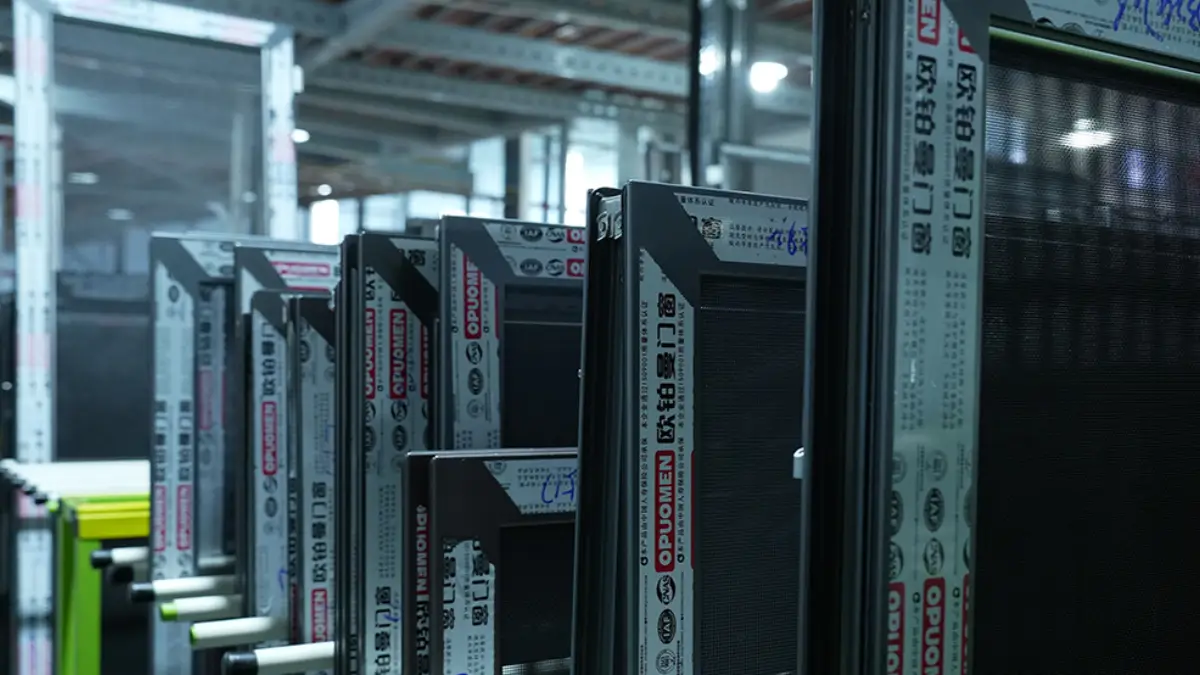
With a 60,000㎡ production facility, experienced engineering teams, and more than 200 employés, OPUOMEN supports OEM and project-based customization from initial design consultation to final production. The company uses high-quality 6063-T5 aluminum profiles and applies strict quality-control processes throughout fabrication to ensure consistent performance across different applications.
OPUOMEN offers a wide range of aluminum systems, y compris les portes coulissantes, portes pliantes, portes en aluminium, portes en aluminium-bois, and other customized solutions for residential and commercial projects. Its production capabilities allow adjustments in dimensions, configurations, finitions, options de vitrage, and hardware packages according to specific architectural requirements.
Supported by certifications including CE, Rohs, ATTEINDRE, and ISO9001, OPUOMEN focuses on reliable quality management and long-term project cooperation. With flexible customization, efficient production, and OEM/ODM support, the company helps international partners deliver modern aluminum door solutions that meet both aesthetic expectations and performance requirements.
Pensées finales
Selecting a reliable aluminum door system helps ensure consistent performance, qualité de pose, and long-term project value. Our commitment to advanced alloys, ruptures thermiques, and meticulous manufacturing ensures you deliver comfort, style, and uncompromising safety.
Ready to elevate your designs? Don’t just settle for specifications; experience the quality difference firsthand. Contact our team today to discuss custom layouts and OEM partnerships tailored to your unique project needs.
Foire aux questions
Which aluminum door designs are popular for modern minimalist homes?
Modern minimalist homes commonly use slim-frame sliding doors, large-format glass doors, bi-fold systems, and pivot entrances. Slim sliding doors are especially popular because they maximize daylight, create wider views, and connect indoor and outdoor spaces with minimal framing.
For premium projects, ultra-slim systems with narrower interlock profiles provide a stronger glass-wall effect. Cependant, the best choice depends on project requirements, including panel size, performances thermiques, résistance aux intempéries, et budget. A well-designed aluminum door system should balance visual openness with structural stability and long-term performance.
Are minimalist aluminum doors suitable for high-rise residential buildings?
Oui. Properly engineered minimalist aluminum doors can be suitable for high-rise residential applications. Performance depends on the complete system, including aluminum profiles, vitrage, matériel, scellés, et la qualité de l'installation.
High-rise projects should consider wind-load resistance, étanchéité à l'air et à l'eau, impact performance, security hardware, and thermal requirements. Thermally broken profiles, vitrage isolant, and reinforced locking systems allow slim aluminum doors to achieve both modern aesthetics and reliable performance.
Can aluminum glass doors include privacy frosting treatments?
Oui. Privacy solutions can be integrated into minimalist aluminum glass doors without affecting the clean appearance of the system. Options include frosted glass, decorative films, etched finishes, and smart glass technologies.
These treatments are commonly used for bedrooms, salle de bain, bureaux, and entrance areas where natural light and privacy are both important. They allow designers to maintain the transparency and simplicity of glass while controlling visibility and glare.
How long does a powder-coated aluminum door last?
A high-quality powder-coated aluminum door can provide decades of service with proper maintenance. The aluminum frame itself is highly durable, while architectural-grade powder coatings help maintain color stability and surface protection against weathering.
Actual lifespan depends on coating quality, environmental exposure, sélection du matériel, and maintenance practices. Regular cleaning and periodic inspection of seals and hardware help preserve both appearance and performance over time.