Dans le paysage de la construction d’aujourd’hui, contrôler les bruits indésirables est essentiel à la satisfaction du client, conformité réglementaire, et la réussite du projet. Architectes, constructeurs, et les chefs de projet doivent sélectionner soigneusement les systèmes de fenêtres qui répondent aux exigences acoustiques, que ce soit pour la confidentialité des conversations ou pour les habitations multifamiliales.
Ce guide explore la science derrière les fenêtres insonorisées, couvrant l'importance des notations STC et Rw, technologies de vitrage acoustique, et le rôle essentiel de la conception du cadre et des bandes d'étanchéité. Apprenez à éviter les fuites sonores provenant des espaces d'installation et à garantir la fiabilité, des solutions d'insonorisation performantes pour vos projets.
Que Sont Les Cotes STC Et Rw Et Pourquoi Sont-elles Importantes Pour L'insonorisation?
ITS (Classe de transmission du son) et Rw (Indice d'atténuation sonore pondéré) sont des évaluations à chiffre unique qui mesurent la capacité d’un matériau à bloquer les bruits aériens.
- STC est testé selon la norme ASTM E90 et se concentre sur l'atténuation acoustique dans la gamme de fréquences de 125 Hz à 4000 Hz.
- Rw fournit une évaluation plus large, offrant une meilleure isolation acoustique dans les basses fréquences.
Les deux évaluations aident les architectes et les constructeurs à sélectionner les bons matériaux pour les environnements sensibles au bruit comme les hôtels., hôpitaux, et bâtiments résidentiels. Des valeurs STC et Rw plus élevées indiquent une meilleure isolation phonique, assurer l'intimité et le confort. Par exemple, ITS 45 garantit la confidentialité des paroles, tandis que STC/Rw 50+ répond aux codes du bâtiment multifamilial. Cependant, les performances réelles peuvent être affectées par des facteurs d'installation, comme les lacunes, ce qui peut réduire l'efficacité jusqu'à 7 dB.
Comment la technologie du verre acoustique se compare-t-elle?
Différentes technologies de verre, comme le verre feuilleté acoustique, Verre feuilleté standard, et verre isolant, chacun offre différents niveaux d’insonorisation – voyons comment ils se comparent.
| Caractéristiques | Verre feuilleté acoustique | Verre feuilleté standard | Verre isolé (Pour moi) |
|---|---|---|---|
| Isolation phonique (Rw/STC) | 32-40 dB (haute performance >45 dB) | 28-32 dB | 30-38 dB (Par exemple, 11mm IGU à 30-32 dB) |
| Mécanisme primaire / Intercalaire | Spécialisé, PVB haute densité (>0.76mm), amortit les vibrations | PVB de base (0.38-0.76mm), retient les fragments pour plus de sécurité | Espace d'air ou de gaz scellé (Par exemple, 5mm+), barrière thermique |
| Performance thermique (Valeur U/SHGC) | Modéré (~0,70 SHGC) | Modéré (~0,70 SHGC) | <2.0 W/m²K, SHGC <0.25 (avec Low-E/argon); Supérieur |
| Exemple d'épaisseur typique | 6.8mm (3+0.76+3 mm) | Varie (PVB 0,38-0,76 mm) | 11mm (3+5A+3mm) |
| Comparaison des coûts | 15-25% plus haut qu'isolé | Généralement inférieur à l'acoustique | Base de comparaison |
| Objectif principal | Réduction du bruit supérieure, amortissement des vibrations | Sécurité, sécurité, atténuation acoustique de base | Isolation thermique, efficacité énergétique |
Comment l’épaisseur asymétrique du verre améliore-t-elle l’isolation phonique?
L'épaisseur asymétrique du verre améliore l'isolation acoustique grâce à l'utilisation de panneaux de différentes densités, qui résonnent à des fréquences distinctes. Cette variation perturbe la vibration uniforme, rendant la transmission des ondes sonores moins efficace que dans les configurations symétriques. Le résultat est une meilleure insonorisation et des indices STC plus élevés grâce à une combinaison de masse, amortissement, et oscillation découplée.
Le principe de prévention des résonances asymétriques
- Chaque vitre résonne à des fréquences différentes, empêchant les vibrations uniformes.
- Cela perturbe la transmission des ondes sonores, améliorant l'amortissement du bruit et l'absorption d'énergie.
- La conception découple l'oscillation de la vitre, éliminant la transmission cohérente des vibrations.
Surmonter les limites de la loi de masse
Les configurations de verre asymétriques répondent aux limites de la loi de masse, en particulier pour les fréquences inférieures 500 Hz, où la résonance conduit souvent à une transmission importante du bruit (Par exemple, grondement de la circulation, Bruits CVC). En empêchant les vibrations uniformes à ces basses fréquences, les conceptions asymétriques améliorent l'isolation acoustique dans les environnements réels.
Gains de performances et configurations
Configurations asymétriques, telles que 6 mm + 4 mm ou 6/12/10 mm de verre : améliorez les performances jusqu'à 2-3 Points STC sur les conceptions symétriques. Les configurations standard peuvent atteindre les valeurs STC de 33-36, avec des IGU laminées hautes performances atteignant le STC 45-50+ et valeurs Rw de 30-53 dB. Entrefers et intercalaires PVB (0.030 pouces) améliorer encore l'amortissement et découpler les vitres.
Fenêtres en aluminium de précision pour les projets mondiaux
Comment la conception des profils contribue-t-elle à l’insonorisation?
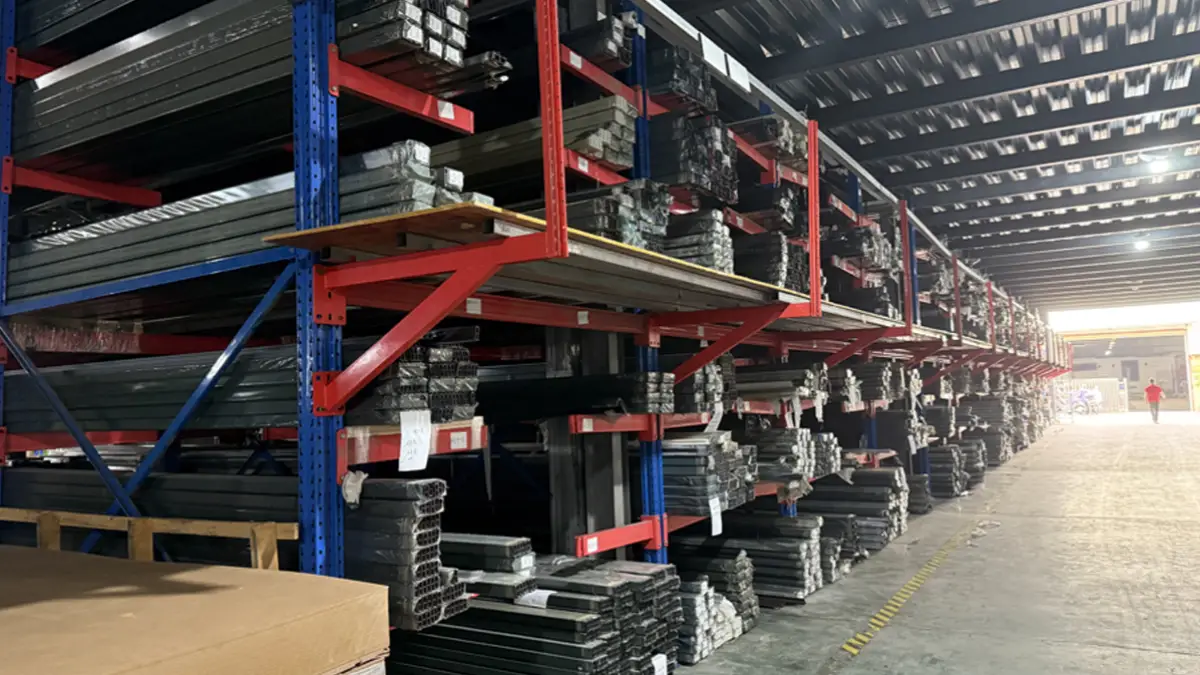
La conception des profilés de fenêtre améliore l'insonorisation en utilisant des matériaux haute densité et des structures à chambres multiples pour réduire efficacement les vibrations et améliorer l'isolation acoustique..
Le rôle de la densité du profil et de la conception multi-chambres
- Les cadres en aluminium épais augmentent la masse, réduire les vibrations et améliorer l’isolation phonique.
- Les peaux externes en aluminium améliorent encore la masse et la capacité d'amortissement du profil.
- Les structures à plusieurs chambres avec cavités d'air découplent les vitres, empêcher la résonance sonore.
- Entrefers plus grands dans le cadre (12.7mm-95mm) dissiper l'énergie sonore et augmenter l'atténuation acoustique.
Spécifications techniques et performances
- Les épaisseurs du cadre varient de 4-1/2″ à 12-7/8″, contribuant à une meilleure isolation phonique.
- Les largeurs de cavité d'air entre les vitres sont généralement de 12,7 mm à 95 mm., contribuant à une meilleure atténuation acoustique.
- Cadres et joints traités acoustiquement, y compris les inserts ininflammables, améliorer encore l'isolement.
- Les profils optimisés peuvent atteindre Rw 32-53 dB pour les fenêtres résidentielles et STC 43-64 pour les systèmes avancés.
Pourquoi les bandes d’étanchéité sont-elles cruciales pour une insonorisation efficace?
Les bandes d'étanchéité sont essentielles pour empêcher les fuites de bruit aérien à travers les interstices et pour désolidariser les éléments structurels., assurer la pleine performance acoustique des fenêtres et des portes. Sans eux, même les meilleurs verres ou panneaux insonorisés ne parviennent pas à atteindre leur potentiel dans les installations réelles.
Prévenir les fuites de bruit aérien et les chemins indirects
Pour obtenir une réduction sonore efficace (30-40+ dB), tous les espaces, tels que les périmètres du cadre, styles de réunion, et seuils – doivent être correctement scellés. Les joints d'étanchéité génériques sont souvent inadéquats, car ils ne parviennent pas à bloquer les fuites sonores à travers “chemins adjacents.” Des bandes d'étanchéité haute performance sont nécessaires pour combler les espaces d'installation et empêcher le son de contourner la barrière principale., s'assurer que les évaluations acoustiques sont pleinement réalisées.
Solutions techniques
- Ailettes et joints d'étanchéité en élastomère (Par exemple, Lorient Finesse™) créer un contact de ligne compressé, testé pour répondre aux normes BS EN ISO, atteindre Rw ≈ 31 dB.
- Ruban d'étanchéité NBR à cellules fermées (Par exemple, Soni NBR) découple les composants, empêchant les ponts sonores rigides et assurant la stabilité sur des plages de température de −40°C à +80°C.
- Joints en caoutchouc viscoélastique (Par exemple, Ruban Acousti-Gasket™) dissiper l'énergie sonore et réduire les vibrations, manutentionner des charges de 100 à 4 000 lb.
- Bandes de mousse polyuréthane haute densité (Par exemple, Joint sonore) s'étendre pour combler les lacunes et les ouvertures inégales, assurer une étanchéité continue.
Comment éviter les lacunes d'installation “Ponts sonores”?

Les lacunes d’installation sont critiques “ponts sonores” qui peut contourner les matériaux d'insonorisation, permettant presque 100% transmission du son. Ces lacunes, que ce soit au niveau des articulations, interfaces structurelles, ou pénétrations de services publics, agir comme des trous ouverts, compromettant gravement les performances acoustiques.
Pourquoi les écarts n'entraînent aucune perte de transmission
IMême les petits espaces peuvent laisser passer le son sans aucune atténuation, annulant efficacement l’efficacité du matériau d’insonorisation. C'est pourquoi les espaces vides sont traités comme des zones sans perte de transmission. (TL). Ils affaiblissent tout le système, le rendant aussi inefficace que son point le plus faible.
Stratégies pour éliminer les ponts sonores
- Directives techniques: Caractéristiques, comme ceux de la FHWA et de l'AASHTO, dicter les longueurs de chevauchement exactes, généralement au moins 2.5 multiplié par la distance de décalage pour les ouvertures d’accès – pour maintenir les performances acoustiques du système.
- Étanchéité agressive: Tous les interstices doivent être colmatés avec des mastics acoustiques haute performance. Pour les espaces horizontaux critiques, comme entre les panneaux et les éléments structurels, des produits d'étanchéité ou du calfeutrage non durcissants doivent être appliqués pour éviter les fuites..
- Minimiser les écarts: Moins il y a de joints ou d’ouvertures, mieux c'est. Utilisation continue, les panneaux pleine hauteur réduisent les risques d'espaces vulnérables et simplifient le processus d'étanchéité.
- Barrières superposées et labyrinthes acoustiques: Lignes directrices de l'industrie, comme ceux de la FHWA et de l'AASHTO, spécifier les longueurs de chevauchement exactes. Par exemple, les ouvertures d'accès doivent se chevaucher d'au moins 2.5 multiplié par la distance de décalage pour maintenir une atténuation acoustique efficace.
Quels sont les avantages des solutions acoustiques OPUOMEN?
Les solutions acoustiques OPUOMEN offrent une isolation phonique supérieure, soutenu par des évaluations STC certifiées qui garantissent une réduction exceptionnelle du bruit. Avec des valeurs STC élevées, leurs produits améliorent considérablement l'intimité et le confort. Par exemple, leur vitrage acoustique feuilleté atteint le STC 40-44, alors que secondaire fenêtres insonorisées peut atteindre STC 48-57, réduire efficacement le bruit dans les environnements exigeants comme les hôpitaux, hôtels, et studios d'enregistrement.
Transformez votre prochain projet avec OpinionLes solutions acoustiques. Contactez-nous pour découvrir comment nos produits peuvent fournir les performances d'insonorisation dont vous avez besoin, assurer le confort et la valeur à long terme de votre espace.
Foire aux questions
Quelle est la cote Rw minimale recommandée pour un appartement à proximité d'un aéroport?
La cote Rw minimale recommandée pour les appartements à proximité des aéroports, équivalent au STC aux États-Unis. normes, est 40 pour les fenêtres résidentielles et les murs extérieurs afin d'atteindre les niveaux de bruit intérieur requis (Par exemple, 45 dB CNEL ou 35-45 dBA).
Comment le remplissage de gaz dans les IGU affecte-t-il l'isolation phonique?
Le remplissage d'une cavité IGU avec de l'argon ou du krypton ne fournit qu'un petit, amélioration secondaire de l'isolation phonique (généralement 1 à 2 dB Rw au mieux) par rapport à l'air. Les gains acoustiques dominants proviennent de l'épaisseur du verre, asymétrie, et panneaux stratifiés acoustiques. Le remplissage de gaz est principalement spécifié pour les performances thermiques et de durabilité (Par exemple, ≥90 % de gaz inerte en volume selon les spécifications de type EN 1279), pas de soulèvement acoustique significatif.
Comment les vibrations du cadre peuvent-elles transmettre du bruit, et comment cela est-il atténué?
Les vibrations du cadre transmettent le bruit principalement via le bruit solidien, où les vibrations mécaniques se couplent aux murs environnants. L'atténuation repose sur l'augmentation de l'amortissement et de la rigidité, rompre la continuité mécanique avec des supports/isolateurs résilients, et vérification des performances avec des tests d'amortissement des vibrations standardisés comme ASTM E756-05(2023) sur la plage de 50 à 5 000 Hz.
Le verre feuilleté est-il toujours meilleur pour la réduction acoustique que le double vitrage standard?
Non, le verre feuilleté n'est pas toujours meilleur. Le double vitrage standard excelle dans les bruits de moyenne à haute fréquence (25-35 réduction des dB), tandis que le verre feuilleté est supérieur aux bruits de basse fréquence mais ne peut qu'ajouter 1 dB supplémentaire dans certains cas. Les combinaisons des deux permettent d'obtenir les performances les plus élevées (jusqu'à 54 dB ou STC 45-50).