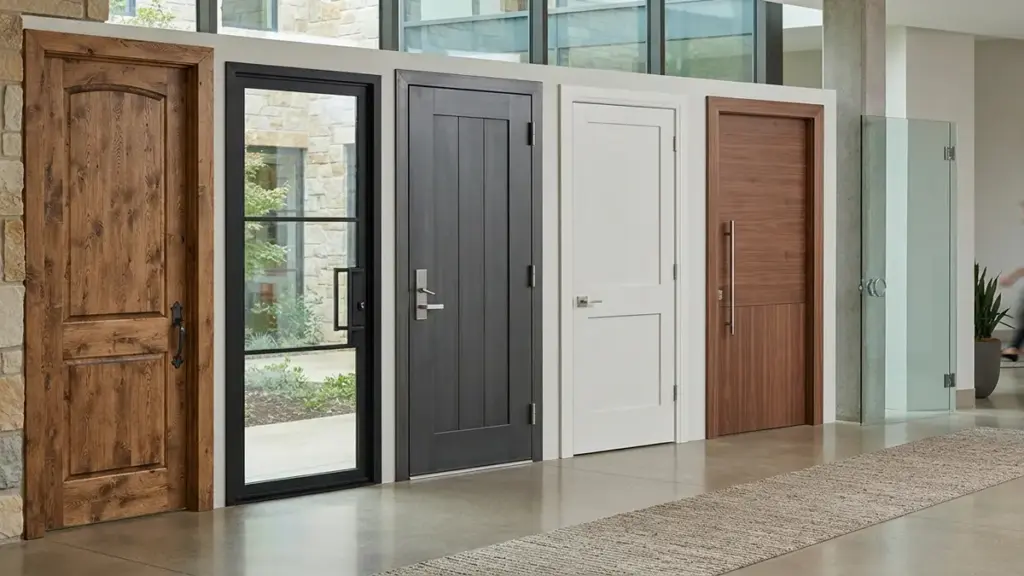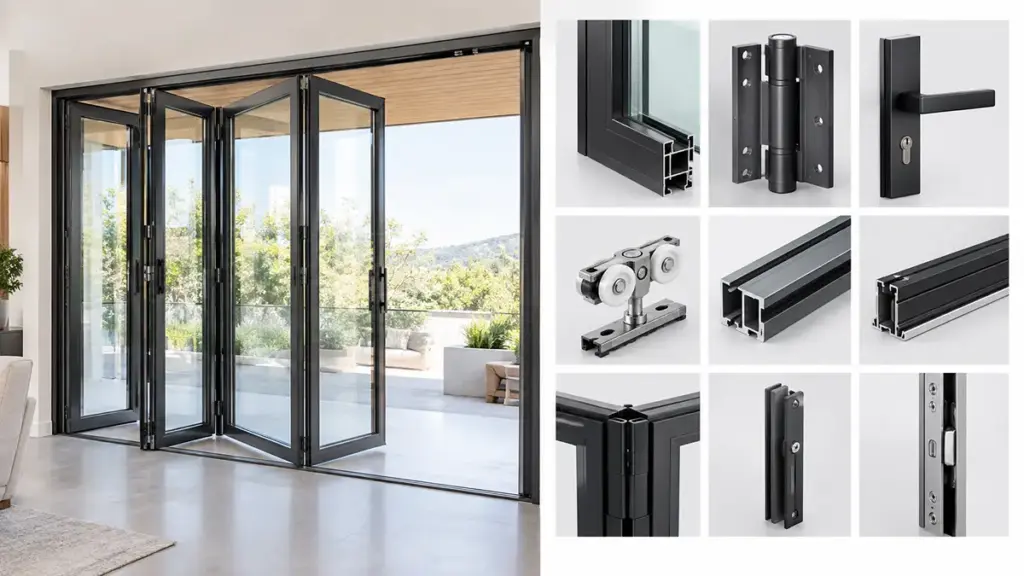
Choosing the wrong door material can lead to poor thermal performance, deformazione, moisture damage, and higher maintenance costs over time. The right choice depends on where the door will be used, the local climate, and the level of security and insulation required.
This guide compares solid wood, acciaio, fibra di vetro, E porte in alluminio based on durability, isolamento, sound control, manutenzione, e costo. Actual performance varies by door construction, core material, vetri, e hardware, so product-level ratings should be checked when making a final specification.
Types of Door Materials and Their Key Differences
The right door material can improve security, sound control, and thermal performance while reducing maintenance and replacement costs over time.
| Materiale / Construction | Primary Use | Punti di forza chiave | Typical Service Life | Cost Tier |
|---|---|---|---|---|
| Legno massiccio | Interno & Esterno | Natural appearance, traditional detailing, highly refinishable | Can last for decades with proper care | Premio ($$$) |
| Solid-Core | Interno | Better sound control, substantial feel, buona durabilità | Long service life with proper installation and care | Mid-Range ($$) |
| Hollow-Core | Interno | Leggero, budget-friendly, easy to install | Typically suited to lower-impact interior applications | Bilancio ($) |
| Acciaio | Esterno | Elevata resistenza agli urti, rigidità, e sicurezza | 30+ years with proper installation and maintenance | Budget-to-Mid ($) |
| Fibra di vetro | Esterno | Resistenza all'umidità, bassa manutenzione, good thermal performance | Long service life with relatively low maintenance | Mid-to-High ($$) |
| Alluminio | Interno, Esterno & Commerciale | Slim profiles, resistenza alla corrosione, robustezza strutturale, large glazed openings | 20–50+ years depending on system, fine, hardware, exposure, e manutenzione | Mid-to-High ($$–$$$) |
| Aluminum-Wood | Interno | Slim aluminum framing, wood-inspired appearance, disegni personalizzabili | Long service life depends on materials, fine, hardware, e manutenzione | Mid-to-High ($$–$$$) |
Interior and Exterior Door Material Characteristics
The performance requirements for interior and exterior doors vary by application. Indoor doors typically prioritize privacy, sound control, aspetto, e costo, whereas those exposed to the elements need greater resistance to weather, umidità, impatto, and forced entry.
- Hollow-Core and Solid-Core Options: Hollow-core doors utilize a wooden perimeter frame with a lightweight cardboard honeycomb or rigid grid core. This design works well for budget-conscious interior projects where weight is a primary constraint. Solid-core doors utilize a dense interior fill, such as engineered wood, particleboard, or fiberboard, to achieve a heavier, premium feel and superior acoustic dampening (STC 30–35).
- Legno massiccio: Built entirely from natural wood throughout, solid wood doors represent the traditional tier. This material is highly valued in classic architecture for its genuine weight, hand-crafted moulding profiles, and ease of physical repair or refinishing over time.
- Steel and Fiberglass-Composite: Engineered to serve as high-security exterior barriers. Steel features high structural rigidity and impact resistance, while fiberglass-composite skins are highly resistant to moisture, marcire, and everyday wear, although severe impacts can still damage the surface.
- Aluminum and Glass: Designed for modern architectural elevations, thin aluminum profiles provide high structural strength to support expansive, heavy panes of glass. These assemblies can maintain good dimensional stability across changing temperatures, provided the frame and installation are properly designed for thermal movement.
Performance Evaluation and Selection Metrics
Project managers and engineers must run comparative analysis across four main metric areas to select the appropriate door materials for commercial or residential envelopes.
- Procurement and Lifecycle Costs: Initial price points vary widely, starting from hollow-core budget options ($25–$150 per slab) and mid-range solid-core or steel entry systems ($150–$1,000) up to premium wood and high-performance glazed aluminum configurations ($800–$3,000+). Specifiers must weigh these upfront costs against expected service lifetimes.
- Security Ratings: Steel doors can provide strong resistance to impact and forced entry, especially when combined with a reinforced frame and appropriate locking hardware. Solid wood and reinforced fiberglass can also provide good security, while hollow-core doors are generally better suited to lower-security interior applications.
- Isolamento termico (R-Value): For exterior doors, thermal performance depends on the complete door assembly rather than the face material alone. Insulated fiberglass and steel doors can provide strong thermal performance, while aluminum systems rely on thermal breaks and appropriate glazing to reduce heat transfer. Product-specific U-factor or tested thermal ratings should be used when comparing complete door systems.
- Maintenance Demands: Natural wood demands regular refinishing, pittura, or sealing to protect against UV degradation and moisture absorption. Synthetic alternatives, including powder-coated aluminum, fibra di vetro, and composite panels, require very low maintenance and simple cleaning, driving down operational costs.
Wood Doors for Traditional Interior Designs
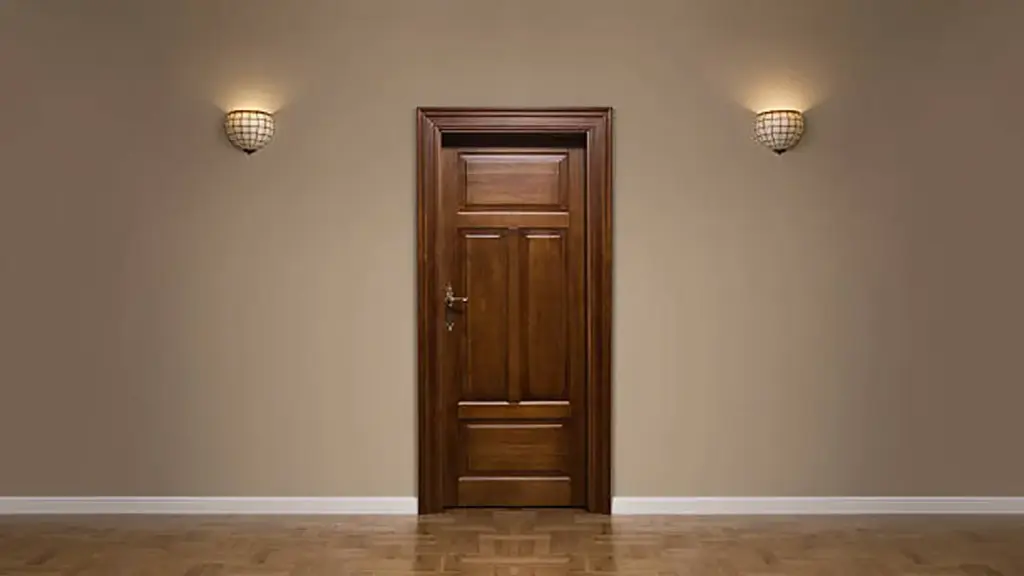
Authentic traditional interiors require balancing visual weight with structural stability. Solid wood offers unmatched heritage aesthetics, while engineered cores prevent seasonal warping.
Selecting Wood Species and Construction Types for Heritage Aesthetics
Achieving architectural authenticity in historic interiors depends on proper material selection. Choosing the wrong core or wood species compromises both the look of the door and its long-term stability.
- Legno massiccio: Delivers an authentic, heavy weight of 60 A 80 pounds and deep millwork detailing, but requires stable climate control to avoid warping.
- Engineered Solid Core: Combines real wood veneers with stable composite cores to provide superior resistance to seasonal expansion and contraction.
- Hollow Core: Offers a low-cost option for secondary areas, though it provides minimal sound reduction and lacks physical heft.
- Classic Hardwoods: White oak, red oak, walnut, cherry, and mahogany suit stained finishes, highlighting natural grains in formal traditional layouts.
- Paint-Grade Materials: Birch and MDF provide perfectly smooth, stable surfaces for classic white trim schemes without the risk of raised wood grain.
Staining premium hardwoods ensures visual cohesion across high-traffic zones. Using paint-grade MDF on secondary matching doors keeps the overall package within budget.
Panel Profiles, Performance Requirements, and Budget Allocation
Door profiles dictate the historical accuracy of a design. Standard flush doors look out of place in traditional projects, making panel detailing, prestazione acustica, and strategic capital placement essential.
- Raised Panels: Traditional 2-panel, 4-pannello, and 6-panel layouts define Colonial and Georgian styles, utilizing profiled sticking to cast deep shadow lines.
- Flat Panels: Shaker layouts and Douglas fir species match the simpler, clean lines of Craftsman and early 20th-century interiors.
- Separazione acustica: Solid-core and solid wood doors generally provide better sound control than hollow-core doors, making them suitable for bedrooms, biblioteche, studi, and other spaces where privacy matters. Actual STC performance depends on the door construction, telaio, sigilli, e hardware.
- Moisture Performance: Engineered wood cores can provide better dimensional stability than some solid-wood constructions, helping reduce the risk of sticking or warping in areas with changing humidity.
- Allocazione del budget: Prioritize premium solid wood doors for high-visibility entry points and use matching hollow core panels on closet doors to control costs.
Smart B2B specification avoids the trap of putting solid wood everywhere. Focus your capital on primary sightlines and let stable, engineered matches handle high-humidity areas.
From Material Selection to Project-Ready Door Systems
Choosing the right door material is only the first step. Per progetti residenziali e commerciali, the frame, bicchiere, hardware, fine, and opening configuration also need to work together. Opuo supports project buyers with customized door solutions based on application, dimensioni, material preferences, e requisiti prestazionali. Our team can assist with drawings and technical recommendations, while samples, opzioni di colore, tipi di vetro, and hardware can be confirmed before mass production. Our aluminum door systems can also be configured for different layouts, compreso lo scorrimento, pieghevole, bifold, tasca, and casement applications. This gives designers, appaltatori, and dealers more flexibility when matching door materials and configurations to specific spaces. From initial design and quotation through sample approval, produzione, and delivery, OPUOMEN provides coordinated support to help turn a material specification into a practical, project-ready door solution.
Choose the Right Door Materials for Your Project
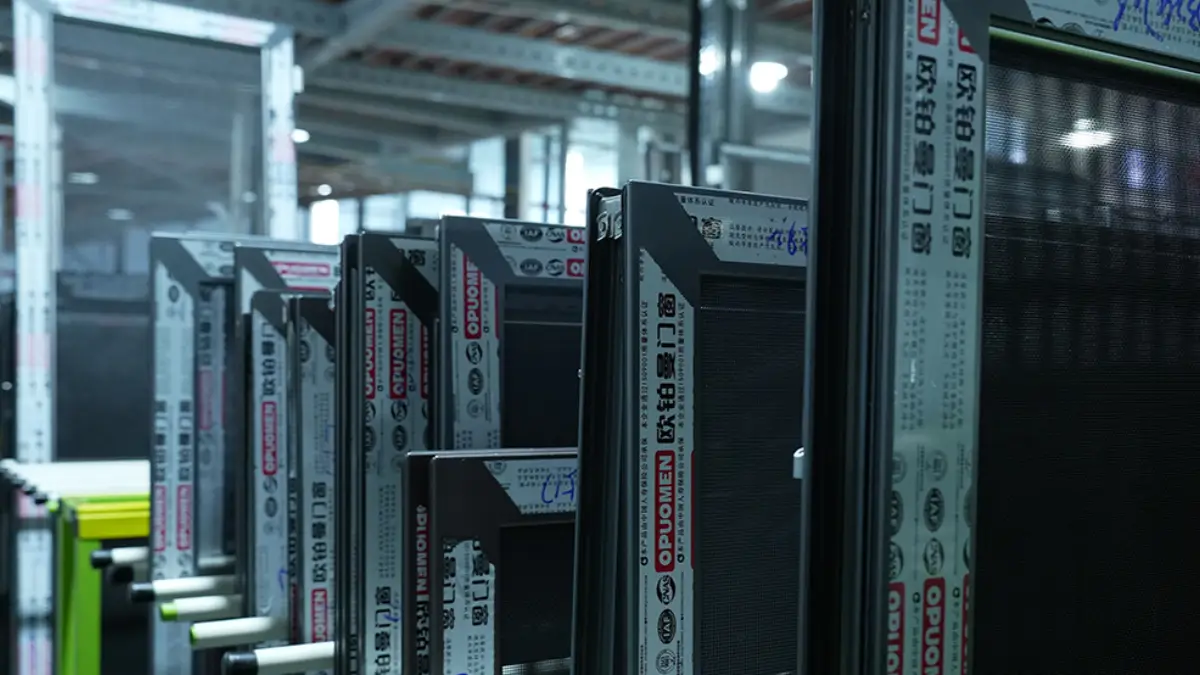
Aluminium Doors for Modern Exterior Applications
Aluminium doors combine high structural strength and thermal barriers to support large glazed openings with minimal maintenance and up to a 50-year lifespan.
Structural Performance and Thermal Efficiency Integration
Modern building designs require materials that support expansive glass walls without sacrificing energy conservation. Aluminium fills this niche by balancing raw physical strength with engineered insulation barriers.
- High Structural Strength: Thinner frame profiles easily support heavy glass panels, facilitating wide, tall openings in sliding and bifold configurations.
- Thermal Barrier Technology: In high-performance systems, polyamide thermal breaks can significantly reduce heat transfer and help the complete door assembly achieve low U-values. Actual results depend on the frame, vetri, misurare, and tested configuration.
- Stabilità dimensionale: The frame resists warping, marcire, and swelling under humidity changes, though installers must configure tolerances to allow minor thermal expansion.
- Lightweight Construction: Aluminum is much lighter than steel, which can help keep large door systems easier to handle and operate when paired with appropriately sized hardware.
Thermal breaks reduce heat transfer through the aluminum frame by separating the interior and exterior portions of the profile. With the right frame, vetri, and weather-sealing design, aluminum door systems can achieve much better thermal performance than older non-thermally-broken systems.
Durabilità a lungo termine, Manutenzione, and Security Dynamics
Exterior doors face relentless weathering and security threats. Choosing aluminium ensures long-term resistance to environmental breakdown and physical forced entry.
- Finiture superficiali: Factory-applied powder-coated or anodised finishes help protect aluminum profiles from surface deterioration and corrosion. With proper installation and maintenance, aluminum door systems can provide a long service life.
- Minimal Maintenance: The stable coating removes any need for regular repainting, varnishing, or staining. Owners only need to wash down the frames periodically and lubricate moving hardware.
- Rigid Security: Natural metal stiffness pairs with multi-point locking gear and laminated safety glass to resist physical impacts and intrusion attempts.
- Protezione dalle intemperie: Advanced gasket sets and heavy-duty weatherstripping block wind, driving rain, and ongoing draft leaks.
Because aluminum needs less refinishing and is resistant to rot and corrosion, it can reduce routine maintenance over the life of the door.
Glass and Glazed Door Construction Options
Glazed doors need the right combination of frame, bicchiere, and hardware to handle the expected loads, traffic, and safety requirements.
Structural Framing and Configuration Options
Selecting the right physical layout determines how a glazed door handles traffic and fits the surrounding architectural footprint. Specifiers choose between several framing and operation styles to match project requirements:
- Configuration Formats: Swinging, scorrevole, pieghevole, and bi-fold operations adapt to specific spatial layouts and clearance limits.
- Frameless Assemblies: Heavy toughened safety glass pairs with patch fittings and pivots to eliminate perimeter profiles for maximum transparency.
- Framed Door Systems: Alluminio, rivestire di legno, or composite profiles wrap the glass to provide structural rigidity and accommodate standard commercial hardware.
- Storefront Entry Systems: Specialized deep profiles support large glass dimensions and resist high-frequency commercial foot traffic.
Safety Glazing and Performance Specifications
Glass doors need to meet more than just appearance requirements. The glass and frame should also be selected for safety, prestazione termica, carichi di vento, and the conditions of the installation site. For interior applications, opzioni di vetro can also be compared by privacy, trasmissione della luce, struttura, e l'aspetto generale.
- Vetri di sicurezza: Building codes may require safety glazing in locations where people are likely to impact the glass. Tempered or laminated glass may be specified depending on the application and local code requirements.
- Insulating Glass Units (IGU): Multi-pane systems featuring low-emissivity coatings restrict thermal transfer and control solar heat gain.
- Fire Door Integration: Tested fire door assemblies incorporate specialized fire-rated safety glass to meet structural containment and egress requirements.
- Acoustic and Wind Performance: Tailored glass thickness and interlayers minimize panel edge deflection under localized wind loads while blocking environmental noise.
Steel and Fiberglass for Strength and Durability
Steel is a strong choice when impact resistance and security are the main priorities, while fiberglass is often preferred where moisture resistance and low maintenance are more important.
Structural integrity and impact resistance under pressure
Steel doors are valued for their rigidity and impact resistance. Depending on the construction, a steel skin can withstand significant impacts while maintaining the strength of the door assembly.
Fiberglass behaves differently under stress. Its composite skin flexes to shrug off everyday impacts and minor collisions without leaving a permanent dent, but extreme, concentrated forces can cause the material to crack or fracture instead of bending.
Environmental exposure and maintenance lifecycles
The environment where a door is installed has a major effect on how long it lasts and how much maintenance it needs. Moisture, salt air, and shifting temperatures degrade materials at vastly different rates, directly affecting how much labor and budget you will spend on upkeep over the years.
- Fiberglass Lifecycles: Fiberglass doors can provide a long service life with minimal upkeep and are highly resistant to rust, marcire, and moisture-related deterioration in humid environments. For projects comparing these benefits with aluminum construction, see this guide to aluminum doors vs fiberglass doors.
- Steel Lifecycles: Properly installed and maintained steel door assemblies can last 30 years or longer. Regular inspection and maintenance of the finish, hardware, and weatherstripping help protect the door from corrosion and keep it operating properly.
How to Choose the Right Door Material
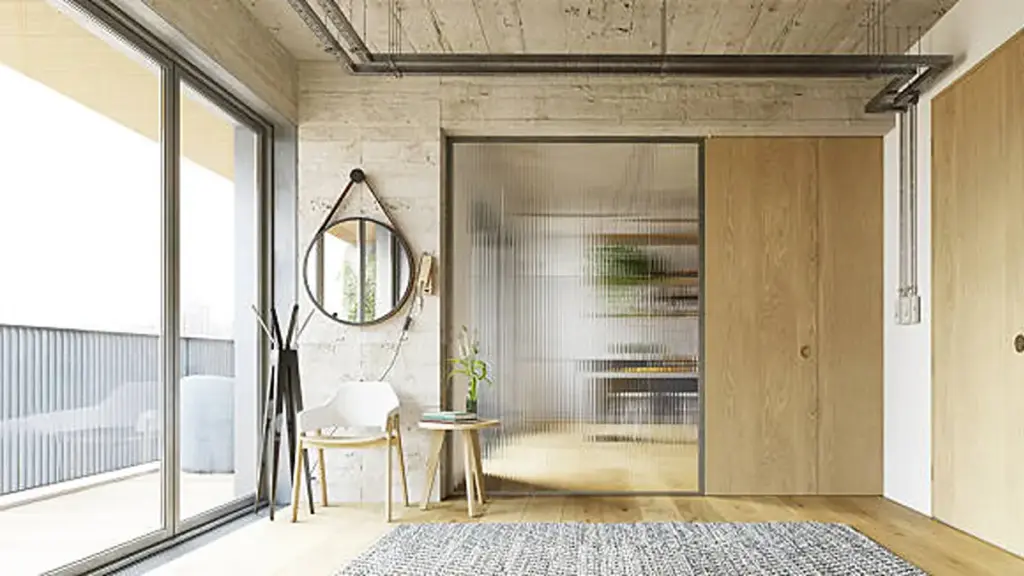
Choosing a door material that suits the climate, exposure, and security requirements can improve durability and reduce long-term maintenance costs.
Assessing Location, Climate, and Security Demands
Exterior and interior doors serve entirely different functional roles. While exterior slabs must withstand weather and protect against physical threats, interior doors focus on privacy, acoustics, and weight management.
- Coastal Protection: Fiberglass and insulated steel doors can offer better resistance to moisture-related problems than traditional wood doors in high-humidity areas.
- Security Limits: Solid steel and heavy-gauge fiberglass provide the highest physical resistance to forced entry.
- Prestazioni termiche: Insulated steel and fiberglass doors can provide higher thermal performance than many uninsulated wood doors, but the actual rating depends on the complete door construction.
Using the wrong material on an exposed exterior door can increase heat loss and cause problems such as sticking or poor sealing. For demanding exterior applications, insulated door constructions can help maintain better thermal performance and a more reliable seal.
Comparing Lifecycle Costs and Maintenance Requirements
The purchase price is only part of the total cost of a door. It is also worth considering how often the finish needs attention, how long the door is expected to last, and how well it will handle daily use.
- Fibra di vetro: Usually costs more upfront than basic steel doors, but it requires relatively little maintenance and can provide a long service life when properly installed and maintained.
- Legno massiccio: Requires regular resealing or repainting to block moisture and UV degradation, making it highly maintenance-sensitive.
- Acciaio: Offers affordable security ($200–$1,000) that performs well if you protect the finish from scratches to prevent rust.
- Interior Cores: Economical hollow-core ($25–$150) works for closets, while heavier solid-core ($150–$400) delivers necessary sound-dampening (STC 30-35) for bedrooms.
You can optimize project budgets by allocating solid wood or fiberglass to primary touchpoints while installing low-upkeep steel on utility openings and cost-effective hollow-core on secondary interior closets.
Domande frequenti
What are the most common door materials?
Legna, acciaio, fibra di vetro, alluminio, bicchiere, and composite are the standard materials. Builders select wood, acciaio, and fiberglass most often for residential exterior entryways. Aluminum and glass dominate modern patio and commercial storefront installations, while composite blends serve as a premium option when you prioritize durability and minimal maintenance.
What is the best material for a door?
No single material fits every situation; selection depends on the door’s location, clima locale, and performance priorities. Fiberglass is the strongest all-around choice for a front door because it balances insulation, resistenza agli agenti atmosferici, and low upkeep. Steel excels if you prioritize raw security and low upfront cost, while solid wood offers premium aesthetic warmth but demands regular refinishing. Per spazi interni, well-constructed solid-core doors generally provide better sound control than hollow-core doors, while the actual acoustic performance depends on the door, telaio, sigilli, e installazione.
Are aluminium doors better than wood doors?
Aluminium doors generally offer advantages over wood in weather resistance, stabilità dimensionale, e manutenzione, especially in wet or coastal environments. They allow for slim frames and large glass panels in modern layouts. Wood doors remain the better option if your project requires a traditional aesthetic, natural timber textures, or the natural thermal insulation of solid wood.
Which door material lasts the longest?
Fiberglass doors can offer a long service life with relatively low maintenance, especially in applications where moisture exposure is a concern. Steel doors can provide a long service life, with properly installed and maintained hollow metal assemblies often lasting 30 years or longer. Maintaining the protective finish is important because exposed steel can corrode if the coating is damaged. Premium solid wood doors can endure for over 60 anni, but only if you consistently seal them against moisture and sun damage.
What is the most energy-efficient door material?
Insulated fiberglass and composite doors featuring rigid polyurethane foam cores provide the highest energy efficiency, delivering R-values between R-6 and R-8. Insulated steel doors perform well too, offering R-5 to R-6 ratings when built with integrated thermal breaks. Solid wood provides some natural thermal resistance, but insulated fiberglass, acciaio, and other engineered exterior door constructions can deliver higher tested thermal performance.
What are aluminium doors made of?
Aluminium doors use extruded 6000-series aluminium alloy profiles to form the outer frame and sash. Manufacturers combine these hollow, multi-chambered sections with double- or triple-glazed glass panels, or solid aluminium skins surrounding an aluminium honeycomb core. The assemblies can incorporate polyamide thermal breaks to reduce heat transfer through the aluminum profiles, EPDM rubber gaskets for weather sealing, and a protective powder-coated or anodized finish.
Considerazioni finali
A lower upfront price does not always mean lower long-term cost. Door materials should be chosen based on the installation location, expected use, clima, Requisiti di manutenzione, e le prestazioni richieste. Alluminio, fibra di vetro, acciaio, legno massiccio, and solid-core doors each have different strengths, so the best option depends on the project. Using verified materials and tested door systems can help maintain security, resistenza agli agenti atmosferici, and energy performance over the life of the project.
Do not guess on material quality—verify the performance metrics before your next installation. We recommend requesting structural material samples or downloading our full product catalog to evaluate the finishes firsthand. Contact our technical specialists today to discuss your project specifications, custom sizing, and volume pricing.