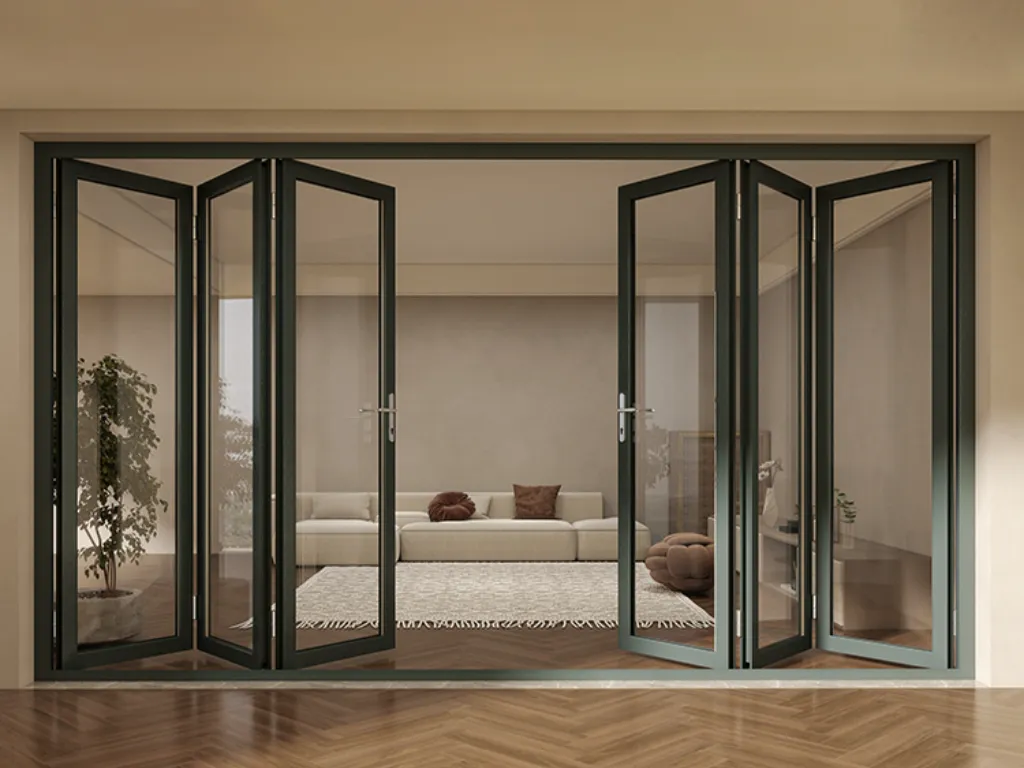
For project buyers, navigating aluminum door pricing can feel like solving a puzzle, where every choice— from materials to shipping—affects the final cost. This article breaks down the factors that shape pricing, offering insights into everything from raw materials and hardware to the impact of customization and shipping decisions. We’ll also share strategies to help you avoid hidden costs and secure the best value for bulk orders, so you can make smarter purchasing decisions.
How Is Raw Aluminum Profile Pricing Calculated?
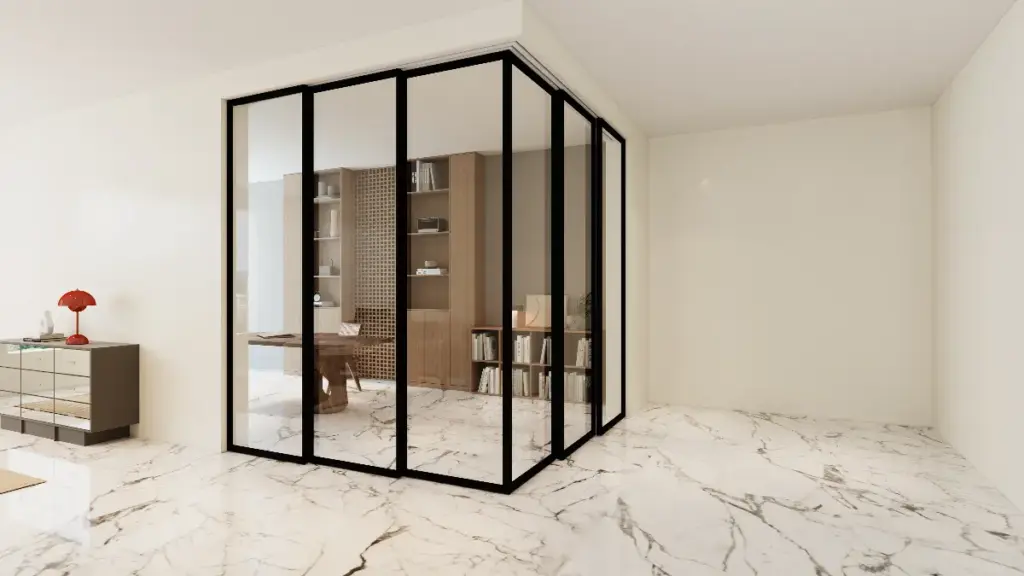
Raw aluminum profile pricing is primarily calculated per ton or per kilogram. The price reflects the cost of aluminum ingots (linked to LME/SHFE), plus conversion, 마무리 손질, and tooling. Here’s how it works:
- Base Price: The price of aluminum ingot, typically around USD 3,100/ton, forms the foundation.
- Conversion Costs: This includes extrusion, aging, 그리고 마무리, with costs like $430/ton for extrusion and $150/ton for anodizing.
- Tooling: Custom die costs range from $400–7,000 and are amortized over the production run.
To calculate per-meter pricing, the profile’s weight per meter (kg/m) is determined based on its cross-sectional area and aluminum density (2.70 g/cm³).
The formula is:
Price per meter = Price per kg × Weight per meter (kg/m)
예를 들어, for a 1.2 kg/m profile priced at $3.68/kg, the per-meter price would be $4.42/m.
This calculation is then adjusted for additional factors such as custom different types of finishes (예를 들어, 아노다이징 처리, 분체 도장), which can increase the final cost.
What Percentage of the Final Price Comes from Hardware and Accessories?
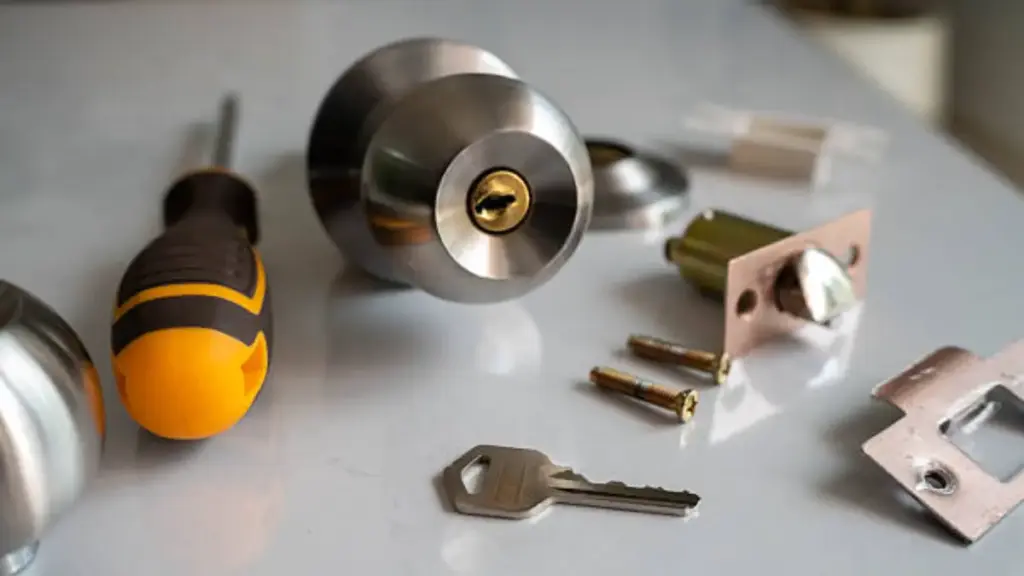
Hardware and accessories typically account for 10-30% of the final price for standard aluminum doors. 하지만, for higher-spec commercial applications, this share can rise to 25-40%, particularly when advanced systems like electronic access control are included.
For a standard aluminum exterior door, priced at $800–$1,500 installed, hardware costs typically range from $80–$250 for residential-grade items, including hinges, door handles, locksets, and weatherstripping.
In more specialized commercial doors, particularly those with electronic access, hardware and accessories can range from $500–$1,000+ per opening. High-end items, such as commercial electronic locks (costing $700–$1,300+ each), can significantly increase the hardware percentage, pushing the total cost contribution to as high as 40%.
These percentages depend on factors like door specification, 하드웨어 품질, 그리고 노동, with the overall cost split varying by project type.
How Do 사용자 정의 and Design Fees Impact Unit Cost?
Customization and design fees significantly increase unit costs by adding premiums for materials, 완료, and complexity to the base price.
Base Costs: Standard single-panel aluminum doors typically range from $250–$800. Custom or high-end options, like 미닫이문 or bi-fold doors, can escalate to $1,000–$3,500.
Customization Add-Ons:
- Custom Finishes: Options like anodized, textured, or wood-grain effects can add $150–$500 per door.
- Glazing Upgrades: Triple-glazing, 착색, 젖빛 유리 or laminated glass can increase costs by up to $1,000 over standard double-glazing.
- Specialized Hardware: Adding essential components like closers, 자물쇠, or push bars can contribute $200–$1,000+ to the unit price.
Labor and Fabrication: Custom doors often require more intricate fabrication and specialized labor. 예를 들어, installing large glass panels or complex locking systems can add $500–$1,200, compared to $200–$600 for standard installations.
The final installed cost for customized aluminum doors generally ranges from $1,500–$5,000+, showing a 50–100% increase over standard models.
Unlock Project Excellence: High-Performance Aluminum Doors & 창
How Does Container Consolidation (LCL vs. FCL) Affect Landed Costs?
LCL (Less-than-Container Load) shipments, while flexible for smaller volumes, incur significantly higher per-CBM landed costs due to tiered consolidation and handling fees. These can increase costs by 25-35% over the base price. Hidden fees, such as $120–$250 for destination handling and $45–$125 for documentation, further inflate the total landed cost.
반면에, FCL (Full-Container Load) provides a flat rate for an entire container, making it more cost-effective for shipments exceeding 14-18 CBM. Even at 65% capacity, FCL offers 28% lower costs compared to LCL. 또한, FCL avoids the delays associated with consolidation (typically 2–5 days) and has fewer customs inspections.
For shipments near or above this threshold, FCL offers greater predictability and cost savings, reducing both transit delays and potential demurrage charges.
LCL vs. FCL Cost Comparison
| 측면 | LCL (Less-than-Container Load) | FCL (Full-Container Load) |
|---|---|---|
| Cost per CBM (landed) | $136–$148/CBM total landed (inflated by 25–35% ancillary fees) | $90–$110/CBM (at 15–18 CBM volumes) |
| Cost Structure | Tiered; includes consolidation ($35–$80/CBM), destination handling ($120–$250), documentation ($45–$125). | Fixed flat rate per container ($1,200–$1,620 for 20ft). |
| Hidden/Ancillary Fees | Comprise 18–34% of total landed costs (예를 들어, 10 CBM base $720 escalates to $1,140). | Predictable and typically under $300 total. |
| 비용 효율성 & Savings | Higher per-CBM costs, less predictable due to variable charges. | 28% lower landed costs even at 65% capacity vs. equivalent LCL volumes. |
| Volume Break-even Point | Becomes significantly less cost-effective above 14–18 CBM. | More cost-effective above 14–18 CBM (예를 들어, 13–15 CBM), offering 12.5–22% lower costs. |
| Transit Time & Risk | Adds 2–5 days consolidation delay; faces 23% more customs inspections. | No consolidation delays; fewer customs inspections; reduced damage risk. |
Negotiation Strategies for Bulk Orders and Favorable Pricing
Leverage Volume and Market Trends
Commit to larger order volumes to secure ‘price lock’ agreements, lowering per-unit rates. Tying contracts to market indices helps hedge against price fluctuations, potentially saving up to 10% compared to fixed price agreements. Use Requests for Quotation (RFQs) to establish competitive price ranges and benchmark offers.
Optimize Payment Terms
Negotiate low initial deposits (10-20%) to enhance cash flow. For large OEM projects, structure milestone payments (예를 들어, 15% deposit, 20% after mold approval, 30% after in-line inspection, 그리고 35% after final inspection) to manage cash flow while protecting both parties.
Amortize Tooling Costs
Spread tooling costs (often in the thousands) across the initial production runs, typically the first 10,000 units, to lower unit cost and ease the upfront burden.
Enhance Supply Chain Flexibility
Mitigate lead time risks by implementing multi-supplier backup strategies, with backup suppliers covering up to 40% of potential delays from primary sources.
Contract Clarity
Ensure clear terms on product specifications, 포장, and FOB details to prevent disputes and hidden costs.
opuo‘s Pricing Strategy: Leveraging Vertical Integration
Successfully navigating the pricing landscape of aluminum doors requires a keen understanding of the various cost factors. By considering material, 맞춤화, 하드웨어, and logistics, project buyers can make smarter decisions, optimize their budgets, and secure the best value for their investments.
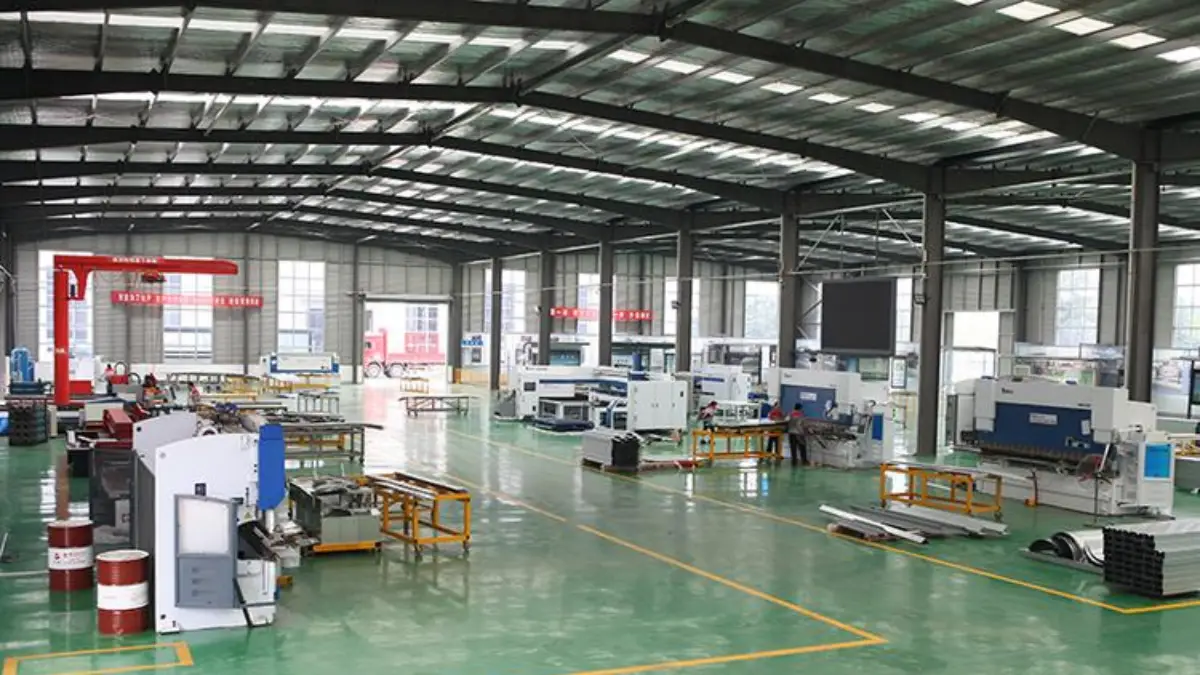
OPUOMEN’s pricing strategy relies on vertical integration, utilizing in-house production to eliminate intermediaries. This approach leads to cost reductions of 10-15%, allowing OPUOMEN to offer competitive, tiered pricing for products such as 6063-T5 aluminum profiles.
By controlling every step of the process—from extrusion to assembly and finishing—OPUOMEN ensures consistent product quality while reducing overall costs. 또한, we stands behind its products with a 5-year warranty, providing long-term value and peace of mind for customers.
Ready to optimize your aluminum door pricing and project efficiency? Contact OPUOMEN today.
자주 묻는 질문
How does the aluminum profile thickness affect the final door price per square meter?
Increasing thermal break aluminum profile thickness from 1.6 mm to 1.8 mm typically results in a ~10–20% price uplift per m² for the finished system, moving from an average of 800–1,200 CNY/m² to a higher tier.
What is the typical cost premium for specialized wood-look or textured powder coatings?
Specialized wood-look or textured powder coatings commonly add 15–30% to the coating cost compared to standard RAL colors at the profile level, translating to roughly 5–15 USD/m² extra on finished doors, depending on the factory and coating line.
How can a buyer ensure they are getting the true wholesale factory price?
Buyers can ensure true wholesale factory pricing by asking for profile unit prices (USD/kg or USD/m) and theoretical weight lists, comparing per-m² door quotations against implied kg and glass costs (예를 들어, US$ 70–110/m²), and checking third-party platform audits for ‘Manufacturer/Factory’ status, ISO 9001:2015, and requesting business licenses and mill certificates.
What is the current market volatility of aluminum raw materials and how is this factored into quotes?
Aluminum raw material prices (예를 들어, 6xxx series billet) are volatile, often priced per ton (예를 들어, US$ 2,600–3,000 per ton). Factories factor this into quotes by offering prices in ranges and stating quotes are valid for a limited time (예를 들어, 7–30 days), adjusting list prices based on LME/SHFE aluminum movements, with raw material adjustments embedded in the per-kg or per-m profile price.