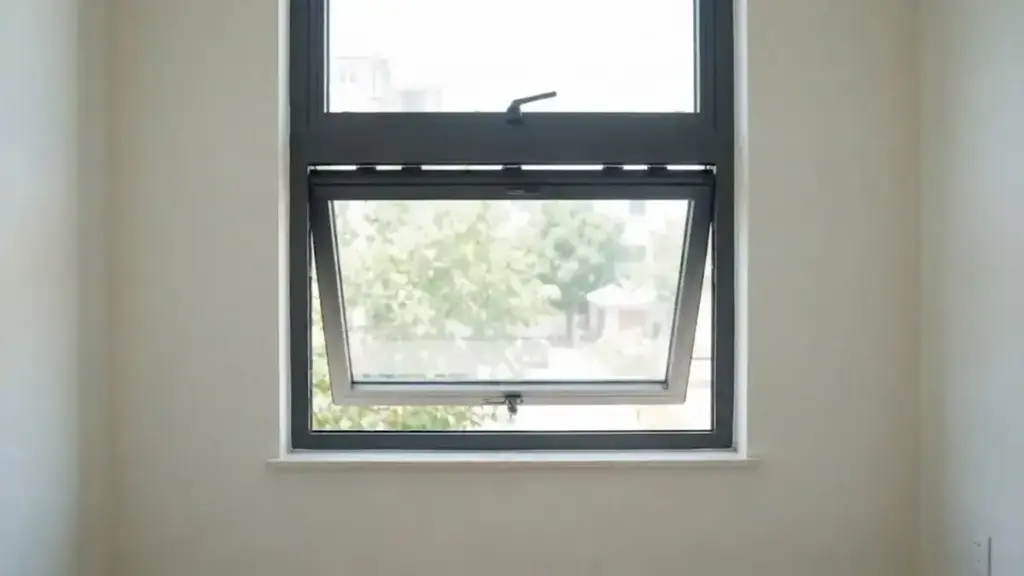
Avoiding common aluminum door and window mistakes during sourcing helps reduce warranty issues, installation problems, and unexpected maintenance costs after delivery. Selecting unsuitable profiles may lead to water leakage, poor operation, and higher repair costs that affect overall project profitability.
This analysis examines key factors behind aluminum door and window performance, including profile design, 6063-T5 aluminum alloy selection, glass configuration, 하드웨어 품질, 및 설치 요구 사항, helping buyers make more reliable sourcing decisions.
Why Aluminum Door and Window Selection Matters
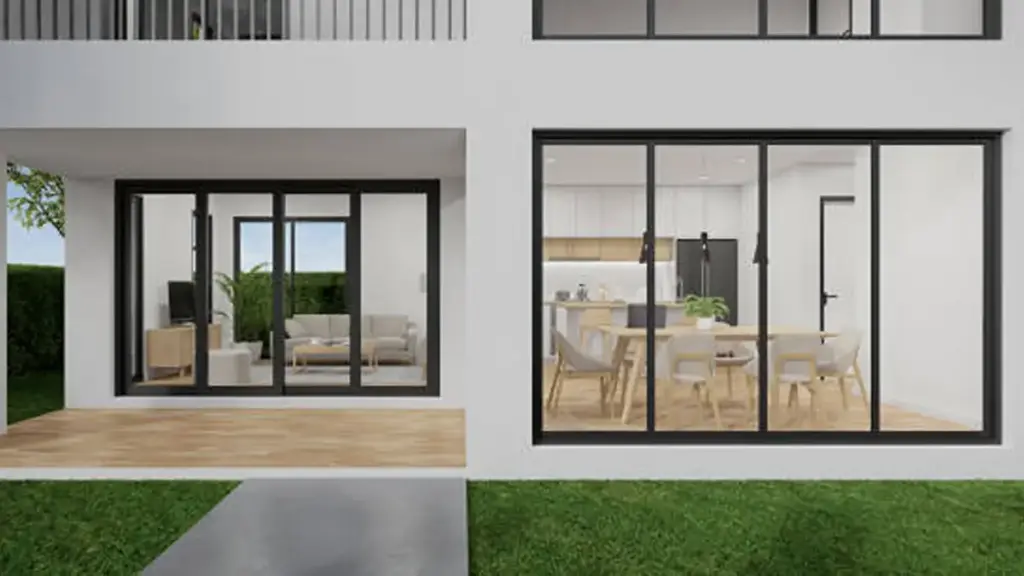
Selecting the right aluminum door directly determines security, 열 성능, 그리고 장기적인 유지보수. Poor choices cause water leaks and early hardware failures, driving up lifecycle costs.
Material Performance and Structural Stability
알루미늄 문 used in residential and commercial projects need to withstand daily operation, 풍압, temperature changes, 그리고 장기간 야외 노출. When engineers specify these systems, they evaluate how the metal handles temperature shifts, physical attacks, and aggressive climates.
- Dimensional stability: Aluminum maintains its shape under extreme temperature shifts, resisting the warping, 뒤틀림, and cracking that often degrade timber doors.
- Security performance: The high strength-to-weight ratio allows the frames to support heavy-duty multi-point locking systems, resisting forced entry in high-traffic openings.
- 내식성: Aluminum naturally forms an oxide layer that helps protect the surface from corrosion. Proper surface treatments such as powder coating or anodizing further improve durability.
- Energy efficiency: Integrating thermal breaks and insulated glazing stops heat transfer, directly reducing heating and cooling costs.
A building’s long-term performance depends on these material properties. If the frame deflects under high wind loads, gasket compression may decrease over time, increasing the risk of air leakage and water infiltration.
Lifecycle Value and Avoidance of Common Failures
Procurement decisions based solely on initial purchase price usually backfire. Lower-cost door systems may create additional expenses through increased maintenance requirements, air leakage issues, and shorter service life. Understanding the factors behind aluminum door pricing can help buyers evaluate long-term value instead of focusing only on the initial quotation.
- Maintenance demands: Powder-coated or anodized profiles require minimal upkeep, completely eliminating the need for regular repainting.
- Lifecycle costs: Although quality systems carry higher initial costs, their extended service life reduces total cost of ownership.
- System protection: Correctly specified profiles and seals prevent drafts, water ingress, and structural vibration over decades of use.
- Hardware specification: 견고한 선택, weight-matched hinges and rollers avoids the mechanical failures common to under-specified, 무거운 문.
When builders combine robust hardware with correct installation tolerances, the door performs as a single, engineered assembly. This attention to detail eliminates early failures and protects the building envelope.
실수 1: Choosing Low-Cost Aluminum Doors and Windows
Choosing low-cost aluminum systems may reduce initial investment but can increase long-term expenses through higher energy consumption, 유지, and replacement costs.
The Long-Term Expenses of Low-Bid Windows and Doors
Low upfront bids look appealing on a spreadsheet, but they mask structural and thermal deficiencies. Real-world operations quickly expose these design shortcuts.
- Energy Losses: Buyers who select non-thermally broken profiles lose their initial savings to surging heating and cooling bills.
- Structural Failures: Thin aluminum frames and low-grade hardware cause sagging doors, 정렬 문제, and premature replacement costs.
- Water and Air Ingress: Substandard seals fail over time, letting drafts and water leaks destroy surrounding walls and interior finishes.
- Lifecycle Deficits: Standard non-thermal units cost less on day one, while thermally broken systems save significantly more over decades of use.
Evaluating these operational expenses before signing a contract protects your budget from compounding maintenance fees.
Key Performance Metrics to Evaluate Beyond the Price Tag
Smart procurement requires looking past the bottom-line number. You must verify the technical specifications that guarantee long-term performance.
- Profile Thickness & 열 파손: Check the physical wall thickness of the aluminum and confirm the inclusion of a high-quality thermal break.
- Hardware and Weather-Stripping: Verify the hardware brand, load-bearing capacities, and the materials used for weather seals.
- Certified Performance Reports: Request official test data and complete warranty documentation, including relevant testing methods such as the ASTM E331 water penetration test standard, to accurately project the total cost of ownership.
- Installation Scope: Confirm that the quote fully details the installation labor, alignment work, and perimeter weather-sealing.
Focusing on these metrics protects the project from hidden field failures, unexpected installation adjustments, and premature wear.
Reliable Aluminum Door and Window Solutions for Global Projects
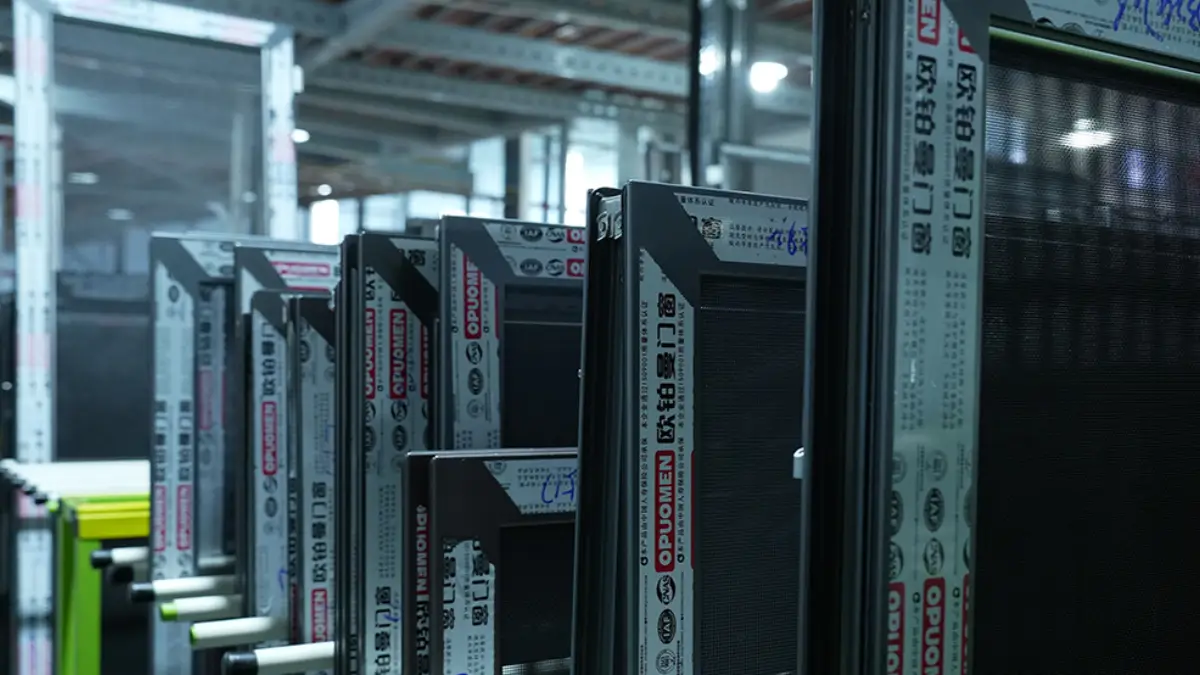
실수 2: Ignoring Aluminum Profile Quality Standards
Using aluminum profiles with insufficient wall thickness for the intended application may reduce structural strength and affect long-term performance, especially in large openings or high-wind-load areas.
Structural and Performance Risks of Substandard Profile Thickness and Alloys
Frame rigidity directly dictates the operational life of architectural glazing, making the selection of suitable 알루미늄 도어 프레임 프로필 critical for long-term performance. Selecting cheap, thin-walled extrusions compromises the structural integrity of the entire building envelope, causing issues that cannot be resolved after installation.
- Wall Thickness Thresholds: For many architectural aluminum systems, thicker profiles are typically selected for larger doors and higher-load applications. The required wall thickness should be determined according to system design, 개구부 크기, and local performance standards.
- Deformation Hazards: Selecting profiles with insufficient wall thickness for the application may reduce frame rigidity and increase the risk of deformation, 특히 큰 개구부의 경우, 무거운 유리 패널, or high-wind-load projects.
- Alloy Strength Requirements: Architectural aluminum systems commonly use alloys such as 6063-T5 because of its balance of strength, 내식성, 및 압출 성능. The selected alloy should match the structural requirements of the project.
- Seal Failures: Weak profiles reduce gasket compression over time, leading to air leakage, 물 침투, and compromised thermal performance.
Quality Verification and Procurement Best Practices
Procurement teams must enforce strict verification protocols before signing supply contracts. Relying on visual inspections or supplier promises inevitably leads to non-conforming site deliveries and costly field repairs.
- Contractual Specifications: Specify exact alloy grades, tempers, wall thicknesses, and tolerance classes in purchase contracts, referencing standards like EN 755-9 or GB/T 5237.
- Coating Thickness Standards: Verify that the surface treatment meets the required coating standards for the target market, such as anodizing or powder coating specifications.
- On-Site Audits: Use calipers and mechanical testing during site sampling to confirm dimensional tolerances remain within strict precision limits.
- System Testing: Request available performance testing reports for wind resistance, air permeability, and water tightness according to applicable regional standards before approving bulk installation.
실수 3: Ignoring Glass and Hardware Compatibility
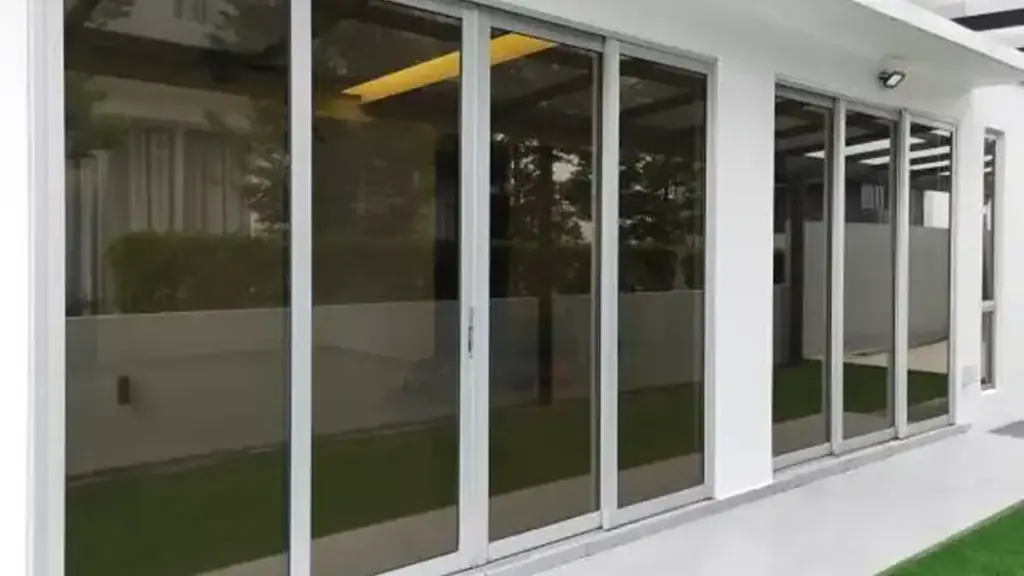
Failing to match glass specifications with frame capacity or ignoring hardware maintenance can reduce thermal performance, affect operation, and shorten system service life.
유리 선택, 손질, and Surface Protection
The frame and glazing system must work together. Incorrect glass specifications can reduce thermal performance and affect overall safety. Glazing choices and on-site handling decide whether the window performs or cracks under pressure.
- Glazing mismatch: Specifying incorrect glazing or wrong glass thickness mismatches the frame design and degrades thermal insulation.
- Abrasive cleaning: Using steel wool, metal scrapers, or abrasive pads scratches the glass surface during construction cleanup.
- Dried debris: Allowing abrasive construction debris and mortar residue to dry on the glass instead of rinsing it immediately with clean water causes permanent scratching.
- Uneven gaskets: Fitting glass gaskets unevenly without leaving sufficient space to accommodate natural thermal expansion creates structural stress.
Protect the glass from day one. Proper handling and correct specification prevent costly replacements before handover.
Hardware Selection, 매끄럽게 하기, and Mechanical Upkeep
Hardware is the mechanical engine of the window system. Buying parts off a catalog page without looking at engineering parameters ensures early mechanical failure.
- Generic selection: Selecting hardware based only on window type rather than matching components to actual wind load, 유리 무게, and usage frequency.
- Grit trapping: Applying lubricants over trapped grit and dust instead of cleaning and drying the hardware parts first.
- Deferred maintenance: Ignoring loose fasteners, worn rollers, and minor hinge friction until the entire locking mechanism fails.
- Exposure neglect: Neglecting to shorten maintenance intervals in coastal or high-exposure areas where salt air accelerates metal corrosion.
Regular lubrication and precise load calculations keep the system operating smoothly. Clean first, dry the components, and then lubricate on a strict schedule.
실수 4: Neglecting Aluminum Door Installation Requirements
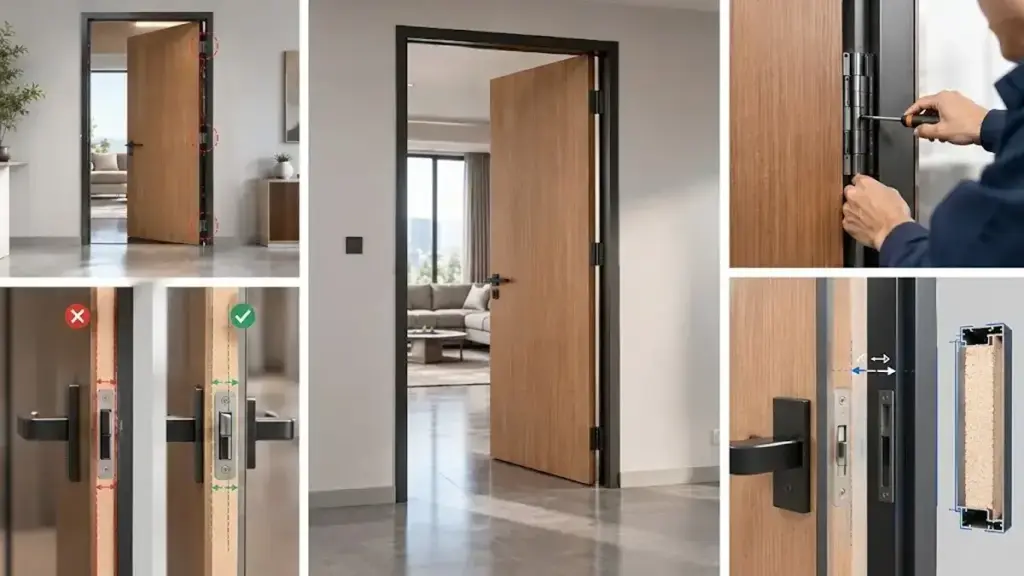
Even the best aluminum doors fail if installed poorly. Precise alignment and correct fastener spacing prevent structural distortion and water leaks.
A high-quality aluminum door relies on an exact fit. Because aluminum frames are rigid and manufactured to tight tolerances, minor field errors during installation will cause immediate operational and structural issues.
Mechanical Alignment and Fastening Specifications
Forcing a frame into an out-of-square opening or guessing the fastener layout guarantees failure. Installers must follow strict physical parameters to preserve the system’s structural integrity.
- 추, Square, and Level Tolerances: Installers must use precision levels to verify all sills, 잼, and heads before securing the frame. Even small deviations warp the frame, causing sashes to bind, 견인, or fail to latch properly.
- Fastener Placement Rules: Fastener locations should follow the supplier’s installation guidelines and project requirements to ensure proper load distribution. Keep anchors at least 100 mm away from transom or mullion center lines, and set intermediate fixings at maximum intervals of 600 mm to distribute loads evenly.
Environmental Sealing and Material Isolation
A door frame must completely isolate the interior environment from exterior weather. Skipping correct perimeter sealing or failing to isolate the aluminum from building substrates leads to fast degradation.
- Perimeter Weather Sealing: Installers must bed sill members in sealant or gaskets. Applying continuous, high-grade sealant around the frame-to-structure joint blocks driving rain and air leaks.
- Thermal Expansion and Material Isolation: Direct contact between aluminum and dissimilar materials like concrete, 벽돌공 직, or structural steel triggers galvanic corrosion. Installers must use gaskets, washers, or isolation tape to separate these materials while leaving space for natural thermal expansion.
실수 5: Choosing the Wrong Aluminum Door and Window Supplier
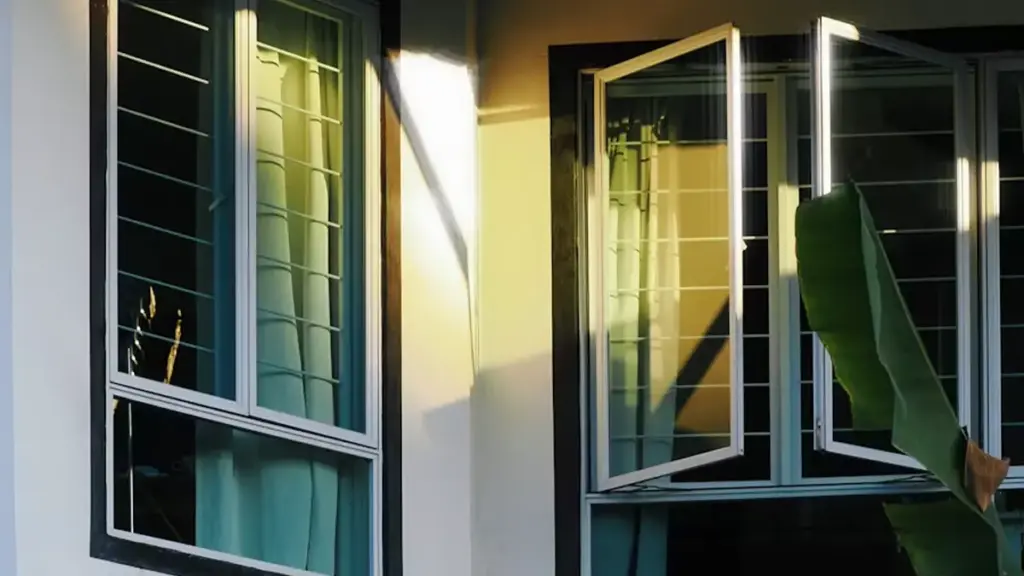
Working with an unverified manufacturer may increase risks related to structural performance, product consistency, and after-sales support. Buyers should prioritize documented testing, production capability, and quality control information when evaluating suppliers.
An unusually low quotation from an unverified manufacturer may indicate compromises in materials, production control, 테스트, or after-sales support. Following a structured evaluation process helps buyers identify a reliable windows and doors supplier before signing long-term contracts. When a supplier lacks proper quality control, the structural and operational failures show up immediately during or shortly after installation.
Technical and Operational Failures Associated with Unqualified Manufacturers
Substandard manufacturing leads to systemic defects that compromise the entire building envelope. Working with unverified suppliers typically results in several critical performance failures:
- Structural compromises: Substandard aluminum alloys or wall thicknesses below the required 2 mm door limit cause frame deformation and bowing under standard wind loads.
- Weatherproofing and energy efficiency failures: Low-grade thermal breaks, misaligned gaskets, and poor joint sealing allow air leakage and water ingress to ruin indoor climate control.
- Project delays and cost overruns: Late deliveries, inaccurate fabrication dimensions, and weak after-sales support force expensive on-site modifications and push back handover dates.
- Code noncompliance risks: Suppliers without documented testing for air leakage, 물 침투, and wind load resistance leave you vulnerable to failed building inspections and liability claims.
Fixing these defects on-site easily wipes out any initial savings. A deformed door frame or a failed perimeter seal requires total replacement, which triggers warranty disputes and damages your reputation with clients.
Methods for Verifying Supplier Compliance and Quality Control
Protecting your project requires a systematic vetting process before signing contracts. Reliable B2B partners readily provide objective proof of engineering compliance rather than verbal assurances.
- Request material certifications: Confirm alloy grades, 성질, and physical specifications like ASTM B 221 alloy 6063-T5 to guarantee raw material integrity.
- Review accredited laboratory test reports: Analyze third-party test data for wind resistance, 기밀성, and water penetration instead of relying on unverified manufacturer sales brochures.
- Evaluate quality management documentation: Prioritize manufacturers with active ISO 9001 certification and clear component traceability systems to ensure batch-to-batch consistency.
- Examine physical production samples: Inspect corner joints, gasket continuity, hardware operation, fabrication tolerances, and surface finish uniformity on actual samples.
If a manufacturer hesitates to share certified test data or raw material traceability, walk away. Consistent fabrication tolerances and verified performance ratings are the only way to ensure long-term building durability.
How to Avoid Aluminum Door and Window Mistakes
Select appropriate profile thickness according to door size, 유리 무게, 풍하중 요구 사항, and the supplier’s system specifications.
| 단계 | Critical Action | Standard Specification |
|---|---|---|
| 재료 & 설계 | Frame Rigidity Check | Deploy a minimum 2 mm profile wall thickness for all exterior door frames. |
| 재료 & 설계 | 열 절연 | Specify certified thermally broken aluminum sections and insulated glass units. |
| 설치 | 구조적 정렬 | Verify squareness on three axes and preserve clear, unblocked weep holes. |
| 유지 | Corrosion Control | Isolate aluminum components from concrete, 강철, and other dissimilar metals. |
Selecting a Reliable Aluminum Door and Window Manufacturer
Choosing a manufacturer with real production capability is one of the most effective ways to reduce sourcing risks. A supplier with its own factory, experienced production team, and strict quality control system can provide better consistency from material selection to final delivery.
오버 13 years of experience in aluminum door and window manufacturing, opuo focuses on providing customized solutions for global residential and commercial projects. The company operates a 60,000㎡ production facility with more than 200 직원, supporting the production of aluminum sliding doors, 접이식 문, 케이스 윈도우, 알루미늄 목제 문, and other customized systems.
From initial design communication and sample confirmation to mass production and delivery, OPUOMEN follows a complete project support process to help distributors, 계약자, and project buyers achieve reliable quality, stable lead times, and customized solutions for different market requirements.
Preventing Aluminum Door and Window Mistakes in Design
Most aluminum door failures trace back to the drafting table. When engineering a commercial or high-end residential opening, you cannot treat aluminum like vinyl or timber. Its rigidity under structural wind load depends entirely on proper section design and correct metal thickness.
- Profile Thickness: Select correct profile thickness, using at least 2 mm for exterior doors to prevent deflection and maintain frame rigidity under heavy daily use.
- Thermal Engineering: Specify thermally broken profiles and insulated glass to limit heat transfer and control indoor condensation during temperature swings.
- Opening Verification: Take multiple exact measurements of the rough opening—height, 너비, and diagonals—to verify it is square before fabrication begins.
- Glass Integration: Match the glass thickness and performance specification to the overall opening size to prevent glass deflection and long-term hardware wear.
Locking in these parameters early prevents field modifications. If a profile is too thin, no amount of high-end hardware will keep the lock set from binding once the building settles or faces high wind loads.
Preventing Installation Mistakes for Aluminum Doors and Windows
Even a perfectly engineered door system fails if the field team rushes the installation. Site crews frequently drop heavy frames into out-of-tolerance openings and expect the door handles and hinges to absorb the structural misalignment.
- Precision Leveling: Use a level during installation to keep the frame perfectly plumb, 정사각형, and aligned inside the rough opening.
- Perimeter Weatherproofing: Apply high-grade sealants and durable weatherstripping around the perimeter to eliminate air drafts and water leaks.
- Drainage Management: Keep weep holes and internal frame drainage paths completely clear of construction debris, 페인트, or sealant to prevent water from pooling inside.
- Galvanic Isolation: Use compatible fasteners and isolate aluminum surfaces from concrete, 벽돌공 직, or dissimilar metals to stop galvanic corrosion.
- Scheduled Care: Clean the system regularly and inspect weatherseals periodically to preserve smooth long-term operation and spot wear early.
Treat these steps as non-negotiable points on your field inspection checklist. Water leakage at the sill almost always comes down to clogged drainage paths or missing isolation gaskets rather than a product defect.
자주 묻는 질문
What should I check before buying aluminum doors and windows?
Verify the profile specifications based on the project requirements, including opening size, 풍하중, 열 성능, and local building standards. Inspect the glass specifications, ensuring double glazing fits your local insulation requirements. Assess the system type, 하드웨어 브랜드, 씰링 개스킷, and drainage design. Always ask the supplier for performance certificates covering air leakage, 방수, 구조적 무결성. Avoid buying based on price alone, and ensure the quote includes precise measurements and clear warranty terms.
Are expensive aluminum doors always better?
아니요. A higher price often reflects custom sizes, 프리미엄 에스테틱, or complex configurations rather than superior core quality. The overall value depends on how well the system specifications match your regional climate and how carefully the team installs it. A poorly installed premium door will still leak air and water. Compare certified thermal performance, profile engineering, and hardware durability rather than using price as your sole quality indicator.
How do I know if an aluminum window manufacturer is reliable?
Reliable manufacturers back their claims with physical documentation instead of marketing talk. Ask for third-party test reports, such as ASTM E283 for air infiltration and ASTM E331 for water penetration. Verify that they use suitable aluminum alloys and thermal break materials according to the system requirements and target market standards. A trustworthy partner provides detailed shop drawings, shows clear quality control records, offers written warranty terms, and has verifiable project references.
What mistakes cause aluminum doors to leak?
Leaks typically happen because of installation errors, poor corner-joint sealing, and blocked drainage. Missing or uneven sealant around the frame-to-wall joint allows water to bypass the frame entirely. Gaps at 45-degree corner joints, worn or incorrectly installed rubber gaskets, and tracks with blocked drainage holes also force water to back up and seep indoors. Using low-grade sealant that cracks under sun exposure accelerates these failures.
How long do aluminum doors and windows last?
Aluminum doors and windows normally last between 30 그리고 50 연령. Premium systems that undergo regular cleaning, track clearing, and hinge lubrication frequently last 45 년 이상. While the structural aluminum frames do not rot, 경사, 또는 녹, secondary components like rubber weatherstrips, hardware locks, and surface finishes may show wear or require replacement after 15 에게 25 연령, especially in harsh coastal environments.
최종 생각
Choosing the right aluminum doors and windows requires more than comparing initial prices. Buyers should evaluate profile design, aluminum alloy selection, glass and hardware compatibility, 설치 요구 사항, and the supplier’s manufacturing capability before making a decision.
A well-designed aluminum door and window system should provide reliable performance throughout its service life, with proper structural strength, 내후성, 에너지 효율, 그리고 유지관리의 용이성. Verifying product specifications, testing documents, and production standards before purchase can help reduce unexpected issues during installation and long-term use.
For projects that require customized aluminum door and window solutions, working with an experienced manufacturer and reviewing technical details in advance can help ensure the final system meets the project requirements. opuo provides technical support, customized solutions, and production capabilities for distributors, 계약자, and project buyers worldwide.