For architects, developers, contractors, and building professionals across Europe and North America, window and door frame material selection is one of the most critical decisions in any project. The choice directly impacts energy performance, maintenance costs, aesthetics, structural integrity, and long-term client satisfaction.
At Opuomen, with over 13 years as a specialized custom aluminum doors and windows manufacturer, we help B2B partners navigate these options daily. This guide provides a data-driven, side-by-side comparison of solid wood (timber), aluminum, and aluminum-clad (alu-clad) systems to support informed specification decisions.
Why Frame Material Matters
Window frames account for a significant portion of a building envelope’s thermal bridging, air leakage, and weathering exposure. Poor choices lead to higher energy bills, callbacks, and reduced asset value. Modern regulations—such as Europe’s EPBD, UK Part L, and North American IECC/ENERGY STAR—demand ever-lower U-values, while clients expect minimal maintenance and design flexibility.
Key evaluation criteria include:
- Thermal performance (U-value)
- Durability and weather resistance
- Maintenance requirements
- Aesthetic lifespan and interior feel
- Structural strength and sightlines
- Lifecycle cost
- Sustainability and compliance
1. Solid Wood (Timber) Frames
Advantages
Wood offers unmatched natural warmth and beauty. Its low thermal conductivity makes it an excellent insulator, often delivering strong baseline energy performance, especially with high-quality softwoods or hardwoods and advanced glazing.
Interior surfaces accept stains or paints easily, suiting heritage restorations, luxury custom homes, and projects requiring organic textures.
Challenges
Maintenance is the primary drawback. Exterior wood requires repainting or refinishing every 5–10 years depending on climate exposure. It is susceptible to moisture absorption, swelling, shrinking, warping, and biological degradation (rot, insects).
In high-wind, coastal, or extreme temperature regions common in parts of North America and Northern Europe, pure wood systems demand protective overhangs or sheltered installations. Dimensional stability can also limit very large openings.
Best Applications
Heritage buildings, protected rural settings, or projects where interior aesthetics take absolute priority and ongoing maintenance budgets exist.
Typical Performance
- U-values: Good with triple glazing (often 1.0–1.4 W/m²K)
- Lifespan: 30–50+ years with diligent care
- Maintenance: High
2. Aluminum Frames
Advantages
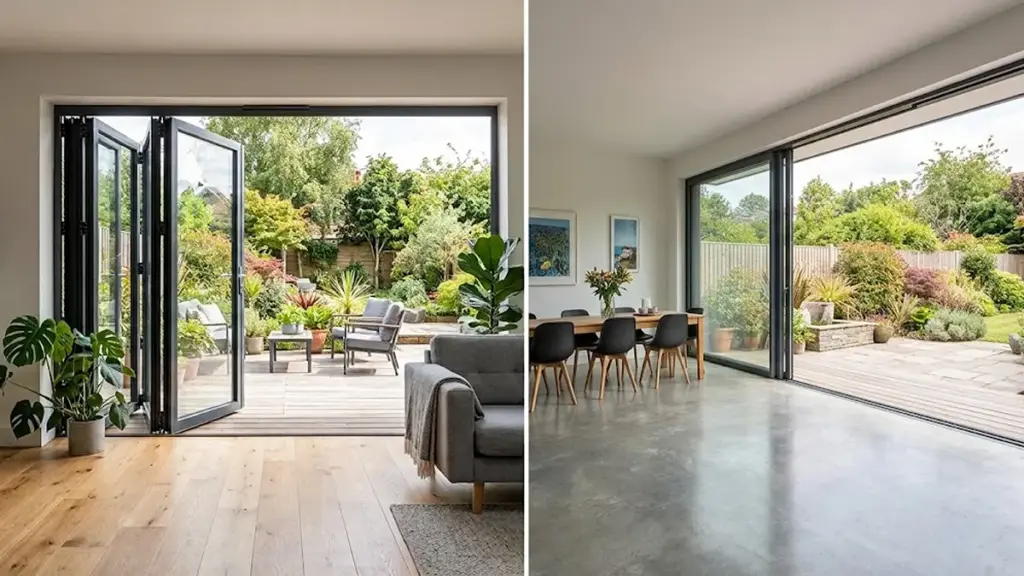
Aluminum systems excel in modern architecture. They allow the slimmest profiles and largest glass-to-frame ratios, maximizing daylighting and views—key for contemporary commercial and residential designs.
Extruded aluminum is exceptionally strong, corrosion-resistant (especially marine-grade or powder-coated), non-combustible, and dimensionally stable across temperature swings.
Maintenance is minimal: periodic cleaning suffices for decades.
Thermally broken aluminum (with polyamide or polyurethane inserts) has dramatically improved insulation performance, making it viable for stringent energy codes. Powder coating offers vast color options with excellent UV stability.
Challenges
Without effective thermal breaks, aluminum conducts heat readily, potentially creating condensation risks in cold climates. Even broken systems may not match wood’s natural insulation in extreme conditions. The industrial aesthetic may not suit every project, though textured finishes help.
Best Applications
Modern and minimalist buildings, high-rise commercial projects, large sliding doors/patio systems, coastal environments, and any project prioritizing strength, slim sightlines, and low maintenance. Opuomen specializes in premium thermally broken aluminum systems optimized for these demands.
Typical Performance
- U-values: 1.2–1.8 W/m²K (high-performance broken systems can reach lower)
- Lifespan: 40–60+ years
- Maintenance: Very low
3. Aluminum Clad (Alu-Clad) Systems
The Hybrid Solution
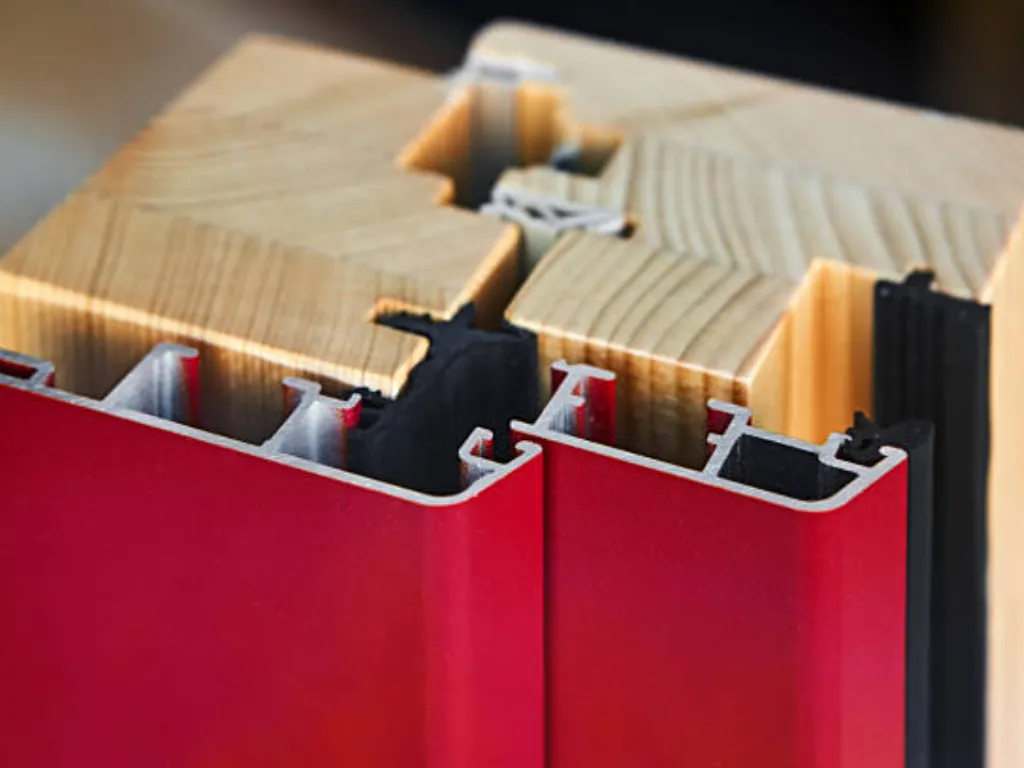
Alu-clad combines the best attributes: a solid wood core for interior warmth, natural beauty, and superior insulation, protected by an external aluminum cladding layer.
The aluminum shield handles weather, UV, and mechanical stress while the wood manages thermal performance and interior aesthetics.
Advanced designs incorporate drainage, ventilation, and pressure-equalized cavities to prevent moisture issues.
Key Strengths
- Exceptional thermal performance (often 0.7–1.1 W/m²K with triple glazing)
- Extremely low exterior maintenance
- Customizable interior wood species and finishes (paint/stain) with durable exterior colors
- Excellent longevity and Passive House compatibility in many systems
- Ability to offer different interior/exterior aesthetics
Considerations
Higher upfront cost than pure aluminum. Proper design and installation are essential to manage the wood-aluminum interface and avoid trapped moisture. Not all suppliers deliver equal quality—engineering of the cladding attachment and sealing is critical.
Best Applications
Premium residential projects, Passive House or near-zero energy buildings, mixed-style architecture needing warm interiors and robust exteriors, and developments targeting long-term value with minimal owner maintenance.
Typical Performance
- U-values: Often the best of the three categories
- Lifespan: 40–60+ years
- Maintenance: Minimal exterior; occasional interior care
Head-to-Head Performance Comparison
| Criterion | Solid Wood | Aluminum (Thermally Broken) | Broken)Aluminum Clad |
| Thermal Performance | Good | Good to Very Good | Excellent |
| Maintenance | High | Very Low | Very Low (exterior) |
| Exterior Durability | Moderate (needs protection) | Excellent | Excellent |
| Slim Sightlines / Large Spans | Limited | Best | Very Good |
| Interior Warmth & Aesthetics | Best | Modern/Metallic | Best (wood) |
| Lifecycle Cost | Higher due to maintenance | Lowest | Competitive |
| Cost (Initial) | Medium | Lower to Medium | Highest |
| Best Climates | Sheltered / Mild | All (esp. coastal) | Cold / Variable |
Additional Decision Factors for B2B Specifiers
Lifecycle Cost vs. First Cost
Aluminum and alu-clad typically deliver the lowest total ownership costs due to reduced callbacks and maintenance.
Sustainability
All three can use recycled content. Aluminum is infinitely recyclable. Responsibly sourced wood offers strong carbon sequestration. Look for FSC, Cradle to Cradle, or equivalent certifications.
Installation & Detailing
Frame depth, fixing methods, and thermal bridging at the wall interface matter more than material alone. Proper installation is non-negotiable for performance.
Customization & Supply
As a direct manufacturer with an integrated factory, Opuomen excels at scaling custom aluminum solutions with reliable lead times—critical for large developments.
Choosing the Right System
There is no universal “best” material,only the best fit for project goals, climate, budget, and client expectations.
- Choose solid wood when heritage aesthetics and natural warmth are paramount and maintenance is acceptable.
- Choose aluminum for modern design, structural performance, slim profiles, and minimal long-term costs—Opuomen’s core expertise.
- Choose aluminum clad for premium projects demanding top thermal efficiency and the perfect blend of beauty and durability.
For most contemporary European and North American projects balancing performance, longevity, and design freedom, high-quality thermally broken aluminum or alu-clad systems deliver the strongest value.
At Opuomen, we specialize in engineering premium custom aluminum doors and windows that meet or exceed international standards (CE, ISO, and more). Our team supports architects and developers from specification through delivery with technical expertise, samples, and project-specific solutions.
Ready to discuss your next project? Contact our team for detailed performance data, sample specifications, or a tailored quotation. Let’s build high-performance envelopes together.