Selecting the right sliding door system requires more than comparing material costs. Frame strength, roller durability, performances du vitrage, and installation quality all directly affect long-term operation and maintenance costs. Substandard profiles lead to frequent warranty claims, compromised weather sealing, and expensive callbacks that erode project margins.
This guide compares common sliding door materials and glass configurations to help architects, entrepreneurs, and buyers choose systems with better durability, efficacité énergétique, et la sécurité. We discuss key performance factors including roller durability, glazing efficiency, isolation thermique, and security features to help you select a reliable sliding door system.
Best Sliding Doors: Key Selection Criteria
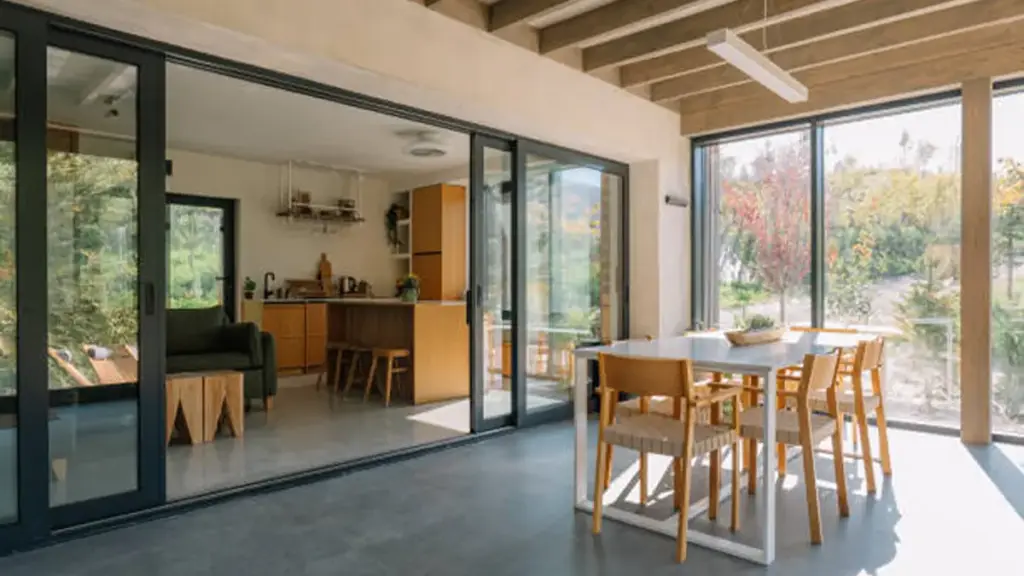
Selecting sliding doors requires balancing structural weight limits and material properties against thermal seals and security needs to ensure long-term mechanical reliability.
Material Properties and Structural Limits
Choose frame materials according to local climate conditions, building requirements, and expected maintenance needs. Fiberglass offers excellent thermal stability in extreme climates, while thermally broken aluminum remains preferred for large openings, montures minces, and modern architectural designs.
Verify track and roller load capacities against the total glass weight. Typical residential panels span 0.8 à 3 meters wide, meaning standard roller systems may experience premature wear when supporting oversized panels or heavy glazing configurations beyond their rated capacity.
Integrate multi-point locking systems with robust steel or aluminum frames. This mechanical combination blocks forced entry and secures the property far better than simple factory latches.
Evaluate lifecycle maintenance needs before specifying. Low-upkeep options like powder-coated aluminum or vinyl eliminate the recurring painting and sealing costs associated with premium hardwoods.
Thermique, Acoustique, and Mechanical Operation
Combine double or triple low-E glazing with fully insulated frames. This system cuts energy bills and stabilizes indoor temperatures during seasonal extremes.
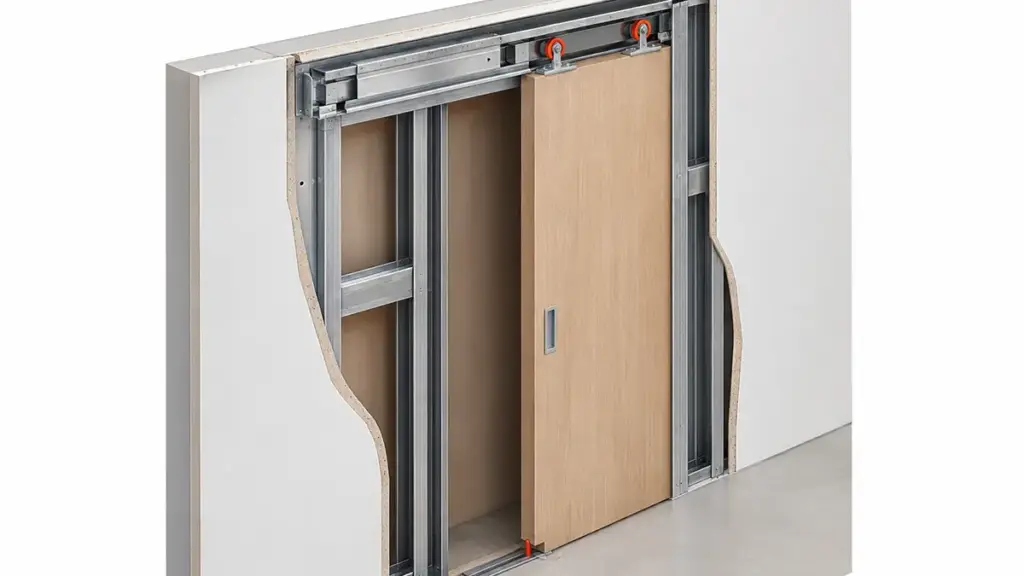
Select the rail system based on room function. Different track systems provide different performance advantages. Proper sealing design, glazing selection, and installation quality are the key factors affecting air tightness and acoustic performance.
Configure flush thresholds with dedicated weather sealing. Low sills eliminate tripping hazards, but they must include integrated drainage paths to handle heavy rain and prevent leaks.
Analyze structural headers and lintels during the early design phase. Massive glass installations exert significant downward force, and insufficient structural support will cause the frame to sag and bind the rollers.
Material Options and Performance Differences
Choosing the right sliding door frame requires balancing structural load capacity with thermal efficiency. Aluminum excels in span size and design flexibility, while fiberglass and composites provide additional insulation benefits.
Structural and Thermal Profiles of Primary Frame Materials
Frame selection directly dictates the limits of your glazing project. Different materials prioritize distinct physical properties, forcing a deliberate choice between sightline width and natural insulation.
- Aluminum Systems: Aluminum is widely selected for modern sliding doors because of its high strength-to-weight ratio, résistance à la corrosion, and ability to support large glass panels with slim sightlines. For improved energy efficiency, thermally broken aluminum frames help reduce heat transfer and improve indoor comfort.
- uPVC and Wood: These options focus on natural thermal insulation and cost control. Wood delivers classic warmth, while uPVC provides the most budget-friendly, low-maintenance thermal barrier.
- Fiberglass and Composites: These provide good dimensional stability and thermal performance, making them suitable for specific climate conditions.
Key Performance Trade-offs and Selection Criteria
Specifying a sliding door system requires navigating key trade-offs where prioritizing one performance metric inevitably impacts another.
- Structural Capacity vs. Isolation: Minimizing sightlines with slim metal frames increases structural rigidity but demands high-performance thermal breaks to prevent energy loss. Insulating materials such as uPVC usually require thicker profiles, which may limit maximum panel sizes compared with aluminum systems.
- uPVC and Wood: These materials can provide good insulation and traditional appearance. uPVC is often chosen for cost-sensitive projects, while wood offers a natural aesthetic but requires more maintenance compared with aluminum systems.
- Fiberglass and Composite Materials: These materials offer good dimensional stability and thermal performance in certain climate conditions. Cependant, aluminum remains preferred for many architectural sliding door applications that require larger openings and modern slim-frame designs.
Premium Aluminum Sliding Doors for Global Projects
Glass Configuration and Energy Efficiency
High-performance glazing systems can significantly reduce U-factor by combining multiple glass panes, Revêtements à faible émissivité, argon filling, and insulated frame designs.
Structural components of energy-efficient sliding glass units
Thermal efficiency in sliding doors depends heavily on the build of the insulated glass unit (Pour moi). Standard single-pane options cannot compete with multi-layered systems engineered to block heat transfer.
- Double and Triple-Pane IGUs: These multi-layered glass assemblies form the core of energy-efficient designs. Triple-pane configurations generally provide better thermal insulation, especially when combined with Low-E coatings, remplissage de gaz, and optimized spacer systems.
- Low-E Coatings and Argon Fills: Microscopically thin low-emissivity coatings reflect radiant heat. Replacing standard air with dense argon gas between the panes restricts conductive heat transfer.
- Warm-Edge Spacers: These components insulate the glass perimeter. They block thermal bridging and stop condensation from building up along the frame edges.
Key performance metrics and climate-specific selection targets
Evaluating sliding doors requires analyzing verified performance metrics rather than relying on generic marketing claims. Different regional climates demand specific target thresholds to optimize energy savings.
- Facteur U: This metric measures the rate of heat loss. While standard double-pane doors achieve ratings around 0.30, high-performance triple-pane variants reach U-factors of 0.19.
- Coefficient de gain de chaleur solaire (SHGC): This rating determines how much solar heat penetrates the glass. Hot climates require low SHGC values to block heat, while cold regions benefit from moderate values to leverage passive solar warming.
- Airtightness Standards: ENERGY STAR and Canadian criteria enforce strict targets. High-efficiency sliding doors must sustain U-factors at or below 0.23, paired with air leakage rates under 0.3 cubic feet per minute per square foot.
Security Features for Sliding Door Systems
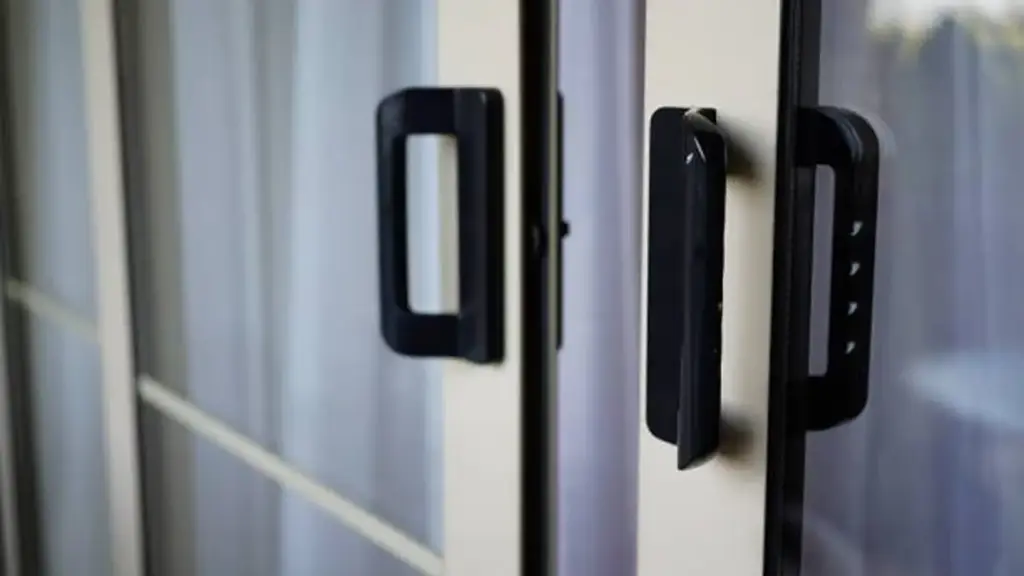
Securing sliding doors requires combining multi-point physical locks, anti-lift track hardware, and laminated glass with real-time electronic sensor monitoring.
Mechanical Locks and Structural Reinforcement
Sliding doors present vulnerabilities at the latch and track. Basic latch systems may provide limited resistance compared with reinforced multi-point locking solutions.
- Systèmes de verrouillage multipoints: Multi-point locking systems are a key component of secure aluminum door designs, especially for projects requiring higher protection standards.
- Anti-Lift Blocks and Steel Pins: Installed in the top track, these components prevent intruders from lifting the panel out of its channel.
- Verre de sécurité feuilleté: Resilient plastic interlayers keep the glass intact even after high-impact strikes.
- Heavy-Duty Framed Anchors: Rigid aluminum or composite frames anchor directly to the building structure to resist heavy leverage attacks.
Distributing locking points across the frame improves resistance against forced entry and provides better overall security performance.
Electronic Detection and Monitoring Systems
Physical barriers delay entry, but early detection prevents it. Integrating electronic monitoring turns a passive door into an active security node.
- Contact and Glass-Break Sensors: These devices report real-time status changes and glass breakage directly to home security networks.
- Surveillance and Motion Lighting: Backyard cameras paired with motion-activated perimeter lighting eliminate dark blind spots near patio entrances.
- Lock-Status Sensors: These allow remote verification of door security through smart home interfaces.
- Alarm System Integration: Monitored systems utilize customized home, night, and away security profiles to automate alerts.
Smart sensors verify that the locks are actually engaged, addressing the common issue of human error where users leave panels slightly ajar.
Best Sliding Door Designs for Different Applications
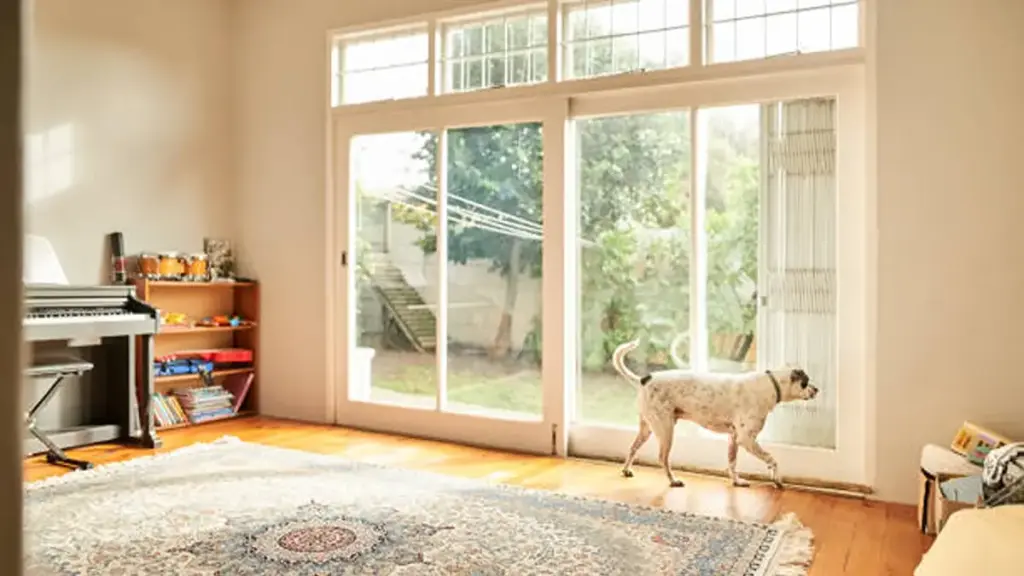
Matching sliding door designs to specific spatial needs optimizes floor layouts, daylighting, and traffic patterns across residential and commercial projects.
Choosing the right sliding door system requires balancing spatial constraints, objectifs esthétiques, and functional demands. Different designs solve distinct structural challenges in both homes and business environments.
Residential Layouts and Interior Integrations
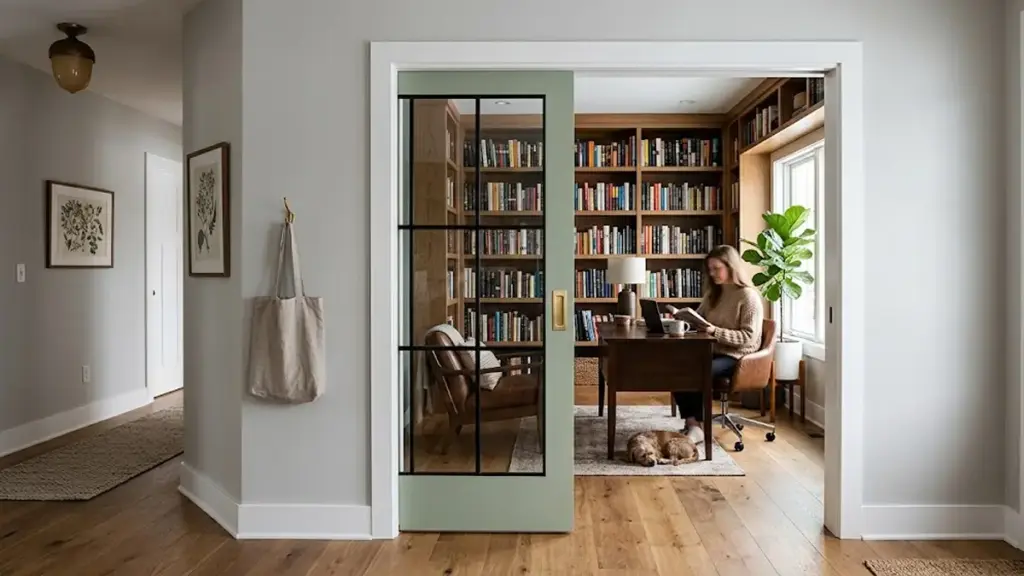
Residential spaces demand a mix of thermal efficiency, floor space conservation, et attrait visuel. Integrating specific door designs handles these requirements across different room layouts:
- Classic Patio and Sliding French Doors: Standard two-panel or multi-panel patio doors eliminate swing clearance, making them ideal for decks, balcons, and gardens. Sliding French doors use divided-lite profiles to deliver a classic, elegant appearance while preserving the space-saving operation of a sliding system.
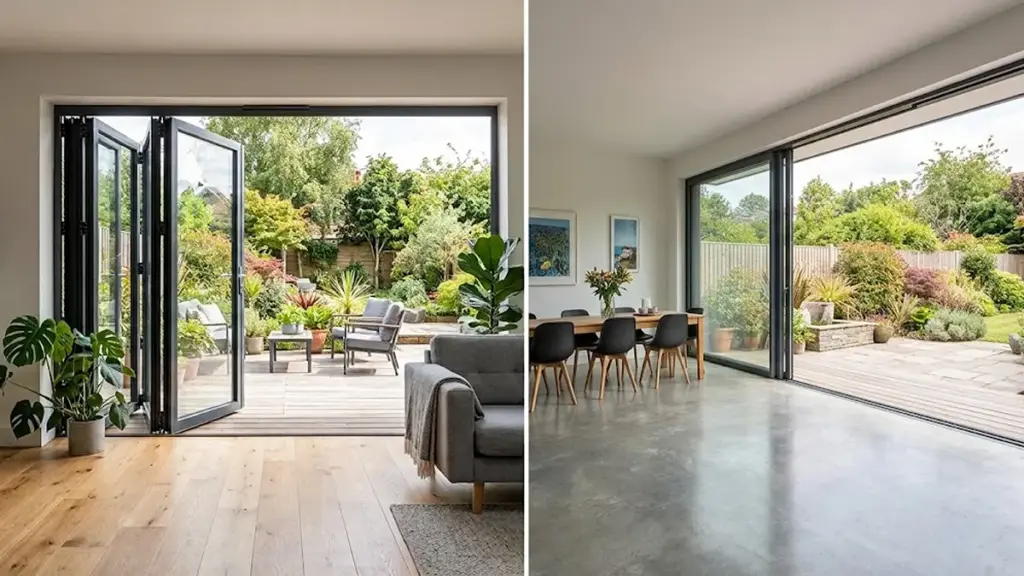
- Multi-Panel and Lift-Sliding Doors: Multi-panel sliding doors are designed for large openings in residential and commercial projects, allowing wider glass areas and better indoor-outdoor connections. Lift-sliding systems are especially suitable for heavy glass panels because of their advanced hardware design and smoother operation.
- Aluminum Folding Sliding Doors: Folding sliding doors combine wide openings with flexible space management. They are commonly used in residential balconies, restaurants, hôtels, and commercial spaces where users need to connect indoor and outdoor areas. High-quality aluminum frames provide durability, résistance à la corrosion, and long-term performance in different climates.
Commercial Settings and Spatial Configurations
Commercial properties prioritize durability, ease of access, and flexible space configuration to accommodate varying occupancy levels and high pedestrian traffic:
- Automatic Glass Sliders: These systems are the standard for high-traffic retail, hôtel, and office entryways. They ensure hands-free accessibility, regulate pedestrian flow, and maintain building climate control.
- Multi-Panel Stacking and Accordion Walls: Stacking systems and bi-fold accordion walls allow hospitality venues, restaurants, and exhibition halls to open entire facades to the outdoors. This flexibility lets operators divide or expand event spaces based on daily business needs.
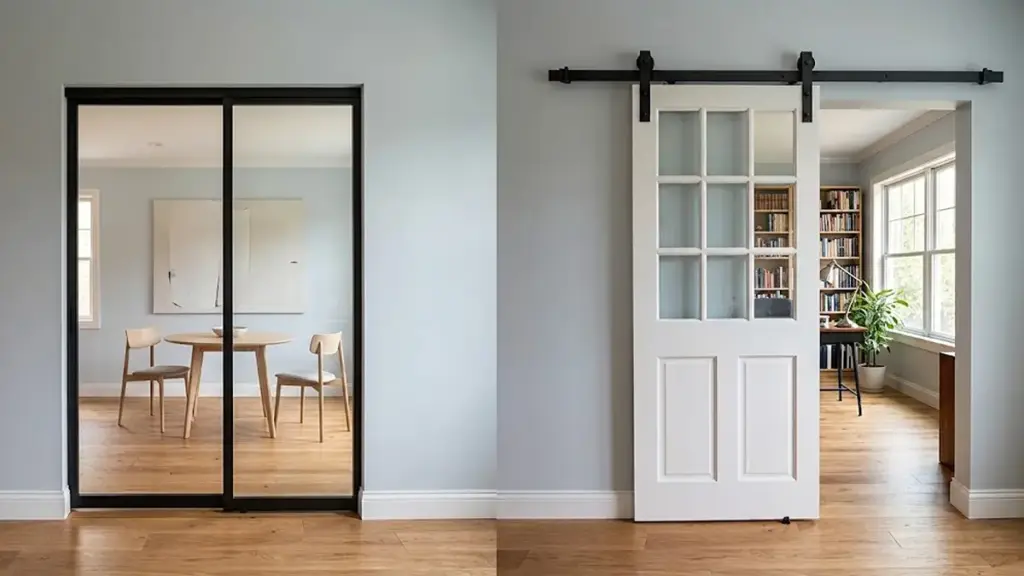
- Acoustic and Glass Partitions: Sliding glass partitions segment conference rooms and modern offices without blocking daylight. When fitted with tight seals and acoustic glass, they provide visual connectivity while isolating sound for confidential meetings.
Selecting a Reliable Sliding Door Supplier
Selecting a sliding door supplier requires strict verification of mechanical cycle testing, alloy certifications, production capacity, and documented on-time delivery rates.
| Evaluation Metric | Target Threshold / Specification | Verification Document |
|---|---|---|
| Roller Durability | ≥ 20,000 open/close cycles | Mechanical test reports |
| Frame Alloy | 6063-T5 or 6061-T6 aluminum | Alloy mill certificates |
| Facility Scale | ≥ 20,000 m² production space | Factory profile / on-site audit |
| On-Time Delivery | ≥ 95% within 4 à 6 semaines | Logistics performance history |
Technical Quality and Certification Standards
Sliding door performance depends directly on material chemistry and mechanical testing. Procurement teams must bypass generic marketing claims and enforce strict validation of component engineering before placing bulk orders.
- Mechanical Durability: Source roller assemblies tested to withstand 20,000 or more open and close cycles without failure.
- Alloy Certification: Require official mill certificates confirming the use of 6063-T5 or 6061-T6 aluminum frames for structural load resistance.
- Compliance Standards: Secure documentation for ISO 9001 gestion de la qualité, Marquage CE, and NAFS structural testing.
- Glazing Verification: Demand official test results for glass tempering and double-glazing seal integrity to guarantee safety.
Securing these technical credentials guarantees the doors can handle heavy wind loads and high-frequency use. Testing rollers prevents early system failure, which remains the most common field issue for sliding systems.
Operational Capacity and After-Sales Support
A supplier might deliver excellent samples but fail during production scaling. Assessing facility footprints and delivery records ensures the factory can meet project schedules without sacrificing quality.
- Production Scale: Prioritize factory-direct manufacturers operating at least 20,000 square meters of floor space to ensure stable output.
- On-Time Delivery: Verify operational history to confirm a minimum 95% on-time delivery rate within standard 4-to-6-week lead times.
- Support Responsiveness: Screen for communication response times under 3 hours during initial technical design phases.
- Warranty Scope: Establish clear, written protections covering structural frames, insulated glass seals, and mechanical parts.
Direct manufacturer relationships cut out middleman markups and give you direct access to replacement parts. Enforcing strict communication response times during quoting prevents downstream delays when handling custom project modifications.
Why Choose Opuomen as Your Sliding Door Manufacturing Partner
Choosing the right sliding door supplier is not only about product specifications but also about manufacturing capability and long-term cooperation. Opuomen Doors and Windows has been specializing in aluminum door and window solutions since 2013, providing customized portes coulissantes, portes pliantes, portes en bois et aluminium, and system solutions de fenêtres for global markets.
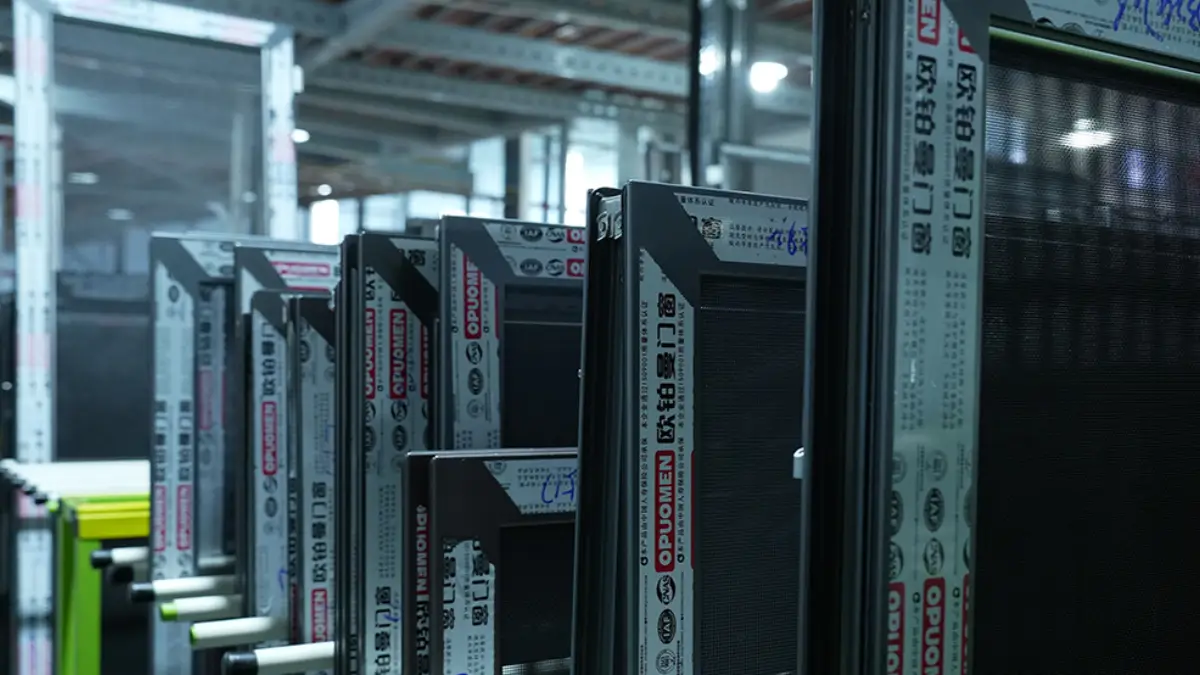
With a 60,000㎡+ production facility and more than 200 employés, Opuomen integrates profile processing, traitement du verre, assemblée, inspection de la qualité, and packaging to maintain stable production quality. Our products comply with international standards including CE, Rohs, and REACH, while ISO9001 quality management ensures consistent manufacturing processes.
From project consultation and design support to production and after-sales service, Opuomen works closely with distributors, entrepreneurs, and builders to deliver reliable aluminum sliding door solutions adapted to different climates and applications.
Foire aux questions
What are the best sliding doors for a house?
The ideal setup balances your specific layout with weather exposure. Standard 2-panel sliding doors fit smaller patios and tight clearances well, costing between $1,200 et $4,000 installé. For expansive layouts, multi-panel or lift-and-slide systems open large wall sections, starting around $1,500 par pied linéaire. Choose vinyl for upfront savings, fiberglass for durability in extreme climates, or thermally broken aluminum for thin frames and massive glass areas.
What material is best for sliding doors?
Aluminum serves as the best overall material for modern patio doors because its raw strength allows for thin frames and wider glass areas with minimal maintenance. If you prioritize budget and insulation, vinyl offers a lower cost but requires thicker profiles. Fiberglass delivers maximum durability and thermal stability in harsh climates, while wood offers traditional warmth but demands regular painting and sealing to prevent rot.
Are aluminum sliding doors worth the investment?
Oui, aluminum sliding doors are worth the price if you value maximum glass area, thin sightlines, and modern styling. They withstand severe weather, résister à la déformation, and do not rot. They carry a higher upfront cost than vinyl, but they deliver better value over a long lifespan due to minimal maintenance. To ensure they perform well, select frames with robust thermal breaks and pair them with high-performance double or triple glazing to prevent heat transfer.
How long do sliding doors last?
A quality residential sliding door typically lasts 20 à 30 années. Premium systems constructed from fiberglass, composite, or high-grade aluminum can easily reach 40 à 50 years with regular maintenance. Cheap builder-grade vinyl doors often fail within 10 à 15 années. You can extend the life of any system by vacuuming the tracks regularly, replacing worn weatherstripping every 5 à 10 années, and lubricating the rollers annually.
What should you look for when buying sliding doors?
Focus first on precise measurements, frame material performance, and strong security. Look for doors with multi-point locking systems and energy-efficient ratings, including a low U-factor for insulation and a low Solar Heat Gain Coefficient (SHGC) for warm climates. Ensure the door features double or triple-pane tempered safety glass, smooth-gliding rollers, and a well-engineered drainage threshold to prevent water leaks.
Pensées finales
While generic sliding doors offer lower upfront costs, specifying certified 6063-T5 aluminum frames and rollers rated for 20,000 cycles is the only way to safeguard your reputation against premature mechanical failure. Selecting systems with verified thermal breaks and multi-point locking secures your properties against severe energy loss and intrusion. High-performance engineering avoids the costly callbacks and sagging frames that plague cheap, unverified installations.
Do not leave structural performance to chance. We recommend requesting our technical specification catalog and a hardware sample to inspect our finish and roller glide firsthand. Contactez notre équipe dès aujourd'hui to match our manufacturing capacities with your custom project demands.