Specifying double vs triple pane windows is a structural decision as much as a thermal one. A third lite raises sash weight by roughly half. Standard hinges, rollers and balances are not always rated for that load, so an under-engineered triple-glazed sash can sag and lose its seal long before the glass fails.
The premium is just as concrete: アメリカで. replacement market a triple-glazed unit typically costs 20 に 40 percent more than an equivalent double-glazed one. The sections below compare the U-factor shift from 0.27 に 0.20 against sash weight, hardware limits and climate-specific payback. Specify the third lite only where it earns its keep.
何 “Pane” Actually Counts
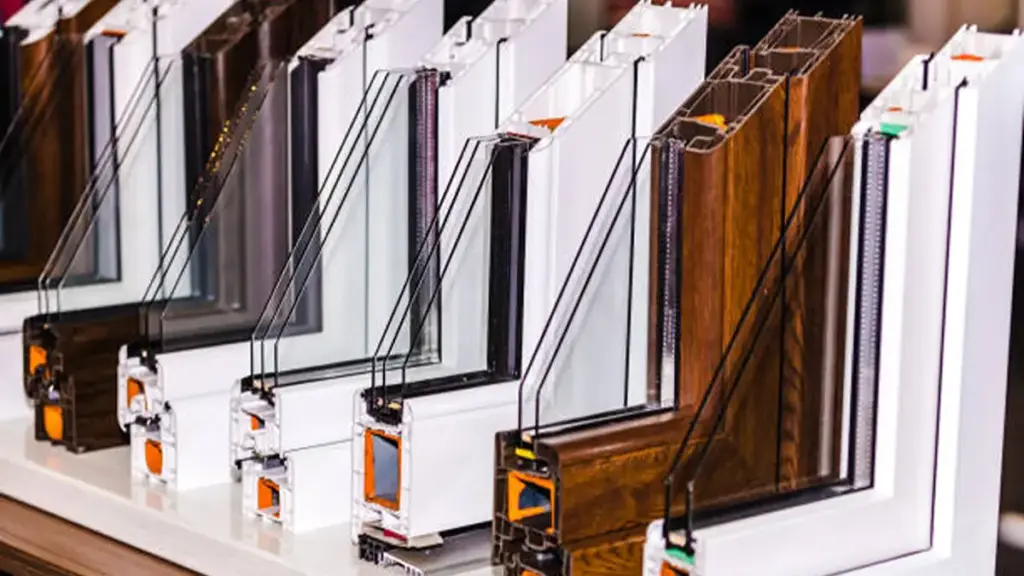
Your window’s pane count relies strictly on the number of rigid, individual glass sheets. コーティング, ガスが充填される, and interlayers do not add to this physical tally.
Defining Glass Lites versus Coatings and Cavities
To specify windows accurately, you must distinguish between physical glass sheets and performance-enhancing options. Adding gas or metallic coatings changes the thermal ratings, but the core physical build stays the same.
- Glass Lites: An individual sheet of glass or rigid glazing material constitutes a single pane.
- Insulating Cavities: Sealed spaces, ガスが充填される, and warm-edge spacer systems do not add to the overall pane count.
- Low-E コーティング: Microscopically thin metallic layers applied directly to the glass surfaces change thermal performance without creating additional physical panes.
Accounting for Laminated Layers, Applied Films, and Storm Panels
Adding aftermarket films, secondary storm glazing, or laminated safety layers often confuses project specifications. These upgrades alter safety and solar metrics but do not change a double-pane unit into a triple-pane model.
- ラミネートガラス: Two glass layers bonded tightly by a plastic interlayer are counted as a single lite for specification purposes.
- Applied Films: Thin polymer layers attached to the glass alter solar heat gain but do not represent separate, rigid glazing panes.
- Storm Panels: Exterior or interior storm panels serve as secondary glazing additions rather than factory-sealed third panes within the primary insulating glass unit.
Pane make-up is a separate decision from pane count. コーティング, gas fill and laminated builds are covered in our guide to choosing aluminum window glass.
U-Value and Energy Savings Compared
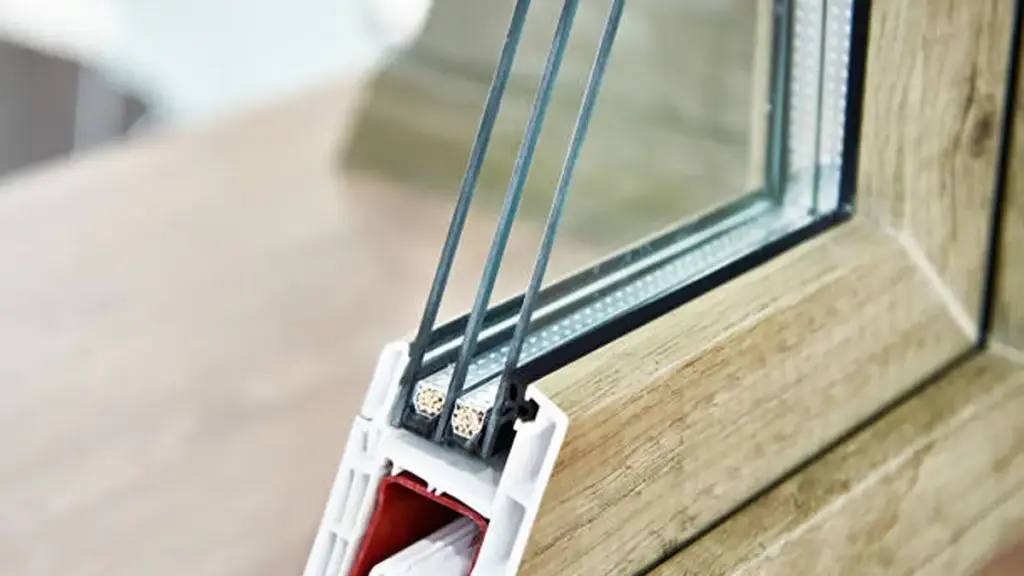
Adding a third lite cuts conductive heat transfer through the glazing by about 26%, but whole-building energy savings depend on where you build.
U-Factor Comparisons and Conductive Heat Transfer
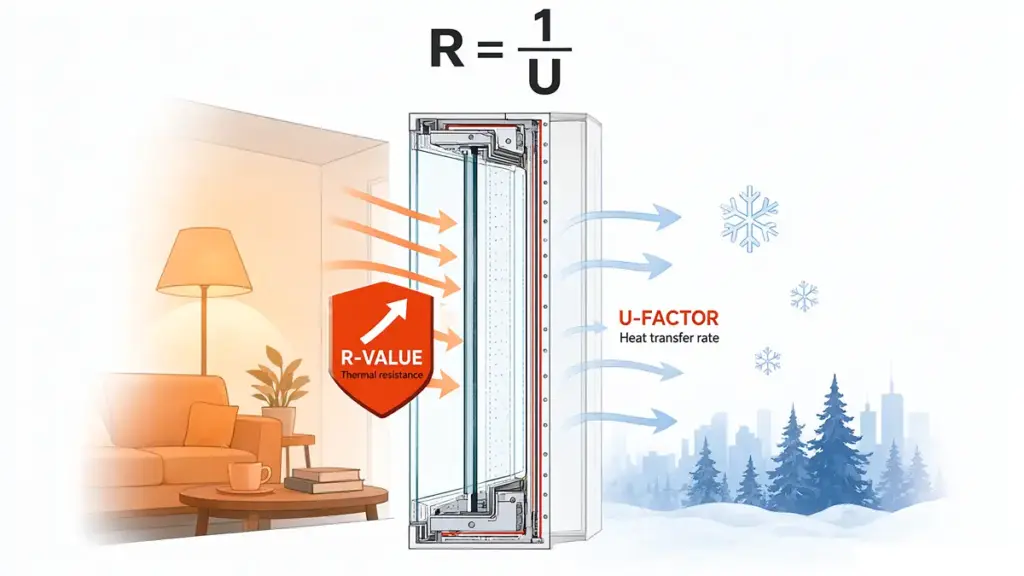
Comparing double vs triple pane windows on paper usually means comparing U-factors first. The U-factor measures the rate of heat transfer through the complete assembly, and lower numbers mean less heat escapes your building. The 全国開窓評価評議会 (NFRC) sets how the industry determines that rating for a finished unit, so treat the label rather than the brochure as the specification input. We cover the rating method itself in our explanation of U-factor window ratings; only the comparison inputs matter here.
- Standard Low-E Double-Pane: Typically delivers whole-window U-values between 0.25 そして 0.30.
- Triple-Pane Configurations: Lowers whole-window U-values to a range of 0.18 に 0.22.
- Conductive Heat Loss: Dropping from a U-factor of 0.27 に 0.20 reduces heat transfer through the glass area by 26%.
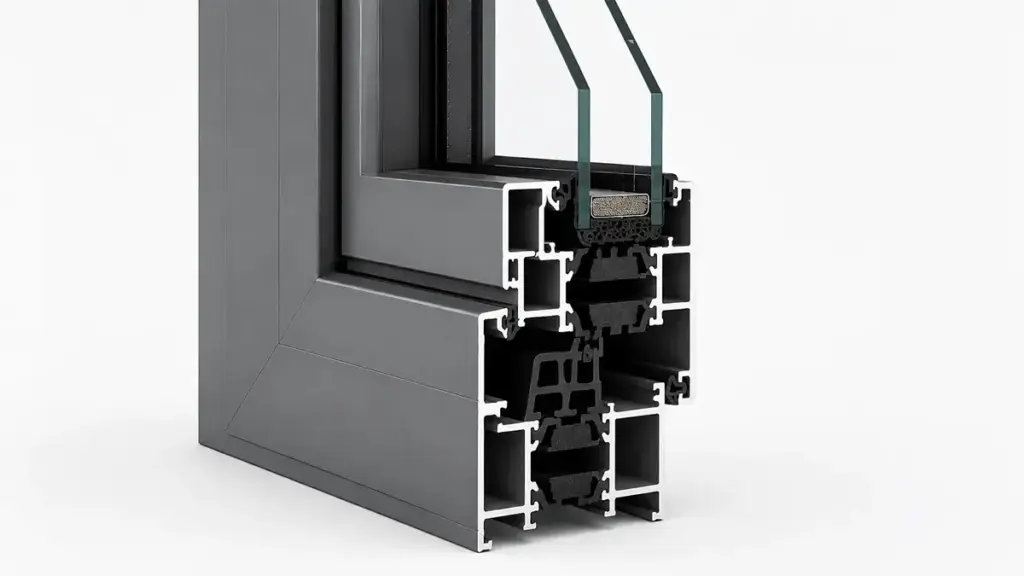
Do not focus solely on the glass. Real-world performance relies on warm-edge spacers, argon gas fills, and insulated frames rather than pane count alone.
Climate-Specific Energy Savings and Utility Impacts
A window’s thermal rating on paper does not translate directly to a utility bill. Real savings depend on where you build.
- Heating-dominated climates: The third lite works every winter night, so the U-factor gain converts into the largest share of utility savings and the shortest payback.
- Mixed climates: Savings are real but smaller, and most of the argument shifts to comfort, cold-edge drafts and interior condensation rather than the bill.
- Cooling-dominated climates: SHGC and exterior shading decide the cooling load, so a third lite adds little and can even trap solar gain you are trying to reject.
Payback turns fastest where the baseline is leaky. Replacing clear single-pane or early non-coated double-glazed units in a heating-dominated region with high utility rates is where the third lite starts to fund itself.

Sound Reduction Difference
Standard triple-pane windows offer only minor acoustic upgrades over double-pane units. True sound isolation requires acoustic laminated glass, asymmetric pane thicknesses, and airtight frame construction.
Standard Ratings and Performance Benchmarks
Acoustic performance depends on the type of noise you need to block. Standard window testing relies on two main metrics to measure sound transmission loss across different frequency ranges.
- STC and OITC ratings: 音響伝達クラス (STC) targets high-frequency indoor sounds like speech, while Outdoor-Indoor Transmission Class (OITC) measures low-frequency exterior noise like traffic and aircraft.
- Standard triple-pane performance: Like-for-like, a basic three-lite unit improves STC by only 2 に 4 decibels. The 6 に 10 decibel claims belong to acoustic builds with laminated and asymmetric lites.
- Acoustic double-pane superiority: Double-glazed units engineered with laminated glass frequently outperform standard triple-pane setups that lack specialized interlayers.
- Perceived decibel changes: A 5-decibel shift produces a clearly noticeable change in the room, while a 10-decibel drop cuts the perceived volume in half.
Glass Configurations and Structural Influences
Adding more glass panes does not guarantee quiet, which is why a double vs triple pane windows comparison rarely settles a noise complaint on its own. The physical properties of the glass and the spacing between the lites dictate how much vibration passes through the window assembly.
- Laminated glass interlayers: A flexible plastic interlayer dampens sound wave vibrations across critical mid- and high-frequency ranges.
- Asymmetric glass thicknesses: Mixing different glass thicknesses prevents the panes from sharing a resonance frequency, which blocks a much wider range of sound.
- Wider, asymmetric cavities: Broad air spaces and uneven cavity widths disrupt sound waves far better than narrow, uniform gaps.
- Airtight frames and seals: Heavy compression seals and airtight sash frames prevent flanking noise from leaking around the glass unit.
Frame-level detailing carries more of the result than the third lite does: gasket compression, sash depth and glazing pocket design. We cover those in our guide to soundproof window design for projects.
Weight and Hardware Load Impact
Triple-pane glass increases weight by 50%, putting extreme stress on standard window hardware and causing long-term structural sag if left unreinforced.
Calculating the Glass and Sash Weight Difference
We evaluate structural loads by comparing base glass weights. A triple-pane insulating glass unit (私にとって) adds approximately 50 percent more glass weight than an equivalent double-pane unit of the same glass thickness.
For a typical 3-foot by 5-foot opening, the difference is tangible:
- Double-pane IGU weight: 約 61.5 ポンド, at 4.1 lbs/sq ft for two 4 mm lites (float glass weighs roughly 0.51 lb/sq ft per millimetre of thickness).
- Triple-pane IGU weight: 約 92.3 ポンド, the same calculation with three 4 mm lites at 6.15 ポンド/平方フィート.
- Net physical increase: A 30.8-pound weight jump for the glass package alone.
Calculating total sash weight requires factoring in the glass, sash frame materials, internal reinforcement, and hardware components. Vinyl and wood profiles vary, but a fully assembled triple-pane casement sash commonly lands near 80 pounds where the equivalent double-pane sash is around 55.
Operational Strain on Hardware and Frames
That weight change alters the physics of window operation. Heavier sashes put continuous stress on hinges, operator gears, and arm linkages, especially on projected windows like casements or awnings. 時間とともに, this stress leads to progressive sash sag, dragging the corner of the window downward.
For horizontal sliding windows, the dead load shifts directly to the rollers and sills:
- Roller wear: Accelerated wear and flat-spotting under increased vertical pressure.
- Sill deflection: Track bowing under heavier sashes, which increases rolling resistance.
- Friction build-up: Dirt accumulation compounded by weight, making the window harder to open.
Undersized hardware creates severe structural risks. When hardware cannot support the load, frame deflection occurs, which pulls locking points out of alignment. Once the locks misalign, you lose consistent perimeter gasket compression, causing drafty rooms and compromised weather seals.
Mechanism choice decides how much load the hardware actually carries. 私たちの tilt and turn window series is built for heavier insulated glass units, with multi-point locking and hinges sized for the extra lite.
Cost Delta and Payback Period
Triple-pane windows add a 20% に 40% capital premium. Cold climates claw it back through a 26% cut in glass heat transfer and smaller HVAC equipment.
| Glazing Configuration | 設置コスト (Per Window) | Project Cost (15 Windows) | Thermal Performance Delta |
|---|---|---|---|
| Double-Pane (Low-E/Argon) | $350 – $700 | $5,250 – $10,500 | ベースライン |
| Triple-Pane (Low-E/Argon) | $500 – $950 | $7,500 – $14,250 | 26% less heat transfer through the glazing |
| Upgrade Premium | $150 – $300 | $2,250 – $3,750 | 20% – 40% cost increase |
Analysis of the Price Differential and Installation Costs
The figures above are U.S. retail installed prices quoted by contractors in the replacement market, shown for budget context only; they are not OPUOMEN quotations. Factory-direct pricing for project quantities sits below these ranges and moves with profile depth, glass make-up and hardware load.
- The average price premium: Upgrading costs $150 に $300 more per window, reflecting a 20% に 40% baseline cost increase.
- Material cost drivers: Expenses stem from a third glass lite, extra low-emissivity coatings, specialized gas fills like argon or krypton, and continuous warm-edge spacers.
- Structural and installation factors: Deep-frame profiles, heavy sashes, and high-capacity hardware can push total project pricing higher.
Climate-Driven Energy Savings and Payback Calculations
The financial viability of three-pane glazing depends on geography. Warm regions rarely justify the cost of the extra glass, while cold climates offer a much faster path to net savings.
- Glass-package heat transfer: Falls about 26% against a modern double-pane low-E unit, while whole-building savings stay in the single digits, which is what drives the payback ranges below.
- Annual heating energy savings: 通常 $20 に $60 in mild climates, $50 に $120 in moderate zones, そして $50 に $200 in cold regions.
- Simple payback timelines: Averages 15 に 25+ years in warm regions, 12 に 20 years in moderate zones, そして 8 に 20 years in cold regions.
- Incentives and tax credits: They can lower the upgrade premium, but terms change by year and jurisdiction. Verify the current credit before building it into a pro forma.
- Non-energy financial factors: Reduced heating system sizing requirements and localized property value appreciation help offset the overall premium.
Climate-Zone Decision Rule
Match window pane counts and performance ratings directly to your local IECC climate zone to optimize thermal performance and avoid unnecessary capital expenditures.
Performance Requirements by IECC Climate Zone
Thermal performance demands shift as you cross regional boundaries. Each model energy code sets its own caps, そして NFRC’s overview of U.S. window energy codes tracks which edition each jurisdiction has actually adopted.
- Zones 1 に 3 (熱い): The controlling number is SHGC, and the prescriptive tables cap it at 0.25 for glazed fenestration. Low-solar glass and exterior shading carry the cooling load; pane count does not.
- Zones 4 そして 5 (Mixed and Mixed-Cool): Maximum U-factor runs 0.32 in Zone 4 そして 0.30 in Zone 5, which a modern double-glazed low-E argon unit already clears. Here the third lite is bought for comfort, edge drafts and condensation control, not for code.
- Zones 6 に 8 (寒い): Adopted editions tighten toward 0.27 に 0.30, with the 2021 edition stricter than 2018 in the coldest zones. Triple glazing at 0.18 に 0.22 clears those caps with margin and keeps the room-side glass warm enough to stop draft-like convection at the edge.
Every figure above is edition-dependent, and states amend the model code. Marine zones drop the SHGC requirement altogether. Confirm the adopted edition with the authority having jurisdiction before you put a U-factor on a specification sheet.
Thermal Metrics and Economic Evaluation
Selecting the right glass package requires analyzing precise performance data alongside regional economic realities. Specifiers must weigh thermal benefits against hardware premiums.
- SHGC Targeting: Prioritize low SHGC values on sun-exposed facades. This prevents uncontrolled solar heat gain from overriding cooling systems during peak summer cooling periods.
- Payback Calculation: Calculate simple payback by dividing the incremental cost of the triple-pane upgrade by estimated annual heating and cooling savings.
This targeted approach keeps the double vs triple pane windows decision tied to measured load and comfort gaps rather than to a sales sheet.
When Triple Glazing Is Overkill
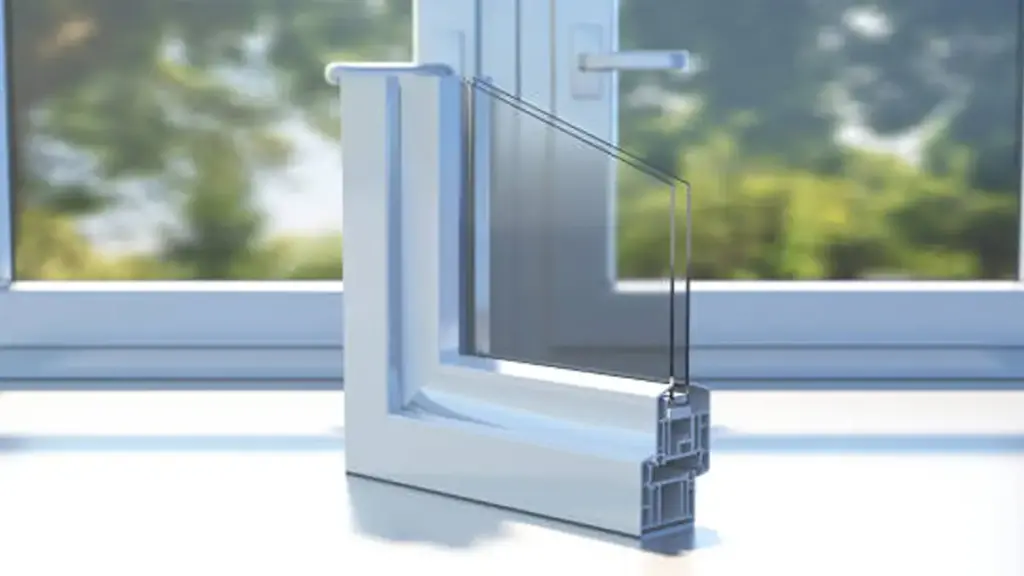
Triple glazing rarely pays back in hot or mild climates, and it pays back least when the existing double-pane units already carry low-E coatings and argon fills.
Climates and Regions Where the Third Pane Fails to Pay Off
You do not need a third layer of glass in every climate. For many buildings the double vs triple pane windows decision is already settled by the glass being replaced. If the existing units are airtight, coated and gas-filled, the premium buys very little.
- Hot and cooling-dominated climates: In these areas, the solar heat gain coefficient (SHGC) and exterior shading dictate cooling performance far more than raw insulation. Blocking solar heat is the priority, not trapping warm air.
- Mild or temperate zones: If local weather remains moderate year-round, the small seasonal differences in energy use cannot justify the higher upfront product cost.
- Properties with modern double-pane setups: If your building already features airtight, double-pane windows equipped with low-emissivity coatings, upgrading to triple glazing offers virtually unnoticeable improvements.
Financial Limits and the Diminishing Returns of Low U-Factors
Lowering your window U-factor sounds attractive on paper, but the physics of heat transfer guarantee that each additional pane delivers smaller absolute savings than the last.
- High upfront premiums: The same 20% に 40% premium documented above applies here too, and in mild climates the incremental saving is small enough that it is never recovered.
- Extended payback periods: Outside cold regions the simple payback stretches past 20 年, routinely outlasting the ownership or lease horizon of the building.
- Structural and installation surcharges: Three layers of glass increase the weight of your sashes by up to 50%. This extra load requires deeper frame profiles, 頑丈なハードウェア, and extra labor to handle and install safely.
よくある質問
Is triple glazing worth it in mild climates?
Triple glazing rarely makes financial sense in mild climates if you already have functioning double-pane windows. High-quality double-pane systems equipped with low-emissivity coatings and argon gas deliver most of the required thermal insulation at a lower cost. Upgrading to triple glazing in these regions serves comfort-focused goals, such as eliminating cold drafts near large glass walls, reducing street noise, or preventing interior condensation.
Does triple-pane glass block more noise than double-pane?
Triple-pane windows often block more sound than standard double-pane designs, but the reduction is not automatic. Effective acoustic control depends on using asymmetric glass thicknesses, laminated glass interlayers, and wider insulating air spaces. A specialized double-pane window with laminated glass and varying pane thicknesses will often outperform a basic triple-pane window that lacks these acoustic features.
Can existing frames handle triple-pane glass?
Existing double-pane frames can rarely support a direct upgrade to triple-pane glass. Triple-pane units are roughly 40% に 50% heavier and much thicker than double-pane units, meaning they require deeper glazing pockets and heavy-duty hinges or balances. While thin-profile triple glazing works in some specialized retrofits, most standard upgrades require replacing the sash or the entire window frame.
Does triple-pane glass cause condensation problems?
Triple-pane windows prevent interior condensation because the extra pane keeps the room-side glass warmer. These highly efficient windows can, on clear and humid nights, show exterior condensation. This happens because the glazing blocks indoor heat from reaching the outermost pane, allowing it to cool below the outdoor dew point. This exterior moisture is a sign of high thermal efficiency and clears naturally as daylight warms the glass.
Which is better for hurricane zones, 二重窓または三重窓?
Neither configuration is inherently safer during a storm based on pane count alone. Hurricane safety depends entirely on impact certification, wind-pressure ratings, and secure anchorage. A certified impact-resistant double-pane window is far safer than a standard triple-pane window. If both have impact ratings, double-pane is often the preferred choice to avoid putting excessive weight on sashes, トラック, and frames.
Standard double-pane glazing keeps initial cost and hardware loads inside ordinary tolerances. High-performance triple glazing in cold zones is what keeps the room-side glass warm enough to stop edge drafts and interior condensation. On larger builds, matching glass weight to reinforced hardware is what prevents progressive sash sag and premature seal failure.
The double vs triple pane windows decision is a load, comfort and budget question at once, not a rating-sheet question. Avoid guesswork on load limits and thermal ratings. Request our technical catalog and glass sample kits to check spacer durability and frame compatibility firsthand. Our specification team can then review your drawings against the glazing package you intend to order.