When specifying aluminum door systems, understanding the differences between commercial and residential options is essential to avoid costly mistakes. This article explores the key distinctions, focusing on structural aspects like wall thickness, hardware durability, and thermal performance standards. It also covers compliance requirements, aesthetic considerations, and cost structures, providing a comprehensive guide to help you make informed decisions for both commercial and residential projects.
Profile Strength
Wandstärke
Commercial aluminum doors typically feature wall thicknesses ranging from 0.090 Zu 0.125 Zoll (2.3–3.2 mm) for the primary stiles and rails. These thicker profiles are designed to support larger glass panes, handle heavy loads, and withstand high wind and impact forces.
Im Gegensatz, residential doors use lighter wall sections (0.050–0.080 inches or 1.3–2.0 mm), focusing on aesthetics and material efficiency for lower structural and traffic demands.
Reinforcement Requirements
Commercial doors require internal reinforcement to support high traffic, heavy-duty hardware, and increased security needs. Reinforcements, such as thickened hinge/lock rails and continuous plates, are essential for handling heavy loads and large glass units.
Residential doors, Jedoch, typically feature minimal reinforcement, as they are designed for lighter use with less demand for heavy hardware or security. Commercial door systems may also include fire ratings (45–120 minutes), a requirement often absent in residential doors.
Hardware Rating: Cycles, Load, and Commercial-Grade Locks
Commercial-grade aluminum door systems are built for demanding environments. These systems receive specific ratings for high cycle counts, heavy wind loads, and strong locking mechanisms. Hardware ratings ensure long-term durability and security, which is key for busy business-to-business applications like storefronts.
Key Metrics
Cycle Life: Commercial doors, such as the Overhead Door 511, typically have a rating of 10,000 Zyklen, supporting frequent daily operations. Residential doors usually have lower cycle ratings.
Load Capacity: Systems handle significant wind loads, accommodating large areas up to 500 Quadratfuß (Zum Beispiel, Haas CA-320/320i) with robust 1-3/4″ thick aluminum panels.
Locking Mechanisms: They incorporate galvanized, interior-mounted locks, providing enhanced tamper resistance and security for commercial premises. These metrics show the performance difference from residential systems, which generally have lighter duty specifications.
For project-specific needs, consulting manufacturer engineering data or ASTM E330 wind load standards is recommended.
Comparison to Residential Doors
Commercial models, like the Overhead Door, specify 10,000 cycles for frequent use (Zum Beispiel, 25+ daily operations over many years), while residential doors often have a maximum of 5,000-10,000 cycles but are for lighter duty.
Commercial doors are wind-rated for large areas (226-500 Quadratfuß) and use heavy aluminum (1-3/4″ thick), different from residential doors that are smaller and lighter (unter 200 Quadratfuß).
Aus Sicherheitsgründen, commercial settings use galvanized, interior-mounted locks for tamper resistance; residential doors typically rely on basic slide bolts.
Exact cycle and load testing can vary by certification (such as DASMA for thermal, IECC for seals). Storefront swing doors often prioritize hardware adaptability over cycle counts. For project-specific ratings, consult ASTM E330 wind load standards or manufacturer engineering data.
Entwickelt für Exzellenz: Your Partner for Premium Aluminum Doors
Code Compliance: Local Building and Fire Code Variances
Local building and fire codes specify door, Hardware, and egress requirements based on the space’s category (z.B., Montage, Wohnen). These regulations ensure safety, accessibility, und Energieeffizienz. Jedoch, commercial aluminum door systems often require variances when applied in residential settings or mixed-use projects.
Technical Justifications and Performance-Based Approvals
Achieving fire-resistance ratings for aluminum doors in rated barriers demands specific framing, cores, and fire-resistive glazing, often requiring performance testing for non-standard assemblies.
Egress variances allow relaxation of panic hardware or door swing rules in residential lobbies if occupant load and evacuation modeling demonstrate equivalent life safety, always ensuring unobstructed egress.
Whole-building energy modeling can justify highly glazed commercial entrance systems in conditioned spaces by offsetting door losses with higher-performing envelope components.
For accessibility in historic retrofits or constrained sites, authorities may consider variances but typically mandate compensating measures such as automatic operators or adjusted hardware.
Navigating Local Regulations and Historic District Considerations
Many jurisdictions implement local amendments, historic district guidelines, or design reviews, which restrict materials, sightlines, and reflectivity of storefronts and entry doors beyond base codes.
Designers frequently seek variances for commercial aluminum door systems with narrow sightlines or large glass panels in areas where traditional proportions or reduced glazing are preferred.
Authorities might grant variances when aluminum systems are detailed to match historic profiles, control light spill, or reduce perceived massing, while consistently meeting life-safety and energy standards.
Aesthetics and Size
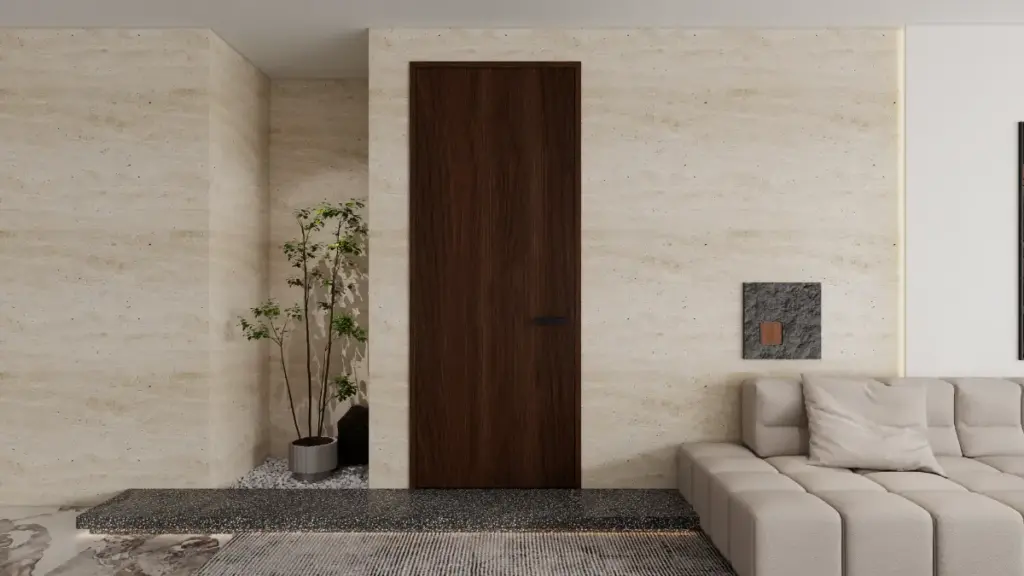
Commercial and residential aluminum doors differ significantly in design, mainly in the following two aspects:
Sightline Design for Visual Appeal
Commercial aluminum doors typically feature narrow stiles, ranging from 1.5 Zu 2.5 Zoll, creating a larger glass area for enhanced aesthetics and natural light. These slim profiles are ideal for storefronts and high-traffic areas, offering a modern, sleek look.
Im Gegensatz, residential doors tend to have wider stiles for added strength and structural support, prioritizing durability over aesthetics, though some thermally broken residential models are now adopting slimmer profiles.
Maximum Aperture Capabilities and Configurations
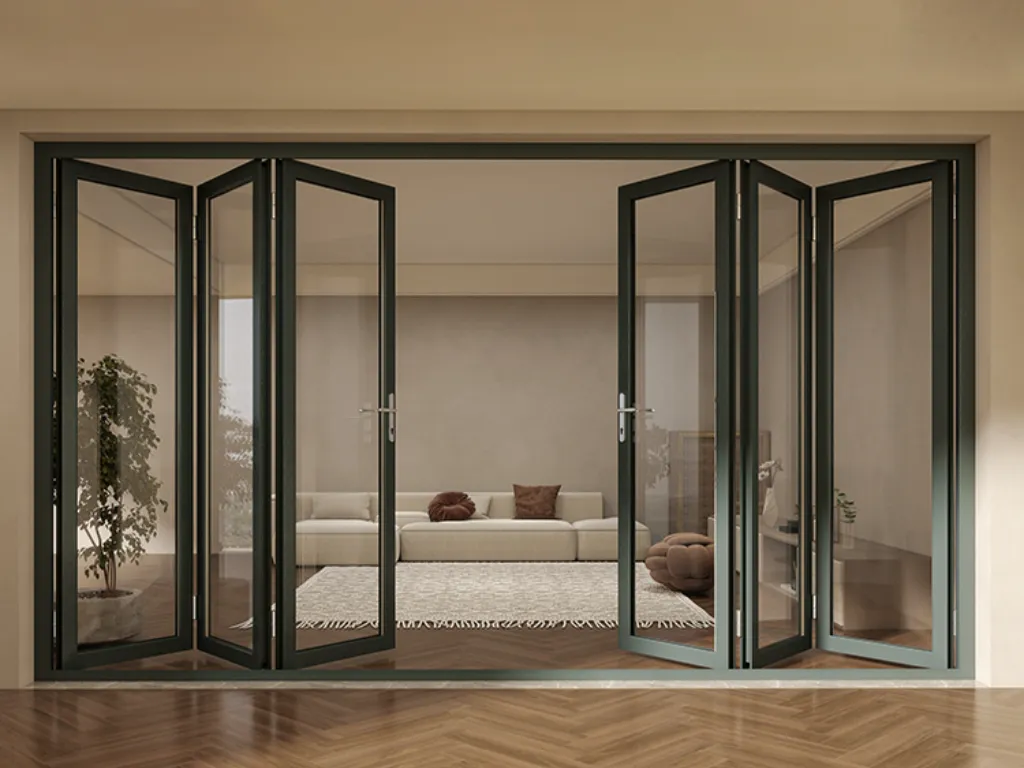
Commercial systems are engineered to accommodate large aperture dimensions due to aluminum’s high strength-to-weight ratio. These doors can support expansive glass panels and configurations, such as multi-slide or bi-fold systems, which are key for modern commercial spaces.
Residential doors, Jedoch, are usually designed for smaller openings with limited panel configurations, balancing strength and efficiency with the aesthetic needs of home environments.
Wärmeleistung
U-value measures heat transfer through a door system. Lower values indicate better insulation, typically measured in W/m²K. Aluminum’s high conductivity means thermal breaks, such as polyamide bars, are needed to achieve low U-values.
Thermal breaks can reduce heat loss by up to 55% when integrated with Low-E double glazing. Standard non-insulated aluminum doors often have U-values ranging from 4.5–5.5 W/m²K, which shows the need for thermal upgrades.
Residential aluminum doors typically target U-values of 1.2–1.6 W/m²K to enhance energy efficiency. Premium options, like thermally broken systems with triple glazing, can achieve values as low as 1.2 W/m²K, improving insulation and reducing heating costs.
Commercial aluminum doors set stricter U-value goals, such as ≤0.5 W/m²K for opaque doors in cold climates, following ASHRAE 90.1 Standards. Für milderes Klima, commercial systems typically require ≤0.77 W/m²K. High-performance storefront systems may achieve U-values as low as 0.327 W/m²K, supporting energy savings and compliance with building codes.
Bulk vs. Custom Order Cost Structure
Bulk ordering of standard commercial or residential aluminum door units follows a predictable, per-door price band. Standard, catalog-based doors (with standard sizes, endet, und Hardware) typically fall at the lower end of published price ranges.
Custom-engineered doors are priced on a per-project basis, incorporating higher design and fabrication premiums. Custom sizes, endet, Verglasung, and performance options push pricing to the top end or beyond standard ranges.
Bulk Order Pricing
Bulk orders of standard aluminum doors offer lower per-unit costs due to volume savings. Prices for standard, non-custom doors typically range from:
- $250 Zu $500 for simpler hinged or interior units.
- $1,000 Zu $3,000 for better-insulated or complex patio/entry doors.
- $400 Zu $2,000 for commercial storefront units (door-only), with installed costs ranging from $650 Zu $2,280 per opening.
In bulk, unit pricing tends to converge toward the lower end as material and logistics costs are distributed across many units.
Custom Order Pricing
Custom-engineered aluminum doors, priced on a per-project basis, carry higher design and fabrication premiums. Key pricing points include:
- $1,100 Zu $5,300+ per opening for custom commercial doors.
- One-off custom doors typically start at $1,000 Zu $2,000 and can exceed $5,000 for specialized designs.
Custom orders involve added costs for non-standard sizes, high-performance glazing, and thermal breaks.
Total Project Costs
Project budgeting should include framing, Verglasung, Hardware, and labor. Pricing examples for installed systems include:
- $1,200 Zu $4,000+ for storefront doors.
- $3,000 Zu $8,000+ for automatic sliding doors.
- $1,000 Zu $3,500+ for standard residential doors (installiert).
- $2,500 Zu $6,500+ for high-performance custom doors with specialty finishes and hardware.
Letzte Gedanken
Commercial and residential Aluminiumtüren serve different purposes. Commercial doors are designed for durability, heavy use, and strict code compliance, with thicker profiles and higher performance standards. Residential doors, meanwhile, focus on aesthetics and lighter usage with slimmer profiles and lower demands.
Choosing the right door is crucial to avoid performance issues and code violations. Bei Opuo, we provide high-quality aluminum doors for both commercial and residential projects, ensuring the perfect fit for your needs. Reach out today to find the ideal solution for your project.
Häufig gestellte Fragen
Is it permissible to use residential-grade doors in small commercial storefronts?
NEIN, it is not permissible to use residential-grade doors in small commercial storefronts. Residential doors lack the durability, Größe, material strength, Sicherheitsfunktionen, and code compliance required for commercial applications. Commercial doors must meet stricter standards for size (z.B., 84 Zoll Höhe, 36 inches width), Dicke (minimum 1¾-inch), und Hardware (ANSI Grade 1 oder 2, UL-listed, ADA-compliant). They also must satisfy fire ratings, impact resistance, and security regulations. Using residential-grade doors in commercial spaces risks building code violations, failed inspections, safety hazards, and a shorter lifespan under high traffic. Always consult local building codes and specify commercial-grade aluminum storefront systems.
How do the panic hardware requirements differ for commercial aluminum doors?
Panic hardware requirements are driven by building and life-safety codes for commercial occupancies, being far more stringent than for residential doors. Commercial aluminum entrance doors serving assembly, educational, institutionell, and high-hazard spaces with an occupant load of 50 people or more must have listed panic or fire-exit hardware on all egress doors in the path of travel. Panic devices are also required by the National Electrical Code within 25 feet of certain electrical working spaces. The actuating portion must be mounted between 34 Und 48 inches above the finished floor, span at least one-half of the door leaf width, and operate with a maximum force of 15 lbf (sometimes 5 lbf). Such hardware must be UL 305 listed (or UL 10C for fire-exit hardware) and compatible with narrow-stile aluminum systems, often using rim, concealed vertical rod, or cable devices. Residential doors generally are not subject to these panic hardware mandates and typically use standard locksets or deadbolts.
What is the life cycle expectation for commercial-grade aluminum door seals?
Commercial-grade aluminum door seals typically have a life cycle expectation of approximately 5 years for standard rubber or vinyl gasketing. Jedoch, this can vary from 2 Zu 10 years depending on the material type, Wartung, and environmental conditions. Zum Beispiel, vinyl U-channels might last 2–3 years, rubber bulbs 5–7 years, and brush seals 7–10 years. Factors significantly affecting longevity include installation quality, regular cleaning and inspection, frequency of door use, and exposure to harsh weather elements like moisture or salt. While aluminum doors themselves can last 10–15 years or more, seals are consumables that require more frequent replacement.
Are commercial doors always non-thermal break?
NEIN, commercial doors are not always non-thermal break. While many standard commercial aluminum doors are non-thermal break for cost and simplicity, thermal break options are available and often chosen for enhanced energy efficiency and sustainability. A thermal break, typically made of polyamide, separates the inner and outer aluminum frames to reduce heat conduction. Doors with thermal breaks are crucial for offices or commercial spaces in climates with extreme temperatures to minimize heating and cooling costs. The need for a thermal break depends on the specific building’s energy performance goals, lokales Klima, and code requirements, demonstrating that commercial doors can indeed be thermally broken.