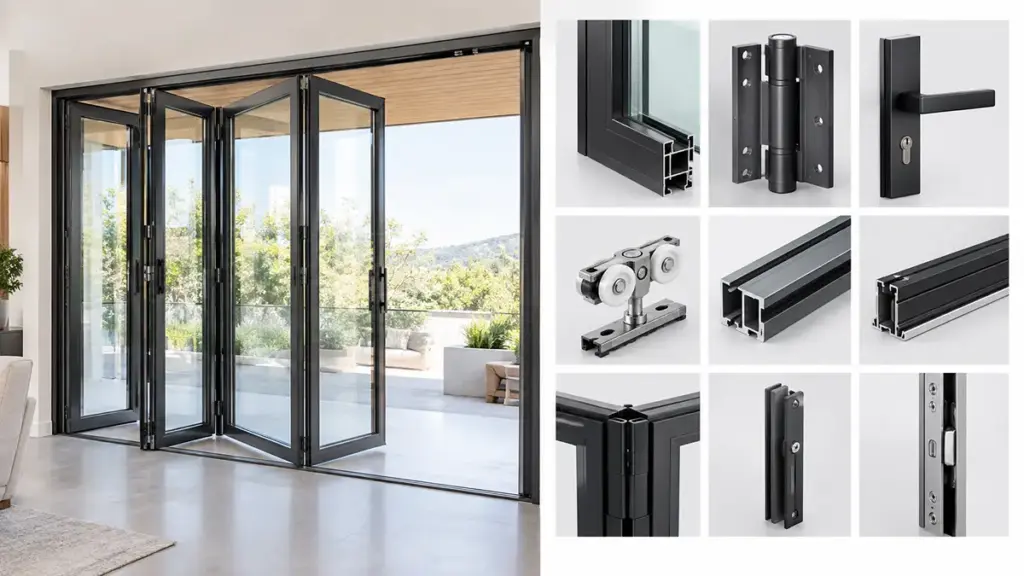
Le choix du verre de porte à battants en aluminium est essentiel. Les mauvais choix entraînent une augmentation des coûts énergétiques, risques de sécurité, et des rappels coûteux. De mauvaises spécifications compromettent l’intégrité structurelle et déclenchent des défaillances prématurées, impactant directement les budgets des projets et la réputation de votre entreprise.
Ce guide analyse les types de verre comme le trempé, feuilleté, givré, et options teintées, évaluer leur impact sur les performances thermiques, propriétés acoustiques, cotes de sécurité, et durabilité à long terme. Nous clarifions les spécifications nécessaires pour éviter des problèmes tels que l'affaissement, fuites, ou non-conformité, viser des résultats optimaux pour le projet.
Pourquoi le choix du verre est important dans les portes battantes
Choisir le bon verre pour une porte battante en aluminium a un impact sur la consommation d'énergie, sécurité, confort, et combien de temps la porte fonctionne.
Comment le verre influence les performances et la sécurité
Le verre constitue la plus grande partie de la plupart des vantaux de portes à battants en aluminium.. Ses propriétés déterminent directement la température thermique de la porte, acoustique, et performances en matière de sécurité. Alors que les cadres en aluminium sont solides, ils conduisent bien la chaleur. Cela signifie que vous avez besoin de choix de verre spécifiques, comme des unités isolées., Revêtements à faible émissivité, ou verre feuilleté pour équilibrer les performances thermiques.
Le verre affecte également le fonctionnement de la porte. Son épaisseur et son poids déterminent le dimensionnement de la charnière, à quel point la porte est facile à ouvrir et à fermer, et le risque d'affaissement avec le temps.
Pour la sûreté et la sécurité, le verre trempé est standard. Il se brise en petits, morceaux granulaires, réduire le risque de blessure. Verre feuilleté, avec son intercalaire, tient ensemble lorsqu'il est cassé. Cela améliore la sécurité et empêche les fragments de tomber, ajoutant également une isolation phonique et une réduction des UV. Les portes de haute sécurité utilisent souvent du verre feuilleté pour résister aux chocs et retarder les entrées forcées.. Pour les installations en hauteur ou exposées au vent, le verre doit répondre aux normes de pression du vent pour éviter la casse ou la déflexion.
Conception, Durabilité, et considérations relatives à l'application
D'un point de vue structurel, les panneaux de verre plus grands augmentent le poids. Cela exige des caractéristiques de charnière correctes, assez de charnières (souvent trois pour les portes hautes), et un renfort de cadre approprié pour éviter la déformation ou le désalignement. Une protection des bords et des détails de vitrage corrects sont essentiels. Vous devez utiliser des cales pour que le verre ne repose pas directement sur le métal, et appliquer correctement le silicone ou les joints. Un mauvais vitrage entraîne des points de stress, rupture, et des fuites.
Le climat et les besoins d'application déterminent le choix du verre. À des températures extrêmes, les cadres à rupture de pont thermique avec verre isolant Low-E sont cruciaux pour les économies d'énergie. Cela inclut les IGU avec de l'argon et des entretoises à bord chaud pour limiter la condensation. Pour les installations en hauteur ou côtières, le verre doit répondre aux tests de pression du vent et utiliser du verre trempé ou feuilleté résistant aux chocs.
Il est essentiel d’adapter le verre au cas d’utilisation de la porte. Pour une porte patio résidentielle, utiliser du verre isolant trempé ou feuilleté avec revêtement Low-E. Pour les entrées principales, concentrez-vous sur la sécurité avec du verre de sécurité feuilleté et une esthétique claire. En milieu urbain très bruyant, le verre feuilleté et isolé offre un contrôle acoustique supérieur. Définissez toujours les priorités de performance, Associer le verre à la technologie du cadre, sélectionner le verre de sécurité approprié, utiliser une épaisseur adaptée à la taille, vérifier les certifications, optimiser pour le climat, et assurer une bonne installation.
Verre transparent, dépoli ou teinté
Clair, givré, et les verres teintés offrent des équilibres distincts en matière d'intimité, lumière, et contrôle énergétique pour portes battantes en aluminium. La sélection du bon type dépend des objectifs spécifiques du projet et des conditions environnementales.
Verre transparent dans les portes à battants en aluminium
Le verre float ou trempé transparent offre une visibilité maximale et une transmission lumineuse élevée, donnant une vue dégagée et un aspect neutre. C'est un choix économique, surtout en simple vitrage. C'est propre, le look moderne complète les cadres minces en aluminium.
- Caractéristiques principales: Visibilité maximale, transmission lumineuse élevée, aspect neutre.
- Avantages: Complète les designs modernes, maximise la lumière du jour, généralement l'option la moins coûteuse (à moins d'ajouter des fonctionnalités de sécurité ou d'énergie).
- Limites: N'offre aucune intimité, provoque un éblouissement et un gain de chaleur solaire élevé en plein soleil, permet une plus grande pénétration des UV.
- Meilleure utilisation: Zones à faible intimité comme les terrasses ou les portes de cour intérieure, climats doux, ou où la priorité est donnée à la vue et à la lumière naturelle plutôt qu'à l'intimité.
Givré (Obscurci) Verre dans les portes à battants en aluminium
Le verre dépoli diffuse la lumière tout en obscurcissant la visibilité, maintenir la luminosité sans vues dégagées. Les méthodes de production incluent la gravure à l'acide, sablé, films, ou motifs texturés. Le verre dépoli est généralement plus cher que le verre clair ou teinté en raison du traitement..
- Caractéristiques principales: Offre de l'intimité grâce à la diffusion de la lumière, obscurcir la visibilité tout en conservant la luminosité.
- Avantages: Bloque efficacement la ligne de vue directe, conserve la lumière naturelle du jour, adoucit la lumière du soleil et réduit l'éblouissement, crée un doux, esthétique moderne.
- Énergie/Performance: Le givrage ne modifie pas significativement les performances thermiques; cela dépend du vitrage (simple/double/triple, Bas-e).
- Points pratiques: Les surfaces texturées peuvent accumuler de la poussière, le nettoyage varie. Les versions trempées ou laminées sont généralement spécifiées pour des raisons de sécurité.
- Meilleure utilisation: Salles de bains, portes de balcon de chambre, entrées donnant sur la rue, ou portes d'entrée latérales où la lumière est nécessaire mais l'intimité est essentielle.
Verre teinté dans les portes à battants en aluminium
Le verre teinté absorbe et reflète la lumière du soleil, réduire l'éblouissement, Rayonnement UV, et la lumière visible. Il offre une intimité modérée pendant la journée. Teintes (bronze, gris, vert) sont intégrés lors de la fabrication. Le verre teinté est plus cher que le verre clair mais souvent moins cher que le verre dépoli.
- Caractéristiques principales: Offre un contrôle solaire et une intimité partielle grâce à la couleur intégrée.
- Attributs de performances: Réduit considérablement l'éblouissement, bloque jusqu'à 99% des rayons UV nocifs, réduit le gain de chaleur solaire, offre une intimité accrue pendant la journée.
- Intégration esthétique: Se marie bien avec les cadres en aluminium foncé ou neutre pour un look contemporain, se coordonne avec les fenêtres adjacentes pour assurer la continuité de la façade.
- Énergie/Coût: Améliore la performance énergétique en réduisant les gains solaires, fonctionne bien avec les revêtements IGU et Low-E.
- Meilleure utilisation: Climats chauds ou ensoleillés, portes-fenêtres et balcons, ou des projets équilibrant intimité et vue où l'obscurité totale n'est pas requise.
Comparaison directe: Transparent, givré ou teinté pour les portes à battants en aluminium
| Aspect | Verre clair | Verre dépoli/obscur | Verre teinté |
|---|---|---|---|
| Visibilité / Confidentialité | Visibilité maximale, pas de confidentialité inhérente | Haute confidentialité; vue obscurcie tout en laissant entrer la lumière | Intimité modérée pendant la journée; vue partiellement obscurcie |
| Transmission de la lumière | Transmission de la lumière du jour la plus élevée | Élevé mais diffus; lumière plus douce | Lumière visible réduite; intérieur plus foncé selon la teinte |
| Contrôle de l'éblouissement | Aucun; peut provoquer un fort éblouissement | Bon adoucissement de l'éblouissement par diffusion | Forte réduction de l'éblouissement |
| Gain de chaleur solaire / UV | Gain de chaleur le plus élevé et plus d'UV | Similaire au transparent sauf en combinaison avec des revêtements | Gain de chaleur réduit; jusqu'à 99% Blocage des UV |
| Rôle en matière d'efficacité énergétique | S'appuie sur des unités isolées/Low‑E pour être efficace | Dépend principalement de l'accumulation de vitrage, ne pas se givrer | Agit comme un verre de contrôle solaire; améliore la performance énergétique |
| Coût (relatif) | Coût matériel le plus bas | Généralement le plus élevé parmi les trois en raison de la transformation | Milieu de gamme; plus haut que clair, plus bas que le plus obscur |
| Intention de conception | Transparence, voir, ouverture | Confidentialité, lumière douce, conception subtile | Contrôle solaire, esthétique colorée, intimité partielle |
| Emplacements typiques des portes | Salons, terrasses, salles d'exposition | Salles de bains, chambres, entrées donnant sur la rue | Balcons, terrasses, façades exposées au soleil |
Portes aluminium-bois haut de gamme pour projets mondiaux
Options de verre à motifs et décoratifs
Le verre à motifs et décoratif offre de l'intimité, esthétique, et gestion de la lumière, ayant un impact direct sur les performances des portes battantes en aluminium.
Types et caractéristiques du verre décoratif
Les options de verre à motifs et décoratifs remplissent plusieurs rôles fonctionnels dans portes battantes en aluminium. Ils gèrent la lumière, améliorer l'esthétique, et contrôler la confidentialité. Ces types de verre diffusent ou diffusent la lumière, réduisant la visibilité directe tout en laissant entrer la lumière du jour dans les espaces. Les différents motifs et textures ajoutent de la profondeur visuelle au cadre minimal en aluminium..
- Contrôle de la confidentialité: Le verre obscur réduit les vues directes tout en laissant passer la lumière du jour, bon pour les salles de bains, chambres, et façades sur rue.
- Amélioration esthétique: En relief, texturé, givré, sablé, et les motifs gravés ajoutent du caractère visuel, prenant en charge divers styles d’intérieur ou de façade.
- Gestion de la lumière: Le verre texturé et dépoli réduit l'éblouissement et adoucit la lumière, fournissant des profils de lumière diffuse.
- Intégration de la sécurité et des performances: Le verre décoratif fonctionne avec trempé, feuilleté, ou des vitrages isolants (IGU) pour répondre aux besoins structurels, impact, et normes énergétiques.
Intégration et sélection de portes battantes en aluminium
L'intégration de verre décoratif dans des systèmes de portes à battants en aluminium nécessite une attention particulière à la sécurité., matériel, et entretien à long terme. Le type de verre doit fonctionner avec le cadre et la quincaillerie pour fonctionner efficacement..
Intégration avec les exigences du système de porte à battants en aluminium
- Sécurité et conformité au code: Le verre décoratif doit répondre aux exigences de sécurité. Vous utilisez du verre trempé à motifs/dépoli pour les portes et les vitrages bas.. Les motifs et le glaçage s'appliquent également au verre feuilleté, offrant une résistance aux chocs. Le verre à motifs ou dépoli sert souvent de vitre intérieure ou extérieure aux IGU, associé à du clair, faible E, ou verre teinté pour la performance énergétique.
- Considérations sur le matériel et le cadre: Les surfaces texturées ne changent pas beaucoup le fonctionnement du matériel, mais ils peuvent affecter le contact et le nettoyage du joint. Les fabricants placent généralement la surface texturée ou gravée à l'intérieur des IGU pour la protéger.. Vos parcloses et plaques de pression en aluminium doivent correspondre à l'épaisseur de verre et aux conditions de bord spécifiées..
- Entretien et durabilité: Les motifs roulés font partie du verre et résistent bien. Les surfaces givrées/gravées nécessitent des produits de nettoyage spécifiques pour éviter les taches; placer le côté gravé vers l'intérieur sur les unités isolées réduit la maintenance. Motifs sablés, étant des traitements de surface, besoin d'une protection contre l'abrasion agressive, surtout sur les portes extérieures très fréquentées.
Directives de conception et de sélection des portes à battants en aluminium
Lors de la sélection du verre décoratif, vous faites correspondre le modèle au cas d'utilisation, coordonner avec la finition du cadre, et équilibrez l'intimité avec la lumière et la vue.
- Faire correspondre le type de modèle au cas d'utilisation:
- Portes d'entrée principales: Utiliser la pluie, roseau étroit, satinage, ou motifs sablés pour l'esthétique et l'intimité.
- Salle de bain et chambres privées: Choisissez une puce de colle, standard obscur, satinage dense, laminé blanc, ou verre obscur hautement texturé pour une plus grande intimité.
- Balcon, terrasse, portes de jardin: Aquatex, légèrement ondulé, motifs de roseaux doux, ou des motifs partiels maintiennent les vues avec une légère obscurcissement.
- Portes commerciales et de bureaux: Motifs sablés, graphiques d'entreprise, ou le verre en roseau donne à la fois de l'intimité et une apparence de marque.
- Coordination avec la finition du cadre en aluminium: Les cadres sombres mettent en valeur le verre dépoli et satiné. Les cadres clairs mettent en valeur par contraste des motifs comme la pluie ou les éclats de colle..
- Équilibrer la confidentialité, Lumière du jour, et vue: Considérez le niveau de confidentialité souhaité, besoins en lumière du jour, et si la reconnaissance de silhouette est acceptable. Le style architectural joue également un rôle.
Verre sécurit: Trempé et laminé
Le verre trempé se brise en petits, morceaux émoussés. Le verre feuilleté maintient les fragments liés, offrant sécurité et fonction barrière continue. Chacun répond à différents besoins de sécurité et de performance dans les portes battantes en aluminium.
| Critère | Verre trempé | Verre laminé |
|---|---|---|
| Comportement de rupture | Se brise en petits morceaux contondants | Se fissure mais reste collé par l'intercalaire |
| Réduction des blessures | Élevé à la casse en raison de fragments contondants | Élevé parce que les fragments restent liés |
| Sécurité après casse | Faible | Plus haut |
| Résistance aux chocs avant rupture | Très élevé | Haut, mais le comportement dépend du maquillage |
| Réduction du bruit | Limité | Mieux |
| Protection UV | Limité | Mieux |
| Coût | Généralement inférieur | Généralement plus élevé |
Attributs fondamentaux du verre trempé
Le verre trempé est renforcé par des processus thermiques ou chimiques, ce qui le rend jusqu'à quatre fois plus résistant que le verre recuit standard.
Quand ça casse, ça forme petit, fragments contondants. Cela réduit le risque de blessure, mais l'ouverture reste exposée. Il offre une forte résistance aux chocs avant de se briser. Ce verre supporte bien les variations de température, ce qui le rend adapté aux zones à chaleur variable. La sécurité après rupture est minime car le panneau s'effondre une fois brisé.
Nous l'utilisons souvent dans les portes battantes extérieures où la conformité au code et la rentabilité sont essentielles..
Attributs fondamentaux du verre feuilleté
Le verre feuilleté comporte deux ou plusieurs couches de verre liées par une couche intermédiaire, généralement du PVB.
L'intercalaire maintient les fragments de verre en place après un bris, maintenir une barrière. Cela permet une meilleure rétention après la rupture, garder l'ouverture de la porte couverte. Le verre résiste mieux à l'effraction car l'intercalaire rend la pénétration difficile. Cela coûte généralement plus cher que le verre trempé.
Nous le précisons pour portes battantes extérieures en aluminium quand la sécurité, performances de barrière conservées, ou le contrôle du son est une priorité. C'est un bon choix pour les endroits où il est important de garder le verre brisé dans le cadre..
Besoins de confidentialité dans les salles de bains et les chambres

Les salles de bains et les chambres exigent des niveaux d'intimité spécifiques, équilibrer la séparation visuelle et acoustique avec la résistance à l'humidité ou un repos tranquille. Les portes battantes en aluminium répondent à ces besoins grâce à un design intelligent, du verre spécialisé aux joints étanches.
Exigences spécifiques en matière de confidentialité pour les salles de bains et les chambres
Les salles de bains ont besoin d'un écran visuel complet, réduction sonore modérée, et résistance à l'humidité. Cela permet de conserver la fonctionnalité et la confidentialité intactes. Chambres, d'autre part, privilégier une intimité visuelle et acoustique élevée. Cela garantit un repos et des activités personnelles tranquilles.
Équilibrer la transmission de la lumière et l’intimité dans les salles de bains. Le verre dépoli laisse entrer la luminosité sans sacrifier l'obscurité. Vous devez également penser à l’ouverture des portes et à leur placement dans les deux pièces.. Cela empêche les vues directes sur les zones sensibles. Quand vous choisissez des matériaux, pensez à l'aluminium moderne. Il signale visuellement les zones privées tout en s'intégrant aux designs contemporains..
Caractéristiques de la porte à battants en aluminium pour une confidentialité accrue
Les profilés en aluminium à plusieurs chambres et les joints usinés avec précision réduisent les espaces. Cela réduit les fuites de lumière et de son. Le verre trempé givré et les unités à double vitrage offrent une obscurité visuelle et une meilleure isolation phonique pour les salles de bains. Pour les portes des chambres, des panneaux solides ou un remplissage opaque offrent une intimité visuelle et une solitude maximales.
Joints continus en caoutchouc, charnières de qualité, et des serrures sécurisées garantissent une étanchéité parfaite contre le son et la lumière indésirables.. Le matériel fait aussi la différence. Les serrures de confidentialité avec commande d'urgence pour les salles de bains et les loquets robustes pour les chambres renforcent la sécurité personnelle.. Enfin, l'intégration de ces portes à la conception globale du bâtiment maintient l'esthétique cohérente et offre des performances d'intimité optimales dans toute une propriété.
Lumière et design dans les espaces de vie et les bureaux
Les portes battantes en aluminium sont essentielles pour maximiser la lumière naturelle, améliorer la ventilation, et assurer le confort dans les espaces de vie et les bureaux. Une conception intelligente et des options de vitrage avancées sont à l’origine de ce résultat.
Optimiser la lumière naturelle et l’esthétique visuelle
La résistance inhérente de l'aluminium permet de réaliser des cadres de porte minces. Ces profils minimaux supportent des panneaux de verre plus grands. Ce choix de conception augmente considérablement la pénétration de la lumière du jour, créer plus de luminosité, des intérieurs plus ouverts pour les salons et les bureaux.
Nous utilisons portes battantes en aluminium du sol au plafond comme des plans transparents. Ils maximisent la lumière naturelle et les vues dans les salons, bureaux ouverts, et salles de réunion. Pour balcons ou terrasses, ces portes apportent la lumière du matin et du jour en profondeur dans les espaces de vie.
Les portes à battants en aluminium accèdent généralement aux balcons et aux jardins. Ils combinent des vues extérieures dégagées et une lumière du jour généreuse. En les associant à des fenêtres à battants donnant sur le jardin, vous créez une composition de lumière et de vue unifiée., étendre visuellement l'espace de vie dans le paysage.
La couleur du cadre a un impact sur l'esthétique visuelle. Cadres sombres, comme le noir ou l'anthracite, autour de grands panneaux de verre soulignent la vue et les lignes architecturales. Cadres légers, comme le blanc ou le gris clair, se fondre avec les murs, rendant les zones vitrées plus grandes et répartissant la lumière de manière uniforme dans les petites pièces et les bureaux.
Les vues ininterrompues à travers les portes et fenêtres à battants réduisent la fatigue visuelle. Cela favorise le bien-être dans les espaces utilisés pendant de longues périodes. Dans les bureaux, les systèmes de portes en aluminium transparent donnent aux postes de travail intérieurs un accès visuel à la lumière naturelle, contribuant à réduire le stress.
Intégration fonctionnelle et confort des occupants
Les portes battantes s'ouvrent en grand, souvent jusqu'à 90 diplômes ou plus. Cela permet une ventilation directe et abondante. Dans les salons et les chambres, ces ouvertures captent les brises latérales et favorisent une ventilation transversale efficace, améliorant le refroidissement naturel et le renouvellement de l'air.
Une fois fermé, les portes battantes en aluminium utilisent des joints à compression. Cela presse fermement le vantail contre le cadre, réduisant les infiltrations d’air et maintenant la stabilité thermique. Cette double performance, forte ventilation à l'ouverture et étanchéité à la fermeture, convient aux climats présentant des variations de température importantes et aux bureaux nécessitant un CVC efficace.
Une ventilation naturelle adéquate grâce aux portes battantes réduit les polluants intérieurs et l'humidité dans les espaces très fréquentés.. Les panneaux à ouverture latérale peuvent être orientés pour éloigner le flux d'air des zones d'assise, éviter les courants d'air tout en rafraîchissant l'air.
Que spécifier dans le bon de commande
Un bon de commande précis de portes battantes en aluminium détaille chaque aspect. Il couvre l'identification de l'ouverture, spécifications physiques, matériel, performance, finitions, et la documentation requise.
Spécifications du porte-clés et du matériau
- ID d'ouverture, emplacement, et désignation intérieure/extérieure: Identifiez clairement chaque ouverture de porte, son emplacement, et s'il dessert un espace intérieur ou extérieur. Cela détermine les choix de profils, coupe-froid, drainage, et finitions.
- Type de cadre, série de profils, dimensions montant/rail, construction d'angle, et renforts: Détailler la configuration du cadre. Indiquer le nom de la série de profilés du fabricant. Spécifier les dimensions des montants et des rails, construction d'angle (Par exemple, joints mécaniques, soudé), et tout renfort interne pour les besoins matériels ou structurels.
- Type de vitrage, épaisseur, mise en page, tailles d'insertion, mordre, et exigences en matière d'étanchéité: Définir le type de verre (célibataire, isolé, tempéré, feuilleté), son épaisseur précise, et comment il est disposé (verre plein, panneau de vision partielle). Inclure des tailles d'inserts spécifiques, le minimum de morsure de verre dans la poche, et tous les besoins d'étanchéité.
- Référence du jeu de matériel, quantité et type de charnière, écluses, opérateurs, ferme-portes, matériel supplémentaire, et modèles: Répertoriez complètement tous les composants matériels. Spécifier le type et la quantité de charnière (Par exemple, plus pour les portes plus hautes), types et fonctions de verrouillage, opérateurs, et ferme-portes. Détaillez tout autre matériel, comme des dispositifs anti-panique ou des boulons affleurants. Inclure des modèles pour une préparation précise.
- Spécifications de finition (anodisé/peinture, identifiants de couleur, texture, et des exemples de références): Indiquer clairement le type de finition (anodisé ou peint), codes de couleur ou identifiants spécifiques, et la texture de la surface. Référencer les échantillons acceptés pour la gamme de couleurs et de nuances.
Exigences critiques en matière de performances et de documentation
- Exigences de performances (de construction, thermique, air/eau, coupe-froid, drainage, et tolérances): Besoins détaillés pour la charge de vent, Valeur U, résistance à l'air et à l'eau. Définir clairement les dispositions relatives aux coupe-froid et au drainage.
- Tolérances et jeux (fabrication et installation, saper, espace de cale): Spécifier les tolérances de fabrication pour la taille de la porte. Inclure les dégagements d'installation autour du cadre, dégagements porte-châssis, et contre-dépouille au bas de la porte.
- Exigences de sûreté/sécurité (vitrage de sécurité, comportement au feu le cas échéant, vitrage et renfort de sécurité): Obliger les vitrages de sécurité (trempé ou laminé) comme l'exige le code. Noter la performance au feu, le cas échéant. Inclure les besoins spécifiques en matière de vitrage de sécurité et de renforcement pour la résistance à l'effraction.
- Soumissions: dessins d'atelier, données produit, et échantillons requis: Répertoriez toutes les soumissions nécessaires, tels que des dessins d'atelier détaillés, fiches techniques des produits, et échantillons physiques (Par exemple, échantillons de coin, terminer les échantillons).
- Notes de fabrication et d'installation (épaisseur d'extrusion, ancrage, alignement, tolérances de mouvement thermique): Inclure des notes sur les méthodes de fabrication, épaisseur minimale de paroi d'extrusion, types d'ancrage, et un bon alignement. Tenir compte du mouvement thermique.
- Options spéciales ou fonctionnalités de variante (acoustique, pare-balles, etc., où fait partie du programme de portes en aluminium): Détaillez toutes les caractéristiques spécialisées telles que l’isolation acoustique, résistance aux balles, ou revêtement en plomb s'ils font partie du programme de porte.
Pensées finales
Bien que les options de verre génériques puissent offrir des coûts initiaux inférieurs, sélection de la spécification précise du verre, prise en compte de la sécurité, performance, et exigences esthétiques, est crucial. Donner la priorité à nos normes rigoureusement testées protège vos projets des réclamations au titre de la garantie, perte d'énergie coûteuse, et la satisfaction des clients compromise.
Demandez notre catalogue de produits détaillé ou planifiez une consultation avec nos experts pour aligner parfaitement votre prochaine commande de portes battantes en aluminium avec les besoins exacts de votre projet et vos objectifs de performance..