Sécuriser les bonnes portes battantes en aluminium signifie naviguer dans des spécifications complexes. Des choix mal alignés conduisent à des délais de projet gonflés, réclamations de garantie coûteuses, et performances du bâtiment compromises.
Ce guide décortique les options clés, comparer des profils allant de 1.4 mm pour usage intérieur à 5.0 mm pour les applications extérieures exigeantes. Nous détaillons les mesures de performance telles que les valeurs U (1.4–1,8 W/m²K) et cotes STC (30–50+) pour éclairer vos choix de matériaux et atténuer les risques du projet.
Qu'est-ce qu'une porte battante en aluminium
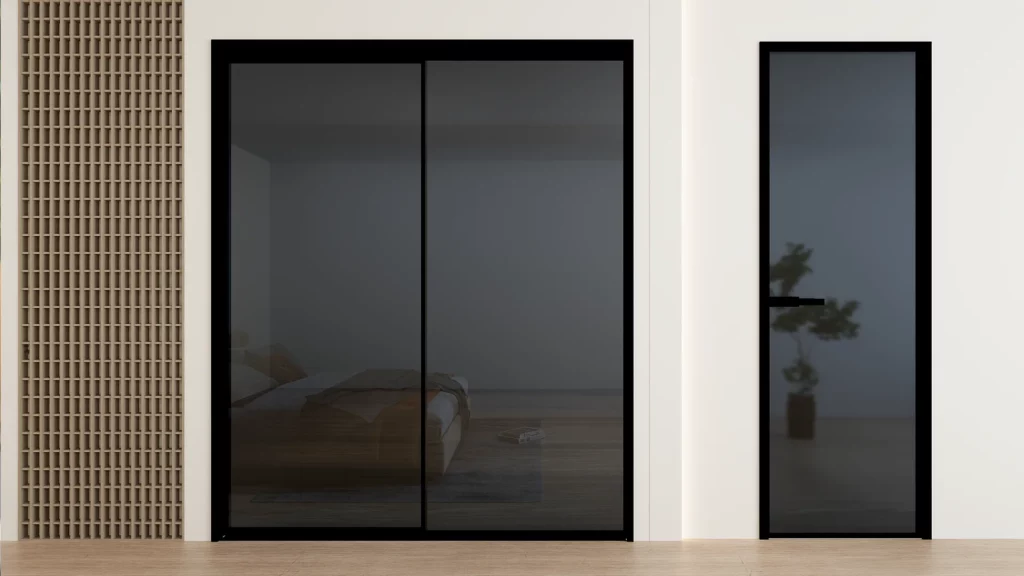
Une porte battante en aluminium est un système de porte battante construit avec un cadre en alliage d'aluminium. Il s'ouvre ou se ferme pour contrôler le passage et séparer les environnements..
Définition de base et fonctionnalité
Un porte battante en aluminium est un système de porte battante. Sa structure provient essentiellement de profilés en alliage d'aluminium. Cette porte s'ouvre vers l'intérieur ou vers l'extérieur selon un axe fixe, à l'aide de charnières fixées au cadre de la porte ou au mur. Contrairement aux portes coulissantes ou pliantes, une porte battante tourne sur des charnières. Cela fournit une ouverture battante traditionnelle avec des matériaux et du matériel modernes..
Caractéristiques et composants clés
Un système de porte battante en aluminium comprend plusieurs composants essentiels:
- Cadre de porte: Fabriqué à partir de profilés en aluminium extrudé, parfois avec rupture de pont thermique pour des performances supérieures. Il s'ancre au mur d'enceinte ou à la façade.
- Par feuille: C'est le panneau mobile qui s'ouvre, également construit à partir de profilés en aluminium. Vous pouvez le trouver en simple ou double vantail, spécialement pour les entrées extérieures ou d'allée.
- Charnières: Charnières conçues avec précision et fixées au cadre ou au mur, permettant une rotation autour d'un axe vertical. Des versions robustes sont disponibles pour les portes de grande taille ou à fort trafic.
- Panneau de remplissage: Les options incluent des unités vitrées (célibataire, double, ou triple vitrage), panneaux en aluminium massif, ou panneaux composites/isolés. Le choix dépend de la sécurité, confidentialité, et besoins thermiques.
- Système de verrouillage et matériel: Cela couvre les serrures multipoints, cylindres, poignées, et en option des serrures électroniques ou automatiques. Le matériel de sécurité est courant pour une utilisation extérieure.
- Éléments d'étanchéité: Joints, pinceaux, et les seuils garantissent l'air, eau, et étanchéité acoustique. Le coupe-froid est essentiel pour les portes battantes extérieures.
Principaux types de portes battantes en aluminium
Les projets de construction modernes nécessitent des systèmes de portes qui répondent à différentes fonctions architecturales tout en conservant un langage de conception cohérent..
Portes à battants simples
Les portes battantes en aluminium à panneau unique restent l'une des configurations les plus courantes pour les applications résidentielles et commerciales..
Leur conception simple les rend adaptés à une large gamme d'ouvertures tout en conservant la propreté., aspect contemporain attendu dans l'architecture moderne.
Les architectes choisissent souvent des portes à battants simples pour les zones où l'efficacité de l'espace et la simplicité d'utilisation sont des priorités., tout en conservant une cohérence avec la façade globale et le design intérieur du bâtiment.
Portes à battants doubles
Pour des ouvertures plus larges, double portes battantes en aluminium offrir une apparence architecturale équilibrée tout en créant une entrée plus généreuse.
Cette configuration est fréquemment intégrée dans les résidences de luxe, projets d'accueil, et les développements commerciaux où de plus grandes ouvertures contribuent à l'expérience spatiale globale.
Les agencements à double porte créent également une plus grande symétrie visuelle, complétant les compositions architecturales modernes qui mettent l'accent sur les proportions et l'ouverture.
Conceptions entièrement vitrées
Le verre est devenu l’une des caractéristiques déterminantes des portes battantes en aluminium haut de gamme.
De nombreux architectes précisent portes en aluminium avec du verre pour maximiser la lumière naturelle et renforcer les liens visuels entre les environnements intérieurs et extérieurs.
Selon les exigences du projet, le vitrage peut devenir l'élément visuel dominant, tandis que les cadres minces en aluminium fournissent le soutien structurel nécessaire pour conserver une apparence raffinée.
Cette approche est particulièrement appréciée dans les villas, hôtels, immeubles de bureaux, et développements résidentiels contemporains.
Portes en aluminium-bois haut de gamme pour des projets exigeants
Tailles typiques et comment mesurer les ouvertures
La sélection des dimensions correctes est l'une des étapes les plus importantes lors de la spécification des portes à battants en aluminium pour le secteur résidentiel., hospitalité, ou projets commerciaux.
La plupart des projets nécessitent des dimensions personnalisées
L'architecture moderne suit rarement une seule taille de porte dans l'ensemble d'un développement. Les appartements peuvent inclure plusieurs plans d'étage, les hôtels proposent souvent différents types de chambres, et les bâtiments commerciaux contiennent généralement des entrées de largeurs et de hauteurs variables.
Pour cette raison, les portes battantes en aluminium sont généralement produites selon des spécifications personnalisées. Les fabricants examinent les dessins architecturaux pour déterminer les dimensions appropriées, sens d'ouverture, et configuration du cadre pour chaque application.
Plutôt que de sélectionner des produits dans une liste de tailles standard, les acheteurs professionnels commencent généralement le processus d'approvisionnement en fournissant la documentation du projet.
Mesurer correctement l'ouverture
Des mesures d'ouverture précises sont essentielles avant le début de la fabrication. Puisque les portes en aluminium sont personnalisées pour chaque projet, les mesures doivent toujours correspondre à l'ouverture architecturale plutôt qu'au vantail de porte fini seul.
Pendant la planification du projet, les entrepreneurs confirment généralement:
- Largeur d'ouverture
- Hauteur d'ouverture
- Conditions de pose
- Sens d'ouverture
- Structure du mur d’enceinte
Ces détails aident les fabricants à préparer des dessins de production qui correspondent aux exigences de construction du bâtiment..
Comprendre les dimensions du cadre de porte en aluminium
Une considération importante concerne les dimensions du cadre de porte en aluminium., qui varient en fonction de la conception architecturale et des exigences de personnalisation de chaque projet.
Les dimensions du cadre sont influencées par des facteurs tels que:
- Dimensions totales de la porte
- Configuration du verre
- Sélection de profil
- Demande de construction
- Méthode d'installation
Parce que chaque projet est différent, les fabricants recommandent généralement de confirmer les dimensions du cadre de porte en aluminium pendant la phase de conception plutôt que de se fier à des spécifications standardisées..
Cette approche personnalisée permet aux architectes de conserver des proportions visuelles cohérentes dans tout le bâtiment tout en garantissant la compatibilité avec les ouvertures structurelles..
La coordination améliore l'efficacité de l'installation
Les projets réussis reposent sur une coordination étroite entre les architectes, entrepreneurs, et les fabricants.
La révision précoce des dimensions permet aux équipes de production de préparer des systèmes de portes personnalisés qui s'adaptent avec précision à la livraison., réduisant les ajustements d’installation et respectant les calendriers de construction.
Pour les grands développements résidentiels et les bâtiments commerciaux, ce niveau de coordination contribue à une plus grande cohérence entre des centaines de blocs-portes installés.
Verre, Options de cadre et de matériel qui comptent
Obtenir du verre, cadre, et la bonne quincaillerie est cruciale pour les portes battantes en aluminium. Ces choix affectent directement les performances d’une porte, sécurité, et valeur à long terme.
Choix de verre
Les options essentielles incluent le trempé pour plus de sécurité, laminé pour une sécurité et une isolation phonique améliorées, et vitrages isolants (IGU) pour l'efficacité thermique. Revêtements Low-E et remplissages de gaz (argon, krypton) améliorer encore la performance énergétique. Méthodes d'installation correctes avec cales de pose et techniques de vitrage spécifiques (sec contre humide) sont cruciaux. Les choix esthétiques vont des inserts transparents et dépolis aux inserts teintés ou décoratifs.
Choix du cadre
Focus sur la conception des profilés en aluminium, y compris les dimensions des montants et des rails, profils minimalistes minces, et la distinction cruciale entre les profils à rupture de pont thermique et non thermiques pour l'isolation. La performance des matériaux met en valeur la résistance à la corrosion et la stabilité structurelle de l’aluminium. Les finitions comme l'anodisation et le revêtement en poudre offrent durabilité et variété esthétique. La construction et l'assemblage du cadre ont un impact sur la fiabilité opérationnelle, la compatibilité avec le matériel étant une préoccupation majeure.
Choix de matériel
Le matériel de verrouillage englobe les interblocages, verrous morts, et des serrures spécialisées à montant étroit pour la sécurité. Charnières et pivots (y compris charnières à axe standard et à axe large) sont essentiels au fonctionnement de la porte, aux côtés de ferme-portes pour un mouvement contrôlé. Poignées, comme l'espagnolette, tirer, et types de leviers, répondre aux besoins fonctionnels et esthétiques. Le matériel auxiliaire comme les boulons affleurants et les gâches offrent une sécurité et une stabilité supplémentaires. Les finitions du matériel et les performances contre la corrosion garantissent la longévité, avec spécification coordonnée recommandée pour les systèmes complexes.
Applications de portes battantes intérieures ou extérieures

Les portes battantes intérieures et extérieures en aluminium partagent un principe de fonctionnement de base mais varient considérablement dans leur conception, besoins de performances, et spécifications matérielles.
Distinctions fondamentales en matière de conception et de performance
Portes battantes intérieures en aluminium espaces principalement séparés, fournir une connexion visuelle, et offre une réduction de bruit de base. Portes extérieures, par contre, fonctionner comme la principale barrière contre les éléments, assurer la sécurité, protection contre les intempéries, et l'isolation thermique tout en contribuant à la conception de la façade du bâtiment.
L'épaisseur du profilé dans les portes battantes extérieures est nettement plus grande, allant de 4 mm à 5 mm, ou même 6 mm pour usage industriel. Cela permet une plus grande résistance et une plus grande isolation. Portes intérieures, pour trafic standard ou léger, utiliser des profils plus fins, habituellement entre 1.4 mm et 3 mm. Ces différentes épaisseurs déterminent les spécifications structurelles, équilibrer la rentabilité et la durabilité par rapport aux exigences d’applications spécifiques.
Les portes extérieures exigent une température thermique élevée, acoustique, et performances météorologiques. Ils doivent limiter les transferts de chaleur, réduire les fuites d'air, et résister à la pluie poussée par le vent, Exposition aux UV, et températures extrêmes. Cela signifie des profils plus épais, joints à compression, et les vitrages isolants sont standards. Les portes intérieures ont des besoins d’isolation moindres car elles séparent les espaces conditionnés. Le contrôle acoustique pour les applications intérieures se concentre sur l'intimité plutôt que sur la réduction globale du bruit provenant de sources extérieures..
Les spécifications de sécurité et matérielles diffèrent également. Les portes extérieures sont la principale barrière, ils nécessitent donc des profils plus épais, systèmes de verrouillage multipoints, charnières robustes, et matériel résistant aux intempéries. Ceux-ci sont souvent associés à des pênes dormants et à des serrures de haute sécurité. Les portes intérieures privilégient l'esthétique et le bon fonctionnement grâce à des serrures plus simples et des charnières plus légères., car la haute sécurité n'est pas la principale préoccupation.
Sélection et mise en œuvre spécifiques à l'application
Le rôle fonctionnel dicte les emplacements typiques. Les portes intérieures à battants sont utilisées dans les transitions de pièce à pièce au sein des unités résidentielles, cloisons de bureau, salles de conférence, et accès au balcon intérieur. Des portes à battants extérieures sont présentes aux entrées avant, portes de service arrière, terrasses, balcons, et points d'accès aux jardins ou aux piscines, directement exposé aux conditions extérieures.
Les pratiques d'installation des portes extérieures se concentrent sur l'ancrage structurel, alignement d'aplomb, étanchéité à l'air, et isolation continue. Cela inclut des mesures précises du cadre, feuille, et profondeur du montant pour correspondre à l'épaisseur du mur et du revêtement. Cales, ancrage par vis, joints à compression, et l'isolation du périmètre sont essentielles. Pour portes intérieures, l'installation donne la priorité à l'alignement visuel avec les finitions intérieures, minimiser les écarts de son et de lumière, et compatibilité avec les garnitures et les moulures plutôt qu'avec l'imperméabilisation.
L’adéquation à l’application signifie adapter la porte à son environnement. Spécifiez des portes intérieures à battants en aluminium avec des profils de 1,4 à 3 mm lorsque la porte se trouve entièrement à l'intérieur de l'enveloppe du bâtiment., protégé de la pluie ou du vent, et où l'isolation ou la haute sécurité ne sont pas critiques. Spécifiez les portes extérieures avec des profils de 4 à 5 mm ou plus lorsque la porte fait directement face aux conditions extérieures., et où la résistance aux intempéries, efficacité énergétique, et la sécurité sont des priorités. L'utilisation de portes de qualité intérieure pour des applications extérieures entraîne une perte de chaleur accrue, condensation, et durée de vie structurelle réduite.
Ce que les distributeurs et les entrepreneurs doivent confirmer avant de commander
Pour les distributeurs, entrepreneurs, et développeurs de projets, Choisir les bonnes portes battantes en aluminium implique bien plus que comparer des photographies de produits ou des prix..
Confirmer les dessins architecturaux
Chaque projet commence par une documentation architecturale précise.
Les fabricants produisent généralement des portes battantes en aluminium selon les dessins du projet approuvés plutôt que selon des dimensions standard fixes. Confirmation des dimensions, instructions d'ouverture, emplacements d'installation, et les configurations des panneaux avant la production permettent de minimiser les problèmes d'installation ultérieurs.
Une communication précoce permet également aux fabricants de recommander des options de personnalisation adaptées en fonction de la disposition architecturale..
Vérifier les dimensions du cadre de porte en aluminium
Parce que les projets varient considérablement en taille et en conception, les dimensions du cadre de porte en aluminium doivent toujours être revues pendant la phase de spécification.
Plutôt que de s'appuyer sur des dimensions génériques, les acheteurs professionnels confirment généralement:
- Largeur et hauteur d'ouverture
- Sélection du profil du cadre
- Configuration du verre
- Exigences d'installation
- Personnalisation spécifique au projet
La vérification de ces détails avant la production contribue à une fabrication plus précise et à une installation plus efficace.
Examiner les options de verre et de finition
Les architectes spécifient fréquemment différentes dispositions de vitrage en fonction des exigences fonctionnelles du projet..
De nombreuses portes en aluminium avec verre sont sélectionnées pour maximiser la lumière du jour et renforcer la continuité visuelle, tandis que les finitions des cadres peuvent être coordonnées avec les fenêtres, murs-rideaux, et autres systèmes en aluminium dans tout le bâtiment.
L'examen de ces éléments de conception avant la production permet de maintenir la cohérence tout au long du développement..
Considérez la valeur du projet à long terme
Les décisions d'approvisionnement doivent prendre en compte l'ensemble du cycle de vie du bâtiment plutôt que de se concentrer uniquement sur les coûts d'achat initiaux..
Portes battantes en aluminium de haute qualité offrent une valeur à long terme grâce à des profilés en aluminium durables, conceptions personnalisables, artisanat de qualité, et un fonctionnement quotidien fiable.
Pour les promoteurs gérant des résidences haut de gamme, hospitalité, ou projets commerciaux, la sélection d'un partenaire de fabrication professionnel favorise à la fois l'efficacité de la construction et la satisfaction du client à long terme.
Pensées finales
Alors que l'architecture contemporaine continue de mettre l'accent sur les lignes épurées, vitrage généreux, et des solutions de construction personnalisées, les portes battantes en aluminium sont devenues un choix incontournable pour le résidentiel, hospitalité, et projets commerciaux.
En tant que fabricant professionnel de portes et fenêtres en aluminium, Opinion propose des portes battantes en aluminium personnalisables conçues pour les applications architecturales modernes. Connectez-vous avec nos spécialistes pour consulter notre catalogue de produits complet et discuter des exigences spécifiques des OEM..