Choosing the right glass for aluminum windows often feels like a balancing act where you’re forced to compromise between bold design and technical necessity. Whether it’s shielding a coastal villa from relentless heat or ensuring a high-rise office remains whisper-quiet amidst urban chaos, the “standard” choice rarely suffices. Getting this decision wrong doesn’t just affect the look—it impacts energy bills, safety compliance, and long-term tenant satisfaction.
This guide simplifies that complexity. We break down the essential glazing technologies—from structural configurations and security features to acoustic dampening and thermal coatings—giving you the clarity to select glass that elevates both building performance and occupant comfort.
Glazing Configurations
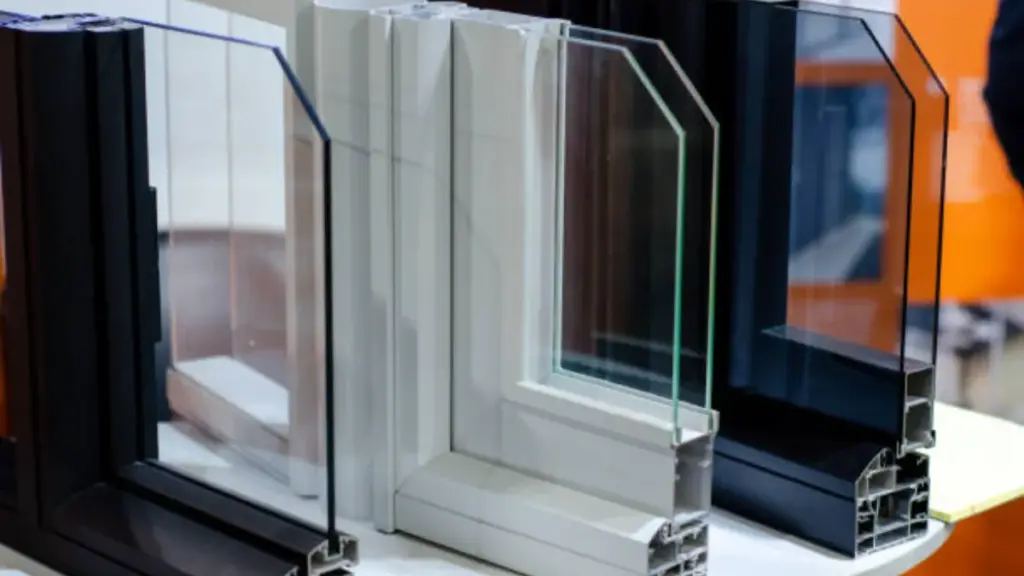
Selecting the right configuration is the most critical technical decision in your window project. It determines the weight the aluminum frame must support, the hardware durability, and the overall energy performance of the building envelope.
Single Glazing
Single glazing consists of a single pane of glass fixed within the aluminum sash or frame. Because it lacks an insulating cavity or gas fill, it provides a direct path for thermal transfer, making it the most basic glazing option available.
- Key Specifications: Typically features a 3mm–12mm solid glass pane with no internal cavities.
- Thermal & Acoustic Performance: Characterized by very high U-values (approx. 5.8 W/m²K) and almost no sound reduction, as there is no air gap to break vibration or heat flow.
- Best For: Internal aluminum office partitions, unheated sunrooms, or legacy building restorations in mild tropical climates.
Double Glazing
Double glazing, or an Insulating Glass Unit (IGU), uses two panes of glass separated by a sealed spacer bar to create a captive air or gas cavity. This design is the benchmark for modern aluminum window systems, offering a balanced performance-to-weight ratio.
- Key Specifications: Total unit thickness usually ranges from 20mm to 32mm (e.g., a 4-16-4 configuration). The cavity is typically filled with Argon gas to enhance insulation.
- Thermal & Acoustic Performance: Modern double glazing achieves U-values between 1.1 and 1.6 W/m²K, providing a significant barrier against external noise and heat loss.
- Best For: Standard residential and commercial facades, urban apartments requiring noise control, and most mid-range energy-efficient projects.
Triple Glazing
Triple glazing is an advanced IGU featuring three panes of glass separated by two inert-gas-filled cavities and two spacer bars. This configuration represents the pinnacle of common insulating glass technology, designed for maximum thermal retention.
- Key Specifications: Total unit thickness ranges from 36mm to 52mm. It utilizes 4mm–6mm glass panes with cavity widths of 12mm or more for optimal performance.
- Thermal & Acoustic Performance: Engineered to reach ultra-low U-values (0.6–0.8 W/m²K), reducing heat loss by up to 50% compared to standard double glazing.
- Best For: Passive House (Passivhaus) certified buildings, extreme cold or northern climates, and projects located in high-decibel environments like airport flight paths.
Resistance and Security Standards
In many regions, safety glass is a legal requirement for aluminum windows in “hazardous locations”—such as floor-to-ceiling windows, doors, and bathroom enclosures. The choice between tempered and laminated glass depends on whether your priority is preventing injury or maintaining a secure barrier.
Tempered Glass
Tempered glass is processed through controlled thermal treatments to increase its strength compared to normal glass. It is designed to be highly resistant to impact, and its most defining characteristic is its “break-safe” pattern.
- Key Specifications: Approximately 4 to 5 times stronger than annealed glass of the same thickness. Must be cut to size and fabricated before the tempering process.
- Safety Mechanism: Upon failure, it shatters into thousands of small, blunt-edged fragments (granules) rather than sharp shards, significantly reducing the risk of severe lacerations.
- Pros & Cons:
- Pros: High thermal strength (resists heat-induced cracking), cost-effective, and provides excellent human-impact safety.
- Cons: Once broken, the entire pane falls out of the frame, leaving the opening completely exposed.
- Best For: Aluminum sliding doors, side-lites, shower screens, and interior office partitions where post-breakage containment is not required.
Laminated Glass
Laminated glass consists of two or more panes of glass permanently bonded together with a plastic interlayer (typically PVB or SGP). It is often referred to as “unbreakable” in common parlance because it maintains its structural integrity even after the glass layers crack.
- Key Specifications: Available in various configurations (e.g., 6.38mm, 10.76mm). The interlayer blocks up to 99% of UV radiation and provides a significant acoustic dampening effect.
- Safety Mechanism: When impacted, the glass cracks in a “spider-web” pattern, but the fragments adhere to the internal plastic interlayer. This prevents fall-through and maintains a weather-tight barrier.
- Pros & Cons:
- Pros: Superior protection against forced entry (burglary), excellent soundproofing, and keeps the building sealed even after damage.
- Cons: Heavier and more expensive than tempered glass; edges must be properly sealed to prevent interlayer delamination.
- Best For: High-rise aluminum facades, overhead/skylight glazing, storefronts prone to break-ins, and coastal projects in hurricane-prone zones.
Heat-Soaked Tempered Glass
Heat-soaking is an additional safety test for tempered glass. The glass is placed in an oven and subjected to a specific temperature cycle to trigger the breakage of any panes containing Nickel Sulfide (NiS) inclusions—a common cause of “spontaneous combustion” in tempered glass.
- Key Specifications: Tested according to EN 14179 or similar standards. The process identifies and eliminates high-risk panes before they leave the factory.
- Safety Mechanism: Does not change the breakage pattern but drastically reduces the statistical probability of the glass exploding spontaneously after installation.
- Pros & Cons:
- Pros: Provides peace of mind for high-value projects; significantly reduces long-term maintenance and replacement costs.
- Cons: Adds to the lead time and initial cost per square meter.
- Best For: Large-scale commercial aluminum curtain walls, high-rise residential windows, and glass balustrades where replacement access is difficult and expensive.
Acoustic Performance
For projects located in dense urban environments, near airports, or alongside busy highways, the acoustic performance of the glass is often as important as its thermal rating. Aluminum windows can achieve sound insulation levels from 30dB up to 50dB+ by utilizing specific glass engineering techniques.
Acoustic Laminated Glass
Unlike standard laminated glass, acoustic laminated glass uses a specialized, softer PVB (Polyvinyl Butyral) interlayer specifically engineered to “dampen” sound vibrations as they pass through the pane.
- How It Works: The acoustic interlayer acts as a shock absorber, breaking the sound wave’s energy and preventing it from vibrating through to the interior.
- Key Specifications: Can achieve sound reduction (Rw) ratings of 35dB to 50dB depending on the glass thickness and interlayer type.
- Pros & Cons:
- Pros: Most effective way to reduce high-frequency noise (like sirens or aircraft); also provides safety and UV benefits.
- Cons: Higher cost than standard glass; requires heavy-duty aluminum frames to support the weight of thicker laminates.
- Best For: Luxury apartments in city centers, hotel facades, and recording studios.
Asymmetric Glazing
Asymmetric glazing refers to an IGU (Insulating Glass Unit) where the two panes of glass have different thicknesses (e.g., a 6mm outer pane and a 4mm inner pane).
- How It Works: Every thickness of glass has a “critical frequency” at which it vibrates easily, letting sound through. By using two different thicknesses, each pane blocks the frequencies that the other pane might miss, preventing sympathetic resonance.
- Key Specifications: A common configuration is 6mm Float + 12mm Air + 4mm Float. This simple change can improve noise reduction by 3dB to 5dB compared to symmetric units.
- Pros & Cons:
- Pros: Highly cost-effective; provides immediate acoustic improvement without significantly increasing the unit’s total weight.
- Cons: Less effective than acoustic laminates for low-frequency noise like heavy truck engines.
- Best For: Standard residential homes in moderately noisy neighborhoods or school classrooms.
High-Gap Insulating Glass
The width of the cavity between the glass panes significantly influences sound insulation, particularly for low-frequency noises. Increasing the air or gas gap provides a larger “buffer” for sound waves to dissipate.
- How It Works: A wider gap (e.g., 20mm vs. the standard 12mm) increases the “mass-air-mass” resonance frequency, effectively decoupling the two glass panes for better sound isolation.
- Key Specifications: Cavity widths of 16mm to 24mm are ideal for acoustic performance. For extreme cases, “Secondary Glazing” (two separate window frames) creates a 100mm+ gap.
- Pros & Cons:
- Pros: Excellent for blocking low-frequency rumbles (trains, heavy traffic).
- Cons: Very wide gaps can slightly decrease thermal efficiency by allowing more internal air convection; requires extra-wide aluminum profile depths.
- Best For: Buildings directly adjacent to railway lines, highways, or industrial zones.
Tailored Aluminum Windows: Quality & Performance for Your Projects
Thermal Performance
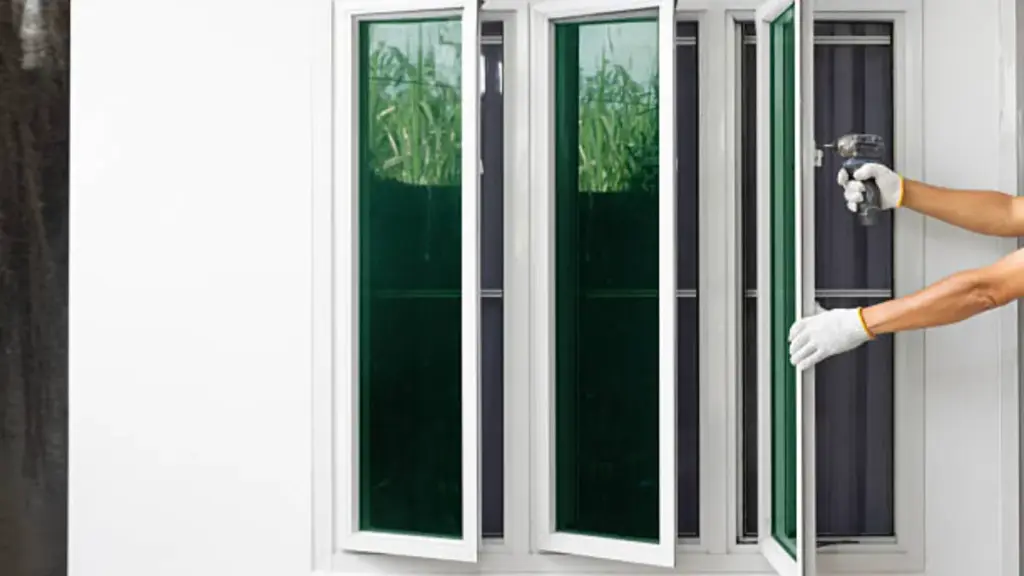
While the number of glass panes provides the structural foundation, the invisible technologies applied to the glass—Low-E coatings and inert gas fills—are what truly drive a building’s energy efficiency. These enhancements can reduce energy loss by up to 40% compared to standard clear glass.
Low-Emissivity (Low-E) Coatings
Low-E coatings are microscopically thin, transparent metallic layers applied to the glass surface. They act like a thermal mirror: reflecting long-wave infrared energy (heat) back to its source while allowing visible light to pass through.
- Hard-Coat (Pyrolytic): Applied while the glass is still hot during production. It is extremely durable and scratch-resistant, making it suitable for single-pane applications, though it offers slightly lower thermal performance.
- Soft-Coat (Sputtered): Applied in a vacuum chamber after the glass is made. It offers the highest thermal efficiency and best SHGC control. However, it is delicate and must be sealed inside an IGU (on surface #2 or #3) to prevent oxidation.
Best For: Projects requiring strict compliance with energy codes (like 2026 targets) and buildings with large glass-to-wall ratios.
Inert Gas Fills
Instead of plain air, the cavity between glass panes can be filled with colorless, odorless inert gases. Because these gases are denser than air, they significantly slow down the movement of heat (convection and conduction) within the window unit.
- Argon Gas: The most common industry choice. It is cost-effective and provides a 15–20% improvement in U-values over air-filled units. Works best in 12mm–16mm cavities.
- Krypton Gas: Much denser than Argon, allowing for superior insulation in much thinner cavities (e.g., 8mm–10mm). While more expensive, it is the elite choice for high-performance triple glazing.
Combined with Low-E, a gas-filled unit can reach U-values as low as 0.25–0.30 BTU/hr·ft²·°F (approx. 1.4-1.7 W/m²K).
Best For: High-end residential builds, extreme climate zones, and maximizing thermal comfort near window seats.
Visual & UV Protection
Beyond temperature and noise, the right glass should manage how much natural light enters a room while shielding occupants and interiors from harmful ultraviolet (UV) radiation.
Solar-Control Coated Glass (Glaring & Heat Shield)
These are advanced tinted or reflective coatings designed specifically to reduce “glare” without completely sacrificing the view.
- Function: They filter the solar spectrum, allowing visible light in while blocking a significant portion of the infrared heat.
- Best For: Large aluminum window walls facing East or West, and commercial offices where screen glare must be minimized.
UV-Filtering Laminated Glass (The Interior Protector)
While all glass blocks some UV-B, the PVB interlayer in laminated glass is the most effective tool for blocking UV-A, which is responsible for fading furniture and fabrics.
- Function: High-quality interlayers can block up to 99% of UV rays.
- Best For: Residential homes with expensive hardwood floors, art galleries, and storefront displays.
Performance Summary Table
Use the comprehensive comparison table below to evaluate key performance metrics and select the ideal glazing configuration for your project requirements.
| Glass Category & Type | U-Value (W/m²K) | Sound Red. (dB) | SHGC | VLT (%) | Best Application |
|---|---|---|---|---|---|
| 1. Glazing Configurations (Basic Structure) | |||||
| Single Glazing | ~5.8 | 20-25 | 0.85 | 90% | Internal partitions, unheated spaces. |
| Double Glazing (Standard IGU) | 1.1 – 2.8 | 30-33 | 0.4-0.7 | 75-80% | Modern residential & commercial facades. |
| Triple Glazing (High Efficiency) | 0.6 – 0.8 | 35-38 | 0.2-0.4 | 55-65% | Passive House, extreme cold climates. |
| 2. Safety & Security Glass | |||||
| Tempered Glass | ~5.7 (Single) | 22-26 | 0.83 | 88% | Shower doors, side-lites, high-traffic areas. |
| Laminated Glass | ~5.5 (Single) | 32-35 | 0.6-0.8 | 85% | Overhead glazing, anti-burglary storefronts. |
| Heat-Soaked Tempered | 1.1 – 1.5* | 30-33 | 0.3-0.5 | 70% | High-rise facades, critical structural glazing. |
| 3. Acoustic Performance Glass | |||||
| Acoustic Laminated | 1.2 – 1.5* | 40-50 | 0.3-0.5 | 65-72% | Airports, recording studios, busy highways. |
| Asymmetric Glazing | 1.3 – 2.6* | 34-38 | 0.4-0.6 | 75-80% | Urban residential noise reduction. |
| High-Gap (20mm+) IGU | 1.4 – 1.8* | 35-40 | 0.4-0.6 | 75% | Low-frequency noise (trains, heavy trucks). |
*Note: U-values for safety and acoustic types assume a double-glazed configuration with Low-E coating and Argon fill for modern standards.
OPUOMEN’s Glass Procurement and Quality Assurance
At OPUOMEN, our manufacturing excellence ensures that the high-performance glass you select is perfectly integrated into world-class aluminum systems. Operating with ISO 9001-certified facilities and cutting-edge R&D, we specialize in high-precision fabrication that meets rigorous CE, RoHS, and ASTM standards.
Our competitive edge lies in integrated supply chain control: we source only prequalified architectural glass—verified for gas fill integrity and Low-E durability—to guarantee long-term thermal and acoustic performance. Whether your project requires high-rise safety through heat-soaking or superior silence via acoustic laminates, OPUOMEN delivers custom-engineered, cost-effective solutions tailored to your climate.
Selecting the right glass is an investment in building longevity and occupant comfort. By balancing U-values, safety ratings, and acoustic dampening, you elevate your project’s standard.
Ready to optimize your next project? View Our High-Performance Window Systems →
Frequently Asked Questions
What is the ideal gas cavity width for optimal U-Value performance?
For argon-filled units, the ideal width is 12–16 mm (14.3 mm is peak optimal). This range balances convection suppression and gas insulation. Cavities outside this range increase heat transfer via conduction (if narrower) or convection (if wider).
How do different Low-E coatings affect visible light transmission?
Low-E coatings reduce VLT compared to clear glass (~82%). High-gain coatings (cold climates) maintain 60–70% VLT, while solar-control triple-silver coatings (hot climates) drop VLT to 45–60% to prioritize heat rejection and glare control.
Is it necessary to use tempered glass in all large-area aluminum windows?
No. Tempered glass is only mandatory in “hazardous locations”—such as doors, wet areas, or low-level glazing near floors. Other large windows may use standard IGUs provided they meet local structural wind load and deflection requirements.
How is glass quality checked for bubbles or internal stress before lamination?
Factories use 360° automated optical systems to detect minute bubbles and inclusions. Internal stress is verified non-destructively using polarized light or photoelastic viewers, ensuring the pane is structurally stable before the bonding process begins.