>

The Complete Guide to Aluminum Casement Doors: Types, 크기, and What Buyers Should Know

The Complete Guide to Aluminum Casement Doors: Types, 크기, and What Buyers Should Know

공유하다:

목차

Securing the right aluminum casement doors means navigating complex specifications. Misaligned choices lead to inflated project timelines, costly warranty claims, and compromised building performance.

This guide dissects key options, comparing profiles ranging from 1.4 mm for interior use to 5.0 mm for demanding exterior applications. We detail performance metrics like U-values (1.4–1.8W/m²K) and STC ratings (30–50+) to inform your material choices and mitigate project risks.

What is an Aluminum Casement Door

케이스 도어

An aluminum casement door is a hinged door system built with an aluminum alloy frame. It swings open or closed to control passage and separate environments.

Core Definition and Functionality

aluminum casement door is a hinged door system. Its structure comes primarily from aluminum alloy profiles. This door opens inward or outward along a fixed axis, using hinges attached to the door frame or wall. Unlike sliding or folding doors, a casement door rotates on hinges. This provides a traditional swing opening with modern materials and hardware.

Key Characteristics and Components

An aluminum casement door system includes several core components:

  • Door Frame: Made from extruded aluminum profiles, sometimes with a thermal break for higher performance. It anchors to the surrounding wall or façade.
  • 잎으로: This is the movable panel that swings open, also built from aluminum profiles. You can find it as a single or double leaf, especially for exterior or driveway entrances.
  • 경첩: Precision-designed hinges fix to the frame or wall, enabling rotation around a vertical axis. Heavy-duty versions are available for large or high-traffic doors.
  • Infill Panel: Options include glazed units (하나의, 더블, or triple glazing), solid aluminum panels, or composite/insulated panels. The choice depends on security, 은둔, and thermal needs.
  • Locking System and Hardware: This covers multi-point locks, cylinders, 처리, and optionally electronic or automatic locks. Security-rated hardware is common for exterior use.
  • Sealing Elements: Gaskets, brushes, and thresholds ensure air, 물, and acoustic tightness. Weatherstripping is critical for exterior casement doors.

Main Types of Aluminum Casement Doors

Modern construction projects require door systems that satisfy different architectural functions while maintaining a consistent design language.

Single Casement Doors

Single-panel aluminum casement doors remain one of the most common configurations for residential and commercial applications.

Their straightforward design makes them suitable for a wide range of openings while maintaining the clean, contemporary appearance expected in modern architecture.

Architects often specify single casement doors for areas where space efficiency and simple operation are priorities, while still maintaining consistency with the building’s overall façade and interior design.

Double Casement Doors

For wider openings, 더블 aluminum casement doors provide a balanced architectural appearance while creating a more generous entrance.

This configuration is frequently incorporated into luxury residences, hospitality projects, and commercial developments where larger openings contribute to the overall spatial experience.

Double-door arrangements also create greater visual symmetry, complementing modern architectural compositions that emphasize proportion and openness.

Fully Glazed Designs

Glass has become one of the defining characteristics of premium aluminum casement doors.

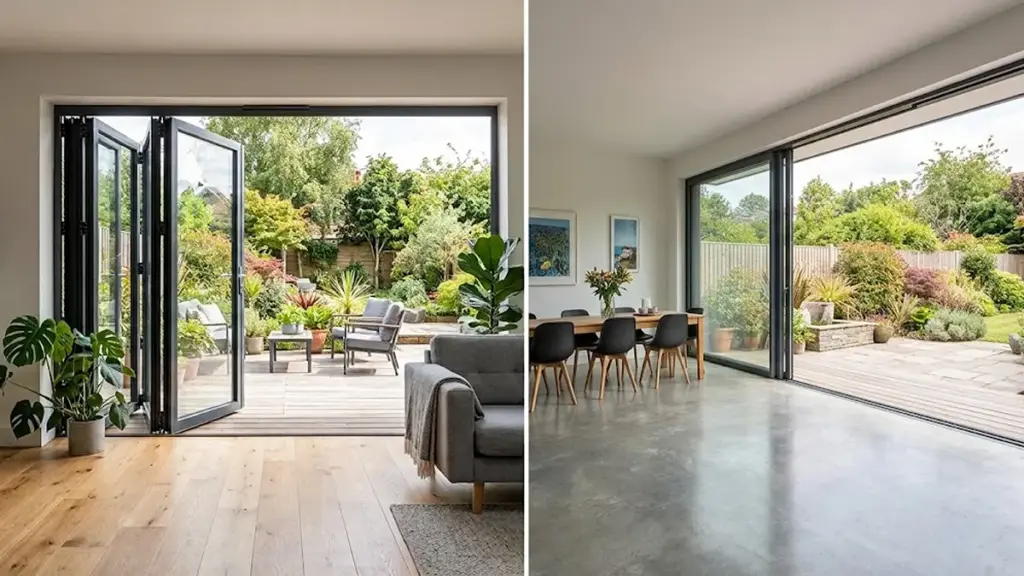
Many architects specify 알루미늄 문 with glass to maximize natural daylight and strengthen visual connections between interior and exterior environments.

Depending on project requirements, glazing can become the dominant visual element, while slim aluminum frames provide the structural support necessary to maintain a refined appearance.

This approach is particularly popular in villas, 호텔, 사무실 건물, and contemporary residential developments.

Premium Aluminum-Wood Doors for Discerning Projects

Our tailored aluminum-wood systems offer superior performance and aesthetics, built for durability and global climate adaptation. Gain a competitive edge with high-quality, cost-effective solutions designed for your specific project and market needs.

알루미늄 목재 문 살펴보기 →

CTA 이미지

Typical Sizes and How to Measure Openings

Selecting the correct dimensions is one of the most important steps when specifying aluminum casement doors for residential, 환대, or commercial projects.

Most Projects Require Customized Dimensions

Modern architecture rarely follows a single door size across an entire development. Apartments may include multiple floor plans, hotels often feature different room types, and commercial buildings usually contain entrances with varying widths and heights.

For this reason, aluminum casement doors are commonly produced according to customized specifications. Manufacturers review architectural drawings to determine the appropriate dimensions, 열리는 방향, and frame configuration for each application.

Rather than selecting products from a standard size list, professional buyers generally begin the procurement process by providing project documentation.

Measuring the Opening Correctly

Accurate opening measurements are essential before manufacturing begins. Since aluminum doors are customized for each project, measurements should always correspond to the architectural opening rather than the finished door leaf alone.

During project planning, contractors typically confirm:

  • Opening width
  • Opening height
  • Installation conditions
  • Opening direction
  • Surrounding wall structure

These details help manufacturers prepare production drawings that align with the building’s construction requirements.

Understanding Aluminum Door Frame Dimensions

One important consideration is aluminum door frame dimensions, which vary depending on the architectural design and customization requirements of each project.

Frame dimensions are influenced by factors such as:

  • Overall door size
  • Glass configuration
  • Profile selection
  • Building application
  • Installation method

Because every project differs, manufacturers generally recommend confirming aluminum door frame dimensions during the design stage rather than relying on standardized specifications.

This customized approach allows architects to maintain consistent visual proportions throughout the building while ensuring compatibility with structural openings.

Coordination Improves Installation Efficiency

Successful projects rely on close coordination between architects, 계약자, 및 제조업체.

Reviewing dimensions early allows production teams to prepare customized door systems that fit accurately upon delivery, reducing installation adjustments and supporting construction schedules.

For large residential developments and commercial buildings, this level of coordination contributes to greater consistency across hundreds of installed door units.

유리, Frame and Hardware Options that Matter

Getting glass, 액자, and hardware right is crucial for aluminum casement doors. These choices directly affect a door’s performance, 보안, 그리고 장기적인 가치.

Glass Choices

Essential options include tempered for safety, laminated for enhanced security and sound insulation, and insulating glass units (IGU) 열효율을 위해. Low-E coatings and gas fills (아르곤, krypton) further improve energy performance. Correct installation methods with setting blocks and specific glazing techniques (dry versus wet) are crucial. Aesthetic choices range from clear and frosted to tinted or decorative inserts.

Frame Choice

Focus on aluminum profile design, including stile and rail dimensions, slim minimalist profiles, and the critical distinction between thermally broken and non-thermal profiles for insulation. Material performance highlights aluminum’s corrosion resistance and structural stability. Finishes like anodized and powder-coated offer durability and aesthetic variety. Frame construction and assembly impact operational reliability, with compatibility with hardware being a primary concern.

Hardware Choices

Locking hardware encompasses deadlocks, deadlatches, and specialized narrow stile locks for security. Hinges and pivots (including standard and wide-swing pin hinges) are vital for door operation, alongside closers for controlled movement. 처리, such as espagnolette, 당기다, and lever types, meet functional and aesthetic needs. Ancillary hardware like flush bolts and keeps provide additional security and stability. Hardware finishes and corrosion performance ensure longevity, with coordinated specification recommended for complex systems.

Interior vs Exterior Casement Door Applications

케이스 도어

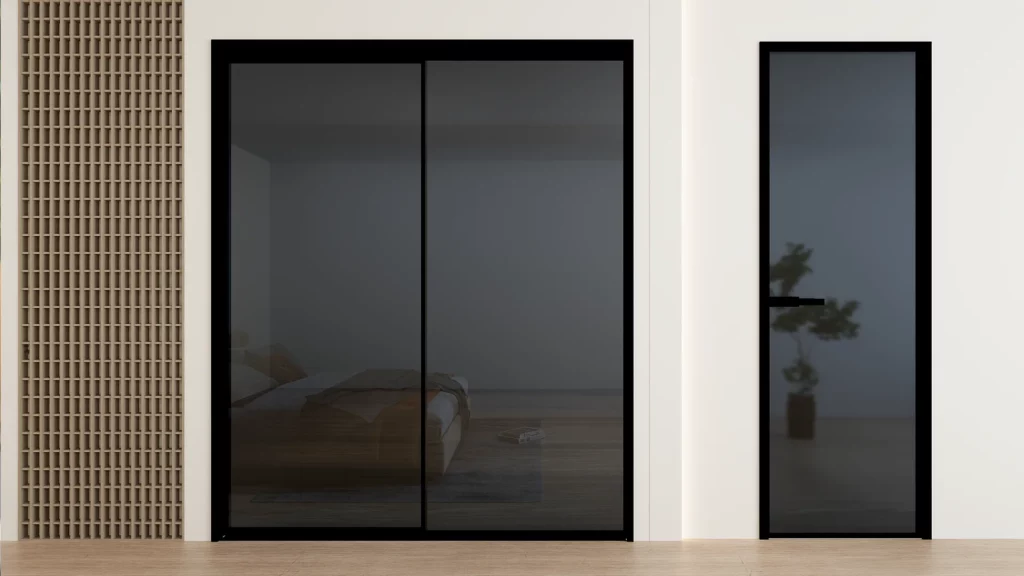
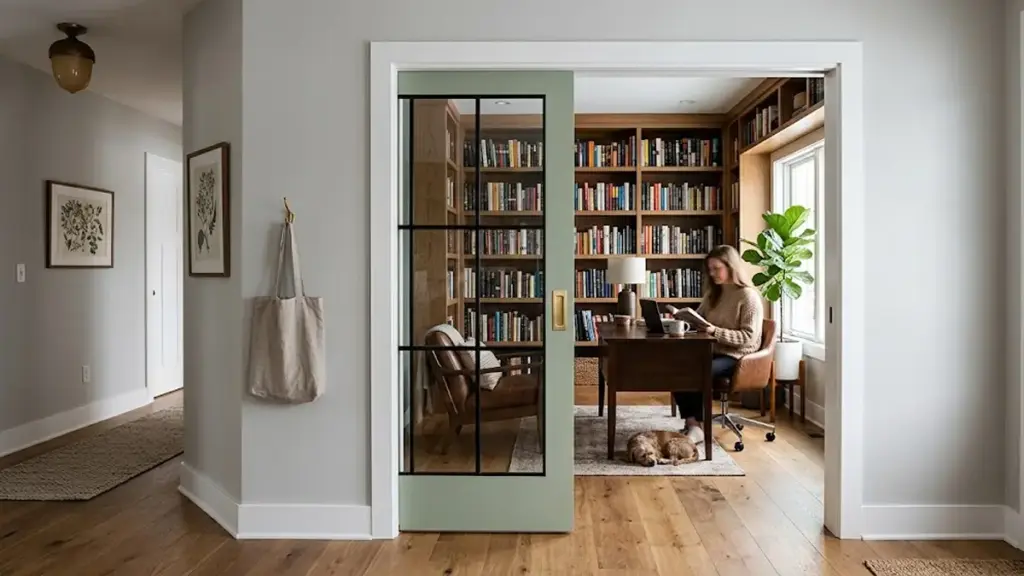
Interior and exterior aluminum casement doors share a basic operating principle but vary significantly in design, performance needs, and hardware specifications.

Core Distinctions in Design and Performance

Interior aluminum casement doors primarily separate spaces, provide visual connection, and offer basic noise reduction. Exterior doors, 대조적으로, function as the main barrier to the elements, 보안 제공, weather protection, and thermal insulation while also contributing to the building’s facade design.

Profile thickness in exterior casement doors is significantly greater, ~에 이르기까지 4 mm 에 5 mm, 아니면 심지어 6 mm for industrial use. This allows for greater strength and insulation. Interior doors, for standard or light traffic, use thinner profiles, usually between 1.4 mm and 3 mm. These different thicknesses determine structural specifications, balancing cost-effectiveness and durability against specific application demands.

Exterior doors demand high thermal, 음향학, and weather performance. They must limit heat transfer, reduce air leakage, and resist wind-driven rain, UV exposure, and temperature extremes. This means thicker profiles, compression seals, and insulated glazing are standard. Interior doors have lower insulation needs as they separate conditioned spaces. Acoustic control for interior applications focuses on privacy rather than comprehensive noise reduction from outdoor sources.

Security and hardware specifications also differ. Exterior doors are the primary barrier, so they require thicker profiles, 다중 지점 잠금 시스템, robust hinges, and weather-resistant hardware. These are often paired with deadbolts and high-security locksets. Interior doors prioritize aesthetics and smooth operation with simpler locksets and lighter-duty hinges, as high security is not the main concern.

Application-Specific Selection and Implementation

The functional role dictates typical locations. Interior casement doors find use in room-to-room transitions within residential units, office partitions, 회의실, and indoor balcony access. Exterior casement doors are present at front entryways, rear service doors, 안뜰, 발코니, and access points to gardens or pools, directly exposed to outdoor conditions.

Installation practices for exterior doors focus on structural anchorage, plumb alignment, air-tightness, and continuous insulation. This includes accurate measurements of frame, leaf, and jamb depth to match wall thickness and cladding. 심, screw anchoring, compression seals, and perimeter insulation are critical. For interior doors, installation prioritizes visual alignment with interior finishes, minimizing sound and light gaps, and compatibility with trim and moldings rather than weatherproofing.

Application suitability means matching the door to its environment. Specify interior aluminum casement doors with 1.4–3 mm profiles when the door sits fully inside the building envelope, protected from rain or wind, and where insulation or high security are not critical. Specify exterior doors with 4–5 mm or thicker profiles when the door faces outdoor conditions directly, and where weather resistance, 에너지 효율, and security are priorities. Using interior-grade doors for exterior applications leads to increased heat loss, 응축, and reduced structural life.

What Distributors and Contractors should Confirm before Ordering

For distributors, 계약자, and project developers, selecting the right aluminum casement doors involves much more than comparing product photographs or pricing.

Confirm Architectural Drawings

Every project begins with accurate architectural documentation.

Manufacturers typically produce aluminum casement doors according to approved project drawings rather than fixed standard sizes. Confirming dimensions, 여는 방향, installation locations, and panel configurations before production helps minimize installation issues later.

Early communication also allows manufacturers to recommend suitable customization options based on the architectural layout.

Verify Aluminum Door Frame Dimensions

Because projects vary significantly in size and design, aluminum door frame dimensions should always be reviewed during the specification stage.

Rather than relying on generic dimensions, professional buyers typically confirm:

  • Opening width and height
  • Frame profile selection
  • Glass configuration
  • Installation requirements
  • Project-specific customization

Verifying these details before production contributes to more accurate manufacturing and efficient installation.

Review Glass and Finish Options

Architects frequently specify different glazing arrangements depending on the functional requirements of the project.

Many aluminum doors with glass are selected to maximize daylight and strengthen visual continuity, while frame finishes can be coordinated with windows, 커튼 벽, and other aluminum systems throughout the building.

Reviewing these design elements before production helps maintain consistency across the entire development.

Consider Long-Term Project Value

Procurement decisions should consider the entire lifecycle of the building rather than focusing only on initial purchasing costs.

High-quality aluminum casement doors provide long-term value through durable aluminum profiles, customizable designs, 품질 장인 정신, and reliable daily operation.

For developers managing premium residential, 환대, or commercial projects, selecting a professional manufacturing partner supports both construction efficiency and long-term customer satisfaction.

최종 생각

As contemporary architecture continues to emphasize clean lines, generous glazing, and customized building solutions, aluminum casement doors have become an essential choice for residential, 환대, 상업 프로젝트.


As a professional manufacturer of aluminum doors and windows, opuo offers customizable aluminum casement doors designed for modern architectural applications. Connect with our specialists to review our comprehensive product catalog and discuss specific OEM requirements.

위안웬

최고의 알루미늄 창 및 문 제조업체의 창립자이자 CEO로서, 내가 가져옴 12 다년간의 고성능 건축자재 전문지식. 내 경력은 에너지 효율성과 엔지니어링 우수성에 대한 헌신으로 정의됩니다., 전 세계 계약자와 개발자가 건축 비전을 달성하도록 돕습니다..

내 지도하에, 우리는 맞춤형 솔루션을 성공적으로 수출했습니다. 30+ 유럽 ​​전역의 국가, 중동, 그리고 동남아시아, 이상을 지원하다 500 대규모 주거 및 상업 프로젝트. 저는 OEM/ODM 제조 및 복잡한 알루미늄 피복 목재 시스템을 전문으로 합니다., 모든 제품이 엄격한 글로벌 표준과 다양한 기후 요구 사항을 충족하도록 보장. 나는 첨단 제조업과 세계 무역 사이의 격차를 해소하는 데 전념하고 있습니다., 전문적인 제공, 다음 프로젝트를 위한 맞춤형 지원.

연락하십시오

인기있는 블로그

It seems we can't find what you're looking for.

맞춤형 알루미늄 도어를 얻으십시오 & 오늘 창문 견적!

고품질 문을 찾고 있는지 여부, 창, 또는 맞춤형 솔루션, 우리는 당신이 당신의 비전을 활기차게하는 데 도움을주기 위해 왔습니다..

*우리는 귀하의 기밀성을 존중하고 모든 정보는 보호됩니다.