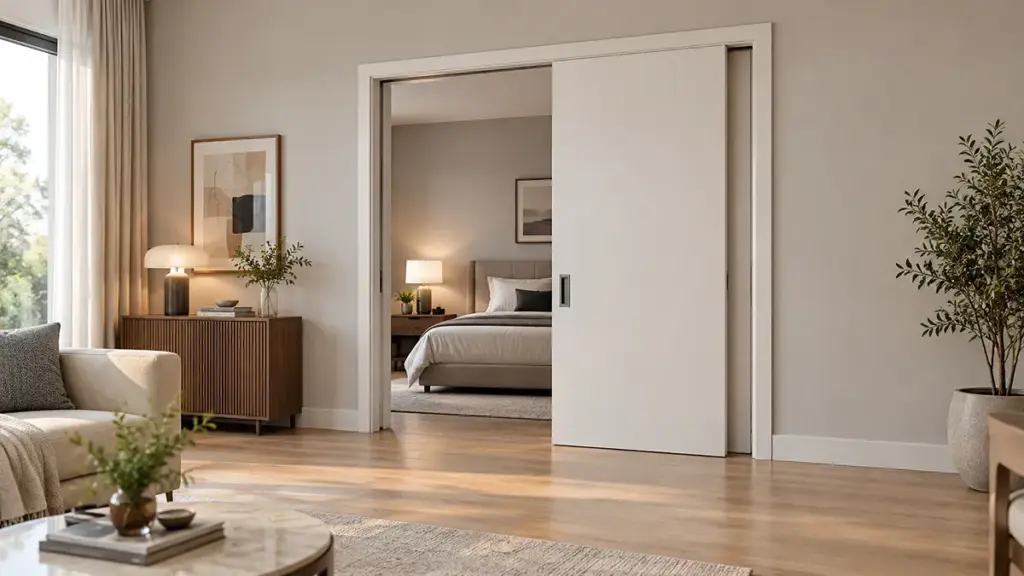
Proteger as portas de batente de alumínio certas significa navegar por especificações complexas. Escolhas desalinhadas levam a cronogramas de projetos inflacionados, reclamações de garantia dispendiosas, e desempenho de construção comprometido.
Este guia disseca as principais opções, comparando perfis que vão desde 1.4 mm para uso interno para 5.0 mm para aplicações externas exigentes. Detalhamos métricas de desempenho como valores U (1.4–1,8 W/m²K) e classificações STC (30–50+) para informar suas escolhas de materiais e mitigar os riscos do projeto.
O que é uma porta de batente de alumínio
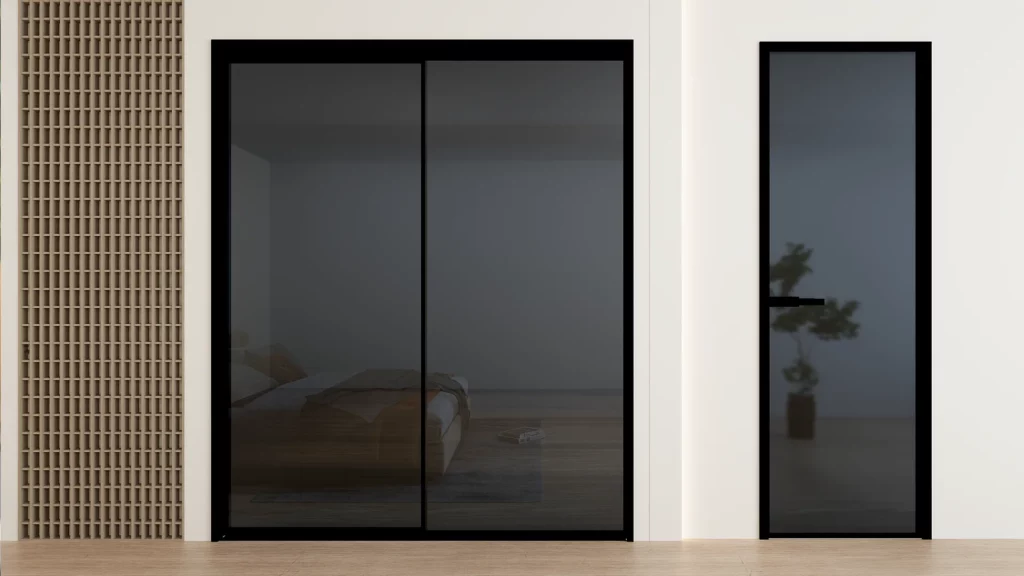
Uma porta de batente de alumínio é um sistema de porta articulada construído com uma moldura de liga de alumínio. Ele abre ou fecha para controlar a passagem e separar ambientes.
Definição Central e Funcionalidade
Um porta de batente de alumínio é um sistema de porta articulada. Sua estrutura provém principalmente de perfis de liga de alumínio. Esta porta abre para dentro ou para fora ao longo de um eixo fixo, usando dobradiças fixadas na moldura da porta ou na parede. Ao contrário das portas deslizantes ou dobráveis, uma porta de batente gira sobre dobradiças. Isso fornece uma abertura giratória tradicional com materiais e ferragens modernos.
Principais características e componentes
Um sistema de porta de batente de alumínio inclui vários componentes principais:
- Moldura da porta: Fabricado em perfis de alumínio extrudado, às vezes com ruptura térmica para maior desempenho. Ancora-se à parede ou fachada circundante.
- Por folha: Este é o painel móvel que se abre, também construído em perfis de alumínio. Você pode encontrá-lo em folha simples ou dupla, especialmente para entradas externas ou de garagem.
- Dobradiças: Dobradiças projetadas com precisão fixam-se na moldura ou na parede, permitindo a rotação em torno de um eixo vertical. Versões reforçadas estão disponíveis para portas grandes ou de alto tráfego.
- Painel de preenchimento: As opções incluem unidades envidraçadas (solteiro, dobro, ou vidros triplos), painéis de alumínio sólido, ou painéis compostos/isolados. A escolha depende da segurança, privacidade, e necessidades térmicas.
- Sistema de bloqueio e hardware: Isso cobre bloqueios multiponto, cilindros, alças, e opcionalmente fechaduras eletrônicas ou automáticas. Hardware com classificação de segurança é comum para uso externo.
- Elementos de vedação: Juntas, pincéis, e limiares garantem o ar, água, e estanqueidade acústica. A calafetagem é crítica para portas de batente externas.
Principais tipos de portas de batente de alumínio
Os projetos de construção modernos exigem sistemas de portas que satisfaçam diferentes funções arquitetónicas, mantendo ao mesmo tempo uma linguagem de design consistente..
Portas de batente único
As portas de batente de alumínio de painel único continuam sendo uma das configurações mais comuns para aplicações residenciais e comerciais.
Seu design simples os torna adequados para uma ampla variedade de aberturas, mantendo a limpeza, aparência contemporânea esperada na arquitetura moderna.
Os arquitetos geralmente especificam portas de batente único para áreas onde a eficiência do espaço e a operação simples são prioridades, mantendo a consistência com a fachada geral e o design interior do edifício.
Portas de batente duplo
Para aberturas mais amplas, dobro portas de batente de alumínio proporcionam uma aparência arquitetônica equilibrada enquanto criam uma entrada mais generosa.
Esta configuração é frequentemente incorporada em residências de luxo, projetos de hospitalidade, e empreendimentos comerciais onde aberturas maiores contribuem para a experiência espacial geral.
Arranjos de porta dupla também criam maior simetria visual, complementando composições arquitetônicas modernas que enfatizam proporção e abertura.
Projetos totalmente envidraçados
O vidro tornou-se uma das características definidoras das portas de batente de alumínio premium.
Muitos arquitetos especificam portas de alumínio com vidro para maximizar a luz natural e fortalecer as conexões visuais entre ambientes internos e externos.
Dependendo dos requisitos do projeto, o envidraçamento pode se tornar o elemento visual dominante, enquanto as finas molduras de alumínio fornecem o suporte estrutural necessário para manter uma aparência refinada.
Esta abordagem é particularmente popular em vilas, hotéis, edifícios de escritórios, e empreendimentos residenciais contemporâneos.
Portas premium de alumínio e madeira para projetos exigentes
Tamanhos típicos e como medir aberturas
Selecionar as dimensões corretas é uma das etapas mais importantes ao especificar portas de batente de alumínio para residências., hospitalidade, ou projetos comerciais.
A maioria dos projetos exige dimensões personalizadas
A arquitetura moderna raramente segue um único tamanho de porta em todo o empreendimento. Os apartamentos podem incluir várias plantas baixas, os hotéis costumam apresentar diferentes tipos de quartos, e edifícios comerciais geralmente contêm entradas com larguras e alturas variadas.
Por esta razão, portas de batente de alumínio são comumente produzidas de acordo com especificações personalizadas. Os fabricantes revisam desenhos arquitetônicos para determinar as dimensões apropriadas, direção de abertura, e configuração de quadro para cada aplicação.
Em vez de selecionar produtos de uma lista de tamanhos padrão, compradores profissionais geralmente iniciam o processo de aquisição fornecendo a documentação do projeto.
Medindo a abertura corretamente
Medições precisas de abertura são essenciais antes do início da fabricação. Já que as portas de alumínio são customizadas para cada projeto, as medidas devem sempre corresponder à abertura arquitetônica e não apenas à folha da porta acabada.
Durante o planejamento do projeto, os empreiteiros normalmente confirmam:
- Largura de abertura
- Altura de abertura
- Condições de instalação
- Direção de abertura
- Estrutura da parede circundante
Esses detalhes ajudam os fabricantes a preparar desenhos de produção alinhados aos requisitos de construção do edifício.
Compreendendo as dimensões da moldura da porta de alumínio
Uma consideração importante são as dimensões da moldura da porta de alumínio, que variam dependendo do projeto arquitetônico e dos requisitos de customização de cada projeto.
As dimensões da estrutura são influenciadas por fatores como:
- Tamanho total da porta
- Configuração de vidro
- Seleção de perfil
- Construindo aplicativo
- Método de instalação
Porque cada projeto é diferente, os fabricantes geralmente recomendam confirmar as dimensões da moldura da porta de alumínio durante a fase de projeto, em vez de confiar em especificações padronizadas.
Esta abordagem personalizada permite que os arquitetos mantenham proporções visuais consistentes em todo o edifício, garantindo ao mesmo tempo a compatibilidade com as aberturas estruturais..
A coordenação melhora a eficiência da instalação
Projetos de sucesso dependem de uma estreita coordenação entre arquitetos, empreiteiros, e fabricantes.
A revisão antecipada das dimensões permite que as equipes de produção preparem sistemas de portas personalizados que se encaixem com precisão na entrega, reduzindo ajustes de instalação e apoiando cronogramas de construção.
Para grandes empreendimentos residenciais e edifícios comerciais, este nível de coordenação contribui para uma maior consistência entre centenas de unidades de portas instaladas.
Vidro, Opções de estrutura e hardware que importam
Obtendo vidro, quadro, e o hardware certo é crucial para portas de batente de alumínio. Estas escolhas afetam diretamente o desempenho de uma porta, segurança, e valor a longo prazo.
Opções de vidro
As opções essenciais incluem temperado para segurança, laminado para maior segurança e isolamento acústico, e unidades de vidro isolante (UGUs) para eficiência térmica. Revestimentos Low-E e preenchimentos de gás (argônio, criptônio) melhorar ainda mais o desempenho energético. Métodos corretos de instalação com blocos de fixação e técnicas específicas de envidraçamento (seco versus molhado) são cruciais. As opções estéticas variam de inserções transparentes e foscas a inserções coloridas ou decorativas.
Escolha do quadro
Foco no design de perfis de alumínio, incluindo dimensões de estilo e trilho, perfis minimalistas finos, e a distinção crítica entre perfis quebrados termicamente e não térmicos para isolamento. O desempenho do material destaca a resistência à corrosão e a estabilidade estrutural do alumínio. Acabamentos como anodizado e revestido a pó oferecem durabilidade e variedade estética. A construção e montagem da estrutura impactam a confiabilidade operacional, com a compatibilidade com o hardware sendo a principal preocupação.
Escolhas de hardware
O hardware de bloqueio abrange impasses, travamentos, e fechaduras estreitas especializadas para segurança. Dobradiças e pivôs (incluindo dobradiças de pino padrão e largas) são vitais para o funcionamento da porta, ao lado de fechos para movimento controlado. Alças, como espagnolete, puxar, e tipos de alavanca, atender às necessidades funcionais e estéticas. Hardware auxiliar, como parafusos nivelados e suportes, fornece segurança e estabilidade adicionais. Acabamentos de hardware e desempenho contra corrosão garantem longevidade, com especificação coordenada recomendada para sistemas complexos.
Aplicações de portas de batente internas e externas

As portas internas e externas de alumínio compartilham um princípio operacional básico, mas variam significativamente em design, necessidades de desempenho, e especificações de hardware.
Distinções Básicas em Design e Desempenho
Portas interiores de batente de alumínio principalmente espaços separados, fornecer conexão visual, e oferecem redução de ruído básica. Portas externas, por contraste, funcionar como a principal barreira aos elementos, fornecendo segurança, proteção contra intempéries, e isolamento térmico, ao mesmo tempo que contribui para o design da fachada do edifício.
A espessura do perfil em portas de batente exteriores é significativamente maior, variando de 4 mm para 5 milímetros, ou mesmo 6 mm para uso industrial. Isso permite maior resistência e isolamento. Portas interiores, para tráfego padrão ou leve, use perfis mais finos, geralmente entre 1.4 milímetros e 3 milímetros. Essas diferentes espessuras determinam as especificações estruturais, equilibrando economia e durabilidade com demandas de aplicações específicas.
Portas exteriores exigem alta temperatura, acústico, e desempenho climático. Eles devem limitar a transferência de calor, reduzir o vazamento de ar, e resistir à chuva provocada pelo vento, Exposição UV, e temperaturas extremas. Isso significa perfis mais grossos, selos de compressão, e vidros isolados são padrão. As portas interiores têm menores necessidades de isolamento, pois separam espaços condicionados. O controle acústico para aplicações internas concentra-se na privacidade, em vez da redução abrangente de ruído de fontes externas.
As especificações de segurança e hardware também diferem. As portas externas são a principal barreira, então eles exigem perfis mais grossos, sistemas de bloqueio multiponto, dobradiças robustas, e hardware resistente às intempéries. Muitas vezes, são combinados com fechaduras e fechaduras de alta segurança. As portas interiores priorizam a estética e o bom funcionamento com fechaduras mais simples e dobradiças mais leves, já que a alta segurança não é a principal preocupação.
Seleção e implementação específicas da aplicação
A função funcional determina locais típicos. Portas de batente internas são usadas em transições de sala para sala dentro de unidades residenciais, divisórias de escritório, salas de conferência, e acesso à varanda interna. Portas externas estão presentes nas entradas frontais, portas de serviço traseiras, Pátios, varandas, e pontos de acesso a jardins ou piscinas, diretamente exposto a condições externas.
As práticas de instalação para portas externas concentram-se na ancoragem estrutural, alinhamento de prumo, hermeticidade, e isolamento contínuo. Isso inclui medições precisas do quadro, folha, e profundidade do batente para corresponder à espessura da parede e ao revestimento. Calços, ancoragem por parafuso, selos de compressão, e isolamento perimetral são críticos. Para portas interiores, a instalação prioriza o alinhamento visual com acabamentos internos, minimizando lacunas de som e luz, e compatibilidade com acabamentos e molduras em vez de proteção contra intempéries.
A adequação da aplicação significa combinar a porta com o seu ambiente. Especifique portas interiores de alumínio com perfis de 1,4–3 mm quando a porta fica totalmente dentro da envolvente do edifício, protegido da chuva ou do vento, e onde o isolamento ou a alta segurança não são críticos. Especifique portas externas com perfis de 4–5 mm ou mais grossos quando a porta estiver voltada diretamente para as condições externas, e onde a resistência às intempéries, eficiência energética, e segurança são prioridades. O uso de portas internas para aplicações externas leva ao aumento da perda de calor, condensação, e redução da vida estrutural.
O que distribuidores e empreiteiros devem confirmar antes de fazer o pedido
Para distribuidores, empreiteiros, e desenvolvedores de projetos, selecionar as portas de batente de alumínio certas envolve muito mais do que comparar fotografias de produtos ou preços.
Confirmar desenhos arquitetônicos
Todo projeto começa com documentação arquitetônica precisa.
Os fabricantes normalmente produzem portas de batente de alumínio de acordo com desenhos de projeto aprovados em vez de tamanhos padrão fixos. Confirmando dimensões, direções de abertura, locais de instalação, e configurações do painel antes da produção ajudam a minimizar problemas de instalação posteriores.
A comunicação antecipada também permite que os fabricantes recomendem opções de personalização adequadas com base no layout arquitetônico.
Verifique as dimensões da moldura da porta de alumínio
Porque os projetos variam significativamente em tamanho e design, as dimensões da moldura da porta de alumínio devem sempre ser revisadas durante a fase de especificação.
Em vez de confiar em dimensões genéricas, compradores profissionais normalmente confirmam:
- Largura e altura de abertura
- Seleção de perfil de quadro
- Configuração de vidro
- Requisitos de instalação
- Personalização específica do projeto
A verificação desses detalhes antes da produção contribui para uma fabricação mais precisa e uma instalação eficiente.
Revise as opções de vidro e acabamento
Os arquitetos frequentemente especificam diferentes arranjos de envidraçamento dependendo dos requisitos funcionais do projeto.
Muitas portas de alumínio com vidro são selecionadas para maximizar a luz natural e fortalecer a continuidade visual, enquanto os acabamentos da moldura podem ser coordenados com as janelas, paredes de cortina, e outros sistemas de alumínio em todo o edifício.
A revisão desses elementos de design antes da produção ajuda a manter a consistência em todo o desenvolvimento.
Considere o valor do projeto a longo prazo
As decisões de aquisição devem considerar todo o ciclo de vida do edifício, em vez de se concentrarem apenas nos custos iniciais de compra..
Portas de alumínio de alta qualidade fornecem valor a longo prazo através de perfis de alumínio duráveis, designs personalizáveis, artesanato de qualidade, e operação diária confiável.
Para desenvolvedores que gerenciam imóveis residenciais premium, hospitalidade, ou projetos comerciais, selecionar um parceiro de fabricação profissional apoia a eficiência da construção e a satisfação do cliente a longo prazo.
Considerações Finais
À medida que a arquitetura contemporânea continua a enfatizar linhas limpas, vidros generosos, e soluções de construção personalizadas, portas de batente de alumínio tornaram-se uma escolha essencial para residências, hospitalidade, e projetos comerciais.
Como fabricante profissional de portas e janelas de alumínio, Opuo oferece portas de batente de alumínio personalizáveis projetadas para aplicações arquitetônicas modernas. Conecte-se com nossos especialistas para revisar nosso abrangente catálogo de produtos e discutir requisitos específicos de OEM.