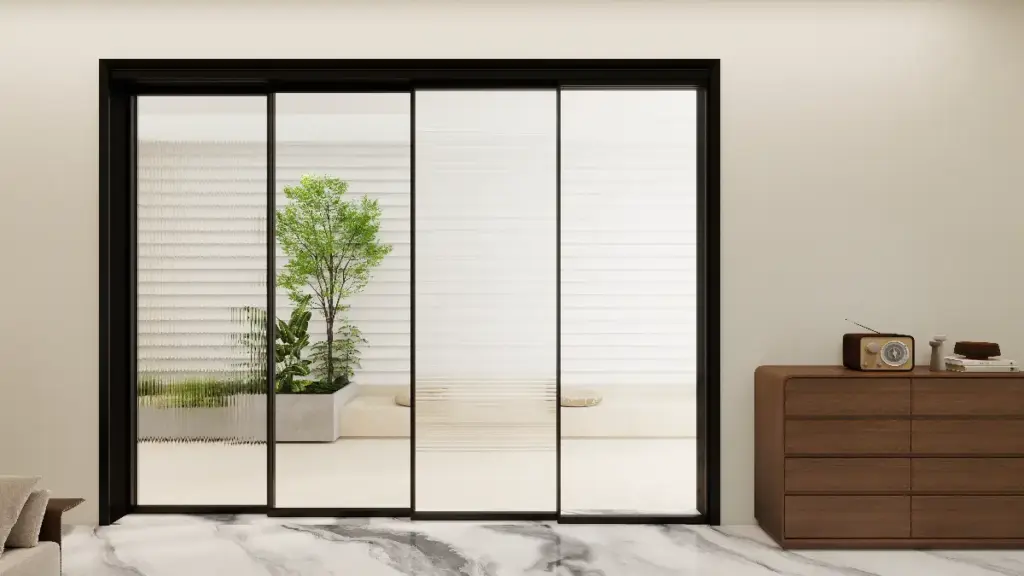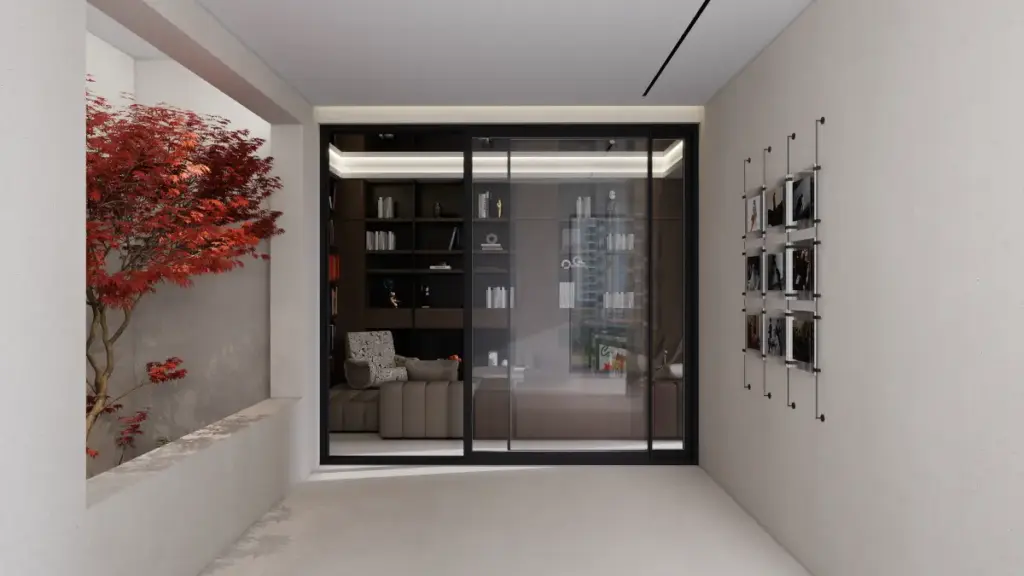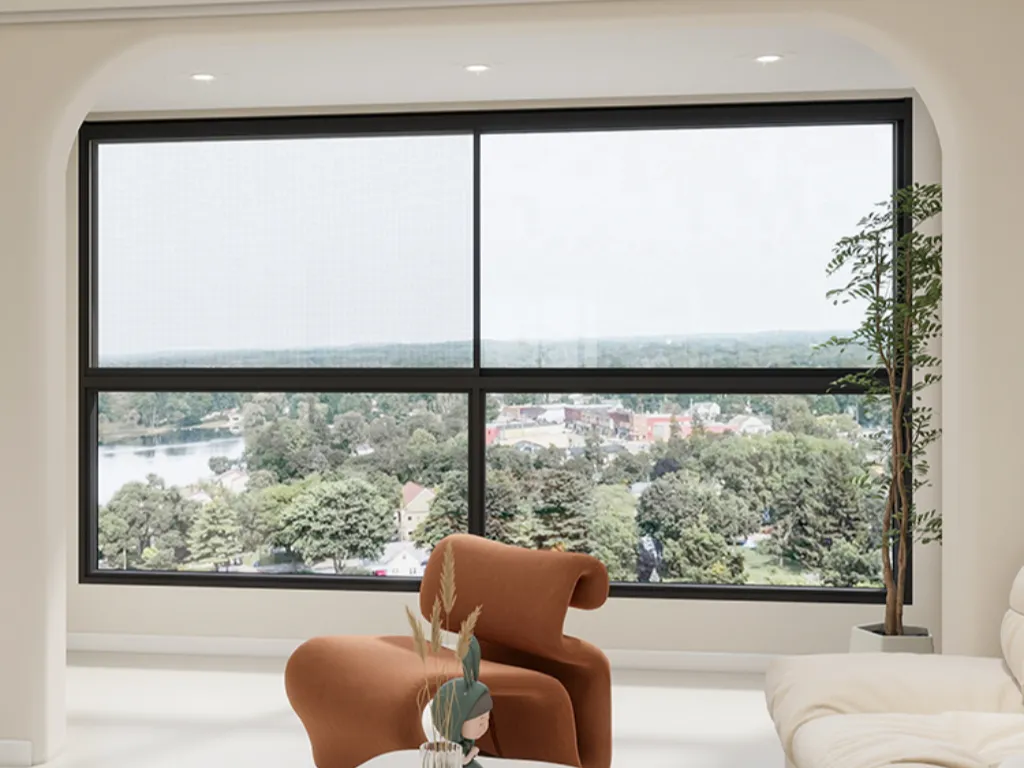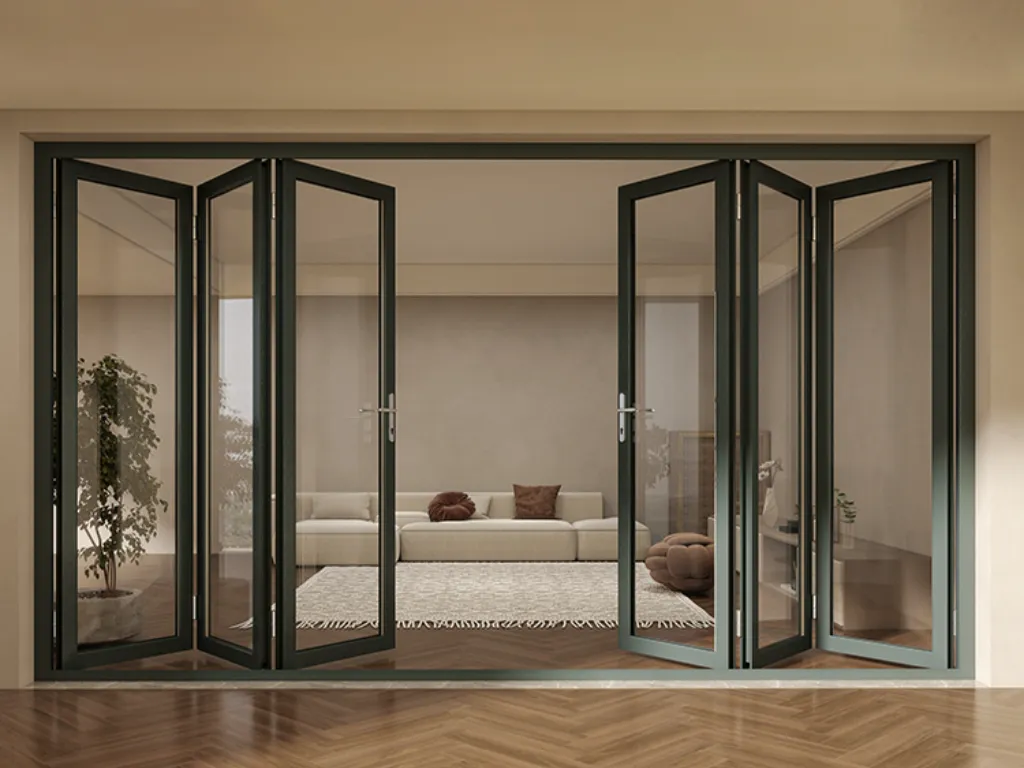
Lors de la sélection des cadres de fenêtres en aluminium, une mauvaise décision peut entraîner des coûts plus élevés, performances réduites, et problèmes de maintenance à plus long terme. Il s’agit d’un choix crucial qui a un impact sur tout, de l’efficacité énergétique à l’intégrité structurelle du bâtiment..
Ce guide vous guide à travers les principales considérations: l'impact de l'épaisseur du cadre sur le coût et la durabilité, le rôle des coupures thermiques dans l'efficacité énergétique, et comment faire correspondre la résistance du cadre avec le poids du verre. Nous explorerons également comment sélectionner le bon matériel et si les cadres personnalisés ou standard conviennent le mieux à vos commandes groupées..
Quel est l'impact de l'épaisseur du cadre sur les performances et les coûts?
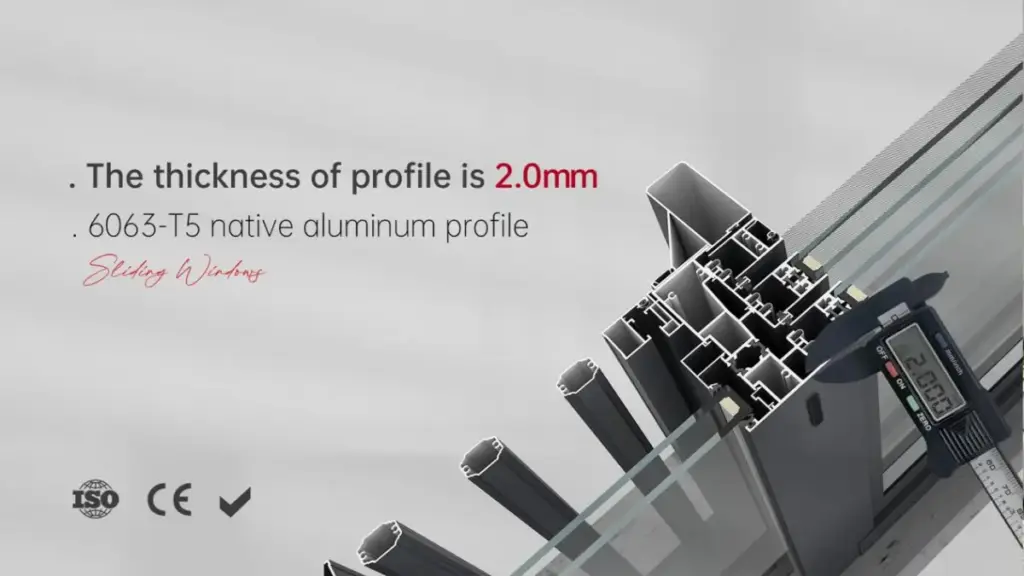
- Intégrité structurelle: Cadres plus épais (1.8–2,0 mm) améliorer la durabilité, supportant de plus grandes portées de verre et offrant une résistance améliorée aux conditions météorologiques extrêmes.
- Efficacité énergétique: Une épaisseur de cadre accrue conduit à une meilleure isolation, atteindre des valeurs U aussi basses que Uw 0,86–1,0 W/m²K (Facteur U 0,15–0,17 Btu/h·ft²·°F), qui améliore la performance énergétique.
- Adéquation des applications: Des profils plus épais sont essentiels pour les immeubles de grande hauteur, côtier, ou fenêtres grand format, où la capacité portante et la résistance aux chocs sont essentielles.
- Impact sur les coûts: Cadres haut de gamme (1.8–2,0 mm) ajouter 20 à 30 % aux coûts des matériaux par rapport aux options standard, reflétant une utilisation plus élevée de matières premières et une extrusion plus précise. Dans l'ensemble, les prix des fenêtres peuvent varier de 200 $ à 1 500 $ par unité.
- Retour sur investissement (Retour de retour): Même si les coûts initiaux sont plus élevés, les cadres plus épais offrent une valeur à long terme avec un entretien réduit et une durée de vie prolongée de plus de 40 années.
Quelles spécifications de rupture thermique devriez-vous prendre en compte?
-1024x576.webp)
- Matériau à rupture de pont thermique: Utiliser PA66 GF25 (polyamide renforcé de fibres de verre) pour une faible conductivité thermique (0.3 W/mK) par rapport à l'aluminium (237 W/mK), Amélioration de l'efficacité énergétique.
- Largeur de la bande thermique: Les largeurs standard vont de 12 à 34 mm, avec des systèmes avancés utilisant jusqu'à 24 à 35 mm pour une isolation améliorée.
- Performance du facteur U: Les systèmes de haute qualité atteignent des facteurs U aussi bas que 0,8 à 2,0 W/m²K, réduisant considérablement le transfert de chaleur.
- Épaisseur de paroi du profil: Généralement 1,2 à 2,0 mm pour l'intégrité structurelle, avec certains systèmes utilisant 0,8 à 1,4 mm.
- Normes de l'industrie: Assurer la conformité à la norme ISO, CNRF, IECC/ASHRAE 90.1 pour l’efficacité thermique et les performances mécaniques.
- Considérations supplémentaires: Faites attention aux limites de fuite d’air (≤ 0.375 cfm à 25 mph) et finitions de surface comme l'anodisation (8–15 μm) ou revêtement en poudre (60–100 μm) pour la durabilité.
OPUOMEN F16 (3.0) La fenêtre externe en aluminium Broken Bridge combine une technologie avancée de rupture de pont thermique pour bloquer la conduction thermique, assurer l’efficacité énergétique et le confort intérieur.
Quel profil de conception correspond à vos besoins esthétiques et fonctionnels?
- Considérations esthétiques: Choisissez des profils en fonction des lignes de visibilité souhaitées, équilibrage mince, cadres minimaux (22–55mm) avec préférences de conception, s’assurer que la charpente complète l’architecture du bâtiment.
- Exigences fonctionnelles: Sélectionnez les profils en fonction du type de fenêtre (fenêtre, glissement, pliable, etc.), résistance pour les grandes vitres, et performances dans des conditions météorologiques telles que la résistance au vent et l'évacuation de l'eau.
- Efficacité thermique: Opter pour des profilés à rupture de pont thermique (Par exemple, inserts en polyamide) pour améliorer l'isolation, atteindre les valeurs U autour 1.4 W/m²K pour les systèmes à double vitrage.
- Formes de profil courantes: Les profils carrés/rectangulaires sont courants pour les cadres, tandis que les profils U/L/T/H sont utilisés pour le support et la connexion, souvent avec des sections creuses pour réduire le poids.
- Matériau et résistance: Pour les applications architecturales, 6063-L'aluminium T5 est privilégié pour sa finition, tandis que le 6061-T6 offre une résistance plus élevée pour les profils porteurs.
- Dimensions et poids: Les profils varient en épaisseur (Par exemple, 1.4–1,6 mm pour le battant), avec des options comme le système MB-Slide supportant de grandes vantaux (jusqu'à 3200 x 3200 mm, 400 kilos).
Débloquez des performances supérieures avec les fenêtres en aluminium OPUOMEN
Comment garantir la durabilité de la finition et la rétention des couleurs?
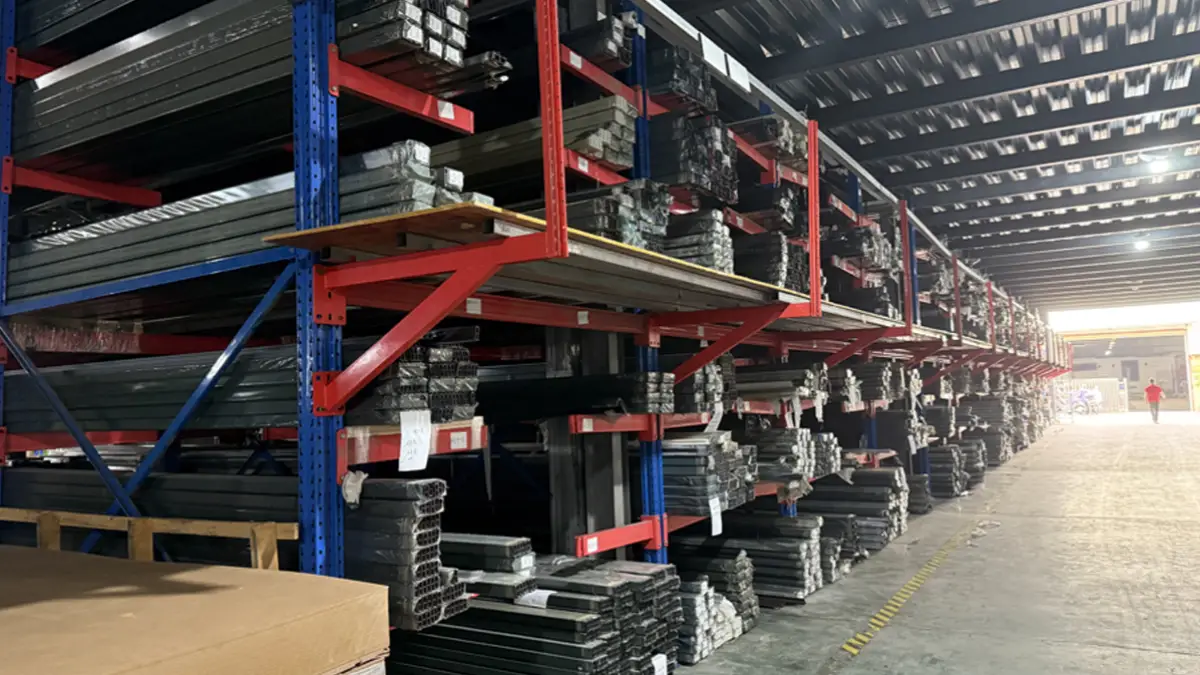
Sélection d'alliage et de finition: La durabilité et la rétention de la couleur dépendent du choix de l'alliage et de la finition adaptés à l'environnement.. Pour les finitions anodisées, AA 5005 est préféré pour l’uniformité des couleurs à long terme, tandis que AA 6063 et AA 6061 offrent une résistance structurelle pour le revêtement en poudre ou l'anodisation.
Systèmes de finition: Revêtement en poudre (≥50 µm) et l'anodisation sont des systèmes de finition courants pour les cadres de fenêtres en aluminium. Le revêtement en poudre fournit une épaisseur, couche protectrice, tandis que l'anodisation améliore la résistance à la corrosion et la rétention de la couleur.
Adaptation environnementale: Adaptez la finition à la corrosivité environnementale, comme l'ISO 12944 C3 pour les milieux urbains ou C5 (de qualité marine) pour les environnements côtiers ou à haute teneur en sel.
Entretien et durée de vie: Des finitions correctement appliquées peuvent garantir un 30-45+ durée de vie d'un an avec une dégradation minimale des couleurs. Un nettoyage régulier avec des détergents neutres aide à maintenir la brillance et la rétention de la couleur.
Quel matériel est nécessaire pour les systèmes de verrouillage hautes performances?
-1024x576.webp)
Mécanismes et matériaux de verrouillage multipoints essentiels
Les systèmes de verrouillage hautes performances s'appuient sur des mécanismes multipoints robustes, qui sont cruciaux pour les grandes fenêtres exposées à de fortes pressions de vent et à des risques d'entrée forcée. Les composants clés comprennent:
- Espagnolette Mechanisms: Doté de cames en forme de champignon qui améliorent la résistance anti-jemmy, ces mécanismes offrent une action de serrage supérieure, améliorer la sécurité des fenêtres et l'intégrité des joints.
- Tireurs: Utilisé pour les grandes ouvertures de fenêtres, les boulons de tir engagent plusieurs points de verrouillage pour répartir la force uniformément, empêcher la séparation sous pression.
- Loquets à came: Souvent utilisé pour les fenêtres à battants, ceux-ci assurent une étanchéité parfaite et empêchent les mouvements indésirables, assurer une durabilité à long terme.
Les composants sont généralement fabriqués à partir de 304/316 acier inoxydable pour la résistance à la corrosion et zinc moulé sous pression pour une résistance accrue, assurant la durabilité même dans des environnements difficiles.
Normes de performance et durabilité
- Résistance à la corrosion: Les systèmes de verrouillage sont soumis à des tests de corrosion rigoureux, avec de nombreux atteignant ou dépassant EN 1670 Grade 4 normes, garantissant qu'ils fonctionnent de manière fiable même dans des environnements difficiles, comme les zones côtières.
- Tests d'endurance: Des systèmes performants, comme ceux de Yale et Safeware, sont testés pour leur durabilité, avec des systèmes comme Yale qui durent jusqu'à 50,000 cycles et Safeware atteignant 100,000 cycles, prouvant leur fiabilité à long terme sous une utilisation constante.
- Ajustement de précision: Hauteurs de came réglables et diverses options d'écartement (Par exemple, 20mm ou 22 mm pour Yale) assurer une compression précise du joint et un ajustement sûr, améliorant l'étanchéité et l'intégrité globale des fenêtres.
- Sécurité de haut niveau: Conformité à la norme ANSI/BHMA 1 les normes garantissent une force de verrouillage supérieure, rendant ces systèmes adaptés aux applications de haute sécurité, assurer une résistance fiable contre l’entrée forcée.
Comment faire correspondre la résistance du cadre au poids et à la taille du verre?
Calcul du poids du verre et des limites de superficie
Le poids maximum d'un vitrage isolant (Pour moi) est plafonné à environ 225 livres (hors cadre) ou 240 livres (y compris le cadre à 1 lb/pi²). Le poids du verre varie en fonction de l'épaisseur et du type:
- 5mm monolithique: 2.6 lb/pi²
- 5mm/5mm double vitrage: 5.1 lb/pi²
- 10mm/10mm double vitrage: 10.2 lb/pi²
Les types de verre plus épais réduisent la surface IGU maximale autorisée. Par exemple, Les zones IGU maximales typiques comprennent 40 pieds carrés pour double vitrage de 5 mm et 35 pieds carrés pour triple vitrage de 5 mm.
Conception de cadre pour le support structurel
Pour supporter les poids en verre, les cadres en aluminium contribuent environ 1 lb/pi² au poids total de la fenêtre. L'épaisseur du cadre varie généralement de 50-75 mm (2–3 pouces) pour un support de charge adéquat. Pour les applications à fortes contraintes, comme dans les zones sujettes aux ouragans, l'épaisseur du montant peut atteindre 8 mm.
Les cadres doivent répondre à des normes strictes en matière de charge de vent 1600-2000 Pennsylvanie (testé selon ASTM E330) pour s’assurer qu’ils peuvent gérer les pressions environnementales. La validation structurelle inclut également les limites de déflexion selon ASTM F2248, garantir que les cadres minimisent les mouvements tout en supportant les poids de l'IGU.
| Spécification clé | Valeur typique | Remarques/Normes |
|---|---|---|
| Poids total maximum de la fenêtre | ~ 240 livres | Comprend du verre & cadre |
| Poids maximum de l'IGU (Verre uniquement) | ~ 225 livres | Exclut le cadre |
| Contribution au poids du cadre | 1 lb/pi² | Pour encadrement de mur de fenêtre en aluminium |
| Épaisseur du cadre (Général) | 50-75 mm (2-3 pouces) | Pour un accompagnement adéquat |
| Épaisseur du montant | Min. 1.4 mm | Jusqu'à 8 mm pour barres anti-ouragan |
| Norme de charge de vent | 1600-2000 Pennsylvanie | Testé selon ASTM E330 |
| Limites de déflexion | Selon ASTM F2248 | Normes de morsure de vitrage |
Si vous choisissez des cadres personnalisés ou standard pour les commandes groupées?
Avantages des cadres standard pour les commandes groupées
Les cadres standards sont préconçus avec des configurations fixes, offrant des économies de coûts et des délais de livraison plus rapides. Idéal pour les projets où les conceptions peuvent s'adapter aux tailles de catalogue, les commandes groupées d'unités standard réduisent généralement les prix unitaires de 100 $ à 400 $ par fenêtre. Ils rationalisent les achats, logistique, et mise en place, permettant des calendriers de projet compressés, ce qui en fait un excellent choix pour les personnes soucieuses de leur budget, projets urgents.
Avantages des cadres personnalisés pour la précision et la performance
Les cadres personnalisés sont adaptés aux dimensions exactes, formes, couleurs, et besoins de performances, tels que des ruptures de pont thermiques avancées et des revêtements spéciaux. Bien que les coûts varient de 300 à 4 000 $ par unité avec des délais de livraison plus longs (6–8+ semaines), ils offrent une précision inégalée, minimiser les reprises sur site et améliorer la durabilité à long terme.
Cadres personnalisés sont idéaux pour les projets hautes performances avec des géométries complexes, codes de l'énergie, ou exigences spécialisées, offrant une isolation supérieure et des avantages à long terme malgré un investissement initial plus élevé.
Pensées finales
La sélection des bons cadres de fenêtres en aluminium pour les projets B2B implique d'équilibrer l'intégrité structurelle, performances thermiques, et esthétiques tout en respectant le budget. Un choix éclairé garantit une meilleure efficacité énergétique, entretien réduit, et des économies à long terme.
Pour des performances et une personnalisation supérieures, choisir Fenêtres en aluminium OPUOMEN. Avec une technologie de rupture thermique de pointe et des solutions sur mesure, nous fournissons une qualité durable pour vos projets les plus exigeants. Contactez-nous aujourd'hui pour commencer.
Foire aux questions
Quelle est l'épaisseur minimale du profil requise pour les régions sujettes aux ouragans?
Pour cadres de fenêtres en aluminium dans les zones sujettes aux ouragans / régions côtières très ventées, Les directives techniques de l'industrie indiquent une épaisseur de paroi de profil d'au moins 1,8 à 2,0 mm., avec de nombreux systèmes industriels et conditions extrêmes utilisant 2.5 mm et plus pour une rigidité et une résistance aux chocs maximales. Les spécifications des fenêtres commerciales en aluminium classées contre les ouragans montrent des épaisseurs de paroi de cadre extrudé généralement comprises entre ~ 2,0 et 2,5 mm. (0.080–0,100 po) gamme pour unités résistantes aux chocs testées à des pressions de 75 à 195 psf.
Comment vérifier la qualité du matériau à rupture de pont thermique?
Vérifier la qualité de la rupture de pont thermique en exigeant des certificats d'essais par lots et en vérifiant que le profilé isolant et le profilé aluminium à rupture de pont thermique assemblés sont conformes aux normes de performances mécaniques et thermiques définies (Par exemple, DANS 14024 performances structurelles pour les profilés à rupture de pont thermique, ASTM C518 pour la conductivité thermique/valeur R, ASTM D1621/D695 pour la résistance à la compression), soutenu par un Certificat de Qualité (COQ), rapport de simulation thermique (Par exemple, CNRF 100/200 basé), et certification QMS des fournisseurs (ISO 9001/14001/45001).
Quelle est la différence entre AAMA 2603 et AAMA 2605 revêtements en poudre?
AMAMA 2603 est la norme de base pour les revêtements en poudre avec une rétention minimale de couleur et de brillance (1-année exposition sud de la Floride, légères modifications autorisées), convient aux intérieurs ou aux extérieurs doux; AMAMA 2605 est la norme supérieure exigeant des performances exceptionnelles à long terme (10-année exposition sud de la Floride, >50% rétention de brillance, <10% perte par érosion, Changement de couleur ≤5 Delta E).
Un profilé en aluminium plus large signifie-t-il toujours une meilleure valeur U?
Non. Un profilé en aluminium plus large aggrave généralement la valeur U globale de la fenêtre., pas mieux, parce que cela augmente la surface du cadre, et les cadres en aluminium ont une valeur nettement plus élevée (plus pauvre) Valeur U du cadre Uf ≈ 1,6–2,0 W/m²K par rapport aux vitrages modernes Ug ≈ 0,5–1,1 W/m²K. Dans un système donné, aluminium plus visible vs. le verre se lève presque toujours (s'aggrave) Euh, à moins que le changement de profil ajoute également des ruptures de pont thermique ou une isolation efficace qui abaissent de manière mesurable le cadre Uf.