When selecting between sliding and folding door systems, buyers must weigh a range of factors including design, लागत, इंस्टालेशन, और दीर्घकालिक मूल्य. This guide highlights the key aspects—such as cost implications, installation requirements, and the impact on project outcomes. We’ll help you understand how these elements influence your overall strategy, enabling a well-informed decision for the success of your project and profitability.
What Are Sliding Doors and Folding Doors?
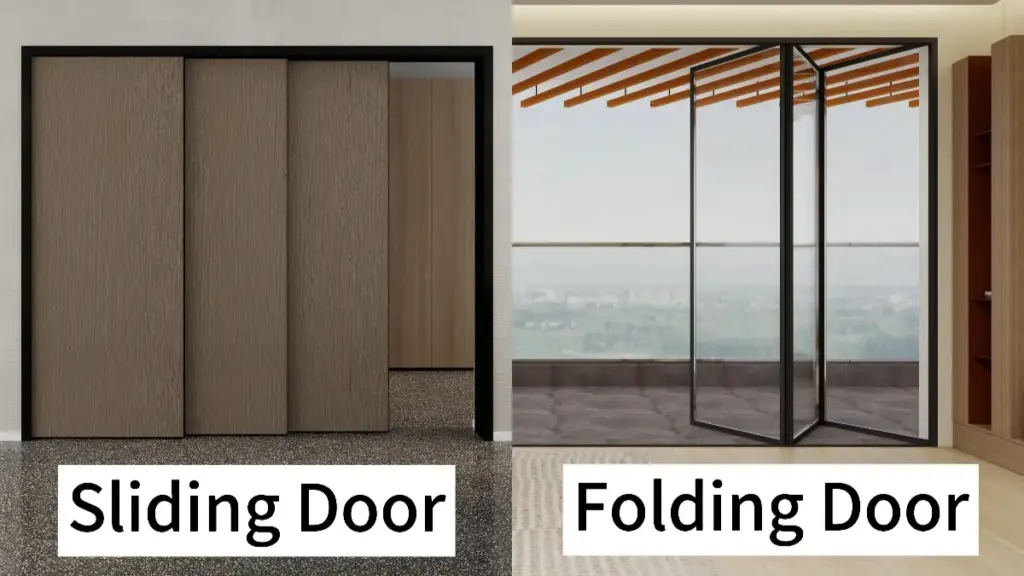
विशिष्टताओं में गोता लगाने से पहले, let’s quickly review what sets sliding and folding doors apart.
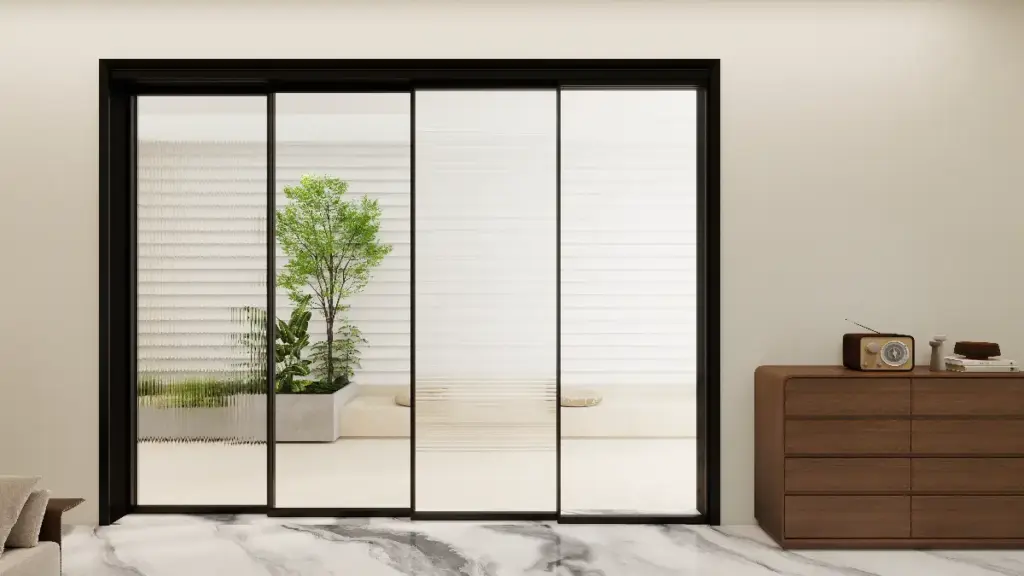
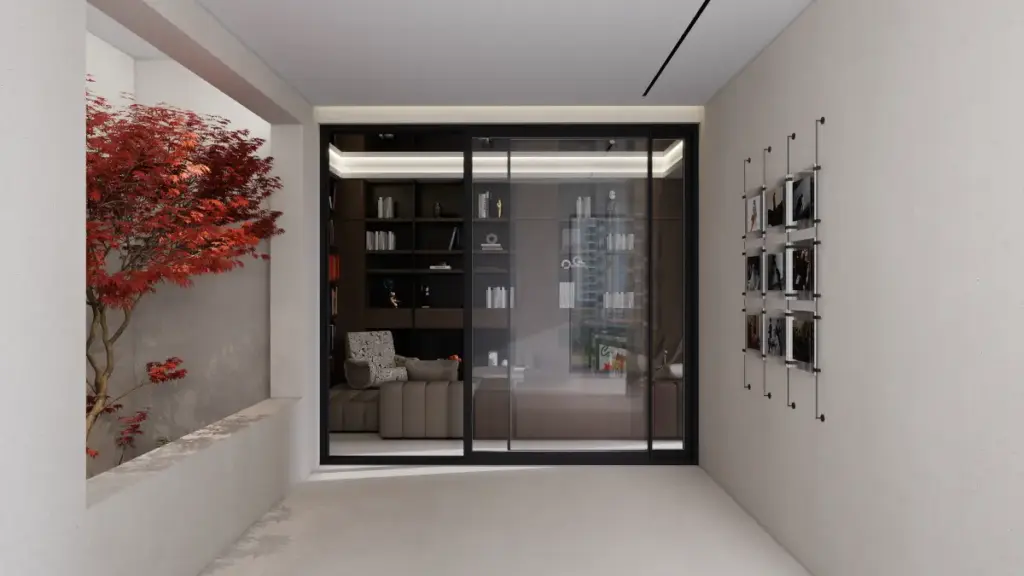
फिसलते दरवाज़े are known for their simple, elegant design. They move along a track, allowing the door to glide smoothly in one direction. They’re often used for patios, बालकनियों, or large windows where you want to create a seamless connection between indoor and outdoor spaces. The appeal lies in their space-saving design, as they don’t require extra room for the door to swing open.
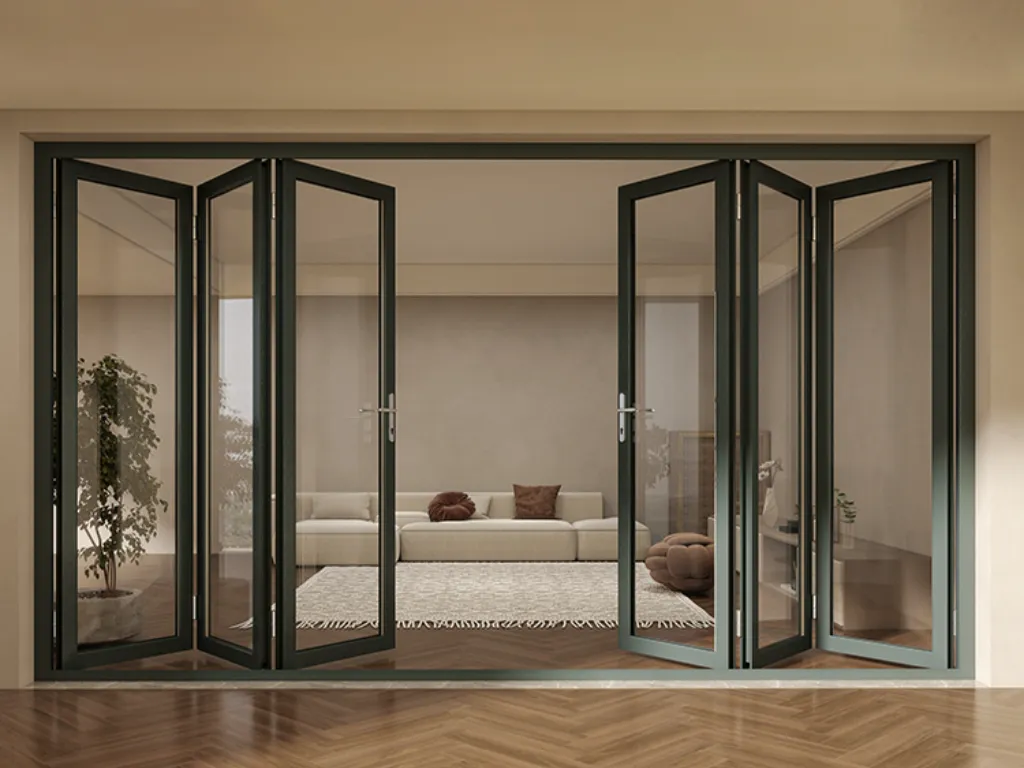
फोल्डिंग दरवाज़े, open by folding in sections, much like an accordion. These doors are particularly popular in spaces where a large opening is needed, such as patios, रहने वाले कमरे, or even commercial spaces. Folding doors provide a dramatic effect by opening up the entire width of the space, making them perfect for connecting interiors with exterior spaces like gardens or courtyards.
Cost vs. Profit: the Financials of Sliding and Folding Doors
When evaluating sliding and folding doors, cost and profit are key considerations, as they can fluctuate significantly based on factors like size, सामग्री, and system complexity.
Cost Breakdown
For sliding doors, the cost typically ranges from $500–$1,500 per linear foot for standard models, with more advanced lift-and-slide systems pushing that number higher to $1,500–$2,500. Installation costs are generally between $15–$30 per square foot. These costs make sliding doors a more affordable choice for many projects, especially for standard applications.
वहीं दूसरी ओर, folding doors generally come at a higher price tag, with material costs starting from $1,500–$2,000 per linear foot and premium models reaching over $3,500 प्रति रैखिक पैर. Installation costs also tend to be higher, ranging from $25–$40 per square foot. तथापि, these doors offer more flexibility in terms of design and can create a larger opening than sliding doors, which can justify the higher price in certain cases.
Profit Margins
From a reseller’s perspective, both sliding and folding doors offer substantial profit margins. Gross margins for mid-to-high-end systems generally range from 25% को 40%. अधिमूल्य, design-driven systems tend to achieve margins in the 30-35% range. Sliding doors often provide slightly better margins due to their lower purchase cost—15-20% cheaper than folding doors. इसके अतिरिक्त, sliding doors are easier and quicker to install, reducing installation risks and callbacks. This streamlined process makes sliding doors a more attractive option for resellers looking to maximize profits while minimizing installation challenges.
Elevate Your Projects with OPUOMEN Aluminum Doors
प्रदर्शन तुलना
हवा में जकड़न
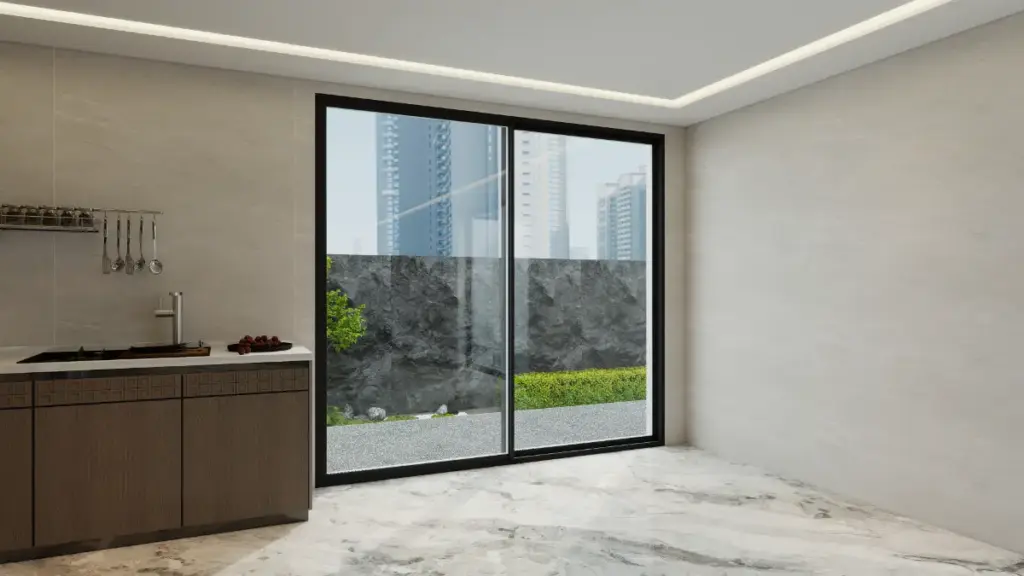
फिसलते दरवाज़े, especially high-quality lift-and-slide systems, typically offer superior air tightness compared to folding doors. This is because sliding systems generally feature fewer panels and seals, which minimizes the potential for air leakage.
फोल्डिंग दरवाज़े, with their multiple panels and gaskets, tend to have more joints, which can lead to minor air leakage. तथापि, premium bi-fold systems, when designed and installed correctly, can still meet stringent air tightness standards, sometimes even achieving Passivhaus certifications—a high benchmark for airtightness in energy-efficient buildings.
For projects with strict air infiltration requirements or those aiming for high-performance building envelopes, sliding systems are often the better choice. अभी तक, with the right engineering, folding doors can also meet demanding air tightness specifications.
पानी की जकड़न
The water tightness of a system largely depends on the threshold design and drainage efficiency. Sliding doors with flat, flush tracks can be more vulnerable to water ingress, especially at the bottom. To mitigate this, they often require overhangs, weep systems, and robust seals.
वहीं दूसरी ओर, folding doors can also face water entry risks, particularly with barrier-free thresholds. They need weep holes, raised thresholds, and good external drainage to prevent water infiltration. High-performance systems designed for harsh climates use non-flush thresholds and strong seals to better manage water.
Hardware’s Role in Longevity and Maintenance
Key Factors for Durability
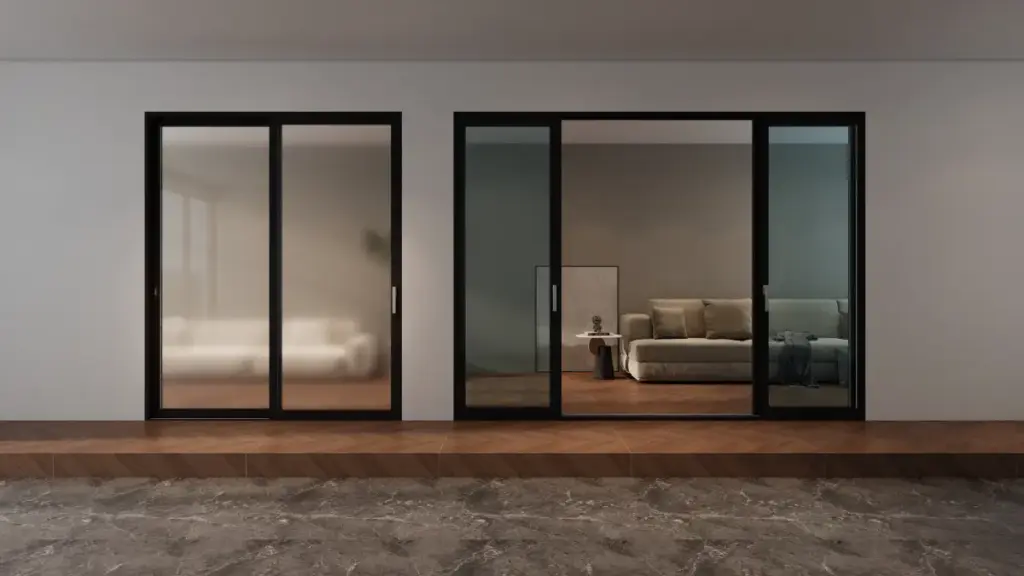
The longevity and maintenance requirements of door systems are largely influenced by hardware components such as rollers, tracks, टिका, pivots, locking gear, and seals. High-quality hardware, when installed correctly, ensures 20-45+ years of reliable service. इसके विपरीत, poor-quality or mis-specified hardware can significantly reduce the lifespan, especially in harsh environments like coastal areas or high-traffic settings.
रखरखाव and Service Life of Different Door Systems
- फिसलते दरवाज़े: With proper maintenance, sliding patio doors can last around 30 साल, reaching up to 50-60 years with premium hardware. Maintenance involves regular track cleaning, roller inspection, and lubrication due to their simpler hardware setup.
- फोल्डिंग दरवाज़े: Aluminum folding doors typically last up to 45 साल, while uPVC bifolds have an expected lifespan of 25-35 साल. These systems require more frequent maintenance to ensure alignment and smooth operation, as multiple hinges, carriers, and locking points are involved. Automatic folding doors need servicing every 3-6 months.
Material and Lifecycle Cost
Hardware wear can accelerate due to the deformation of frame materials such as aluminum, यूपीवीसी, या लकड़ी, caused by thermal or moisture changes. While higher-quality hardware and proper installation come at a higher upfront cost, they reduce unplanned repairs, extend replacement intervals, and lower total lifecycle costs. Prioritize factors like tested cycle life and environment ratings over initial price to ensure long-term value.
स्थापना जटिलता
When considering installation, both sliding and folding doors require professional help, especially for larger projects, but they differ significantly in complexity.
Installation Time and Expertise
Sliding doors are generally simpler and quicker to install, typically requiring just 1-3 days for standard sizes. The process involves securing tracks, adjusting rollers, and ensuring smooth operation. For smaller projects, some DIY enthusiasts can manage the installation with minimal professional assistance. For an in-depth guide on best practices, हमारा संदर्भ लें installation guide for large-span aluminum sliding doors.
फोल्डिंग दरवाज़े, तथापि, are more labor-intensive. Due to their complex mechanisms and heavier panels, installation can take 2-5 days. Aligning the multiple panels and ensuring they fold and stack correctly requires specialized knowledge and precision, making it a more expert-demanding choice.
| पहलू | फोल्डिंग दरवाज़े | फिसलते दरवाज़े |
|---|---|---|
| Professional Need | Almost always required | Recommended, DIY possible for basics |
| Timeline | 2-5 days | 1-3 days |
| Tools/Expertise | Specialized for tracks, टिका | Standard carpentry |
| लागत (Install) | $25–$40 per sq ft | $15–$30 per sq ft |
Structural Considerations
Folding doors place a significant load on headers and ceilings, often needing structural reinforcements like strengthened beams. Insufficient support can lead to failure, particularly in large spans or retrofitted projects. फिसलते दरवाज़े, वहीं दूसरी ओर, typically require fewer structural adjustments, mainly focusing on stable foundations and proper drainage.
Both systems should undergo pre-installation checks, but folding doors may need more extensive modifications to ensure proper functionality.
Aesthetic Appeal and Design Flexibility
Visual Design and Architectural Language
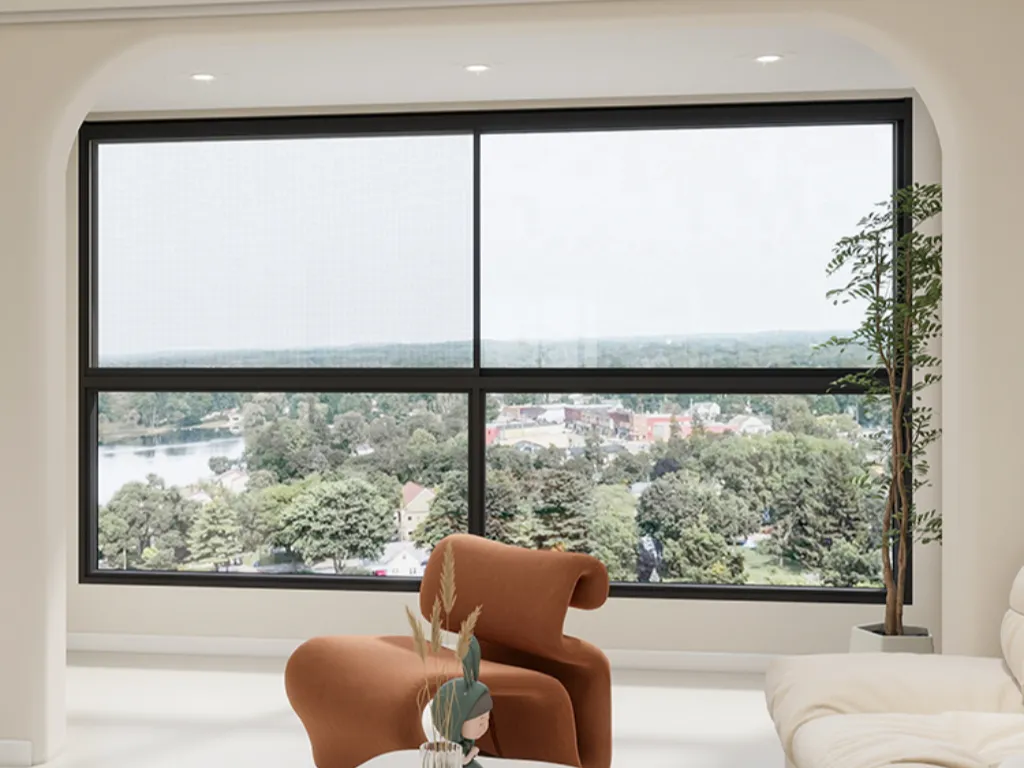
Sliding doors create a seamless visual connection between interior and exterior spaces. Their large glass panels and slim sightlines emphasize a minimalist aesthetic, enhancing landscape views with minimal visual interruption. The clean, planar façade of sliding systems aligns well with modern architecture, एक चिकना पेशकश, unobstructed look.
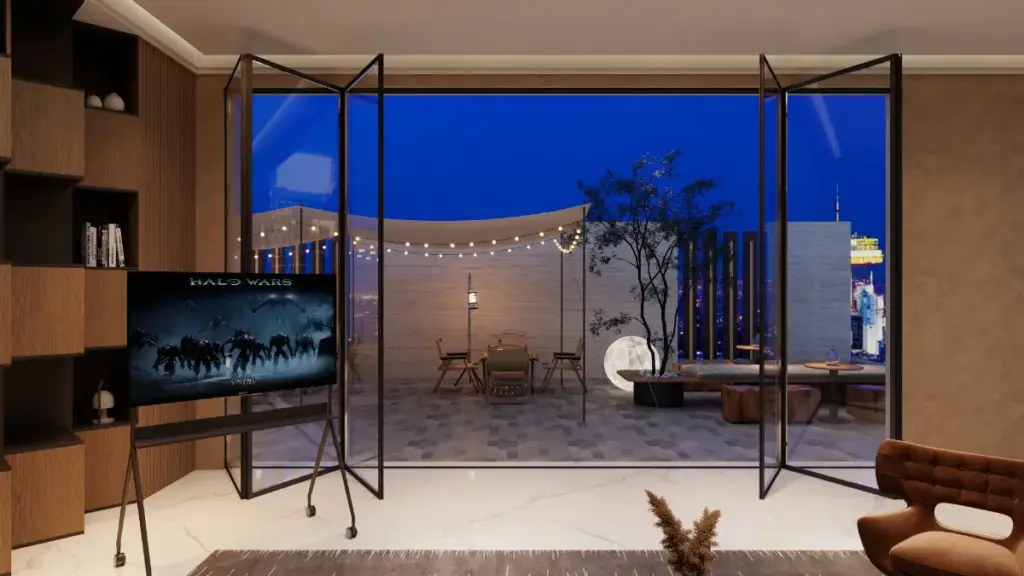
फोल्डिंग दरवाज़े, वहीं दूसरी ओर, introduce more vertical mullions and hinges, which can disrupt the view when closed. तथापि, when opened, they provide a “wall-less” प्रभाव, maximizing the opening and creating an engaging indoor-outdoor connection. This dynamic visual appeal is perfect for spaces where flow and openness are prioritized.
Space Flow and Usage
Folding doors open nearly the full width of a space, making them ideal for areas that require large openings, like pool terraces or restaurant fronts. Their ability to create an unobstructed aperture enhances functional flow during events. इसके विपरीत, sliding doors always retain at least one panel, offering a slightly smaller clear opening.
Both systems can feature low or recessed thresholds, providing barrier-free transitions for smooth flow between indoor and outdoor spaces. Sliding doors also take up less floor area, supporting flexible furniture arrangements and efficient space use.
User Interaction and Operational Patterns
Sliding doors are easy to operate for frequent partial openings and require minimal effort. They suit spaces where ventilation and control over opening size are needed. Folding doors excel in transforming a closed façade into a large opening, ideal for event-mode use.
अंतिम विचार
Both sliding and folding doors offer distinct benefits, but selecting the right system depends on your specific needs and project goals. Sliding doors provide a cost-effective, low-maintenance solution with sleek aesthetics and excellent air-tightness. इसके विपरीत, folding doors excel in creating dramatic, open spaces for high-end projects. For resellers, sliding doors offer faster sales and better margins, while folding doors can differentiate offerings in premium markets.
पर ओपूओ, we specialize in high-quality door systems that deliver both functionality and design flexibility. Contact us today to find the perfect customization solutions for your next project!
अक्सर पूछे जाने वाले प्रश्नों
Which system is generally easier for a homeowner to operate and maintain?
Sliding doors are generally easier to operate and maintain than folding doors. Sliding doors typically use simpler track-based mechanisms with fewer moving parts and hinges. This reduces the need for adjustments and cleaning compared to folding (bifold) दरवाजे, which have multiple panels, टिका, and stacking requirements that can accumulate dirt and wear over time.
How does the frame profile thickness differ when comparing both systems?
Frame profile thickness varies; folding doors often use thicker or more reinforced profiles for strength, while sliding doors can accommodate slimmer frames. Aluminum profiles for both range from 1.0-3.0 मिमी. Folding doors require stronger frames (जैसे, 1.6-2.5 mm with reinforcements) to support multiple panels and wind loads, whereas sliding doors suit thinner profiles (1.2-1.6 मिमी) for residences. While slim sightline bifold systems minimize visible frame width, the overall structure remains robust. Sliding doors prioritize frame-to-glass ratios under 12-20% with less emphasis on panel multiplicity.
What is the typical price difference for security hardware on folding doors versus sliding doors?
Security hardware for sliding doors is generally less expensive. Folding doors require pricier multipoint locks, reinforced hinges, and handles for multiple panels, potentially increasing the overall system cost by 20-30%. Sliding doors use simpler single-point or basic multipoint hardware. While no exact numeric difference is specified, the initial investment for folding systems typically exceeds sliding for equivalent openings.
Can both systems be adapted for use in sunroom or conservatory structures?
Both sliding and folding door systems can be adapted for sunrooms or conservatories. Sliding doors work well for standard wide spans with minimal intrusion. Folding doors excel at maximizing openings, providing 80-90% clear space with 4-6 panels for light-filled structures, provided profiles match local wind and glazing needs. Larger folding configurations might require thicker glass and reinforcements, similar to sliding limits.