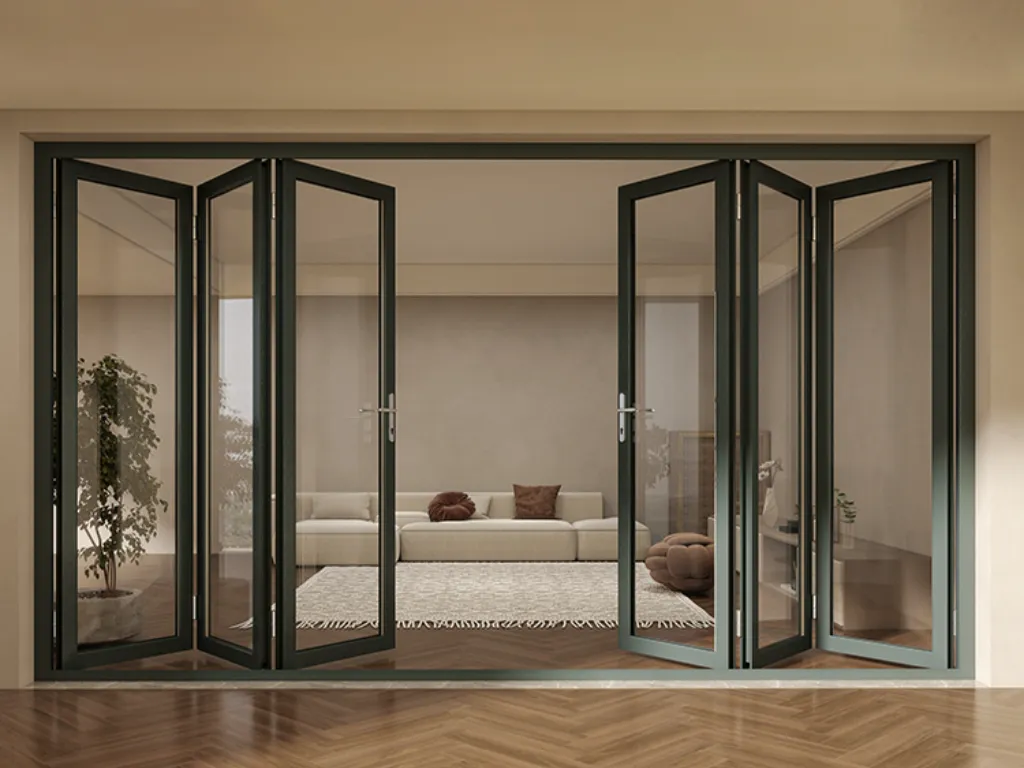
A escolha do material da janela impacta diretamente o desempenho e a relação custo-benefício de qualquer projeto de construção. Dois dos materiais mais comuns, fibra de vidro e alumínio, cada um oferece benefícios exclusivos.
Este artigo se aprofunda em uma comparação detalhada dessas duas opções, cobrindo aspectos críticos como eficiência térmica, resistência estrutural, e custos do ciclo de vida. Você descobrirá como a fibra de vidro fornece isolamento superior com fatores U tão baixos quanto 0.15, enquanto o maior módulo de elasticidade do alumínio oferece vantagens para grandes vãos. No final, você estará preparado para tomar uma decisão informada que equilibre eficiência energética com durabilidade a longo prazo.
O que são janelas de fibra de vidro?
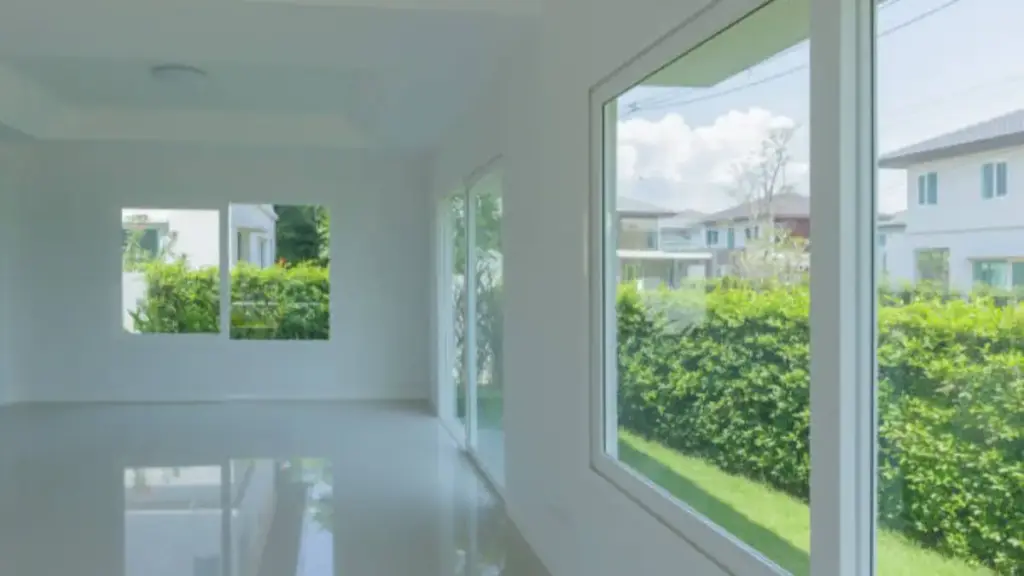
As janelas de fibra de vidro são construídas a partir de caixilhos pultrudados, que integram fibras de vidro contínuas dentro de uma resina polimérica. Esta combinação oferece um peso leve, material durável que se destaca em eficiência energética e resistência às intempéries. A fibra de vidro é a escolha ideal para projetos que exigem forte, janelas de baixa manutenção com excelente desempenho térmico.
Principais recursos:
- Eficiência energética: Baixa condutividade térmica, melhorando o isolamento.
- Durabilidade: Resiste à umidade, flutuações de temperatura, e corrosão.
- Design fino: Permite armações mais estreitas sem sacrificar a resistência.
- Baixa manutenção: Requer manutenção mínima devido às suas propriedades resistentes.
- Longa vida útil: Fornece desempenho estendido em uma variedade de climas.
O que são janelas de alumínio?
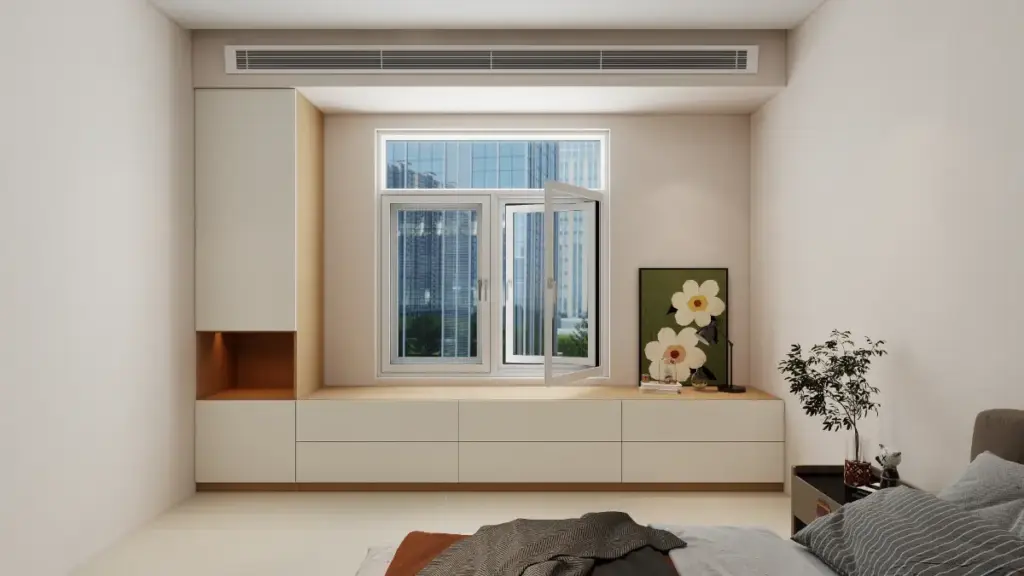
As janelas de alumínio são conhecidas pela sua excepcional durabilidade e flexibilidade de design. Fabricado em molduras de alumínio extrudado, essas janelas são leves, mas fortes, oferecendo uma alta relação resistência/peso que permite áreas de vidro maiores e perfis mais finos. As janelas de alumínio são uma escolha popular para arquitetura moderna e comercial devido à sua aparência elegante, resistência à corrosão, e desempenho duradouro.
Principais recursos:
- Durabilidade: Resistente à corrosão e condições climáticas extremas.
- Flexibilidade de projeto: Permite grandes, perfis finos com amplas áreas de vidro.
- Eficiência energética: Pode alcançar alto desempenho térmico quando combinado com rupturas térmicas.
- Baixa manutenção: Requer manutenção mínima devido às suas propriedades resistentes à corrosão.
- Longa vida útil: Fornece desempenho confiável por 30 a 50 anos com cuidado adequado.
Eficiência Térmica
O fator U mede a transferência de calor, com valores mais baixos indicando melhor isolamento. A ‘janela inteira’ O fator U é responsável pelo desempenho térmico combinado do quadro, vidro, e efeitos de borda, fornecendo uma avaliação completa da eficiência energética.
As janelas de fibra de vidro superam o alumínio em eficiência térmica devido à sua condutividade térmica significativamente menor. A fibra de vidro pultrudada tem aproximadamente 500 vezes menos condutivo que o alumínio, o que significa que fornece naturalmente isolamento superior. Por exemplo, uma janela de alumínio de painel único normalmente tem um alto valor U de cerca de 1.25 Btu/h·ft²·°F, Considerando que as molduras de fibra de vidro e de madeira podem reduzir o valor U de toda a janela em cerca de 50% quando usado em sistemas de painel duplo.
Molduras de fibra de vidro de alto desempenho com vidro triplo podem atingir fatores U tão baixos quanto 0.25, oferecendo eficiência térmica excepcional (equivalente a R ≈ 4). Em contraste, esquadrias de alumínio, mesmo com rupturas térmicas, requerem engenharia adicional para alcançar desempenho térmico semelhante, tornando a fibra de vidro uma opção mais eficiente em termos energéticos para projetos que priorizam o isolamento.
Janelas de alumínio projetadas por sistema para desempenho máximo
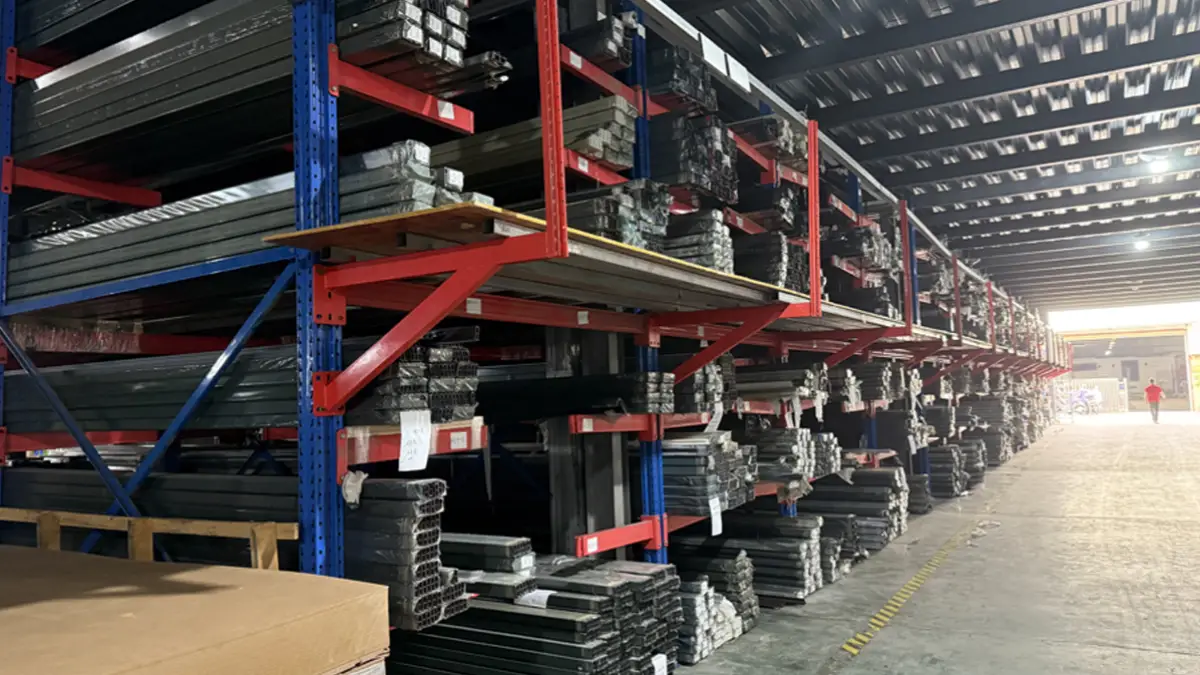
Desempenho Estrutural
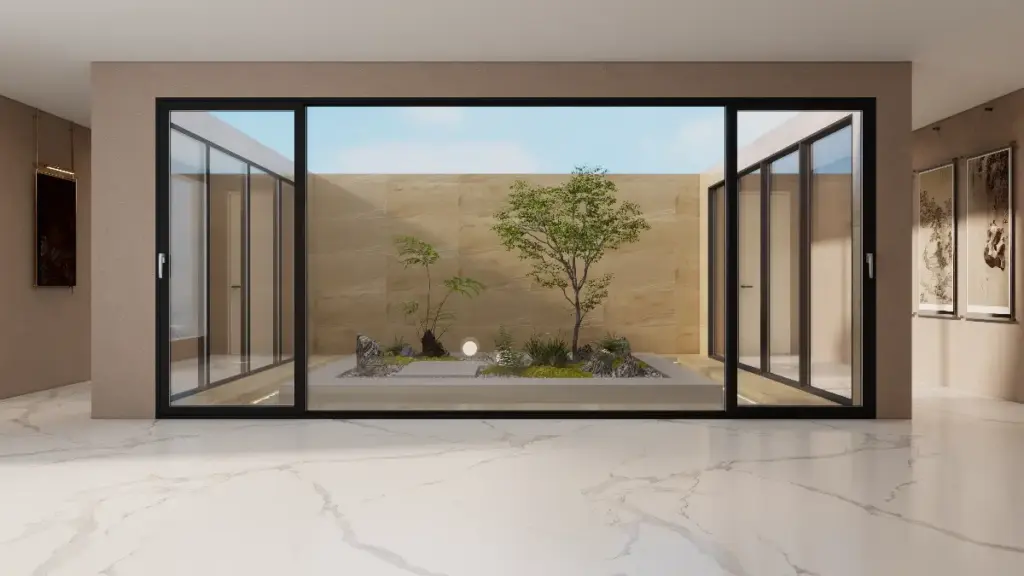
Rigidez e capacidade de carga
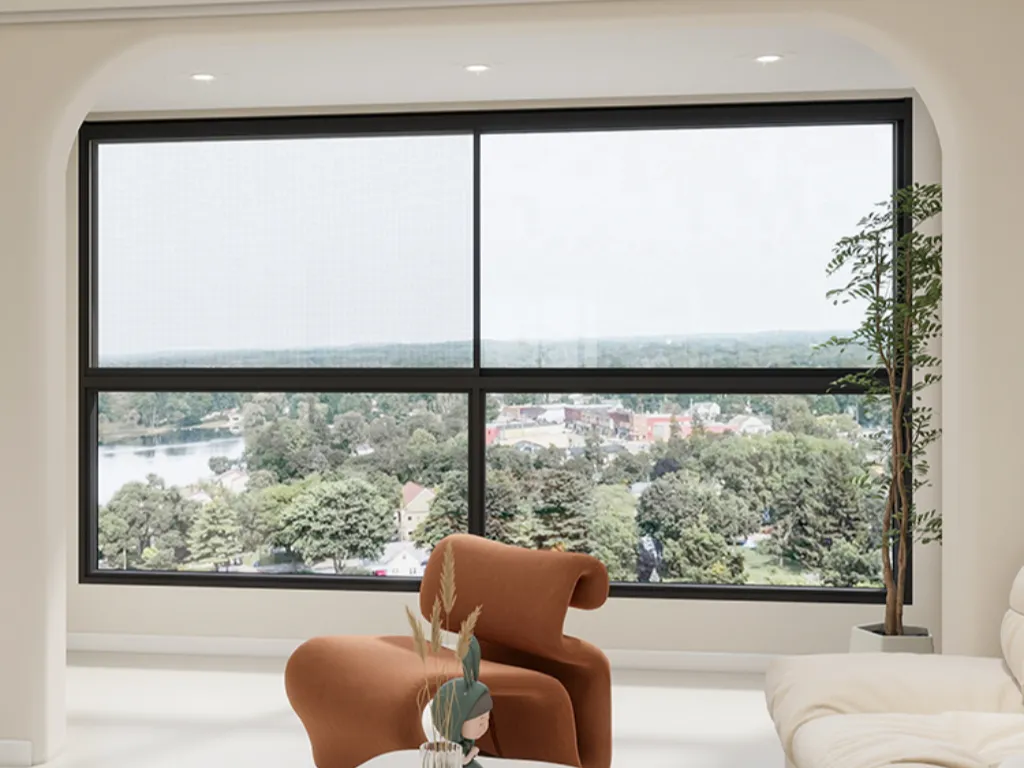
As armações de alumínio oferecem rigidez superior com um módulo de elasticidade de cerca de 69 GPa, tornando-os ideais para grandes vãos e aplicações de alta carga. Esta maior rigidez garante que o alumínio possa suportar cargas extremas, tornando-o a melhor escolha para edifícios comerciais e altos. Embora a fibra de vidro tenha um módulo menor, compensa com uma maior relação resistência-peso, tornando-o adequado para aplicações menos exigentes.
Espessura do perfil e flexibilidade de design
A rigidez inerente do alumínio permite a criação de perfis mais finos, o que é crucial para projetos arquitetônicos que exigem maiores áreas envidraçadas. No entanto, a alta condutividade térmica do alumínio exige perfis multicâmaras e rupturas térmicas para alcançar eficiência energética. Fibra de vidro, por outro lado, requer menos rupturas térmicas, permitindo estruturas mais finas, mantendo uma forte integridade estrutural.
Adequação da aplicação
O alumínio é preferido para projetos que envolvam grandes vãos, cargas de vento forte, ou sistemas de envidraçamento pesados, como fachadas comerciais ou residenciais. A fibra de vidro é mais adequada para aplicações residenciais ou comerciais leves, onde a eficiência energética e a durabilidade em climas variados são as principais considerações.
Flexibilidade de design e cores
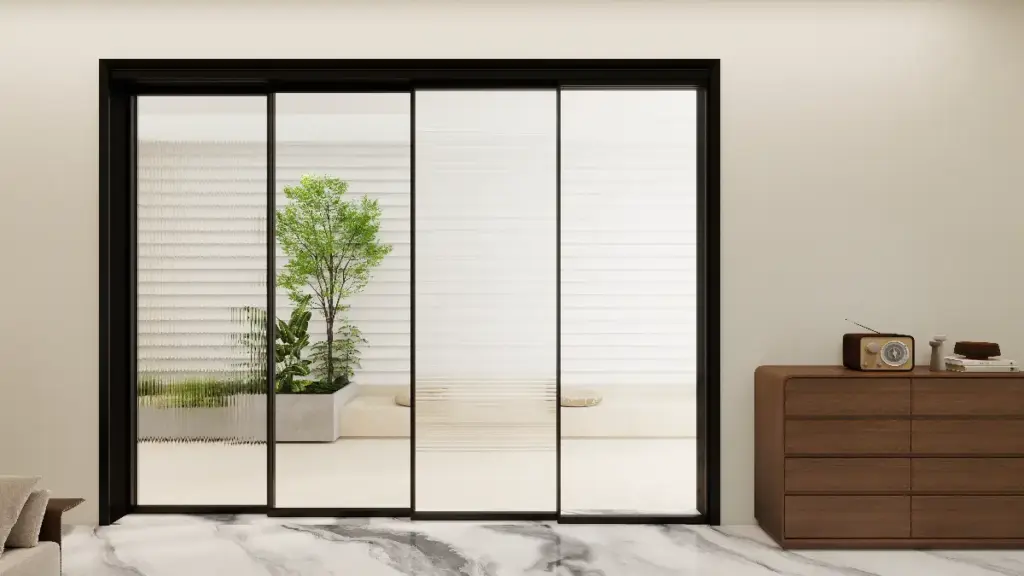
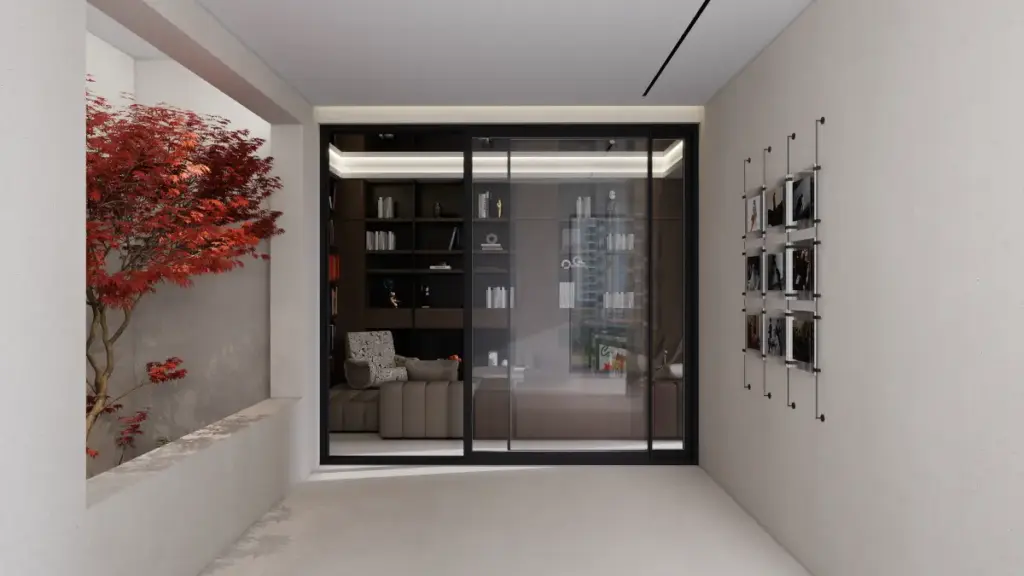
As janelas de alumínio oferecem excepcional flexibilidade de design com extrusão precisa de ligas como 6063, que permite perfis complexos e uma ampla gama de opções de personalização. As principais opções incluem:
Forma e configuração: Formas de moldura personalizáveis, incluindo fixo, caixilho, deslizando, e designs tilt-turn, com grandes lites fixos até 60 pés quadrados.
Larguras do perfil: Disponível de 55 mm a 120 mm, acomodando vários requisitos de design.
Paleta de cores: Escolha entre uma vasta gama de cores, incluindo preto, antracite, bronze, prata, off white, e creme.
Acabamentos: Revestimento em pó avançado e acabamentos anodizados garantem durabilidade e resistência ao desbotamento, coçando, e intemperismo. As opções incluem fosco, lustroso, e acabamentos texturizados.
Opções de vidro: Vidros duplos ou triplos, revestimentos de baixa emissividade, e preenchimento de gás argônio para maior eficiência energética.
Longevidade e Manutenção
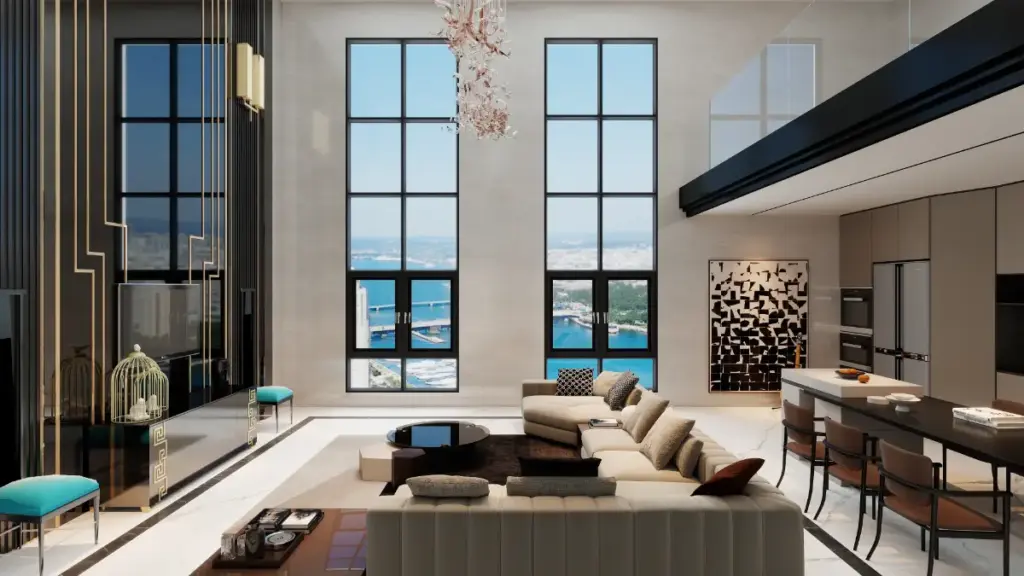
Durabilidade e Manutenção
As janelas de alumínio são altamente duráveis, oferecendo uma vida útil de 15-30 anos, com manutenção adequada. Embora o alumínio seja resistente ao desgaste, é mais suscetível à corrosão, especialmente em áreas costeiras ou ambientes com alta umidade. Manutenção regular é necessário para evitar a degradação do acabamento, particularmente na forma de arranhões ou lascas, que pode expor o metal à umidade. Para manter sua aparência e longevidade, janelas de alumínio geralmente precisam de retoques periódicos.
Em contraste, janelas de fibra de vidro são praticamente isentas de manutenção, com resistência superior à corrosão, Danos UV, e deformação, garantindo desempenho de longo prazo com manutenção mínima.
Análise de custos do ciclo de vida
Embora as janelas de fibra de vidro tenham uma 15-30% custo inicial mais alto, sua durabilidade, eficiência energética, e a baixa manutenção levam a menores custos gerais do ciclo de vida. A fibra de vidro é mais do que 100% mais eficiente termicamente que o alumínio, o que se traduz em economia de energia e redução da necessidade de reparos, tornando-o uma opção econômica em relação 20-30 anos.
Seleção de Projetos: O ambiente ideal para cada material
Com base na comparação acima, resumimos os pontos principais da tabela para ajudar a orientar sua decisão:
| Propriedade | Janelas de fibra de vidro | Janelas de alumínio |
|---|---|---|
| Condutividade térmica | 500 vezes menos condutivo que o alumínio, habilitando >100% melhor eficiência térmica. | Altamente condutivo, requer rupturas térmicas projetadas para mitigar a transferência de calor. |
| Faixa de temperatura | Suporta -40°F a 350°F sem fragilidade ou amolecimento. | Suscetível a pontes térmicas; freios projetados necessários para estabilidade em climas frios. |
| Vida útil | 50-80 anos. | 20-50 anos (requer manutenção e revestimentos). |
| Expansão térmica | Expande/contrai a uma taxa quase idêntica à do vidro, reduzindo o estresse da vedação. | Alta expansão térmica, requer pausas projetadas para mitigar. |
| Padrões/Acabamentos | Usa pultrusão e cobertura acrílica para maior durabilidade. | Acabamentos validados para AAMA 2605 para UV alto, resistência ao desbotamento/giz. |
| Resistência ao impacto/granizo | Resiste ao impacto normal, mas pode lascar sob forte granizo. | Oferece resistência superior a amolgadelas em áreas propensas a granizo. |
| Desempenho de valor U | Condutividade inerentemente mais baixa, alcança excelentes valores U em toda a janela. | Alcança excelentes valores U em toda a janela com vidro isolado/rupturas térmicas projetadas. |
| Especificações estruturais | Alta relação resistência-peso, suporta molduras finas/vidro expansivo. | Mais pesado, precisa de hardware robusto; frequentemente escolhido para carga/rigidez estrutural. |
Escolha janelas de fibra de vidro:
- Para eficiência energética, com isolamento térmico superior e valores U mais baixos.
- Em climas extremos, de temperaturas frias a quentes, como a fibra de vidro resiste a uma ampla gama.
- Quando a longevidade e a manutenção mínima são prioridades, com uma vida útil de 50-80 anos.
- Para aplicações residenciais ou comerciais leves onde a durabilidade e a economia de energia são fundamentais.
- Para projetos que exigem resistência estrutural, como áreas de vento forte ou de alto impacto (Por exemplo, zonas propensas a granizo).
- Quando você precisa de grandes áreas envidraçadas e perfis finos, ideal para ambientes comerciais ou urbanos.
- Para aplicações onde a flexibilidade de design e a variedade estética são essenciais, com uma ampla gama de opções de cores e acabamentos.
Considerações Finais
Para concluir, a escolha entre janelas de fibra de vidro e alumínio depende do equilíbrio entre desempenho térmico e necessidades estruturais. Fibra de vidro se destaca em eficiência energética, longevidade, e manutenção mínima, tornando-o ideal para projetos com consciência energética. Por outro lado, o alumínio oferece flexibilidade e resistência ao design, especialmente para grandes vãos e áreas de alto impacto.
Para soluções personalizadas, OPUOMEN fornece sistemas de janelas de alto desempenho que combinam durabilidade, eficiência energética, e opções personalizáveis. Quer você priorize o isolamento ou o design, Opuo pode ajudá-lo a selecionar a melhor solução de janela para o seu projeto, garantindo valor e sustentabilidade a longo prazo.
Perguntas frequentes
A fibra de vidro mantém sua integridade estrutural melhor do que o alumínio em condições de calor extremo??
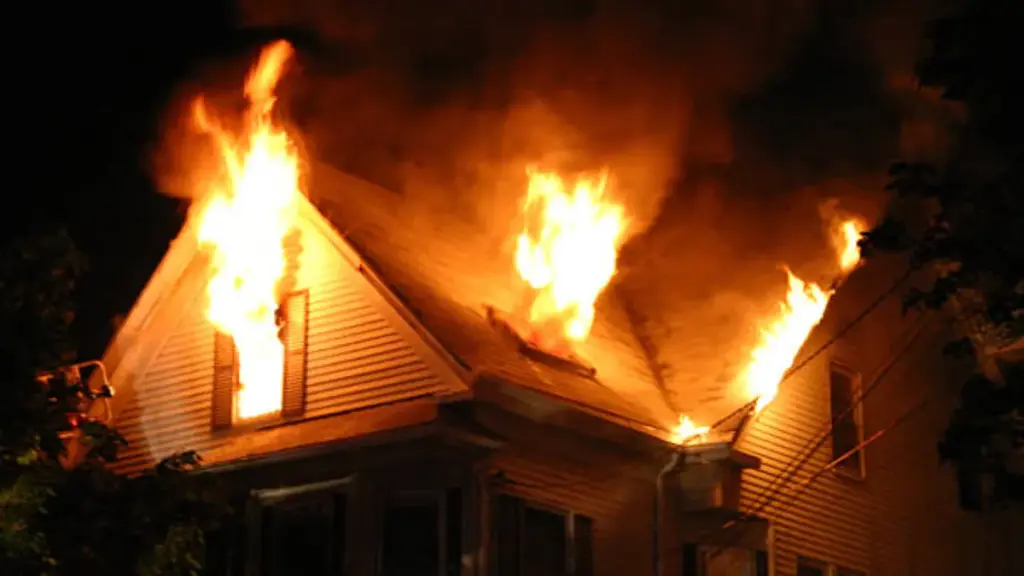
Sim. As esquadrias de fibra de vidro pultrudadas mantêm a integridade estrutural de aproximadamente -40°F a cerca de 350°F (≈175°C) sem perda de rigidez ou deformação significativa. Esquadrias de alumínio, em contraste, amolecem e perdem resistência rapidamente quando as temperaturas do metal se aproximam de ~400–500°F (≈200–260°C) devido a um ponto de fusão mais baixo e uma queda acentuada no limite de escoamento com o calor. A fibra de vidro permanece dimensionalmente estável em exposições típicas de “calor extremo” em edifícios, manutenção de selos, enquanto o alumínio depende de rupturas térmicas e é mais propenso à condução de calor, incompatibilidade de expansão, e perda de desempenho energético em vez de falha estrutural total.
Quais são as limitações quanto ao tamanho das janelas operáveis de fibra de vidro?
Janelas operáveis de fibra de vidro, como tipos de caixilho e funil, têm tamanhos máximos típicos. As janelas de batente são geralmente limitadas a 4′-5″ largura x 7′-4″ altura (32.29 pés quadrados ou 3.0 m²), e janelas da tremonha para 3′-8″ largura x 6′-7″ altura (23.68 pés quadrados ou 2.2 m²), com base nas especificações de janelas de fibra de vidro certificadas pela Passive House.
Como é normalmente acabada a superfície das janelas de fibra de vidro para projetos B2B?
Para projetos B2B comerciais e multifamiliares, As esquadrias de fibra de vidro pultrudadas geralmente são acabadas de fábrica com um sistema de revestimento acrílico ou acrílico-uretano. Esses revestimentos são testados e certificados pela AAMA 613 (agora 613/615) padrões para revestimentos orgânicos em fibra de vidro. Eles normalmente são assados, Estável aos raios UV, acabamentos à base de água ou à base de solvente projetados para não rachar ou descascar, geralmente em cores de brilho médio, com uma paleta padrão limitada e cores personalizadas opcionais disponíveis.
Qual é a diferença de custo entre fibra de vidro e alumínio com ruptura térmica?
Fontes da indústria indicam que as esquadrias de fibra de vidro são normalmente cerca de 15 a 30% mais caras do que as esquadrias de alumínio comparáveis., mesmo quando o alumínio inclui uma ruptura térmica. Exemplos de custos instalados mostram que unidades de alumínio preto podem custar várias centenas de dólares a menos por abertura do que fibra de vidro para o mesmo tamanho e configuração, posicionamento de alumínio (incluindo sistemas termicamente quebrados) como a opção de menor custo inicial.