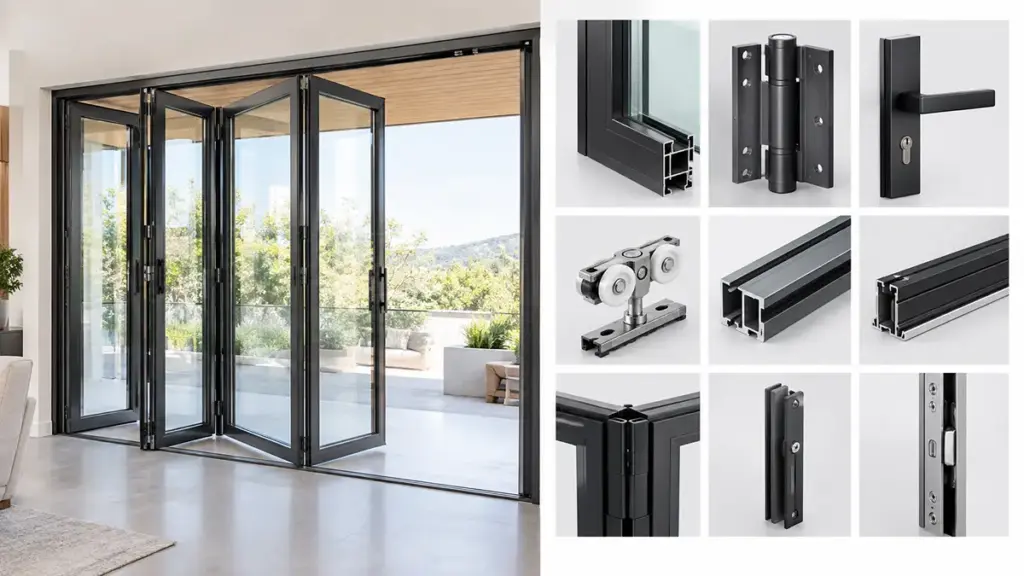
L'approvisionnement en portes battantes en aluminium est souvent confronté à une complexité technique, risquer des réclamations de garantie importantes et des défaillances opérationnelles dues à des fuites prématurées ou à un affaissement structurel.
Ce guide examine les spécifications de base telles que l'épaisseur du profil structurel, technologie à rupture de pont thermique pour des performances de facteur U, et des indices d'infiltration d'air/eau validés pour garantir une robustesse, résultats conformes.
Facteurs clés lors de la sélection d’une porte battante en aluminium
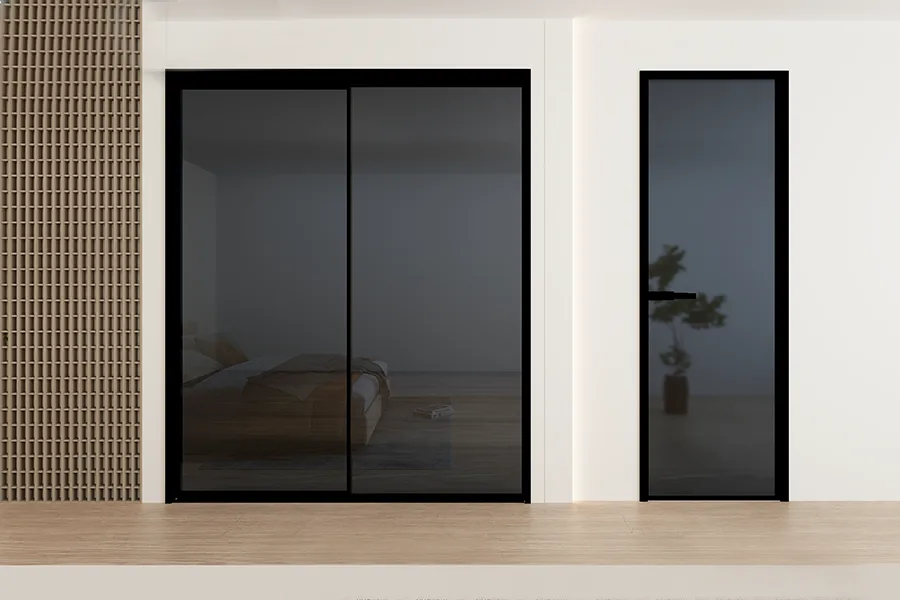
Le choix d’une porte battante en aluminium exige un équilibre de performances, conception, et durabilité avec une installation solide et le soutien du fournisseur pour une valeur durable.
Éléments de performance et de conception de base
Les profilés en aluminium de qualité architecturale sont largement utilisés car ils offrent un excellent rapport résistance/poids, résister à la déformation, et maintenir une stabilité dimensionnelle à long terme. Pour assurer la durabilité en milieu côtier, humide, ou environnements difficiles, les profils doivent présenter des finitions anodisées ou thermolaquées de haute qualité qui protègent contre la corrosion, Exposition aux UV, et détérioration de la surface.
L'efficacité énergétique est fortement influencée par la conception des profilés. Systèmes à rupture de pont thermique, souvent appelées structures de « pont brisé », réduire le transfert de chaleur entre les surfaces intérieures et extérieures, améliorant les performances d'isolation et aidant à atteindre des valeurs de facteur U plus faibles. Combiné avec des unités de verre isolantes à double vitrage et des systèmes de joints continus, ces conceptions améliorent également l'isolation acoustique et le confort intérieur.
La résistance aux intempéries dépend de l'interaction entre le cadre, ceinture, et composants d'étanchéité. Joints multicouches en EPDM ou en caoutchouc, tolérances de fabrication de précision, et des systèmes de drainage optimisés contribuent à améliorer l'étanchéité à l'air, résistance à l'eau, et la fiabilité opérationnelle globale. Tests de performances indépendants, y compris ASTM E283 pour l'infiltration d'air et ASTM E331 pour la pénétration de l'eau, fournit une vérification objective de ces capacités.
La qualité du matériel est tout aussi importante. Systèmes de verrouillage multipoints, charnières robustes, poignées, et les composants de support contribuent à la sécurité, bon fonctionnement, et durabilité à long terme. Des portes battantes en aluminium bien conçues offrent également des lignes de visibilité fines qui maximisent la surface vitrée tout en offrant de nombreuses options de personnalisation en termes de taille, finition, et la couleur.
Qualité d'installation, Fiabilité des fournisseurs, et valeur du cycle de vie
Même le système de porte le plus performant peut échouer si la qualité de l'installation est mauvaise.. Une installation correcte garantit l'alignement du cadre, étanchéité aux intempéries, performances de drainage, et bon fonctionnement des composants mobiles. Après l'installation, les inspections de qualité doivent vérifier l’intégrité du verre, fonctionnalité matérielle, alignement du châssis, et performances de verrouillage.
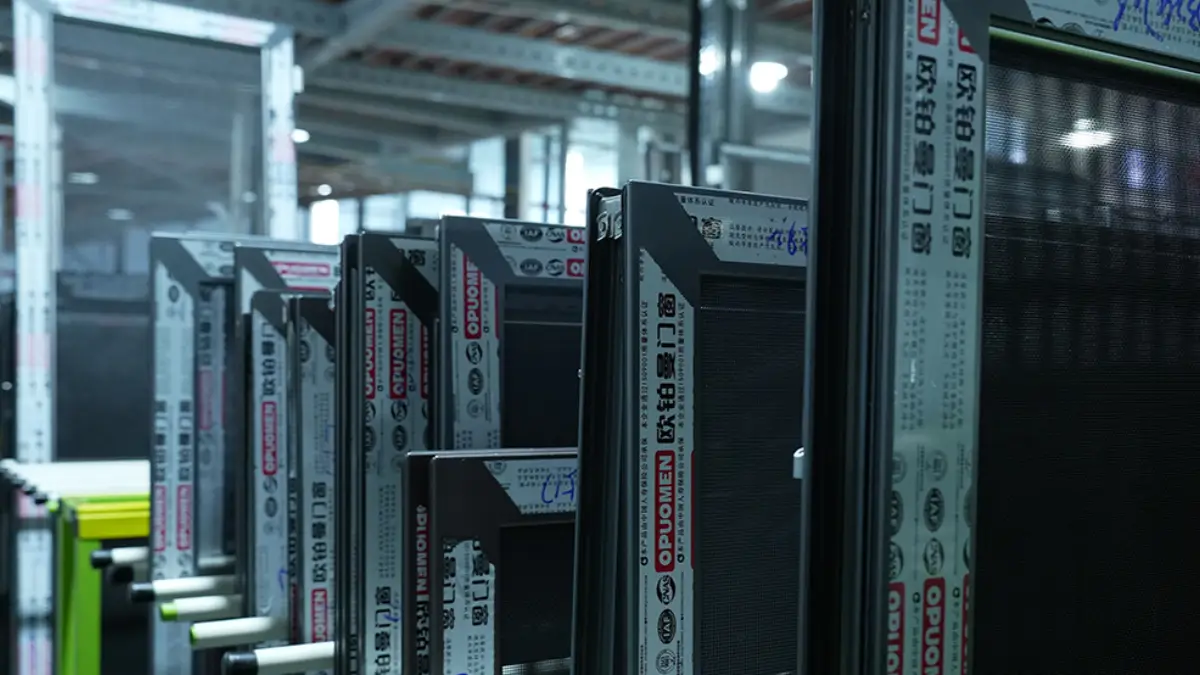
La sélection des fournisseurs joue un rôle important dans la réussite du projet à long terme. Les fabricants réputés maintiennent une composition d’alliage constante, tolérances de production précises, et conformité documentée aux normes internationales en matière de performances structurelles, fuite d'air, pénétration de l'eau, et résistance au vent. L'identification et la traçabilité claires des produits soutiennent davantage l'assurance qualité.
Des garanties complètes sur les profilés, finitions, matériel, et le vitrage offre une protection supplémentaire et indique la confiance du fabricant dans la qualité du produit. Même si les systèmes premium peuvent impliquer des coûts initiaux plus élevés, leur durée de vie prolongée, exigences d'entretien réduites, et une efficacité énergétique améliorée se traduit souvent par une réduction des coûts du cycle de vie.
Détermination de l'épaisseur de paroi de profil correcte pour les charges structurelles
L'épaisseur de paroi du profilé pour les portes battantes en aluminium est une tâche de conception structurelle. La plage typique est de 1,6 à 3,0 mm, avec ≥2,0 mm pour les éléments principaux et ≈3,0 mm pour les portes robustes.
Approche technique de la détermination de l’épaisseur des parois
Calculer le bon mur épaisseur pour porte battante en aluminium les profils sont une tâche de conception structurelle. Cela nécessite de considérer diverses charges, codes du bâtiment, et la configuration spécifique de la porte. L'épaisseur structurelle typique des profilés de porte en aluminium est comprise entre 1,6 et 3,0 mm.. La plupart des éléments de la porte principale utilisent ≥2,0 mm, tandis que les portes à forte charge ou à usage intensif ont besoin d'être entourées 3.0 mm.
Les profilés industriels généraux pour fenêtres et portes ont généralement une épaisseur de 1,2 à 3,0 mm., choisi en fonction de l'application et des charges de conception. Les portes battantes résidentielles utilisent souvent des profils de 1,6 à 2,0 mm, avec de nombreux systèmes fixant un minimum de 1.6 mm pour profilés de porte. Commercial, gratte-ciel, ou des portes hautes performances résistantes à des charges de vent plus élevées, ouvertures plus grandes, ou un verre plus lourd se déplace vers une épaisseur de 2,0 à 3,0 mm. Les portes commerciales en aluminium robustes peuvent comporter des extrusions de hublots avec 3.0 mm d'épaisseur de paroi pour les pièces principales comme les montants et les rails.
Pour déterminer la bonne épaisseur de paroi pour les profilés de porte battante en aluminium, les ingénieurs prennent en compte plusieurs entrées:
- Type de demande: S'agit-il d'une porte battante résidentielle ou d'une entrée commerciale/de grande hauteur?
- Pression du vent de conception: Quantifier les pressions positives et négatives des codes du bâtiment.
- Géométrie de la porte: Taille des feuilles, dimensions du cadre, et la longueur de la portée affectent directement la résistance et la rigidité requises.
- Vitrage et remplissage: Épaisseur du verre, double/triple vitrage, et les charges de flexion et de support par impact du poids des panneaux.
- Exigences opérationnelles: Intensité d'utilisation prévue (résidentiel léger vs. commercial lourd) et les besoins de sécurité (résistance aux chocs, résistance à l'entrée forcée) poussent souvent pour des profils plus épais ou un renforcement interne.
Directives pratiques de sélection de l’épaisseur et liste de contrôle
Lors de la sélection de l'épaisseur de paroi pour les portes battantes en aluminium, une approche pratique combinant des lignes directrices générales et des contrôles spécifiques.
Portes battantes résidentielles
Pour usage résidentiel, cibler une épaisseur de paroi de ≥1,6 à 2,0 mm pour le cadre principal et les profils de vantail. Cela fonctionne pour les tailles de porte modérées, double vitrage standard, et zones de vent faible à moyen. Vérifier la conformité aux normes nationales sur les profils de porte; adopter ≥2,0 mm pour les profilés principaux si les portes doivent répondre aux normes des fenêtres. Utilisez un renfort en acier dans les vantaux à battants de grande portée si les limites de déflexion sont presque atteintes à l'épaisseur choisie..
Commercial / Portes battantes de grande hauteur
Pour les applications commerciales, les profils principaux doivent être ≥2,0 mm, se déplaçant généralement entre 2,5 et 3,0 mm pour les grandes portes ou les pressions de conception élevées. Pour usage intensif, envisagez des extrusions de hublots avec 3.0 mm épaisseur de paroi pour montants et rails de porte, en particulier dans les zones à fort trafic ou à vent fort. Utilisez un renfort structurel interne en acier pour la stabilité du cadre si nécessaire. Appliquer des critères de déviation stricts, comme le L/175 à des pressions de conception allant jusqu'à 70 psf, et ajuster l'épaisseur et le renfort en conséquence.
Hautement performance / Portes pour conditions météorologiques extrêmes
Dans des conditions extrêmes, considérer l'épaisseur de la paroi sur 3.0 mm. Combinez cela avec des ruptures de pont thermique pour l’efficacité énergétique, renfort en acier, et construction d'angle robuste. Concevez spécifiquement ces portes pour des charges de vent élevées, impact, et températures extrêmes. Vérifiez que la rigidité du verre et du cadre est suffisante pour éviter les défaillances des joints et les fuites sous charge..
Élevez vos projets avec des portes en aluminium-bois de qualité supérieure
Technologie à rupture de pont thermique: Assurer la conformité au code de l’énergie
La technologie à rupture de pont thermique dans les portes battantes en aluminium est cruciale pour la conformité au code de l'énergie, réduisant considérablement le transfert de chaleur et améliorant la résistance à la condensation pour de meilleures performances du bâtiment.
Performances de rupture thermique
L'aluminium est un matériau hautement conducteur. Il permet un transfert de chaleur rapide entre les environnements intérieurs et extérieurs. Cela augmente les charges de chauffage et de refroidissement, et ça risque de condensation sur les encadrements de portes. Une coupure thermique résout ce problème.
Une rupture de pont thermique est un matériau non métallique, matériau isolant à faible conductivité. Les constructeurs le placent stratégiquement entre les sections en aluminium intérieures et extérieures d'un cadre de porte.. Cela interrompt le chemin du flux de chaleur. Les bandes de polyamide sont le matériau le plus courant. Ils offrent une résistance élevée et une faible conductivité thermique. Le cadre de la porte est constitué de deux profilés en aluminium distincts, à l'intérieur et à l'extérieur. Les fabricants les relient mécaniquement via la bande à rupture de pont thermique..
La rupture relie structurellement les profilés tout en les séparant thermiquement. Cela interrompt le transfert de chaleur conductrice à travers le cadre. Il réduit également les ponts thermiques, le chemin thermique direct provoquant une perte d’énergie et des surfaces intérieures froides. Cette conception maintient les températures intérieures du cadre plus proches des conditions ambiantes., limiter les points froids et améliorer le confort.
Conception et installation intégrées pour une conformité durable
Le cadre de porte se divise efficacement en zones thermiques intérieures et extérieures. La bande thermique en polyamide ou composite sépare ces zones. Cela empêche un chemin métallique continu pour le transfert de chaleur. Il maintient la température intérieure du cadre plus proche de la température de l'air intérieur.. Il réduit également le mouvement de l'air convectif près de la porte provenant des surfaces froides..
Les conceptions modernes à rupture de pont thermique prennent en charge les formes complexes d'extrusion d'aluminium. Ils prennent également en charge une large gamme d'options et de matériel de verrouillage.. Les profils de portes battantes peuvent intégrer des mécanismes de verrouillage multipoints. Ils ont également des sections renforcées pour les charnières et le matériel de fonctionnement. Des canaux de joint et des chemins de drainage intégrés sont possibles. La rupture de pont thermique maintient l'intégrité structurelle. Il supporte les charges de porte et les cycles de fonctionnement pendant des décennies.
Les bandes en polyamide sont choisies pour leur haute résistance mécanique et leur stabilité dimensionnelle. Ils résistent également aux UV, cycle de température, et l'humidité. Les produits en aluminium à rupture de pont thermique peuvent atteindre des durées de vie dépassant 30 années avec une fabrication et une installation appropriées. Les portes battantes utilisées dans les climats rigoureux bénéficient de la résistance à la corrosion de l’aluminium grâce à une isolation à rupture de pont thermique.. Cela améliore la résilience et le confort.
Les cadres en aluminium standard ne respectent généralement pas les limites modernes du facteur U.. Ils ont également une plus faible résistance à la condensation. Les portes battantes en aluminium à rupture de pont thermique offrent des réductions du facteur U allant de 0,35 à 0,65.. Ceci est souvent nécessaire pour la conformité. Ils améliorent la résistance à la condensation à 55-70, favoriser le confort et la santé du bâtiment. Ils réduisent également la consommation énergétique globale du bâtiment.
Sélection des spécifications de vitrage: Équilibrer sécurité et isolation acoustique
Le vitrage optimal pour les portes battantes en aluminium combine le verre de sécurité avec des propriétés d'isolation acoustique, signifiant souvent des unités isolées laminées dans des cadres à rupture de pont thermique.
Comprendre les types de vitrages pour la sécurité et les performances acoustiques
Le meilleur choix de vitrage pour les portes battantes en aluminium implique souvent un vitrage feuilleté isolant (Pour moi) dans un cadre en aluminium à rupture de pont thermique, associé à des joints de compression de haute qualité et à du matériel multipoint. Cette configuration améliore la sécurité des impacts, limites fracassantes, et améliore l'isolation phonique par rapport au vitrage simple ou double standard.
La sécurité avant tout. Utilisez du verre de sécurité là où des personnes pourraient frapper à la porte, spécialement pour les grandes portes lumineuses et les vitrages bas. Le verre trempé se brise en petits fragments contondants. Le verre feuilleté retient les fragments après casse, ce qui le rend préférable dans certains cas. Les performances acoustiques dépendent de l’ensemble de l’ensemble: conception du cadre, qualité du joint, maquillage en verre, et le matériel affectent tous le contrôle du bruit. L'isolation phonique ne dépend pas seulement de l'épaisseur du verre. Aussi, une coupure thermique compte. L'aluminium conduit bien la chaleur, Ainsi, un cadre à rupture de pont thermique réduit le transfert de bruit et de chaleur à travers le cadre lui-même.. Un plus grand nombre de couches de verre et une meilleure conception des cavités améliorent généralement le contrôle du son.
Le verre trempé est couramment spécifié pour les portes à battants. Il s'agit de 4-5 fois plus résistant que le verre standard et se brise en petits morceaux, réduire le risque de blessure. Le verre feuilleté est un choix judicieux lorsque vous souhaitez à la fois sécurité et acoustique. La couche intermédiaire aide à maintenir les fragments collés après la rupture et aide également à amortir les vibrations sonores.. Les luminaires en verre plus grands et les zones de châssis inférieures nécessitent généralement un vitrage de sécurité plus solide, car le risque d'impact est plus élevé.. Aussi, rappelez-vous la conformité au code. Le vitrage des portes doit souvent respecter les dispositions relatives aux verres de sécurité et porter les étiquettes appropriées..
Optimiser la sélection des vitrages pour les exigences spécifiques du projet
Choisissez des vitrages en fonction de votre environnement. Pour un bruit de rue modéré, une porte battante en aluminium à rupture de pont thermique avec double vitrage, au moins une vitre feuilletée, et les joints de haute qualité fonctionnent bien. Si vous avez des artères très fréquentées, rail, ou exposition à l'aéroport, privilégier une IGU laminée, meilleure étanchéité à l'air, et éventuellement triple vitrage ou système acoustique spécialisé. Pour les applications sensibles en matière de sécurité, utiliser du verre de sécurité feuilleté ou des combinaisons trempées feuilletées. Cela permet à la porte de retenir les fragments après rupture et améliore également l'isolation acoustique.. Pour vantaux de grand format, des vitres plus épaisses et un cadre plus solide sont souvent nécessaires, car un verre plus épais est courant pour les grandes portées et les charges de vent élevées.
Voici une liste de contrôle des spécifications pour une porte battante en aluminium:
- Cadre: Profilé en aluminium à rupture de pont thermique avec une profondeur de section robuste et une conception à plusieurs chambres.
- Verre: Double vitrage au minimum; verre feuilleté ou feuilleté isolant pour une meilleure sécurité et une meilleure maîtrise du bruit.
- Sécurité des vitres: Verre trempé ou feuilleté lorsqu'il existe un risque de choc ou de casse.
- Système de joint: EPDM ou étanchéité multicouche équivalente, avec compression serrée autour du vantail.
- Matériel: Verrouillage multipoint et charnières durables pour maintenir une pression d'étanchéité uniforme.
- Performance cible: Adapter le choix des vitrages et des cadres au niveau sonore du chantier; des emplacements très bruyants peuvent justifier des assemblages acoustiques avec des performances STC/OITC plus élevées.
Durabilité du matériel: Évaluation des caractéristiques des charnières et des serrures multipoints

La durabilité du matériel dans les portes battantes en aluminium dépend des systèmes de charnières et de serrures multipoints. Évaluer les matériaux, conception mécanique, et cotes certifiées pour la charge, corrosion, et cycle de vie.
Pour portes battantes en aluminium, les charnières et les serrures multipoints sont essentielles. Ils portent le poids de la porte, gérer son mouvement, et sécurisez-le. Une quincaillerie faible compromet même un système de porte bien conçu. Nous nous concentrons ici sur la charge structurelle, verrouillage sécurisé, résistance à la corrosion, et performances de cycle de vie.
| Composant | Aspect évaluation | Critères clés (2026 Normes) |
|---|---|---|
| Charnière | Compatibilité des matériaux | Aluminium, 304/316 SS pour 2026 environnements extérieurs; résistance à la corrosion. |
| Charnière | Capacité de charge | Correspond au poids de la porte; les marges de sécurité sont claires. |
| Charnière | Conception mécanique | Roulements à billes étanches, formation d'articulations serrées, épingles robustes. |
| Charnière | Adhésion aux normes | Normes de qualité ANSI/BHMA et normes pertinentes 2026 classement au feu. |
| Charnière | Qualité d'installation | Fixations de qualité, les méthodes empêchent un descellement prématuré. |
| Verrouillage multipoint | Analyse des points de verrouillage | Nombre et type de points (crochets, cames) pour une stabilisation efficace du vantail. |
| Verrouillage multipoint | Matériaux des composants | Acier inoxydable, placage robuste pour la corrosion et la résistance à l'usure par 2026 normes. |
| Verrouillage multipoint | Cohérence des opérations | Lisse, fonctionnement équilibré et engagement cohérent sur tous les points. |
| Verrouillage multipoint | Ancrage de la sécurité | Les gâches et les gâches renforcées s'ancrent solidement dans les profilés du cadre en aluminium.. |
| Verrouillage multipoint | Exigences opérationnelles | Examine les performances et la stabilité du cycle de vie par rapport aux prévisions 2026 demandes. |
Critères de performance et d’évaluation des charnières
Les charnières gèrent le poids et le mouvement de la porte. Une sélection appropriée garantit un fonctionnement fluide et une longue durée de vie. Des facteurs comme le matériel, capacité de charge, et les détails de conception sont importants pour les performances.
- Évaluer la compatibilité des matériaux (Par exemple, aluminium, acier inoxydable) pour 2026 environnements extérieurs et résistance à la corrosion.
- Vérifier la capacité portante par rapport au poids de la porte, compte tenu des marges de sécurité.
- Inspecter la conception mécanique des roulements à billes étanches, formation d'articulations serrées, et des épingles robustes.
- Confirmer le respect des normes de qualité ANSI/BHMA et des 2026 classement au feu.
- Évaluer la qualité des fixations et les méthodes d'installation pour éviter un desserrage prématuré.
Évaluation du système de verrouillage multipoint
Les serrures multipoints offrent une sécurité et une étanchéité améliorées en répartissant les forces sur la porte. Évaluer ces systèmes pour garantir qu’ils fonctionneront de manière fiable dans diverses conditions.
- Analyser le nombre et le type de points de verrouillage (Par exemple, crochets, cames) pour une stabilisation efficace du vantail.
- Confirmer les matériaux des composants de verrouillage (acier inoxydable, placage robuste) pour la résistance à la corrosion et à l'usure par 2026 normes.
- Test de douceur, fonctionnement équilibré et engagement cohérent sur tous les points.
- Vérifiez que les gâches renforcées et les gâches sont solidement ancrées dans les profilés du cadre en aluminium..
- Examiner les performances et la stabilité du cycle de vie par rapport aux prévisions 2026 exigences opérationnelles.
Choix de traitement de surface: Protection contre la corrosion et les UV
La sélection du bon traitement de surface en aluminium est cruciale. Des options comme l'anodisation, revêtement en poudre, et PVDF offrent une protection variée, exigeant un choix minutieux et un entretien continu.
Principales options de traitement de surface et leurs performances de protection
- Anodisation (Anodisation architecturale de type II): Crée un oxyde d'aluminium durable (Al₂O₃) film (7–23 µm d'épaisseur) par oxydation électrochimique. Il offre une forte résistance à la corrosion atmosphérique et à la pollution urbaine/industrielle. La couche d'oxyde est inorganique et hautement stable aux UV; les tons naturels et clairs offrent une excellente stabilité des couleurs à long terme. Cela forme un dur, résistant à l'abrasion, surface d'aspect métallique, adapté à une exposition à la corrosion modérée à élevée.
- Revêtement électrophorétique (Pulvérisation électrophorétique): Applique un uniforme, film organique mince en immergeant les profils dans un champ électrique. Ce procédé offre une protection barrière supplémentaire, amélioration de la résistance à la corrosion, et s'applique souvent sur une couche anodisée existante.
- Finitions de transfert de grain de bois: Transfère un motif de bois sur une couche de base en poudre en utilisant la chaleur et la pression. La résistance à la corrosion et aux UV de ces finitions dépend de la qualité et de la classe AAMA du revêtement en poudre sous-jacent.. Ceux-ci donnent un aspect de bois naturel sans les exigences d'entretien du vrai bois..
Sélection stratégique et maintenance pour une protection à long terme
- Rôle crucial du prétraitement: Nettoyage en profondeur, gravure, démoulage, et le revêtement de conversion empêche le cloquage prématuré et la corrosion sous les revêtements. Un prétraitement inadéquat est à l’origine de la plupart des défauts précoces du revêtement.
- Adhérer aux normes de performance: AMAMA 2603 convient aux portes résidentielles standard dans les zones climatiques douces et présente une résistance modérée aux UV et à la corrosion. AMAMA 2604 convient aux portes commerciales haut de gamme et milieu de gamme et offre une meilleure solidité des couleurs ainsi qu'une résistance à l'humidité et au brouillard salin. AMAMA 2605 convient aux zones côtières, environnements à UV élevé et portes commerciales emblématiques, offrant une résistance aux UV de haut niveau, performances anti-décoloration et anti-changement de couleur.
- Maintenir la protection au fil du temps: Nettoyer régulièrement avec des détergents doux et éviter d'utiliser des nettoyants abrasifs. Dans les zones côtières ou polluées, le nettoyage devrait être fait plus fréquemment. En essuyant le cadre, séchez-le soigneusement pour éviter les traces d'eau et les dépôts minéraux. Lubrifiez la quincaillerie chaque année et entretenez les joints en caoutchouc. Remplacer si endommagé. Utilisez des installations d'ombrage externes ou des auvents d'ombrage pour réduire l'exposition de la porte de terrasse aux rayons ultraviolets intenses et à l'humidité..
Approvisionnement direct en usine: Gestion des délais et des budgets des projets
L'approvisionnement direct réduit les coûts mais exige des délais de livraison et un contrôle budgétaire minutieux. Gérer étroitement les délais, de la spécification préliminaire aux approbations par étapes, et séparer les coûts logistiques de la production pour protéger les budgets des projets.
Gestion des délais de livraison pour les portes provenant de sources directes
Le délai de livraison est influencé par des facteurs tels que le niveau de personnalisation, volume de commande, et disponibilité des composants. Pour minimiser les retards potentiels, il est important de finaliser les spécifications du produit à un stade précoce et de demander un calendrier de production détaillé en usine avec des étapes claires.
Pendant le processus de fabrication, mettre en œuvre des approbations par étapes, y compris une confirmation photo ou vidéo aux étapes clés de la production, aide à assurer le contrôle de la qualité et à maintenir le projet aligné sur les attentes. En outre, tous les délais convenus pour la production, modalités d'expédition, et toute pénalité ou condition d'accélération doit être clairement documentée par écrit pour éviter les malentendus et garantir une livraison fluide..
Stratégies de contrôle budgétaire dans l'approvisionnement direct
L'approvisionnement direct peut contribuer à réduire les coûts unitaires en éliminant les majorations intermédiaires, mais cela oblige également l'équipe de projet à assumer la responsabilité de gérer des dépenses supplémentaires telles que le fret., douane, et frais d'inspection. Pour maintenir un contrôle budgétaire précis, les coûts de fabrication des produits doivent être séparés de la logistique et des autres dépenses connexes.
Il est également important de prendre en compte les augmentations potentielles de coûts causées par une production accélérée., modifications des spécifications après la commande, ou des problèmes inattendus pendant le transport. Allouer un budget de prévoyance pour les variations, pièces de rechange, et les retards d'expédition peuvent aider à minimiser les risques financiers et à garantir une exécution plus fluide du projet..
Pensées finales
Le coût initial des systèmes de fenêtres et de portes en aluminium peut sembler attractif, mais des composants non vérifiés et une mauvaise qualité de construction peuvent entraîner des fuites d'eau, effets de pont thermique, et échec prématuré. La valeur et la réputation à long terme du projet dépendent du choix de systèmes dont les performances ont été certifiées et qui respectent strictement les exigences des spécifications.. Ignorer ces facteurs clés entraînera des retouches coûteuses et des inefficacités opérationnelles persistantes..
En parcourant notre catalogue de produits complet ou en planifiant une consultation directe avec nos experts, vous pouvez vérifier vos prochaines exigences de spécification. Nous fournirons solutions de portes en aluminium vérifiées et des solutions de chaîne d'approvisionnement optimisées basées sur les exigences spécifiques uniques de votre projet.