Choosing the right aluminum sliding door manufacturer directly impacts project timelines, overall costs, そして長期的なパフォーマンス. Poor selection leads to frequent warranty claims, increased maintenance, and compromised structural integrity. This crucial decision affects profitability and client satisfaction throughout the project lifecycle.
We provide a framework to evaluate manufacturers based on verifiable criteria. This includes assessing crucial technical specifications like U-values (例えば, 0.84 付き(m²K)), wind load resistance (up to class C4), and profile wall thickness (以上 2.0 mm for commercial use). Understanding these metrics ensures you select a partner capable of delivering durable, high-performing systems for your high-end projects.
What a Good Manufacturer should Offer

A good aluminum sliding door manufacturer offers strong product quality, reliable support, and a commitment to performance across design, 生産, そしてサービス.
Product Quality and Versatility
A quality manufacturer delivers diverse product offerings and strong engineering.
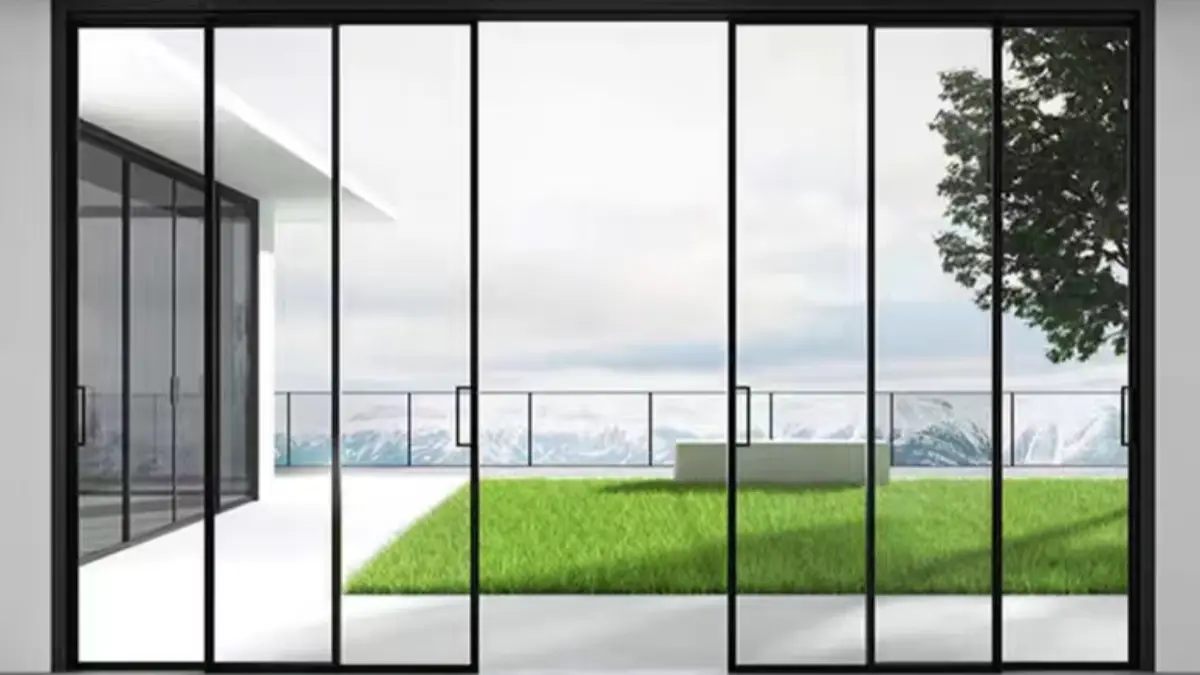
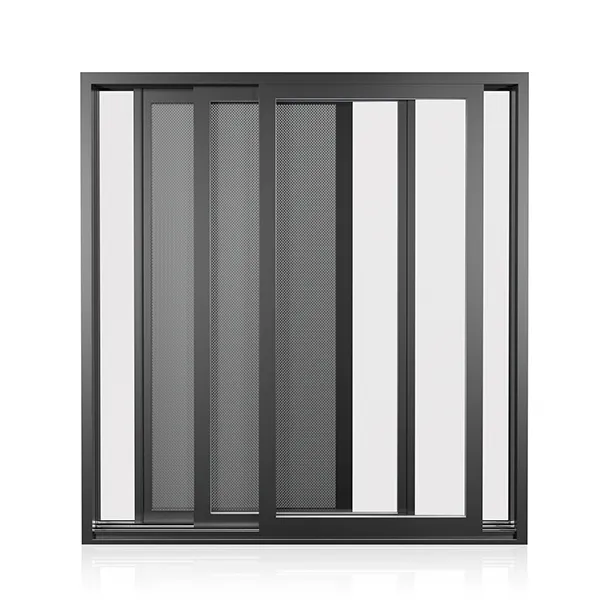
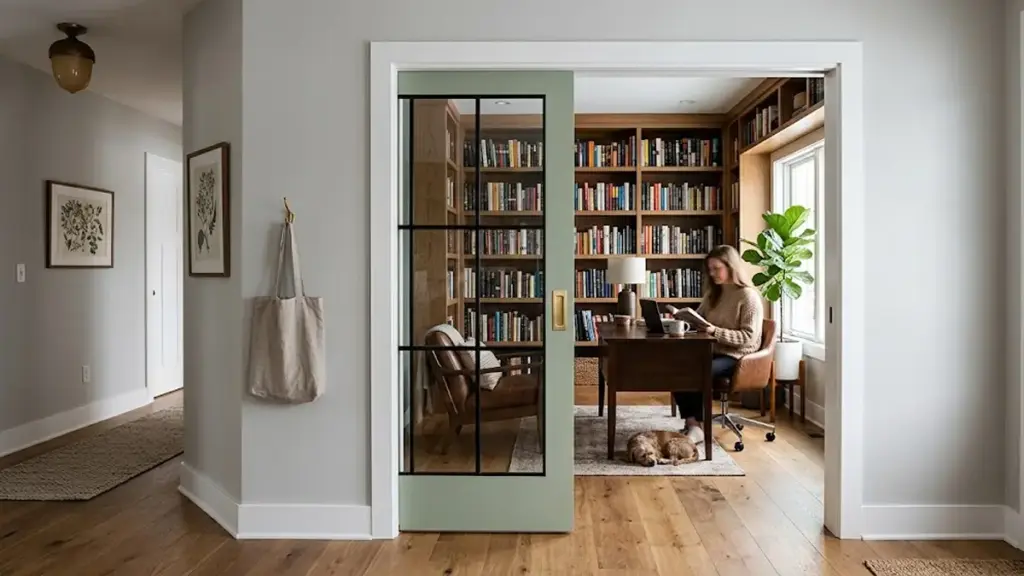
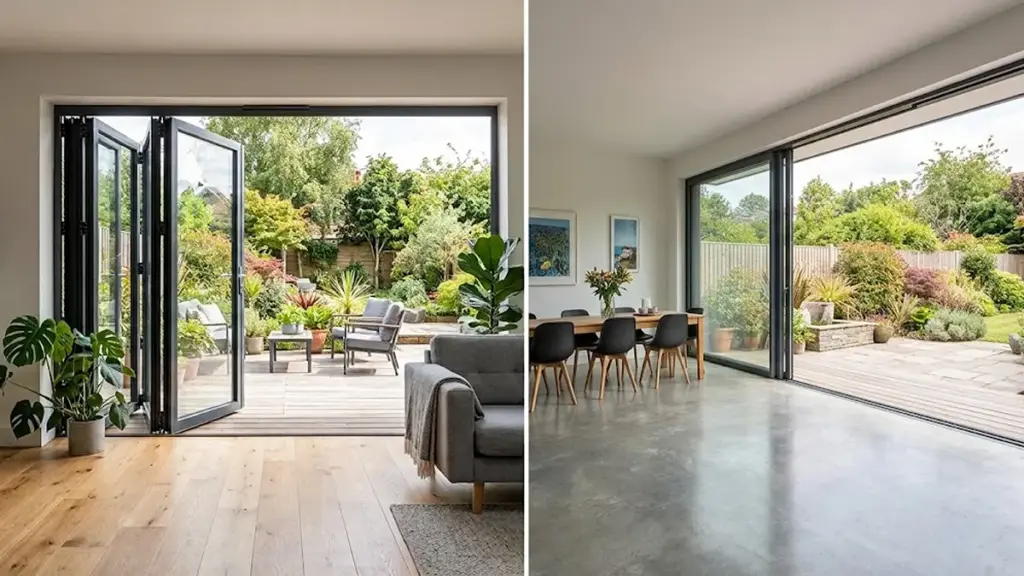
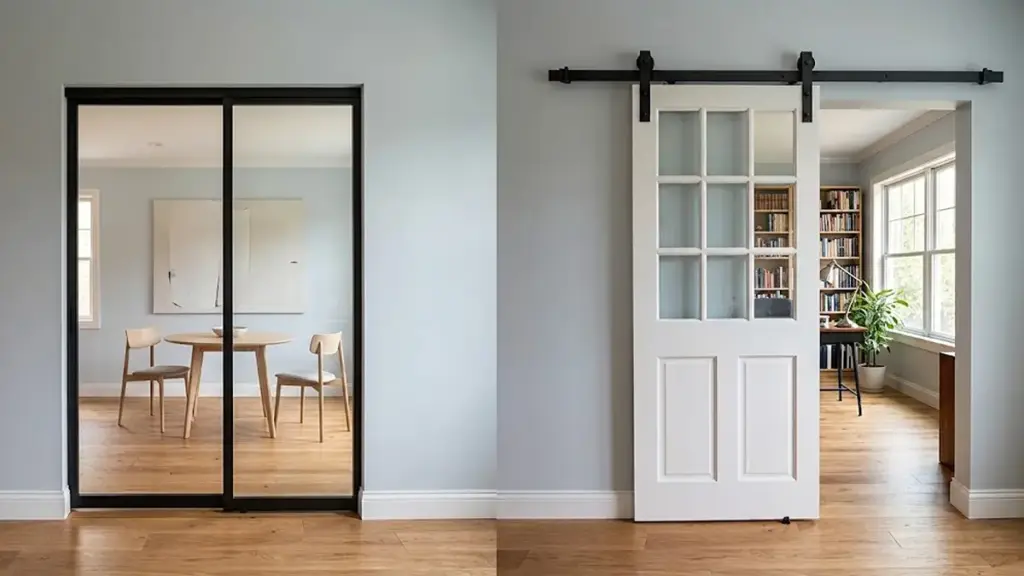
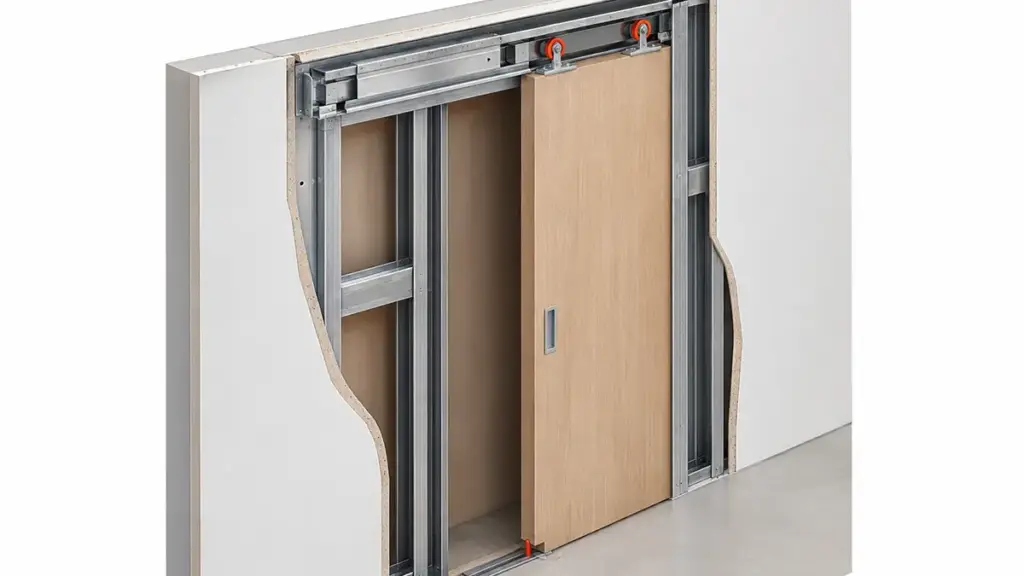
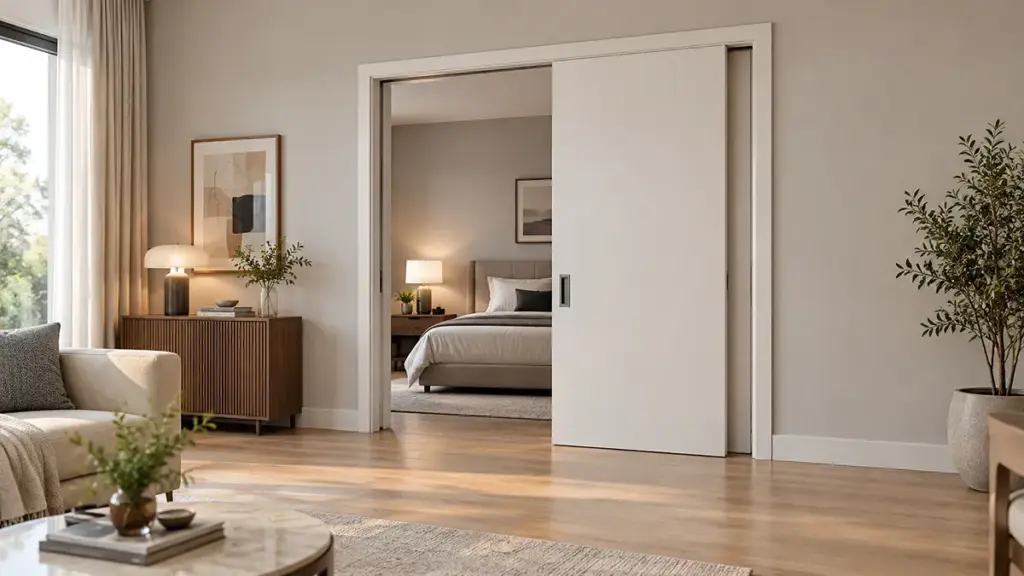
- Comprehensive Product Range: They offer multiple sliding door types, including multi-slide, lift & slide, ポケット, and stacking systems. They also provide bi-fold and folding options for relevant projects. Products are available for both residential and commercial lines, tailored for homes, multifamily units, おもてなし, とオフィス. Expect flexible configurations like XO, OX, OXO, OXXO, custom panels, and corner or pocketing doors.
- Material and Component Quality: They use high-quality aluminum extrusions with tight dimensional tolerances, offering thermally broken profiles to reduce heat transfer. Surface finishes include durable powder coating and anodizing with warranties against fading or peeling, plus custom color options.
- デザイン, 美学, and Customization: Look for narrow aluminum frames that maximize glass area and offer clean, ミニマリストの美学. Customization includes oversized panels, flexible mullion layouts, and integration with adjacent window systems. They accommodate unique requirements like corner sliders, curved openings, and integrated blinds.
- Smart, 専門化された, and High-Value Features: They provide motorized sliding options compatible with smart home systems (例えば, Matter 2.0) and integration with access control (keycards, RFID). Specialized variants include fire-rated sliders, smoke control, security-enhanced versions, and high acoustic performance doors.
Manufacturer Reliability and Support
A reliable manufacturer backs its products with strong support, from testing to after-sales service.
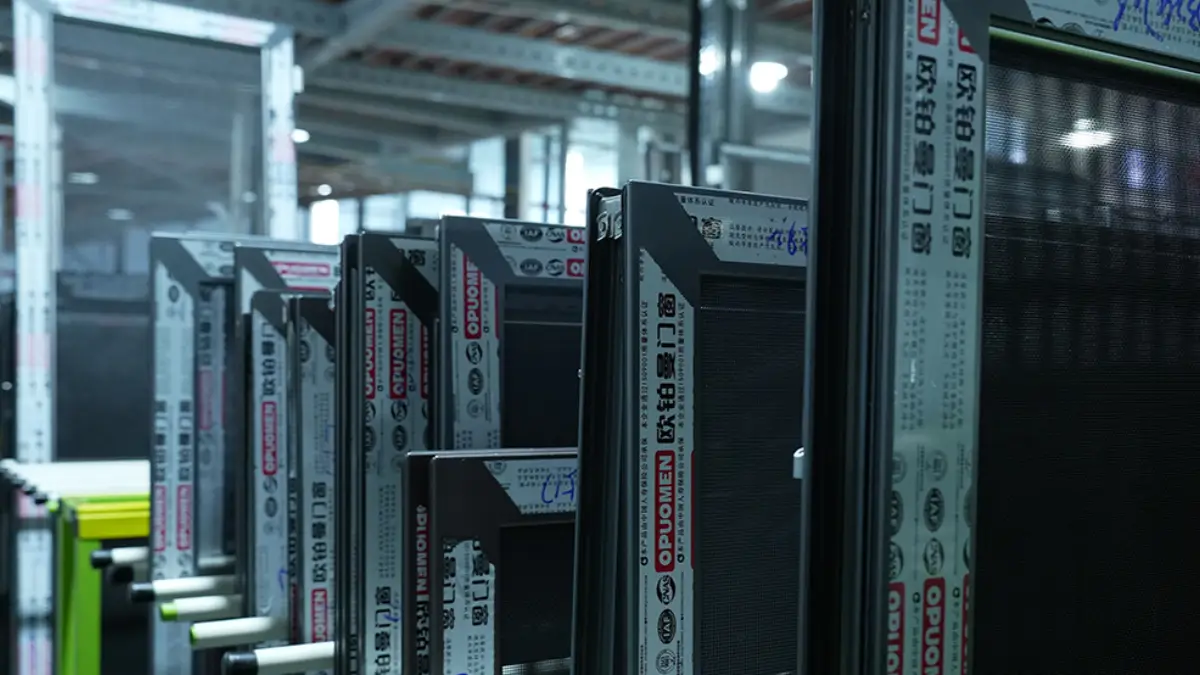
- Manufacturing Capability and Quality Control: They maintain robust quality management systems for consistent production quality and documented tolerances for frame squareness and alignment. They can scale to support large builds or smaller projects. For trade buyers, OEM programs offer technical guidance and branding options.
- Technical Support and Project Services: Expect pre-sales design and engineering assistance to help select suitable door systems. They provide specification tools like comprehensive catalogs and data sheets. They also offer installation manuals, トレーニング, and optional field support for complex projects.
- Warranty, After-Sales Service, and Lifecycle Support: They provide clear, robust warranties covering aluminum frames, 仕上げ, glass units, およびハードウェア. Products are serviceable, with replacement parts (ローラー, ロック, アザラシ) available over a defined product lifetime. Systems are designed for easy maintenance, with responsive customer support for all stakeholders.
Why Custom Capability Matters
Custom capabilities in sliding door manufacturing are crucial since projects have diverse needs for size, パフォーマンス, そしてデザイン, which standard products do not address.
Customization is vital in aluminum sliding door manufacturing. Project requirements often differ by opening size, layout, performance targets, 仕上げ, and site conditions. Standard doors simply cannot fit every application.
Project-Specific Advantages of Customization
Doors fit nonstandard openings. You match the opening, not force the opening to match a stock product.
Design alignment with architecture means custom options in frame materials, 仕上げ, and glass align with the building’s visual intent.
Custom configurations maximize usable space and adapt to room geometry, especially where clearance is tight.
Stronger materials, specific locking systems, and weather-resistant assemblies meet security and durability requirements better than fixed options.
Product and Market Drivers for Custom Capability
Large openings are common for aluminum sliding doors. Manufacturers need to build larger or specially configured units.
Aluminum’s material properties suit a wide range of configurations and finishes. It is strong and lightweight.
Project-specific needs vary across residential, コマーシャル, and hospitality sectors. Each requires different combinations of aesthetics, アクセシビリティ, そしてパフォーマンス.
グローバルプロジェクト向けの高性能アルミニウム木製ドア
What to Check in Samples and Specs
When assessing aluminum sliding door samples and specifications, verify core product attributes, fabrication quality, performance data, and documentation compliance. These checks ensure you get a reliable system.
Essential Product Attributes and Fabrication Quality
初め, you need to verify the core product attributes. Check the overall door size, ensuring the frame’s width, 身長, and depth match your shop drawings. Confirm there’s a 10–15 mm installation gap between the frame and masonry for proper sealing. また, make sure the clear opening width meets architectural and code requirements.
For alignment, check that the outer frame is plumb, レベル, そして正方形, ideally with zero variance. A consistent gap around the sash, 通常 5 mm or less, is also critical. Look at the glass: confirm its thickness, type (clear, 着色された, ローエ), and construction (シングル, double-glazed, ラミネートされた) matches the spec. Check the glass size and ensure sufficient edge cover in the glazing pocket without glass-to-aluminum contact.
The aluminum material and finish deserve scrutiny. Confirm the alloy (例えば, 6063) and temper (例えば, T5/T6) meet system documentation and project specs. Material certifications should verify mechanical performance. Profile wall thickness, typically 1.4–2.0 mm for residential and over 2.0 mm for commercial, needs to match structural calculations. Use calipers to measure samples for consistent minimum thickness. Check the surface finish type—powder coat, enamel, or anodized—and ensure the color code, gloss level, and coating thickness (例えば, powder at least 60–80 μm) are correct.
Hardware quality is non-negotiable. Check the roller type, 材料 (stainless steel axle, nylon/metal wheel), and load rating. The sash should slide smoothly without scratching or sticking, and without rattling. Confirm the roller adjustment mechanism works. Test that locks engage fully and handles operate smoothly. Gaskets and weatherstripping are vital. Confirm the gasket type (EPDM, TPE), 材料, and hardness.
Performance Verification and Documentation Compliance
Performance verification starts with structural criteria. Confirm the profile design and glass thickness meet wind load and deflection limits. For larger samples, ensure the leaf and frame feel firm and rigid when closed, with no visible sagging. Check air tightness by observing for rattling, light penetration at seals, or drafts. Water management is critical: confirm the bottom track has proper slope and drainage paths with sufficient weep holes. The sealant at frame corners must be continuous.
Evaluate how the door interfaces with installation. The sample or mockup should show the correct frame position relative to jambs and the finished floor. An adequate 10–15 mm gap for sealant around the frame is standard. Inspect the specified sealant type and confirm a continuous bead without cracks or voids. Ensure internal gaps between sections are filled.
Functional operation tests are essential. Open and close each sash repeatedly; there should be no scraping on the sill or track, and resistance should be uniform. The door must remain stable at any position. Operate locks and handles multiple times, confirming smooth locking and unlocking.
Documentation and standards compliance are key indicators of a manufacturer’s reliability. Confirm the quality system aligns with ISO 9001:2015 or an equivalent. Check references to relevant window and door performance standards like air/water/structural test reports. The manufacturer’s spec sheets must define critical parameters and acceptable tolerances.
Production and Quality Control Basics

Aluminum sliding door production relies on precise fabrication, 組み立て, 仕上げ, and integration. Quality control ensures systematic inspection against industry standards at every stage.
Production Process Overview
Manufacturing aluminum sliding doors involves a structured process, starting with raw materials and moving through design, fabrication, そして仕上げ. It all begins with shaping aluminum profiles, then meticulously assembling the components into a functional door system.
Raw aluminum billets are heated to about 375°C–500°C. We control temperature, press speed, and quench rate to ensure consistent mechanical properties and dimensional accuracy. After extrusion and cooling, we straighten and cut profiles to stock lengths, maintaining tight tolerances for later fabrication.
Door systems are engineered for smooth sliding, correct panel alignment, and precise clearances between rails and sashes. We consider panel size, 重さ, 風荷重, 水密性, and allowable deflection for large openings. Client requirements dictate frame size, panel configuration, and threshold details. サーマル, 音響, and security needs guide our choices for glass type, track layouts, and reinforcement profiles.
Fabrication starts with precision cutting. We cut profiles according to construction drawings, making sure length accuracy is maintained within ±2 mm to guarantee squareness. Sliding doors generally use right-angle (90°) cuts for frame and sash joints. Drilling for assembly and hardware is also precise; we avoid repeated drilling on visible surfaces.
Frame and sash assembly involves using right-angle butt and vertical butt methods. Connections between horizontal and vertical members use special connectors or aluminum angles. Corner reinforcement includes cleats and chevrons inserted into profile chambers with adhesive. We ensure frames and sashes are square and diagonally aligned, as misalignment affects sliding performance and sealing.
Surface treatment and finishing protect the aluminum and enhance aesthetics. Anodizing creates an oxide layer, improving corrosion resistance and hardness. Powder coating provides durable, colored finishes resistant to scratching and chalking. We inspect for uniform color and absence of defects. Glazing involves selecting glass types like tempered glass for safety and energy-efficient units for thermal performance.
Quality Assurance Principles
Quality assurance ensures consistency and performance throughout production. We use a multi-stage inspection framework, rigorously checking materials, processes, and finished products. This proactive approach catches any deviations early.
Our multi-stage inspection starts with material verification. Incoming aluminum, ガラス, and hardware are inspected for specification compliance. During fabrication, we conduct in-process checks on cutting dimensions, drilling positions, corner alignment, and coating quality. Production workers and QC staff monitor each stage closely.
Performance testing is critical. We perform operational tests to confirm smooth panel and hardware function under normal loads. Our high-end factories also assess water tightness, 空気漏れ, ノイズリダクション, and wind load resistance for door systems. This ensures products withstand environmental challenges and meet specific performance criteria.
Our core quality control principles focus on premium materials, precision, rigorous inspection, and standardized processes. We use high-grade aluminum profiles, certified tempered glass, and robust hardware. We maintain tight tolerances in extrusion, cutting, 掘削, and assembly for frame squareness and alignment.
Packaging and Shipping Support
Aluminum sliding door manufacturers ensure safe product delivery through robust packaging, strict compliance, efficient handling, and tailored logistics support.
Protective Packaging Standards and Methods
- Packaging objectives include preventing damage, ensuring traceability, enabling efficient handling, meeting international standards, and being sturdy, 安全な, stackable, 汎用性, and clearly identifying vulnerable components.
- Materials and methods use EPE foam, hard cartons, and edge guards for frames. They apply bubble wrap and separation layers for glass. Hardware and accessories pack into labeled boxes.
- Before packaging, manufacturers thoroughly clean and inspect each unit for defects. They also verify configurations to maintain pristine condition.
- Sustainable practices reduce waste. They incorporate environmentally friendly materials such as recyclable cardboard and reusable pallets to minimize environmental impact.
Coordinated Shipping and Delivery Management
- Packaging design allows for stackability. Manufacturers secure loads within containers using straps, bands, and dunnage to prevent shifting during transit.
- Labels include product type, model, サイズ, 重さ, handling instructions, and warnings for fragile components. This ensures proper identification.
- Manufacturers adhere to packaging standards for sturdiness, 安全, そして持続可能性. They support buyers with detailed packing lists and performance certificates.
- Shipping services provide integrated support for carrier selection and delivery methods. This includes consultation on full container load (FCL), less-than-container load (LCL), or truck freight options.
How to Compare Manufacturers
Comparing aluminum door manufacturers means digging into product quality, パフォーマンス, サービス, and total cost. Don’t just look at the price.
To pick the right aluminum sliding door manufacturer, you need a clear framework. It’s not just about a low bid. You need to look past the surface at real performance, long-term value, and how well they support you.
| Key Comparison Factors | Practical Steps for Manufacturer Evaluation |
|---|---|
| Product quality and durability aspects | Define specific project requirements and performance priorities |
| Energy efficiency and thermal performance metrics | Shortlist manufacturers based on market segment focus |
| デザイン, 美学, and configurability options | Evaluate detailed technical specifications and product systems |
| 認定, コンプライアンス, and testing results | Assess service, warranty terms, and long-term relationship potential |
| Manufacturing scale, capabilities, and market positioning | Conduct a comprehensive total cost of ownership analysis |
| Service, warranty, and support provisions | Utilize comparison matrices and performance-critical filters |
| Total cost of ownership assessment |
Key Comparison Factors
When evaluating aluminum sliding door manufacturers, you need to weigh several factors. These go beyond the immediate price tag. 考慮する:
- Product quality and durability: Look for robust frame materials, strong hardware, and finishes that hold up in real-world conditions.
- Energy efficiency and thermal performance: これは重要です. Check U-values, サーマルブレイク, and glazing specifications.
- 認定, コンプライアンス, and testing: Verify their products meet industry standards and building codes. Ask for test reports.
- Manufacturing scale, capabilities, and market positioning: Are they a specialist or a generalist? Do they have the capacity for your project size?
- Service, warranty, and support: What’s their reputation for standing behind their product? How good is their technical support?
Practical Steps for Manufacturer Evaluation
Evaluating manufacturers is a process. Follow these steps to cut through the noise and make an informed decision:
- Define specific project requirements and performance priorities: Know exactly what you need in terms of size, 美学, パフォーマンス, and budget before you start looking.
- Evaluate detailed technical specifications and product systems: Get into the weeds. Look at profile cross-sections, hardware specs, and glazing packages.
- Assess service, warranty terms, and long-term relationship potential: A good warranty is only as good as the company behind it. Check their after-sales support.
- Conduct a comprehensive total cost of ownership analysis: This includes upfront costs, インストール, メンテナンス, and energy performance over the product’s lifespan.
最終的な考え
Opting for minimal upfront cost over proven manufacturing strength in aluminum sliding doors is a gamble. Your project’s long-term success, aesthetic integrity, and client satisfaction depend on verifiable quality, robust engineering, and transparent production standards. Choosing a certified manufacturer with stringent quality control safeguards your reputation against costly failures and premature replacements.
We invite you to experience our product quality firsthand with samples and detailed technical consultations. Contact our specialists to align our proven manufacturing capabilities with your project’s precise needs, securing both performance and peace of mind.